 Bellingham Siding
 Why Edgemoor's Setting Is Hard on Siding
Edgemoor sits close to the water, wrapped in mature evergreen canopy and exposed to weather rolling in off Bellingham Bay. That combination is beautiful to live with and genuinely tough on a house exterior. Salt-laden air off the bay works on fasteners, trim, and paint film in ways inland Whatcom County homes never experience. Add driving, wind-blown rain that gets pushed sideways into wall assemblies during winter storms, and a shade canopy dense enough to keep siding damp for days after a system passes, and you have three climate stresses stacking on top of each other instead of just one.
Most siding failures we're called out to inspect in this neighborhood aren't caused by one dramatic event. They're the slow result of an installation that didn't account for all three stresses at once — a nail pattern that was fine for a dry inland lot but not for salt exposure, a trim detail that shed rain on a south-facing wall but not on a shaded north wall buried in fir trees, or a moisture barrier that was adequate for six months of the year but not the long, wet stretch that defines a Bellingham winter.
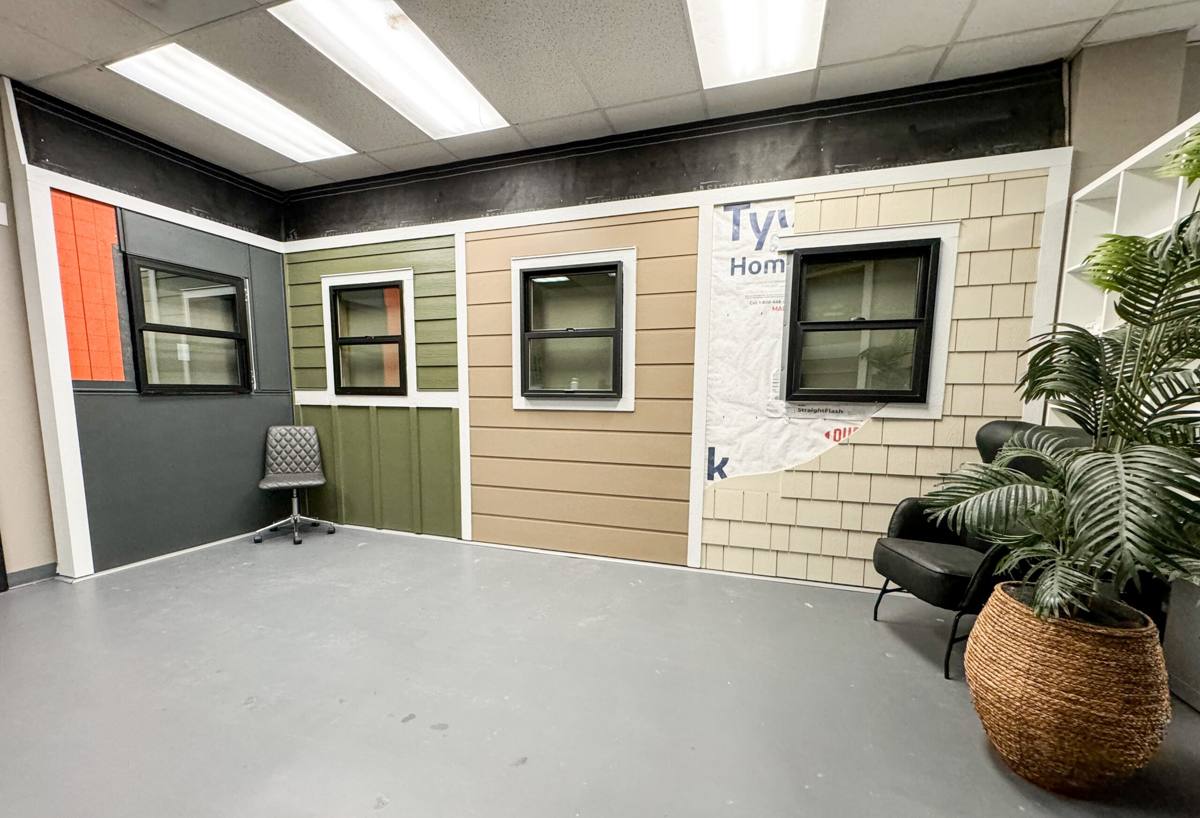
What "Correct" Siding Installation Actually Means Here
A siding installation is only as good as what's behind it. On a marine-exposed, tree-shaded lot like the ones common in Edgemoor, that means paying close attention to details that get skipped on easier jobs elsewhere:
Drainage and the Rainscreen Gap
Siding here needs somewhere for incidental moisture to go. A proper rainscreen — a ventilated gap between the water-resistive barrier and the back of the siding — lets bulk water drain out and lets damp wall cavities dry between storms instead of staying wet for weeks under a fir canopy. Skipping this gap is one of the most common shortcuts we see on older installs, and it's usually the reason a home starts showing trapped moisture damage years before it should.
Flashing at Every Penetration
Windows, doors, deck ledgers, hose bibs, and vents are where water gets in, not through the flat field of the wall. Every one of these needs correctly lapped flashing — installed so water sheds down and out, never into the wall assembly — and the flashing has to be checked and, where needed, replaced during a re-side rather than reused.
Fastener Selection for Salt Exposure
Standard fasteners corrode faster in salt-influenced air than most homeowners expect, and a corroding fastener eventually stains the siding face or loosens its grip. Corrosion-resistant fastener specifications matter more here than on a lot ten miles inland, and it's a detail that's invisible once the job is finished — which is exactly why it needs to be right the first time.
Managing Shade and Moss
Where tree cover keeps siding damp longer, moss and algae get a head start. That's partly a material question (a factory finish that resists organic growth holds up better than field-applied paint) and partly an installation question — proper clearance off grade, roof lines and gutters that direct water away from wall faces, and siding profiles that don't create ledges where debris and moisture collect.
Why We Install Only James Hardie Fiber Cement
We standardized on James Hardie fiber cement siding for every home we side, including the ones in Edgemoor, and we did it because of exactly the conditions described above. Fiber cement is dimensionally stable — it doesn't swell, cup, or rot the way wood-based products can when they stay damp for extended stretches. It's non-combustible, which matters as wildfire smoke seasons have become a more regular part of Pacific Northwest summers. And it comes with a factory-applied ColorPlus finish that's baked on and warrantied against fading, rather than a field-applied paint job that salt air and UV will start breaking down years sooner.
James Hardie also engineers its products for different regional climate stresses rather than selling one formulation everywhere. That climate-specific engineering, paired with a strong transferable warranty backing both the product and the finish, is why we don't offer a menu of siding brands and let homeowners pick blind. We install one system because we've seen what holds up in this exact climate and what doesn't.
Our Installation Process for Edgemoor Homes
- Site and exposure assessment. We walk the property noting sun exposure, tree cover, prevailing wind and rain direction, and any existing moisture or moss patterns on the current siding before we ever price the job.
- Tear-off and sheathing inspection. We remove the old siding down to the sheathing and inspect for hidden rot or moisture damage — common on shaded walls — before anything new goes on. Damaged sheathing gets replaced, not covered up.
- Water-resistive barrier and rainscreen installation. A new weather barrier goes on correctly lapped, followed by a drainage gap sized for the wall assembly.
- Flashing at every penetration. Windows, doors, and other penetrations get new or corrected flashing before siding closes them in.
- James Hardie siding installation to manufacturer spec. Correct fastener type, spacing, and clearance — off grade, off roof lines, off decks — following Hardie's installation instructions, which is what keeps the product warranty intact.
- Trim, caulking, and final detailing. Trim boards, corners, and joints are finished and sealed with attention to the same drainage principles as the field siding.
- Walkthrough. We go over the finished work with the homeowner and explain any maintenance specifics tied to the home's particular exposure.
Comparing Siding Options for a Salt Air, High-Moss Environment
| Material | Behavior in Salt Air / Shade | Maintenance Burden | Finish Longevity |
|---|---|---|---|
| James Hardie Fiber Cement | Dimensionally stable, resists moisture-driven warping | Low — factory finish, no repainting cycle | Factory ColorPlus finish, warrantied against fading |
| Vinyl | Can warp or become brittle with temperature swings; seams can trap moisture | Low to moderate — limited repair options if damaged | Color is through-body but can fade or chalk over time |
| Untreated or Primed Wood (Cedar, Spruce) | Absorbs moisture in shaded, damp conditions; prone to rot and moss growth | High — regular repainting/staining and moisture monitoring | Field-applied finish, shortest interval before recoating |
| Engineered Wood (LP SmartSide) | Wood-strand core is moisture-sensitive at cut edges and panel joints | Moderate to high — edge sealing and joint maintenance are critical | Factory finish, but core is vulnerable if moisture reaches it |
This isn't a knock on every product in that table — cedar has genuine character, and engineered wood has real cost advantages. But when we weigh those trade-offs against a marine-influenced, shade-heavy climate like Edgemoor's, fiber cement is the product that holds up with the least ongoing maintenance burden on the homeowner.
Warning Signs We See on Edgemoor Homes
If your current siding is showing any of the following, it's worth having it looked at before the next wet season, not after:
- Persistent dark streaking or moss growth that returns within weeks of cleaning
- Soft or spongy spots when pressed, especially near ground level or under deck overhangs
- Paint that's peeling or bubbling rather than just fading evenly
- Visible gaps or separation at corner boards, window trim, or butt joints
- Rust staining running down from fastener heads
- Warping or cupping boards, particularly on north-facing or heavily shaded walls
Timeline and Cost Factors
Every home is different, but a few factors consistently move the price and timeline on Edgemoor projects specifically:
| Factor | Why It Matters Here |
|---|---|
| Existing sheathing condition | Shaded, damp walls more often need sheathing repair discovered only after tear-off |
| Access and lot grading | Sloped, wooded lots common in the neighborhood can add setup and material staging time |
| Trim and architectural detail | Larger, more detailed homes have more flashing and trim work per square foot of siding |
| Scope of tear-off vs. overlay | A full tear-off costs more up front but is the only way to inspect and fix hidden moisture damage |
We give a firm, itemized estimate after the site walk — not a ballpark over the phone — because these factors genuinely shift the number from one Edgemoor property to the next.
Why Local Experience Matters for This Job
A crew that's already worked on homes near the bay knows to expect shaded north walls that never fully dry, corrosion-prone fasteners near salt spray, and gutter and grading issues that show up more on wooded, sloped lots. That's not something you can fully substitute with a generic install checklist — it's pattern recognition built from doing the work in this specific setting, in Bellingham and across Whatcom County, season after season. It's also why we're comfortable pointing out problems before they're visible from the street, rather than waiting for a homeowner to notice streaking or soft boards on their own.
Questions to Ask Before You Sign a Siding Contract
- Will you tear off the existing siding and inspect the sheathing, or install over it?
- What rainscreen or drainage detail will be used behind the new siding?
- What fastener type and spacing will you use, and is it corrosion-resistant?
- How will flashing be handled at windows, doors, and deck penetrations?
- What warranty covers the material, the finish, and your labor separately?
- Can you walk me through how the job will handle a shaded, damp section of the house differently than a sun-exposed wall?
If your Edgemoor home's siding is showing its age, or you're planning ahead before the next wet season sets in, we're happy to walk the property with you and give a straightforward, no-pressure estimate. Fill out the form below and we'll schedule a time that works for you.