 Bellingham Siding
 Building a Deck in Edgemoor: What the Location Actually Demands
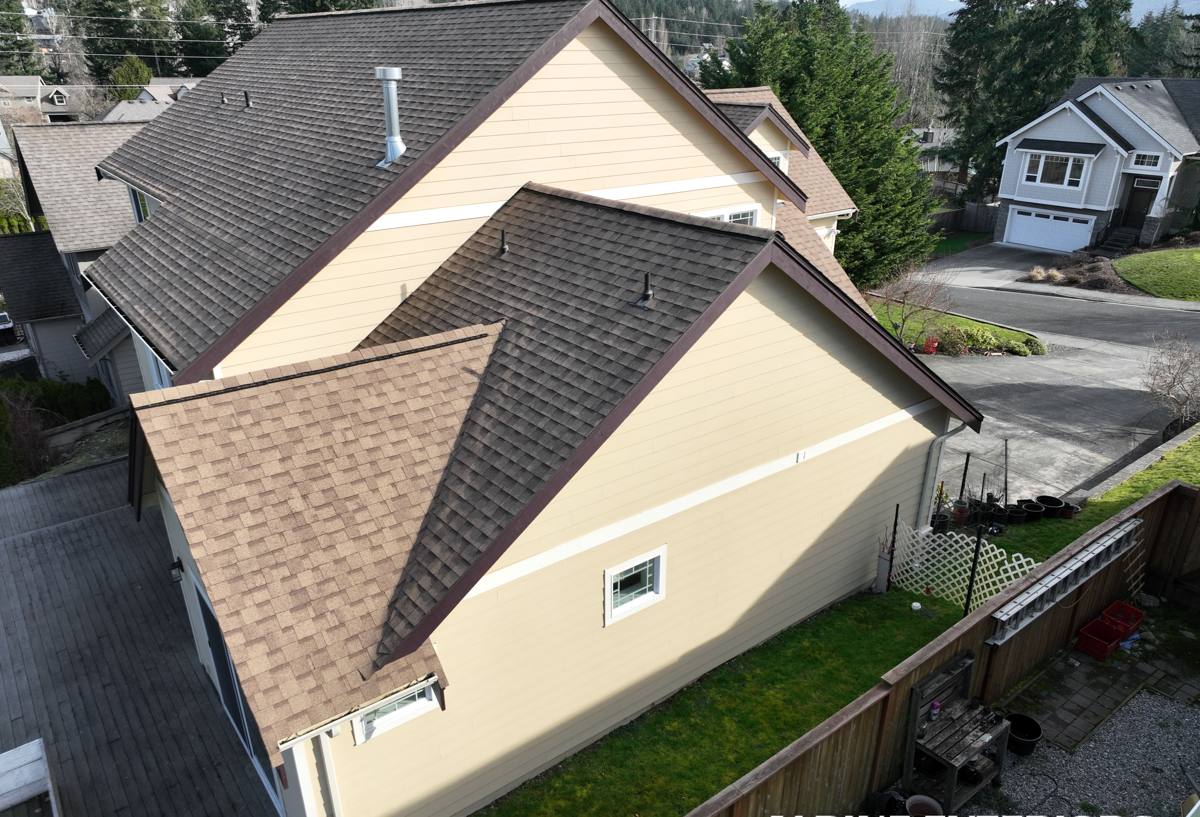
Edgemoor sits along the wooded bluffs and shoreline on the south side of Bellingham, close enough to Bellingham Bay that salt-laden air is a daily fact of life, and shaded enough by mature tree cover that many lots stay damp long after a storm has passed inland. A deck built here is doing a different job than a deck built out on an open, sunny lot in the Skagit Valley or east of the mountains. It's dealing with corrosive marine air, driving rain off the water, and a moss season that can run most of the year in the shadier spots. Building a deck that holds up in Edgemoor means designing around those three things from the start, not adding fixes after the first winter.
This page covers what actually matters for a custom deck built specifically for this neighborhood and this climate — material choice, framing details, hardware, and the maintenance rhythm that keeps a deck looking and performing well for decades instead of five or six years.
Salt Air, Driving Rain, and Moss: The Three Forces Working Against a Deck
Salt Air and Metal Corrosion
Proximity to Bellingham Bay means airborne salt settles on every exposed surface, including a deck's fasteners, brackets, and railing hardware. Standard galvanized screws and connectors that would last two decades inland can start showing rust streaks in a few years this close to the water. This isn't a cosmetic issue only — corroded fasteners lose holding strength, and a structural connector that's rusting from the inside out is a safety problem, not just an appearance one.
Driving Rain and End-Grain Exposure
Storms moving in off the water tend to drive rain sideways, not just straight down. That matters because the most vulnerable part of any decking board or piece of framing lumber is its cut end grain, where moisture wicks in fastest. A deck designed for a drier climate often doesn't account for water hitting board ends, rail post bases, and stair stringers at an angle, which is exactly what causes rot to start in places that look fine from a few feet away.
Moss, Shade, and Slip Risk
Edgemoor's tree canopy is part of what makes the neighborhood attractive, but it also means many decks sit in partial shade for most of the day, sometimes longer depending on the lot and time of year. Shade plus moisture is exactly what moss and algae need to establish, and once they get a foothold on decking boards, stairs, or railings, they hold moisture against the wood surface and create a genuine slip hazard on stairs and landings. A deck that isn't designed with drainage and airflow in mind will grow moss faster than one that is.
Choosing the Right Decking Material for This Climate
There's no single "best" decking material for every home — the right choice depends on budget, how much shade the deck sits in, and how much upkeep the homeowner actually wants to do. Here's how the common options compare for a shaded, salt-air, high-rain site like Edgemoor.
| Material | Moisture & Moss Resistance | Maintenance | Typical Lifespan | Upfront Cost |
|---|---|---|---|---|
| Pressure-treated lumber | Good if sealed regularly; end grain still vulnerable | Annual cleaning and re-sealing recommended | 10-20 years with upkeep | Lowest |
| Cedar | Naturally rot-resistant but softer surface holds moisture in shade | Periodic cleaning and oil/sealer | 15-20 years with upkeep | Moderate |
| Capped composite | Excellent — moisture-sealed shell resists moss and staining | Occasional washing only | 25-30+ years | Higher |
| PVC decking | Excellent — fully synthetic, no wood fiber for moisture to enter | Occasional washing only | 25-30+ years | Highest |
In our experience on shaded, salt-air lots, capped composite tends to be the sweet spot: it resists moss and moisture far better than any wood product, and it doesn't need the annual sealing that pressure-treated or cedar decks require to stay ahead of this climate. Wood decking isn't a bad choice — it's a lower upfront cost and plenty of homeowners like the natural look — but it's an honest trade-off. It requires real, ongoing maintenance in a wet, shaded environment, and skipping a season of sealing shows up fast as graying, moss growth, or soft spots.
A Note on Uncapped Composite
Older, uncapped composite decking (common in the early 2000s) doesn't perform the same way as today's capped products. Without a protective outer shell, the wood-fiber content in uncapped composite can absorb moisture over time, especially in shaded, high-moisture settings like Edgemoor, leading to swelling, mold staining, and surface degradation. We install capped composite and PVC products specifically because they hold up to this coastal climate — it's a maintenance-burden and moisture-behavior decision, not a brand preference.
Framing and Substructure: Where Bellingham Decks Actually Fail
Most deck failures don't start with the visible decking boards — they start underneath, where nobody's looking until there's a problem. This is the part of the job that separates a deck that lasts 10 years from one that lasts 30.
- Ledger board flashing: Where a deck attaches to the house, proper flashing keeps water from tracking behind the siding and into the wall framing — a common source of hidden rot on attached decks in wet climates.
- Joist protection tape: A self-adhering waterproof tape over the top of every joist keeps rain from soaking into the end grain and top surface of the framing lumber, which is where hidden rot typically starts.
- Post bases off the concrete: Setting posts on raised metal bases rather than directly on or in concrete keeps the post end grain away from standing water and speeds up drying after rain.
- Footings below frost depth and proper drainage: Footings need to be sized and set correctly for the soil and slope, with grading underneath the deck that lets water move away instead of pooling.
- Airflow underneath: Low decks with poor ventilation underneath stay damp longer after rain, which speeds up both wood decay and moss growth on the underside of boards.
None of this is visible once the deck is finished, which is exactly why it matters who's building it. A deck can look identical on the surface for the first year or two whether the framing was done right or not — the difference shows up five or ten years down the road, usually as an expensive repair instead of a simple maintenance item.
Railings, Fasteners, and Hardware for a Marine Environment
Hardware choice matters more here than it would on a deck built twenty miles inland. Stainless steel fasteners and structural connectors cost more upfront than standard galvanized, but they resist the corrosive effects of salt air far longer, which matters most at structural connection points — joist hangers, post-to-beam connectors, and ledger bolts — where a failure isn't cosmetic.
For railings, both wood and metal systems can work well in Edgemoor, but each has a maintenance reality worth understanding upfront:
- Wood railings need the same sealing schedule as wood decking to resist moisture and graying.
- Aluminum and vinyl railings resist corrosion and moisture well but should be rated for coastal or marine use — lower-grade hardware can still pit and corrode near the bay.
- Cable and glass rail systems look great but need periodic washdown to keep salt residue from building up on cable and hardware, and cable tensioners should be stainless-rated.
Permits and Whatcom County Considerations
Most attached and elevated decks in the City of Bellingham and unincorporated Whatcom County require a building permit, and depending on the lot, there can be additional considerations — setback requirements, critical areas or shoreline-adjacent review for lots near the bay or on sloped terrain, and site-specific factors tied to bluff or wooded lots common in Edgemoor. Requirements vary by parcel and we don't guess at them — we pull the specifics for your address before design work starts and handle the permit application as part of the project, so you're not the one tracking down code requirements.
Our Process for an Edgemoor Deck Project
- Site visit and assessment: We look at sun/shade exposure, slope, drainage, tree root proximity, and access for equipment and materials — all of which affect design and cost.
- Design and material selection: We walk through material trade-offs honestly based on your budget, how much maintenance you want to take on, and how the deck will actually be used.
- Permitting: We handle the permit application and any required documentation for the specific parcel.
- Framing and structural work: Footings, posts, ledger flashing, and joist protection are done to hold up specifically to this climate, not just to minimum code.
- Decking, railing, and finish work: Boards, railings, stairs, and hardware are installed and finished.
- Final walkthrough: We go over the finished deck and what maintenance it needs — and when — so there are no surprises down the road.
Keeping a New Deck Performing Well Year After Year
The biggest difference between a deck that still looks good in year fifteen and one that's showing rot and moss by year five usually isn't the initial build quality — it's whether basic seasonal maintenance actually happens. Here's a realistic checklist for this climate:
- Sweep leaves and debris off the deck surface regularly, especially in fall — trapped wet leaves are one of the fastest ways to stain and soften decking boards.
- Wash the deck surface at least once or twice a year to remove salt residue, pollen, and early moss growth before it establishes.
- Check and clear gaps between boards so water can drain through instead of pooling.
- Inspect stairs and shaded areas for moss buildup going into the wet season — these are the first spots it takes hold.
- For wood decking, plan on cleaning and re-sealing on the schedule the product calls for — skipping a year in this climate shows up fast.
- Check visible fasteners and railing hardware periodically for early rust or corrosion, especially on homes closer to the water.
- Confirm gutters and downspouts near the deck are directing water away rather than onto or under it.
Why a Crew That Already Works in Edgemoor Matters
Edgemoor's wooded, sloped, bay-adjacent lots come with practical challenges that a crew unfamiliar with the neighborhood will run into partway through a project — tight access for equipment on narrow or steep driveways, tree root systems that affect footing placement, and the specific microclimate differences between a sun-exposed lot and one shaded most of the day just a few streets over. A crew that already builds decks in this part of Bellingham has already worked through those constraints and knows which material and framing choices actually hold up here, instead of learning it at the homeowner's expense.
A well-built deck is a long-term investment in how a home gets used — it's worth getting the material, framing, and hardware decisions right the first time. If you're planning a new deck or replacing one that's showing its age in Edgemoor, we're happy to walk the site and give you a straightforward, no-pressure estimate using the form below.