 Bellingham Siding
 Window Installation Built for Sunnyland's Climate
Sunnyland is one of Bellingham's older, established residential neighborhoods, with a housing stock that spans mid-century ranch and bungalow homes through newer infill construction. What almost all of those homes have in common is exposure to the same weather pattern: a marine climate off Bellingham Bay that brings salt-tinged air, wind-driven rain off the water, and long stretches of the year where shaded siding and trim simply never fully dry out. Windows sit right at the center of that exposure. They're the first thing to show a failed seal, the first place moss and algae take hold on north-facing walls, and often the first sign that a home's envelope needs attention.
Window installation done right in this neighborhood isn't just about swapping old glass for new. It's about understanding how Whatcom County's climate behaves against a specific wall assembly, and installing in a way that keeps water moving out and away from the structure for the next several decades, not just the first few winters.
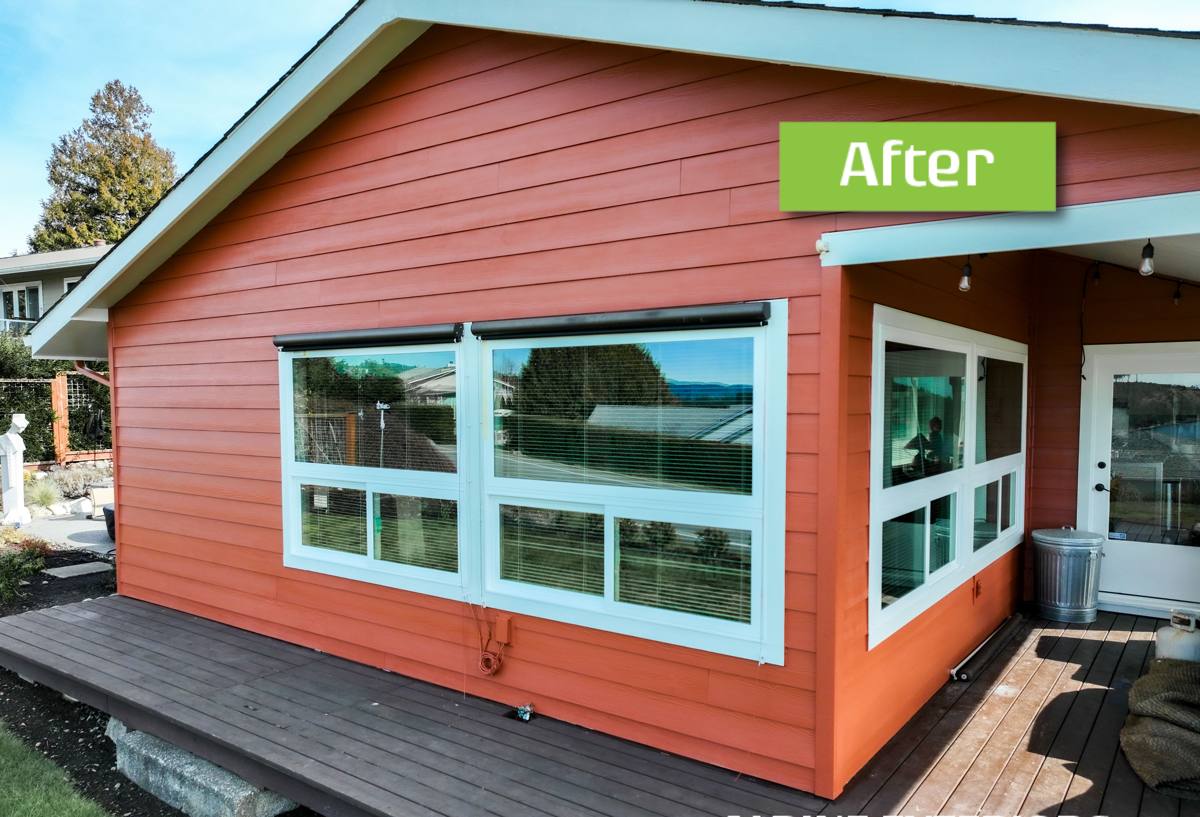
What Bellingham's Marine Climate Does to Windows Over Time
Homeowners in Sunnyland tend to notice the same handful of problems, and they're almost always climate-driven rather than random bad luck.
Driving Rain and Wind-Driven Moisture
Storms coming off Bellingham Bay don't just fall straight down — wind pushes rain sideways into window assemblies, especially on west- and south-facing walls. If the flashing detail behind the window isn't correctly lapped, water gets pushed past the frame and into the wall cavity instead of running down and out. This is rarely visible from outside until there's already rot or staining on the interior sill or drywall.
Salt Air and Metal Fatigue
Proximity to the water means airborne salt settles on exterior surfaces, including window hardware, aluminum frames, and fasteners. Over years, that accelerates corrosion on lower-grade metal components — hinges get stiff, weep holes clog, and finishes chalk out faster than they would further inland.
Moss, Algae, and the Long Damp Season
Bellingham's moss season isn't a few weeks — it's a good chunk of the fall through spring calendar. Shaded window sills, especially on the north and east sides of a home, stay damp long enough for moss and algae to establish. On older wood sills and inadequately sealed vinyl track, that persistent moisture works into any hairline gap and slowly breaks down caulk, glazing, and the wood beneath it.
Condensation From Temperature Swings
Even without a single leak, older single-pane or early-generation double-pane windows in Sunnyland homes often show heavy interior condensation during cold snaps. That's a sign the glass and frame are no longer insulating well, and persistent condensation on sills and trim is its own slow path to wood damage and mold.
Signs Your Sunnyland Home Is Ready for New Windows
Not every window with a scuff or a stiff crank needs replacing. These are the signs worth taking seriously:
- Visible fogging or a permanent haze between the glass panes (a failed seal, not something that can be cleaned off)
- Soft, spongy, or discolored wood at the sill or lower frame corners
- Windows that are difficult to open, close, or lock, especially after damp weather
- Persistent moss or dark streaking on the sill that returns shortly after cleaning
- Noticeable draft or cold spot near the window frame during winter storms
- Rising heating bills without a clear cause elsewhere in the home
- Visible daylight or gaps around the frame from outside
What a Correct Window Installation Actually Involves
The window unit itself is only part of the job. In a climate like this one, the installation detailing around the window matters at least as much as the product quality.
Flashing and Water Management
Every opening needs a properly lapped flashing system — sill pan, jamb flashing, and head flashing installed in the correct shingle-style sequence so water is directed out and over the layer below it, never trapped behind. This is the single most common point of failure we find when replacing older windows in this neighborhood: house wrap or building paper that was cut but never properly integrated with the window flange, leaving a path for wind-driven rain to track behind the siding.
Air Sealing and Insulation
The gap between the window frame and the rough opening needs to be filled with an appropriate low-expansion foam or backer rod and sealant — not stuffed with fiberglass batting, which does little to stop air movement and can actually hold moisture against the frame. Proper air sealing here is what actually shows up as a difference on your heating bill.
Level, Plumb, and Square
An out-of-square installation puts ongoing stress on the sash and hardware, which shows up years later as windows that stick, won't latch fully, or develop premature seal failure. This is a five-minute check that gets skipped when a crew is rushing.
Interior and Exterior Finish Work
New interior trim or casing repair, and exterior caulking sized and tooled correctly (not just a bead squeezed into the gap), finish the job so it looks intentional and holds up to the next few winters of weather.
Choosing the Right Window Frame Material for This Climate
There's no single "best" window material for every home — it depends on your home's age, your budget, and how much upkeep you want to take on. Here's how the common options actually perform in a Bellingham/Whatcom County coastal environment:
| Frame Material | Moisture & Salt Air Behavior | Maintenance | Typical Trade-Off |
|---|---|---|---|
| Vinyl | Won't rot or corrode; performs well in damp, salty air | Low — occasional cleaning | Limited color/finish options on some lines; frame flexes slightly in extreme temperature swings |
| Fiberglass | Very stable in moisture and temperature; resists warping | Low | Higher upfront cost than vinyl |
| Wood (unclad) | Attractive, traditional look but vulnerable to the region's long damp season if finish isn't maintained | High — regular repainting/sealing | Best suited to covered or protected exposures, not full weather-facing walls |
| Wood-Clad | Exterior cladding protects the wood core from rain and salt air | Moderate | Higher cost; clad seams need proper detailing to stay watertight |
| Aluminum | More prone to corrosion and condensation in coastal, low-insulation applications unless thermally broken | Moderate | We generally steer homeowners away from non-thermally-broken aluminum in this climate — it conducts cold and sweats |
For most Sunnyland homes, we recommend vinyl or fiberglass for full weather exposure, with wood-clad reserved for homes where the architectural character calls for it and the exposure is more protected.
Our Process, From Estimate to Final Walkthrough
Assessment and Measurement
We start by looking at the actual condition behind the trim, not just the glass — checking for existing water damage, the state of the flashing, and how the current window was originally integrated with the siding. This tells us whether it's a straight replacement or whether some framing or sheathing repair needs to happen first.
Installation Day
Openings are protected, old units are removed carefully to avoid unnecessary siding damage, and any rot or compromised sheathing found underneath is addressed before the new window goes in — not covered over. Flashing, insulation, and sealing follow in the correct sequence described above.
Final Details and Walkthrough
Every window is checked for smooth operation, a square reveal, and a clean weather seal inside and out before we consider the job finished. We walk the job with you so you know what was done and why.
Permits, Codes, and Energy Considerations
Depending on the scope of the project — especially if window openings are being resized, or the work is part of a larger remodel — permitting through the City of Bellingham may apply. If a window serves as an egress point for a bedroom, current building code sets minimum size and sill height requirements that a straight replacement needs to respect. We'll flag any of this during the estimate so there are no surprises, and current Washington State energy code performance requirements (U-factor targets for this climate zone) factor into what products we recommend.
Why a Local Sunnyland Crew Matters
A crew that regularly works this neighborhood already has a sense of the common construction patterns in Sunnyland's housing stock — the era-typical framing, the siding types that were popular when many of these homes were built, and the specific ways Bellingham Bay weather tends to find its way into a wall assembly. That familiarity shortens the assessment phase and reduces surprises once a wall is opened up. It also means a shorter drive if a follow-up adjustment or a warranty check is ever needed, rather than waiting on a crew based well outside the county.
Get a Straightforward, No-Pressure Estimate
If your windows are fogging, sticking, drafting, or just showing their age, we're happy to take a look and give you an honest read on whether it's time to replace or whether a repair will hold. Use the form below to request a free estimate — no pressure, no obligation.