 Bellingham Siding
 Windows Built for South Hill's Weather, Not Just Its View
South Hill sits up above the rest of Bellingham, which means the homes here get more of everything the weather has to offer — more wind off the bay, more direct exposure during driving rain, and more of the damp, shaded conditions that keep moss and algae going strong most of the year. A window that performs fine in a sheltered valley lot somewhere inland often struggles on a South Hill exposure. We've replaced enough failed units on this hillside to know that "energy-efficient" here has to mean weather-tight first and insulated second — because a window that leaks air around the frame or lets moisture in behind the trim will never hit its efficiency numbers no matter what glass package is inside it.
This page covers what actually matters for an energy-efficient window project on South Hill specifically: the climate factors at play, what a correct installation looks like, and how our process is set up around the realities of this neighborhood.
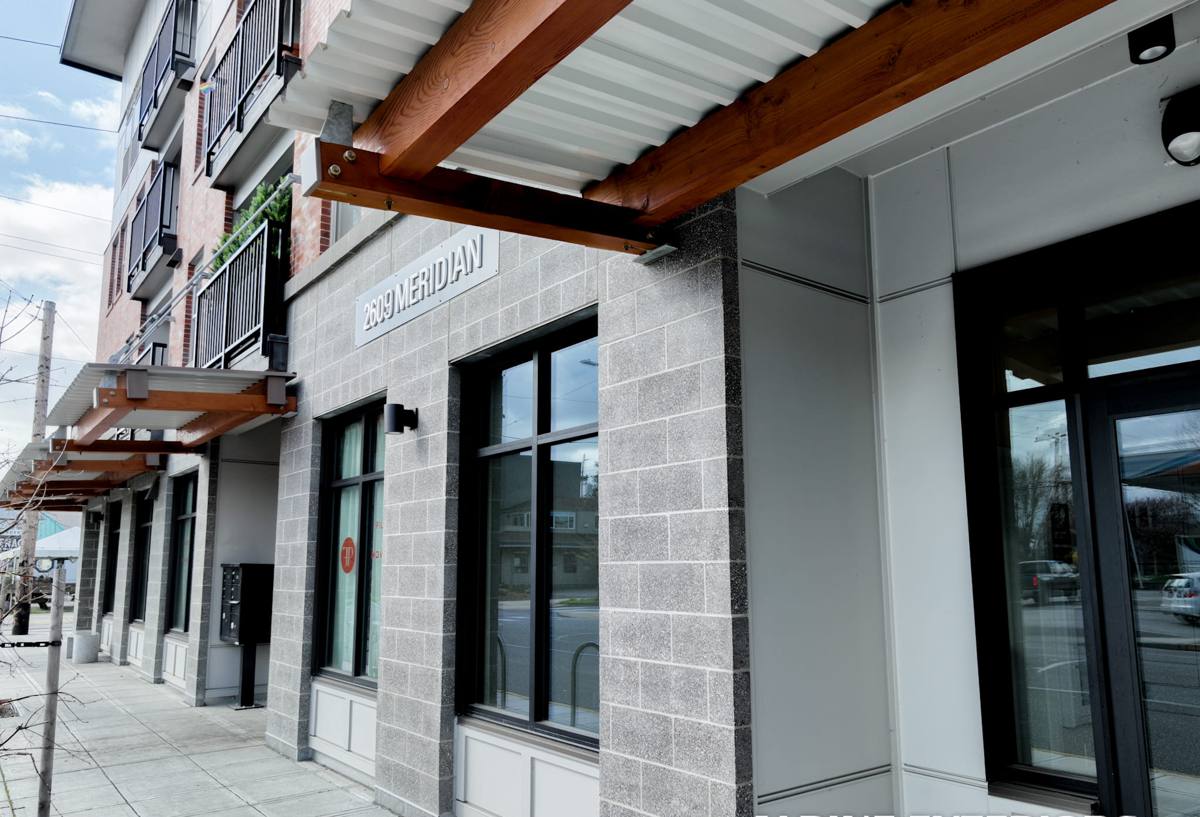
What South Hill's Climate Actually Does to Windows
Bellingham sits on Whatcom County's stretch of the Salish Sea, and that proximity to salt water shows up in the wear pattern on South Hill homes. A few things compound here:
- Salt air corrosion. Metal window hardware — hinges, balance mechanisms, cranks, and lock strikes — corrodes faster this close to the water. Cheap or poorly finished hardware pits and seizes years ahead of schedule.
- Driving rain. Storms coming off the water tend to push rain sideways, not straight down. On an elevated, exposed lot, that means water gets forced against and around window openings with more pressure than a sheltered site ever sees. Flashing and sealant details that would be "good enough" elsewhere aren't good enough on South Hill.
- A long moss and algae season. Bellingham's mild, wet stretch from fall through spring gives moss and algae months to establish themselves on sills, tracks, and anywhere else moisture sits. Left alone, that growth holds water against wood trim and vinyl components and accelerates rot and seal failure.
- Older housing stock. A good share of South Hill's homes were built well before modern energy codes existed, many with original single-pane wood or early aluminum-frame windows. Those units were never designed to compete with today's efficiency standards, and decades of settling have often left the openings slightly out of square — which matters a lot when a new window has to seal against them.
None of this is a reason to avoid older homes or hillside lots — it's just the baseline a correct window job on South Hill has to account for.
What "Energy-Efficient" Actually Means Here
The label gets used loosely in this industry. For a Pacific Northwest marine climate like Bellingham's — mild temperatures, low direct sun in winter, lots of moisture — the two numbers that matter most are U-factor and solar heat gain coefficient (SHGC).
The Numbers That Matter in a Marine Climate
| Measurement | What It Tells You | What to Look For in Bellingham |
|---|---|---|
| U-factor | How much heat escapes through the window — lower is better | 0.30 or lower for most South Hill homes; heating loss matters more here than cooling |
| SHGC (Solar Heat Gain) | How much solar heat passes through the glass | Moderate values are usually fine — we don't get the intense summer sun that drives this number in hotter climates |
| Air infiltration rating | How much air leaks around the sash when closed | Lower is always better; this is where a lot of "efficient" windows quietly underperform |
| Old single-pane baseline | Typical U-factor around 1.0+ | A quality double-pane replacement can cut heat loss through the glass by more than half |
Gas-filled (usually argon) double-pane glass with a low-E coating covers most of what a South Hill home needs. Triple-pane exists and does perform better on paper, but the marginal efficiency gain is smaller here than in a harsh continental climate — for most homes on this hillside, the money is better spent on a quality double-pane unit with correct installation than on upgrading to triple-pane with a mediocre install.
Common Window Problems We Find on South Hill Homes
A few patterns show up again and again on service calls and replacement estimates in this neighborhood:
- Fogged or hazy glass — the seal between panes has failed and moisture has gotten between them. Once this happens, the insulating gas is gone and no amount of cleaning fixes it; the sealed unit needs replacing.
- Sticking or seized hardware from salt-air corrosion on older aluminum and steel components.
- Soft or discolored sills and trim where moss, algae, and standing moisture have been sitting against wood for one too many wet seasons.
- Drafts and cold spots around the frame that point to failed weatherstripping or, more often on older homes, gaps behind the trim that were never properly insulated in the first place.
- Water staining below the window on interior walls — usually a sign that flashing or sealant is letting driving rain past the exterior, not a glass problem at all.
That last one matters most for the "energy-efficient" conversation. A brand-new, high-performance window installed with bad flashing will leak air and water at the frame regardless of what the glass is rated for. The install determines whether the window's real-world performance matches its rating.
Frame Material: What Holds Up on This Hillside
We install a range of frame materials, and each one is a legitimate choice with real trade-offs — there's no single "correct" answer for every home. What changes on South Hill is how much weight to put on moisture and salt-air resistance versus other factors.
| Frame Material | Moisture & Salt-Air Behavior | Maintenance | General Cost Position |
|---|---|---|---|
| Vinyl | Doesn't corrode or rot; good baseline performer | Low — occasional cleaning | Most affordable |
| Fiberglass | Very stable in wet, salt-air conditions; expands/contracts close to glass, which helps seal longevity | Low | Mid to upper-mid |
| Wood (clad exterior) | Good if the exterior cladding is intact; exposed wood needs protection from driving rain and moss | Higher — exterior cladding and any exposed wood need periodic inspection | Upper-mid to premium |
| Aluminum | Conducts cold and can corrode faster in salt air unless well-finished; less common for full replacements now | Moderate | Varies widely |
For most South Hill homes we lean toward vinyl or fiberglass specifically because of the corrosion and moisture exposure this hillside sees — not because wood-clad or aluminum are bad products, but because they ask more of the homeowner in ongoing upkeep in this particular climate. If you have a wood-clad or historic-style home where appearance is a priority, that's a real and valid reason to go a different direction, and we'll walk you through what the maintenance commitment looks like so it's an informed choice rather than a surprise five years in.
What a Correct Installation Actually Involves
This is the part that determines whether a window performs the way its rating says it should — and it's where driving-rain exposure on South Hill makes the details less forgiving.
Steps We Don't Skip
- Opening inspection first. On older homes especially, we check the rough opening for square, rot, and existing water damage before anything gets installed. A new window set into a compromised opening will fail early no matter how good the unit is.
- Sill pan flashing. A proper sloped sill pan directs any water that gets past the exterior seal back outside instead of into the wall cavity — critical on a lot that takes wind-driven rain directly.
- Integration with the weather-resistive barrier. Flashing tape and housewrap need to be layered correctly (top piece over the one below it, like shingles) so water is always shed downward and outward, never trapped.
- Correct shimming and fastening. The unit needs to be plumb, level, and square, and fastened without over-compressing the frame — an over-tightened frame can bow and cause the sash to seal poorly.
- Insulating the gap, not just caulking it. The space between the window frame and the rough opening needs a proper low-expansion foam or backer rod and sealant — not packed solid, and not left hollow.
- Exterior sealant compatible with your siding. Whatever caulk or sealant goes at the exterior trim needs to be rated for the movement and material of your specific siding so it doesn't crack loose after a season or two of temperature swings.
Our Process for a South Hill Window Project
The steps are straightforward, but each one is shaped by what we see repeatedly on this hillside:
- On-site assessment. We look at each opening's exposure — which walls take the brunt of the wind-driven rain, which sills already show moss or moisture staining, and where the existing construction is original versus previously modified.
- Measurement and product selection. We measure every opening individually rather than assuming uniformity, since older homes rarely have perfectly consistent openings. We'll walk through frame material and glass package options against your priorities — efficiency, maintenance, budget, and appearance.
- A written quote you can actually read. Line items for the units themselves and for the installation work, with no vague allowances buried in the total.
- Installation. Old units removed, openings inspected and repaired as needed, new units set with correct flashing and insulation, and exterior trim sealed and finished to match.
- Cleanup and walk-through. Every window gets operated and checked before we consider the job done, and we'll show you what to expect from the new hardware and finishes.
What a South Hill Homeowner Should Check Before Hiring
Whoever you hire for this job, ask these questions before signing anything:
- Are you licensed and bonded to do this work in Washington State?
- Does your quote separate the cost of the window units from the cost of installation labor?
- Who handles the flashing and sealant work — is it done by your crew, or subcontracted out?
- What's the warranty on the glass, on the frame, and on the installation labor — and are those three the same warranty or different ones?
- Have you worked on homes in this part of Bellingham before, and do you know how to handle an opening that's out of square?
- What happens if hidden rot or damage is found once the old window comes out?
A contractor who answers these clearly and without hesitation is usually one who does this work often enough to have good answers ready.
Why Hiring a Crew That Already Works South Hill Matters
Window installation isn't identical from neighborhood to neighborhood. A crew used to sheltered, newer-construction openings can do a fine job on a modern subdivision home and still get caught off guard by a South Hill opening that's slightly racked from decades of settling, or by trim details on an older home that need extra care to match. Working this hillside regularly means recognizing moss and moisture damage before it becomes a bigger problem, knowing which flashing details actually hold up against wind-driven rain here, and understanding that a home's age and construction era change what the right approach looks like.
It also matters for permitting and code compliance — window replacement work in Bellingham and Whatcom County needs to meet current energy code requirements, and if your home has any architectural guidelines or covenants tied to its neighborhood or era, we'll work within those rather than treating every home as a blank slate.
As a rough starting point, homeowners in this area typically see installed costs somewhere in the range of a few hundred to just over a thousand dollars per window, depending on size, frame material, and how much opening repair is needed — but the only way to get a real number is a site visit, since South Hill's older housing stock varies so much from block to block.
Get a Straight Answer on Your South Hill Windows
If your windows are drafty, fogged, sticking, or just old enough that you're wondering whether it's time, we're glad to come take a look. We'll give you an honest read on what your home actually needs — no pressure, no inflated scope — and a clear, itemized estimate. Use the form below to request a free estimate and we'll get in touch to schedule a visit.