 Bellingham Siding
 Siding Repair Built for Sunnyland's Weather, Not Just Its Look
Sunnyland sits close enough to Bellingham Bay and the surrounding waterways that its homes take a different kind of weathering than siding a few miles inland. Salt-laden air, wind-driven rain off the Sound, and a moss season that can stretch from October well into spring all work on exterior walls in ways that a quick caulk-and-paint patch job doesn't actually fix. When we get a repair call in Sunnyland, we're not just matching a color or covering a crack — we're figuring out why that section of siding failed in the first place, because in this climate, siding rarely fails without a reason.
This page is about siding repair specifically — not full re-siding — for homes in and around Sunnyland. If your siding is sound overall but has a problem area, a damaged section, or early signs of trouble, this is what a correct repair looks like here, and what we do differently as a crew that already knows this neighborhood's exposure.
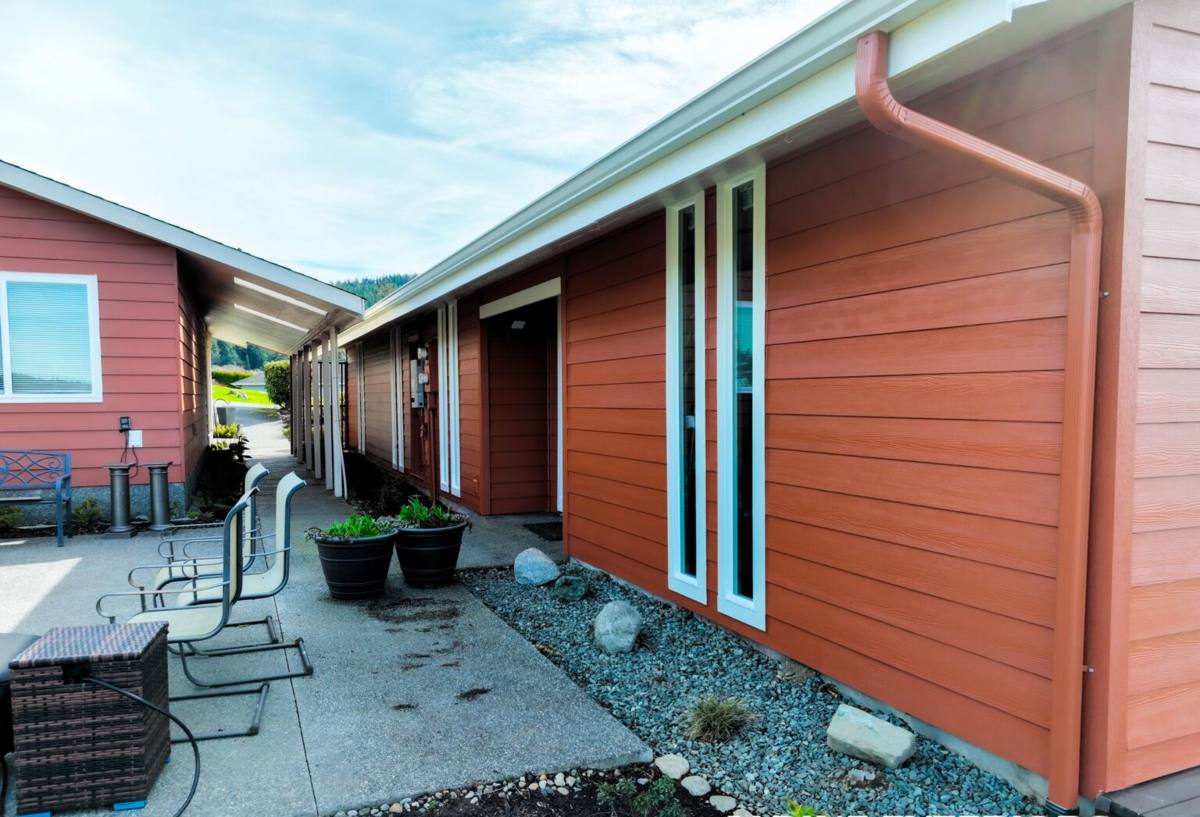
What Bellingham's Climate Does to Siding Over Time
Whatcom County doesn't get extreme heat or hard freezes very often, but it makes up for that with persistence. Sunnyland's siding problems are almost always caused by moisture and biological growth working slowly, over years, rather than a single storm event.
Salt Air
Proximity to the bay means airborne salt settles on exterior surfaces and accelerates corrosion of fasteners, flashing, and any exposed metal trim. It also breaks down cheaper paint films faster than inland exposure would, which is why homes closer to the water tend to need repaint and caulk maintenance on a shorter cycle than homes further up the hill.
Driving Rain
Bellingham's rain is rarely just falling straight down — wind pushes it sideways into wall assemblies, especially on west- and south-facing elevations. Siding systems depend on lap geometry, flashing, and sealed penetrations to shed that water. When any one of those details is even slightly off, water finds its way behind the siding instead of off of it, and the damage shows up months or years later as soft trim, stained caulk lines, or paint that won't hold.
Moss and Organic Growth
Shaded lots, mature trees, and the long damp season common to Sunnyland's older, established streets give moss, algae, and lichen plenty of time to colonize horizontal trim, butt joints, and anywhere debris collects. Left alone, that growth holds moisture against the siding surface far longer than open air would, which is one of the more common root causes we find behind repair calls that started as "just a stain."
| Climate Factor | What It Does to Siding | Where It Shows Up First |
|---|---|---|
| Salt air | Corrodes fasteners and metal flashing, degrades paint film | Trim edges, nail heads, flashing seams |
| Driving rain | Pushes moisture behind siding at weak seals and laps | Butt joints, window and door trim, low wall sections |
| Moss and algae season | Holds moisture against the surface, stains and softens material | Shaded walls, horizontal trim, north-facing elevations |
Common Signs You Need Siding Repair in Sunnyland
Most homeowners call us after noticing one of a handful of warning signs. Catching these early is what keeps a repair a repair, instead of it turning into a full re-side.
- Soft or spongy spots when you press on siding or trim, especially near the bottom of a wall
- Paint that's peeling, bubbling, or won't hold no matter how many times it's redone in one spot
- Visible cracks, chips, or impact damage on individual boards or panels
- Persistent moss, algae, or black streaking that returns shortly after cleaning
- Gaps opening up at butt joints, corners, or around window and door trim
- Staining or discoloration that follows a seam line, which usually points to water getting behind the siding rather than just sitting on top of it
- Rust streaks below fasteners or flashing
- A musty smell or visible interior wall staining on the room behind a suspect exterior section
Any one of these can be minor. Several together, or damage that's spreading, usually means the underlying cause needs to be found and corrected, not just covered.
What a Correct Siding Repair Actually Involves
A lot of "siding repair" in this region is really just cosmetic — new caulk, a fresh coat of paint, maybe a board swapped without asking why it failed. That approach almost always brings the homeowner back to square one within a year or two, because the moisture path that caused the damage is still there. We work the problem in a specific order:
1. Find the Actual Water Path
Before anything gets replaced, we trace where water is actually getting in — a failed seal, a flashing detail that was never installed correctly, a nail that backed out, or siding that was cut too tight against trim with no room to drain. Repairing the visible symptom without fixing this step just resets the clock.
2. Open Up and Assess What's Behind the Siding
Once we remove the damaged section, we check the water-resistive barrier, sheathing, and framing underneath. If there's rot or compromised sheathing, that gets addressed before any new siding goes back on — patching over damaged substrate is how a small repair turns into a bigger problem two years later.
3. Correct the Detail, Not Just Replace the Material
If the failure was caused by a flashing or lap detail that was wrong to begin with, we fix that detail as part of the repair. Simply swapping in a new board with the same flawed installation just delays the next failure.
4. Match Material and Finish
For homes with existing James Hardie fiber cement siding, we match the profile, exposure, and ColorPlus finish so the repair blends in rather than standing out as an obvious patch. For homes with other siding materials, we'll be straightforward about what we can and can't match, since we only install and repair Hardie products — more on why below.
5. Reseal and Protect
Correct caulking at the right joints (and no caulking where the siding is designed to drain, not seal) finishes the repair. Over-caulking is almost as common a mistake as under-caulking, and it can trap moisture just as effectively as a missed seal.
Repair or Replace? How We Help You Decide
Not every damaged section needs a full re-side, but sometimes a repair call reveals that the whole wall — or the whole house — has reached the point where patching isn't the responsible answer. We walk through this honestly rather than defaulting to the bigger job.
| Situation | Repair Usually Makes Sense | Replacement Should Be Considered |
|---|---|---|
| Damage extent | Isolated to one or two sections or elevations | Recurring failures across multiple walls |
| Underlying material | Sound siding elsewhere, good remaining life | Widespread softness, delamination, or rot found during inspection |
| Age of siding | Newer install with a localized defect | Original siding is decades old and near end of service life |
| Cause of damage | One-time impact or a single failed detail | Systemic issue like missing house wrap or widespread flashing errors |
Our estimate will tell you plainly which category your situation falls into, with the reasoning behind it — not just a number.
Our Process for a Sunnyland Repair Call
- Inspection: We look at the damaged area and the surrounding wall assembly, not just the spot you called about, since related damage often extends further than what's visible from the ground.
- Diagnosis and estimate: We explain what caused the damage, what needs to happen to fix it correctly, and give you a clear repair estimate — including whether we think repair or replacement is the better long-term call.
- Material matching: For Hardie siding, we source matching profile and ColorPlus finish so the repair reads as original work, not a patch.
- The repair itself: Remove damaged material, correct the underlying detail, address any substrate issues, install and finish new siding to match.
- Final check: We confirm the repair sheds water correctly and walk you through what to watch for going forward.
Why We Repair Only With James Hardie Fiber Cement
We install and repair James Hardie products exclusively — we don't work in vinyl, LP SmartSide, primed spruce, cedar, or other fiber cement brands. That's a deliberate standard, not a limitation we apologize for. Hardie's fiber cement is non-combustible, holds up to the freeze-thaw and moisture cycling common in Northwest Washington, and its ColorPlus factory finish resists the fading and peeling that repeated repainting in salt air tends to cause with other materials. When we repair a section of Hardie siding, we're working with a product engineered for this exact climate — and one backed by a strong transferable warranty when installed to spec.
If your home currently has a different siding material and you're facing repeated repair calls, that's often the moment to have an honest conversation about whether continuing to patch makes sense, or whether it's time to consider a Hardie re-side that solves the underlying problem instead of managing it indefinitely.
Why Hiring a Crew That Already Works Sunnyland Matters
Siding repair done right depends on understanding the specific exposure of the wall you're fixing — which direction it faces, how much wind-driven rain it takes, how much shade and moss pressure it deals with. A crew that regularly works Bellingham's older, tree-lined neighborhoods near the bay already knows what to expect from a Sunnyland repair call before they even open the wall: where salt air tends to hit hardest, which elevations take the worst of the driving rain, and which shaded corners need extra attention for moss. That local pattern recognition is the difference between a repair that lasts and one you'll be calling about again in two years.
Maintaining Your Siding Between Repairs
A correctly executed repair still needs basic upkeep to get its full service life out of it, especially in this climate:
- Rinse siding annually to remove salt residue and organic buildup before it takes hold
- Trim back vegetation and tree limbs that keep walls shaded and damp longer than necessary
- Check caulking at trim and penetrations every year or two, since it's a wear item, not a permanent seal
- Address small paint or finish issues promptly rather than waiting for them to spread
- Walk the exterior after major windstorms to catch new impact damage or loosened trim early
If you're seeing signs of damage, water staining, or recurring moss on your siding in Sunnyland, we're happy to take a look and give you a straightforward, no-pressure estimate on what it would take to fix it right. Fill out the form below and we'll get back to you.