 Bellingham Siding
 Why Roofs Wear Out Faster in Sunnyland
Sunnyland is one of Bellingham's older, well-established neighborhoods, and like most of the city it sits close enough to Bellingham Bay that salt-laden air is a regular part of the weather, not an occasional event. Add in the driving rain that comes off the Sound through fall and winter, plus the mature tree canopy that shades a lot of Sunnyland's older roofs, and you get a combination that ages roofing materials faster here than it would in a drier, more open part of Whatcom County. None of that means a roof in Sunnyland is doomed to fail early — it means the replacement has to be planned and installed with those three conditions in mind from the start.
Salt Air and Metal Components
Salt in the air doesn't just affect homes right on the waterfront. Even a few miles inland, airborne salt slowly works on exposed metal — nail heads, flashing edges, gutter hardware, vent caps. Over years, that means corrosion shows up sooner on cheap or poorly coated fasteners and flashing than the manufacturer's paperwork would suggest. It's one of the reasons material choice and fastener choice matter more here than in a landlocked climate.
Driving Rain and Roof Transitions
Western Washington rain isn't always gentle straight-down rain. Storms off the water regularly push rain sideways, which means it finds its way into anywhere a roof plane changes direction — valleys, chimney flashing, skylight curbs, sidewalls. A roof that's fine in a light drizzle can leak in a wind-driven storm if those transitions weren't detailed correctly the first time.
Moss Season and Shaded Roof Sections
Bellingham's moss season runs long — realistically most of the year on shaded, north-facing slopes that stay damp under tree cover. Sunnyland's tree-lined lots are exactly the kind of setting where moss gets a head start and doesn't let go. Left alone, it doesn't just look bad; it actively shortens the life of the roof underneath it.
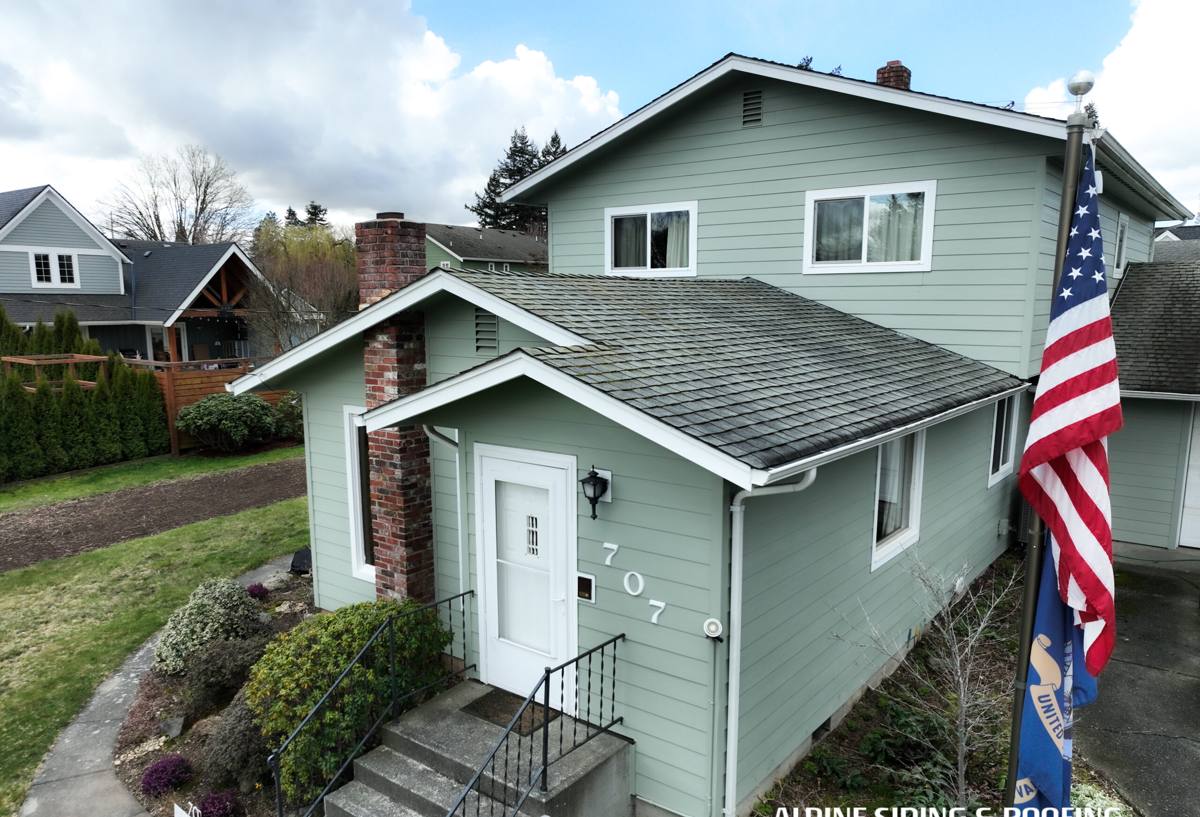
What Moss and Moisture Actually Do to a Roof Over Time
Moss isn't just a surface stain. It roots into the texture of a shingle and holds water against the surface long after the rest of the roof has dried out. That constant moisture does a few things: it accelerates granule loss on asphalt shingles, it keeps wood shakes and the roof deck beneath any material damp enough to invite rot, and it lifts shingle edges just enough for wind-driven rain to get underneath. A roof that looks "mostly fine" from the ground can already have soft, saturated decking under a mossy patch.
Salt air adds a slower, quieter kind of wear — corrosion on nail heads and flashing that isn't obvious until a fastener backs out or a flashing seam starts leaking. Combined, moss and salt exposure are the two biggest reasons a Sunnyland roof can look serviceable but actually be past the point where another repair makes sense.
Signs a Sunnyland Roof Needs Replacement, Not Another Repair
Some of these are easy to spot from the ground; others take a closer look. If several of these apply, it's worth getting a straight answer on whether repair still makes sense or whether it's time to replace.
- Granule loss heavy enough that you can see bare, dark patches on asphalt shingles
- Moss returning to the same slopes within a season or two of cleaning
- Shingles cupping, curling, or cracking at the edges
- Soft or spongy spots when walking the roof deck
- Daylight visible through the roof deck from inside the attic
- Water stains on ceilings or in the attic after wind-driven storms
- Flashing around chimneys, skylights, or sidewalls that's rusted, lifted, or gapped
- A roof at or past 20–25 years of age for standard asphalt shingle, less for lower-grade product
- Multiple repair calls to the same section within a year or two
What a Correct Roof Replacement Involves Here
Tear-Off and Deck Inspection
A proper replacement starts with a full tear-off, not an overlay. That's the only way to actually see the condition of the roof deck — plywood or plank sheathing that's been sitting under years of trapped moisture from moss or a slow leak often needs sections replaced before new material goes down. Skipping this step just buries the same problem under a new roof.
Underlayment and Ice-and-Water Shield
Given how much wind-driven rain this area sees, underlayment choice matters more than most homeowners realize. Self-adhering ice-and-water shield belongs at eaves, valleys, and around every roof penetration — the spots where sideways rain is most likely to get pushed under the shingle field. The rest of the deck gets a synthetic or felt underlayment rated for the exposure.
Ventilation
A roof that can't breathe traps moisture in the attic, which speeds up deck rot from the inside and can actually make moss and algae growth worse on the outside by keeping the roof deck warmer and damper than it should be. Balanced intake at the eaves and exhaust at the ridge is a basic requirement, not an upsell — it's part of what makes the shingle manufacturer's warranty valid in the first place.
Flashing and Moss-Resistant Detailing
Every valley, chimney, skylight, and sidewall gets new flashing during a replacement — reusing old flashing to save money is a false economy in a climate this wet. On shaded slopes prone to moss, we also look at whether zinc or copper strips near the ridge make sense, since the runoff from those metals helps slow moss regrowth on the slope below.
Choosing Materials for Bellingham's Climate
There's no single "right" roofing material for every Sunnyland home — it depends on the roof's pitch, how much shade it gets, and the homeowner's budget and timeline. Here's how the common options actually compare for this climate specifically.
| Material | Moss/Algae Resistance | Typical Lifespan Here | Relative Cost |
|---|---|---|---|
| Standard asphalt shingle | Low without treatment | 15–20 years | Lowest upfront |
| Algae-resistant architectural shingle | Moderate to good | 20–30 years | Moderate |
| Standing seam metal | Very good | 40–50+ years | Highest upfront |
| Synthetic/composite shingle | Good | 30–40 years | Moderate to high |
Algae-resistant shingles use copper or zinc-coated granules mixed into the surface specifically to slow the growth that causes those dark streaks and moss footholds. They cost more than standard shingles but tend to be worth it on shaded Sunnyland roofs, where a standard shingle would need more frequent cleaning to look and perform the same. Metal costs more up front but shrugs off moss almost entirely, which is why it's worth considering on steep, heavily shaded roof sections even if the rest of the house uses shingle.
Our Replacement Process, Start to Finish
- On-site inspection of the existing roof, deck, and attic ventilation, with photos and a plain-language explanation of what we find
- Written estimate covering material options, scope, and a realistic timeline
- Permitting through the City of Bellingham where required
- Scheduling around weather windows, since tear-off days need a dry forecast
- Tear-off and disposal of the old roofing material
- Deck inspection and repair of any soft or rotted sheathing found underneath
- Installation of ice-and-water shield, underlayment, new flashing, ventilation components, and the roofing material itself
- Final inspection and full site cleanup, including a magnetic sweep for stray nails
- Walk-through with the homeowner before we consider the job finished
Why Hiring a Crew That Already Works Sunnyland Matters
A roofing crew that regularly works Bellingham neighborhoods like Sunnyland already knows the things that only show up after a few seasons of local experience: which roof slopes typically hold moss the longest given the tree cover common in older neighborhoods, how the City of Bellingham's permitting process actually runs, and how to plan a tear-off schedule around Whatcom County's rain patterns instead of guessing. That local familiarity translates into fewer surprises mid-project — not because the physics of roofing changes from town to town, but because knowing the specific conditions here means fewer assumptions and more accurate planning from day one.
After Replacement: Keeping a New Roof Ahead of Moss and Salt Air
A correctly installed roof still benefits from a little upkeep in this climate. Keeping gutters and downspouts clear prevents water from backing up under the eaves during heavy rain. Trimming back tree limbs that overhang the roof improves airflow and sunlight to shaded slopes, which slows moss regrowth more than any treatment applied after the fact. A gentle moss treatment once a year on shaded sections, done without pressure-washing the granules off the shingles, goes a long way toward protecting the investment. None of this is complicated, but skipping it is how a 30-year roof ends up looking and performing like a 15-year roof.
If you're weighing whether your Sunnyland home needs a repair or a full replacement, we're glad to take a look and give you a straight answer — no pressure, no inflated scope. Use the form below to request a free estimate.