 Bellingham Siding
 Roof Replacement Built for Happy Valley's Conditions
Happy Valley sits close enough to the water and the tree cover that its homes take a different kind of weathering than roofs a few miles inland. Between salt-laden air drifting in off Bellingham Bay, long stretches of driving rain through fall and winter, and a moss season that can run most of the year under shaded lots, roofs here age on a schedule that doesn't always match the "20-year shingle" printed on the wrapper. If you're starting to see granule loss, moss lines along the north-facing slopes, or soft spots near valleys and eaves, it's worth understanding what a correct replacement actually involves before you get quotes.
This page covers what we look at, what we install, and how we run a roof replacement specifically for Happy Valley's mix of older bungalows, mid-century ranches, and newer infill homes.
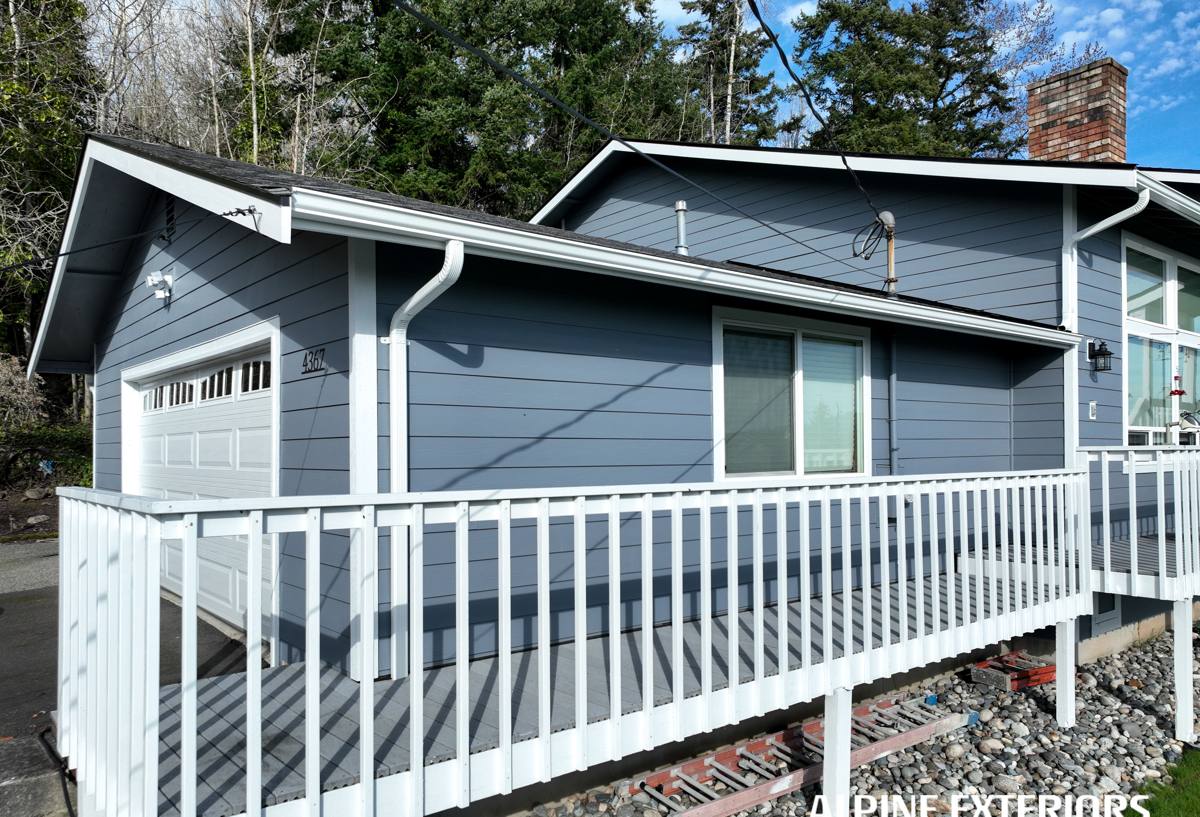
Why Roofs Wear Differently in This Part of Bellingham
Salt Air and Metal Fatigue
Homes closer to the water deal with airborne salt that accelerates corrosion on exposed fasteners, flashing, and any galvanized (as opposed to properly coated) metal. Over years, this shows up as rust streaking at valleys, rusted nail heads telegraphing through shingles, and pitting on vents and flashing. It's rarely dramatic — it's slow, and it's easy to miss until a leak shows up.
Driving Rain and Wind-Driven Water
Whatcom County's weather doesn't just rain straight down; wind off the water pushes rain sideways during storms, which means water gets tested at every lap, seam, and penetration on the roof — not just the open field of shingles. Underlayment quality and how flashing is detailed at valleys, walls, and chimneys matter more here than in drier climates, because marginal work gets found out.
Moss and Moisture Retention
Shaded lots and tree cover common in Happy Valley keep roof surfaces damp longer after rain, which is exactly what moss needs to establish. Moss holds moisture against the roof surface, lifts shingle edges as it grows, and works its way under laps over time. A roof that's shaded most of the day will need moss management as a matter of routine, not as a one-time cleanup.
Signs a Happy Valley Roof Needs Replacing (Not Just Patching)
- Granule loss heavy enough that you can see bare, shiny patches on shingles from the ground
- Moss growth that comes back within months of cleaning, especially on north- or tree-shaded slopes
- Curling, cupping, or cracked shingles across multiple sections rather than one isolated spot
- Rust staining or visible corrosion at valleys, flashing, or vent boots
- Daylight visible through the roof deck from inside the attic
- Soft or spongy decking when walked, or sagging visible from the street
- Leaks that keep reappearing in the same area after repeated repairs
- A roof that's 18-25+ years old and has never been fully replaced or re-decked
One or two of these on their own might mean a targeted repair is enough. Several at once, or a roof already past its expected service life, usually means repair costs start competing with replacement costs — and replacement gives you a clean, warrantied start instead of a patchwork.
What a Correct Roof Replacement Includes
A roof replacement is more than swapping old shingles for new ones. Done right, it's a system, and each layer matters for how the roof performs against Bellingham's rain and moisture:
Tear-Off and Deck Inspection
We remove the old roofing down to the deck rather than layering over it. This is the only way to actually see the plywood or sheathing underneath — soft, delaminated, or water-stained decking gets replaced before anything new goes down. Roofing over a compromised deck just hides the problem.
Underlayment
Given how much wind-driven rain this area sees, we don't treat underlayment as an afterthought. Synthetic underlayment, with ice-and-water shield at eaves, valleys, and other vulnerable transitions, gives the roof a second line of defense if wind ever pushes water past the shingle laps.
Flashing
Valleys, chimneys, skylights, and wall intersections are where roofs actually fail — far more often than in the open field. We use corrosion-resistant flashing materials and detail it to shed water outward at every layer, which matters more here given the salt air's effect on lesser metals over time.
Ventilation
Proper intake and exhaust ventilation keeps the attic dry and temperature-regulated, which reduces condensation buildup and helps shingles last their full rated life. It also reduces the damp, dark conditions moss and moss-adjacent growth prefer.
Shingles or Roofing Material
We install products chosen for wind and moisture performance rather than the cheapest per-square option, and we're upfront about the maintenance trade-offs of each material so you're picking based on how you actually want to live with the roof, not just the sticker price.
Material Options and How They Perform Locally
| Material | Moss Resistance | Wind/Rain Performance | Typical Lifespan | Maintenance |
|---|---|---|---|---|
| Standard architectural asphalt shingles | Moderate — benefits from periodic cleaning in shaded areas | Good with proper underlayment and fastening | 20-30 years | Periodic moss treatment on shaded slopes |
| Algae/moss-resistant asphalt shingles (copper- or zinc-infused granules) | Better on shaded, tree-covered lots | Good, same install standards apply | 25-30 years | Lower, but not maintenance-free |
| Metal roofing (standing seam or panel) | Very good — sheds moisture, little surface for moss to grip | Excellent in wind and driving rain | 40-50+ years | Low; check fasteners and coatings periodically near salt air |
| Cedar shakes | Poor without diligent upkeep — retains moisture | Fair; installation detail is critical | 20-25 years with upkeep | High — regular treatment needed in damp, shaded conditions |
We'll walk you through which of these actually makes sense for your lot's sun exposure and tree cover rather than pushing one product across every house. A heavily shaded roof and a sun-exposed roof two streets apart can have genuinely different right answers.
Our Roof Replacement Process
- On-site inspection. We walk the roof and attic, check the deck, flashing, and ventilation, and note moss patterns and shaded areas specific to your lot.
- Written scope and estimate. You get a clear breakdown of materials, tear-off scope, any deck repair contingencies, and the timeline — no vague allowances.
- Material selection. We go over the trade-offs above so you land on a product that fits your budget and how much upkeep you want to deal with going forward.
- Tear-off and deck assessment. Old roofing comes off, the deck gets inspected in daylight, and any necessary repairs are confirmed with you before covering it back up.
- Underlayment and flashing installation. This is where the roof's real weather resistance gets built — done to the standard this climate calls for, not the minimum code allows.
- Roofing installation. Shingles or panels go down to manufacturer spec, which matters for both performance and keeping any material warranty intact.
- Final walkthrough and cleanup. We check the finished roof with you, clear job-site debris including nails, and go over care and moss-prevention basics for your specific setup.
Why Work With a Crew That Already Knows Happy Valley
A roofer who works across all of Whatcom County sees plenty of roofs, but a crew that's spent real time on Happy Valley's streets already knows which lots hold moisture longest, which older homes tend to have deck issues under the shingles, and how the salt-air corrosion pattern tends to show up here versus roofs further from the water. That familiarity shortens the guesswork during inspection and shows up in fewer surprises mid-project.
It also means we're not learning the neighborhood's permitting quirks or typical roof pitches on your project — we've already done that homework on homes near yours.
Cost Factors Worth Understanding
| Factor | Why It Matters |
|---|---|
| Roof size and pitch | Steeper roofs take longer and require more safety setup, affecting labor cost |
| Deck condition | Rotted or delaminated sheathing found during tear-off adds material and labor |
| Number of valleys, chimneys, skylights | Each penetration needs custom flashing work, which adds time |
| Material choice | Asphalt, algae-resistant shingle, and metal options carry different upfront costs and lifespans |
| Ventilation upgrades | Adding or correcting intake/exhaust vents adds modest cost but extends roof life |
| Tear-off layers | Removing multiple existing layers of roofing takes more labor than a single-layer tear-off |
We'll flag any of these that apply to your roof specifically during the inspection, rather than surprising you with them after work has started.
Get a Straightforward Estimate
If your roof is showing moss buildup that won't quit, granule loss, or you're just past the point where another patch makes sense, we're happy to take a look and give you a straight answer — replacement, repair, or something in between. Use the form below to request a free, no-pressure estimate for your Happy Valley home.