 Bellingham Siding
 Siding Repair Built for the York Area's Climate
Homes in the York neighborhood deal with a specific combination of weather stresses that most siding was never designed to handle well over the long haul. You're close enough to the water and the marine air that moves through Bellingham to get real salt exposure, you get driving rain off the Strait for a good chunk of the year, and Whatcom County's mild, damp winters mean moss and algae have months to work on anything that stays shaded and wet. Siding repair here isn't just patching a hole or replacing a cracked board — it's fixing the problem in a way that accounts for why it failed in the first place. A repair that ignores the local climate usually fails again within a couple of seasons.
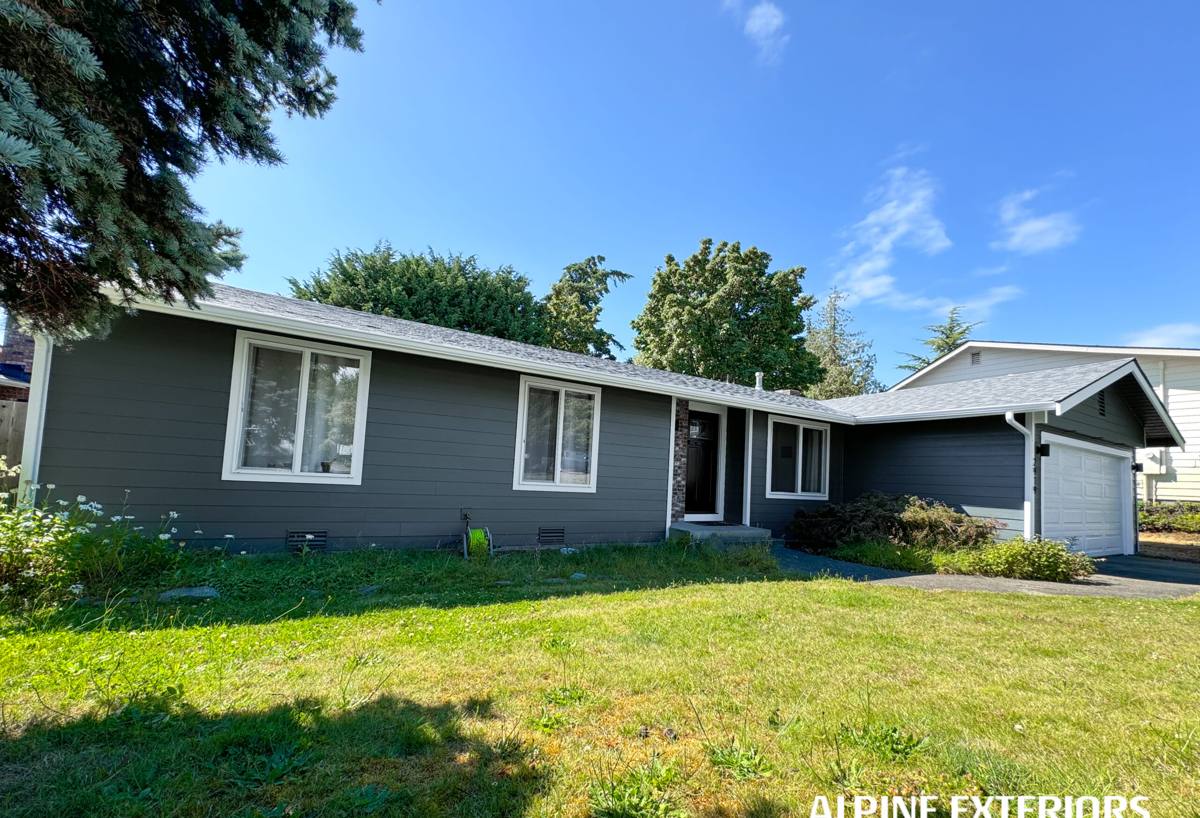
What We Commonly Find on York Homes
Moss and Algae Colonization
North- and west-facing walls, areas under eaves with limited sun, and siding near mature landscaping are the spots where moss and algae take hold first. On its own, surface growth is mostly cosmetic. Left alone for years, though, it holds moisture against the siding surface far longer than the material was designed to tolerate, which accelerates rot in wood-based products and can degrade paint and caulk lines on any siding type.
Moisture Intrusion at Seams, Trim, and Penetrations
Most of the siding failures we get called out for don't start in the middle of a wall panel — they start where two materials meet: butt joints, window and door trim, deck ledger connections, hose bibs, and vent penetrations. Driving rain finds these gaps and pushes water behind the siding, where it can sit against sheathing and framing without anyone noticing until there's visible staining, soft spots, or a musty smell inside.
Salt Air and Coastal Weathering
Salt-laden air accelerates corrosion on fasteners, flashing, and any exposed metal trim, and it can gradually break down lower-quality paint films faster than inland exposure would. Homes with a clearer path to the water tend to show fastener staining and finish wear sooner than homes further inland, even when they're the same age and the same product.
What a Correct Siding Repair Actually Involves
Diagnosing the Cause, Not Just the Damage
Replacing a damaged board without figuring out why it failed is the single most common mistake we see from repairs done elsewhere. If water is getting behind the siding at a trim detail or a flashing failure, a new board in that same spot will fail again — often faster, since the underlying moisture path never got addressed. A proper repair starts with pulling back enough of the surrounding siding to inspect the water-resistive barrier, flashing, and sheathing underneath, not just swapping the visible piece.
Matching Material, Profile, and Finish
Repairs also need to match what's already on the wall — plank width, exposure, texture, and color — closely enough that the patch doesn't stand out. On factory-finished fiber cement, that means sourcing the correct ColorPlus color and caulking with a matched sealant rather than a generic tube off the shelf. A repair that's structurally sound but visually obvious usually means the wrong product or the wrong process was used.
Restoring the Water Management System, Not Just the Surface
Siding is one layer of a larger water management assembly that includes house wrap, flashing, and properly lapped seams. A repair crew that only replaces the outer skin without re-integrating it correctly into that system is setting the homeowner up for a repeat call. We rebuild the flashing and drainage path at the repair area before the new siding ever goes back on.
Repair or Replace? How We Make That Call
Not every damaged section needs a full re-side, and not every "small" repair should stay small. The table below covers the signs we weigh when advising a York homeowner one way or the other.
| Condition | Usually Points to Repair | Usually Points to Replacement |
|---|---|---|
| Extent of damage | Isolated to one or two wall sections | Recurring failures across multiple elevations |
| Underlying sheathing/framing | Dry, sound wood behind the damaged area | Soft, discolored, or rotted sheathing found on inspection |
| Age of existing siding | Siding is well within its expected service life | Siding is near or past the manufacturer's expected lifespan |
| Cause of failure | A single identifiable defect (trim, flashing, impact damage) | Systemic issue — original installation error, wrong product for the exposure |
| Product on the wall now | Fiber cement or another durable product in otherwise good condition | A product prone to moisture failure that's already showing widespread wear |
Our Repair Process, Start to Finish
- On-site inspection. We walk the exterior, identify every affected area (not just the spot you called about), and check trim, flashing, and penetrations for related issues.
- Investigative opening. We pull back siding around the damage to inspect the water-resistive barrier and framing before quoting the scope — this is how we avoid under-scoping a repair.
- Written scope and estimate. You get a clear explanation of what failed, why, and what it takes to fix it correctly, with no pressure to upsell into a full replacement unless the inspection actually supports it.
- Rebuild the water management detail. Damaged sheathing is addressed, flashing and house wrap are repaired and properly lapped, and any compromised fasteners or trim are replaced.
- Reinstall matched siding. New material is fitted, fastened, and finished to match the existing wall as closely as possible.
- Final check. We walk the repair with you before we consider the job done.
Why We Only Repair With and Install James Hardie Fiber Cement
We've made James Hardie fiber cement the only siding product we install and the standard we repair back to whenever the existing wall allows it. It's non-combustible, it holds its factory ColorPlus finish far longer than field-applied paint, and Hardie's HZ5 product line is engineered for exactly the wet, temperate exposure Bellingham and Whatcom County sit in. That matters directly for repair work: when we tie a patch into existing Hardie siding, we're matching a product with a strong track record in this climate rather than trying to keep a moisture-sensitive material limping along. If a home currently has vinyl, LP SmartSide, or another wood-based product and the damage is extensive, we'll say so plainly and talk through what moving to fiber cement would involve — but a small, isolated repair on sound existing siding doesn't always need to turn into a full product change, and we'll tell you that too.
Timeline, Disruption, and What Drives Cost
Most single-area repairs on a York home take one to a few days once material is on hand, though anything involving hidden rot or a wider flashing rebuild takes longer. Cost depends less on square footage and more on what we find once we open the wall.
| Cost Factor | Why It Matters |
|---|---|
| Extent of hidden moisture damage | Rotted sheathing or framing adds labor and material beyond the visible repair |
| Color and profile matching | Discontinued or custom ColorPlus colors can affect sourcing time and cost |
| Access and height | Second-story or hard-to-reach elevations require more setup and safety equipment |
| Trim and flashing scope | Repairs that include window/door trim or deck flashing take more time than a plain wall panel swap |
| Number of affected areas | Several smaller repair zones can add up to more total labor than one larger contiguous area |
Maintenance That Keeps a Repair From Becoming a Recurring Problem
A good repair buys you time, but a few habits keep it — and the rest of your siding — from failing again in this climate:
- Rinse moss and algae off shaded, north-facing walls before it builds up a thick mat
- Keep gutters clear so overflow doesn't run down the siding face during heavy rain
- Trim back landscaping that keeps siding shaded and damp for long stretches
- Re-caulk trim joints and penetrations at the first sign of cracking or gaps, before water gets behind them
- Walk the exterior after major storms and check low corners, deck ledgers, and window sills for staining
- Have any soft spots or bubbling paint inspected early — they're cheaper to fix small than large
Why It Matters That We Already Work in York
Repair work rewards local knowledge in a way full replacements don't always require. Knowing which exposures in this area take the worst weather, which older siding products were common on York homes built in different decades, and how Whatcom County's moss season behaves on a given lot orientation all shape how we diagnose a problem the first time we look at it — rather than guessing and coming back twice. A crew that's already repaired siding on homes near yours isn't starting from zero on any of that.
If you're dealing with damaged, stained, or aging siding on a York home, we're happy to take a look and give you a straightforward, no-pressure estimate — including an honest opinion on whether a targeted repair is enough or whether it's time to talk about more.