 Bellingham Siding
 Windows in Sehome Face a Specific Set of Conditions
Sehome sits close enough to Bellingham Bay that salt-laden air is a real factor in how exterior materials age, and it shares the same weather pattern as the rest of Whatcom County: long stretches of driving rain off the Sound, mild but damp winters, and a moss season that can run eight months out of the year. None of that is unique to Sehome, but combined with the neighborhood's mix of older single-family homes, hillside lots, and denser housing near Western Washington University, it adds up to a specific set of demands on windows that a generic install approach doesn't always account for.
Older wood-frame windows in this part of Bellingham are frequently original to the house or were replaced decades ago with aluminum-framed units that were standard at the time. Both types tend to show their age the same way: fogged double-pane glass from failed seals, sashes that have swollen or warped from years of moisture cycling, and frames where paint or finish has broken down enough that water is starting to find its way behind the trim. On hillside and tree-shaded lots, which are common in Sehome, that moisture problem is often made worse by shade that keeps siding and window trim from drying out fully between rain events.
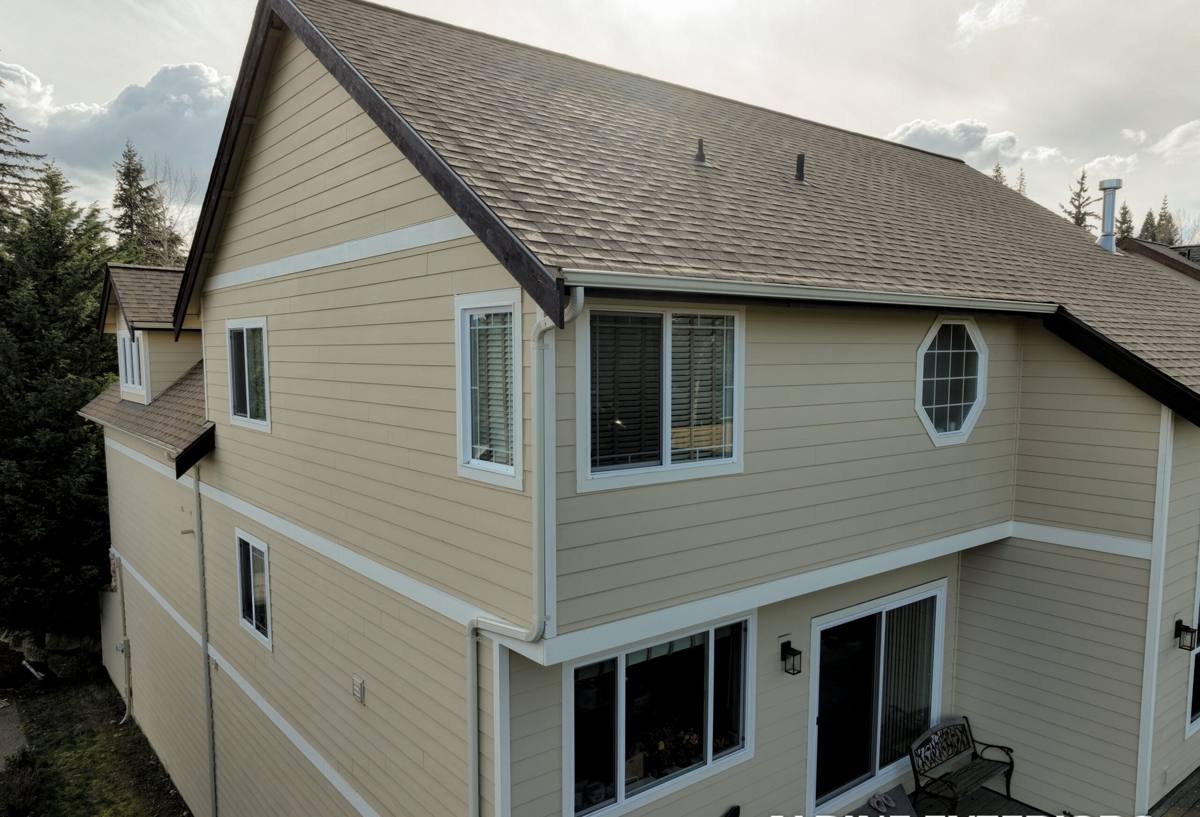
What Correct Window Replacement Actually Involves
Swapping in a new window is the easy part. The work that actually determines whether the job holds up in this climate happens around the window, not in it.
Removing the Old Unit Without Hidden Damage
When we pull an old window, we're also looking at what's behind it. Rotted sill framing, saturated sheathing, or trim that's been slowly wicking moisture into the wall cavity are common finds in older Bellingham homes, especially on north- and west-facing walls that catch the brunt of the weather. Any of that needs to be dealt with before a new window goes in — installing a new window over compromised framing just hides the problem for a few more years.
Flashing and Water Management
This is the step that's most often shortcut, and it's the one that matters most in a climate that sees this much sustained rain. Proper flashing means a sill pan to catch and direct any water that gets past the window, house wrap integration so water sheds down and over the wrap rather than behind it, and correctly lapped flashing tape at the head and jambs. Done right, this system is what keeps a hard rain from ever becoming an interior leak, regardless of how good the window itself is.
Air Sealing and Insulation
Gaps around the rough opening get filled with low-expansion foam or backer rod and sealant — not stuffed with fiberglass insulation alone, which does nothing to stop air movement. This is also where a lot of a home's winter draft and energy loss originates, so it's worth doing carefully rather than quickly.
Interior and Exterior Finish Work
Trim, caulking, and paint or stain get finished to match the surrounding siding and trim as closely as possible. On homes with older wood trim, we'll flag if the trim itself needs replacement rather than just working around it.
Choosing the Right Window for a Sehome Home
There's no single "best" window brand or material — the right choice depends on the house, the budget, and how much upkeep the homeowner wants to take on.
| Frame Material | Performance in This Climate | Maintenance |
|---|---|---|
| Vinyl | Good moisture resistance, won't rot; performance varies by manufacturer quality | Low — no painting, occasional cleaning |
| Fiberglass | Very stable in temperature and moisture swings, holds paint well | Low to moderate |
| Wood (clad exterior) | Warm interior look; exterior cladding protects from rain if detailed correctly | Moderate — interior finish upkeep |
| Aluminum | Prone to condensation and heat loss in our winters unless thermally broken | Low, but performance trade-offs |
For most Sehome homes, we lean toward vinyl or fiberglass options for their moisture tolerance and lower long-term maintenance, but we'll walk through the trade-offs for your specific house rather than push a single product. Glass package matters just as much as frame material — a double-pane, low-E unit with argon fill is a reasonable baseline for this climate, and we'll explain when a triple-pane upgrade is or isn't worth the added cost for a given room or exposure.
Signs a Sehome Window Needs Replacing, Not Repairing
- Visible fog or moisture trapped between panes — the seal has failed and can't be restored
- Sashes that stick, won't stay open, or have visibly warped out of square
- Soft or discolored wood at the sill or lower frame corners
- Noticeable draft or cold spot near the window even when it's fully closed
- Paint or finish that's peeling or bubbling specifically around the window, not the wall generally
- Visible daylight or gaps between the sash and frame
- Condensation forming on the interior glass regularly in cooler months
If you're only seeing one or two of these on an otherwise sound window, repair may be the more sensible move. Full replacement makes more sense once the frame or sill itself is compromised, or when several windows on the same wall are showing the same wear pattern.
Our Process for a Sehome Window Replacement
- On-site assessment — we look at each window individually, check for hidden moisture damage around openings, and note sun/wind exposure differences wall to wall.
- Straightforward proposal — options and pricing explained in plain terms, including where we think repair could work instead of replacement.
- Scheduling around the weather — we sequence openings so no wall sits open longer than necessary, which matters more here than in drier climates.
- Removal and structural check — old units come out, framing gets inspected, and any rot or damage is addressed before anything new goes in.
- Install with full flashing and air sealing — sill pan, house wrap integration, and sealing done to hold up through the wet season, not just look finished.
- Finish and walkthrough — trim and paint matched, then a walkthrough so you know how the new windows operate and what maintenance, if any, they'll need.
Why Local Experience in Sehome Matters
A crew that's worked other homes in Sehome and nearby Bellingham neighborhoods already knows what tends to be hiding behind the trim on a house of a given age and construction type, and how the specific exposure of a hillside or tree-covered lot changes the moisture picture. That's not something you get from a general home-improvement crew that treats every job the same regardless of region. Knowing how Whatcom County's rain patterns interact with a particular house orientation, or recognizing early moss growth as a sign of a chronically damp wall section, comes from doing this work here repeatedly — not from a manual.
It also matters for permitting and code questions specific to the City of Bellingham, and for knowing which failure patterns are common in the housing stock typical to this neighborhood versus, say, newer construction elsewhere in the county.
What This Typically Costs
Window replacement pricing depends on window size, frame material, how many units are being replaced at once, and what condition the framing is in once we open things up. As a broad range, expect standard vinyl or fiberglass replacement windows, installed, to run from the low thousands per window down to less per unit on larger multi-window jobs, with wood-clad or larger custom sizes running higher. Hidden rot repair, if it's found, is priced separately once we can see the extent of it — we won't guess at that cost before we've opened the wall.
Factors That Move the Price
- Number of windows replaced in a single project versus one-off replacement
- Frame material and glass package selected
- Whether existing trim can be reused or needs replacement
- Extent of any hidden moisture or structural damage found during removal
- Access difficulty on upper floors or steep lots
Maintaining New Windows in a Wet Climate
New windows still need some upkeep to get their full lifespan out of Whatcom County's weather. Rinsing pollen, salt residue, and grime off the exterior glass and frames a couple of times a year keeps finishes from degrading early. Checking exterior caulking annually for cracking, especially after a hard winter, catches small gaps before they become water intrusion points. Keeping gutters and downspouts clear nearby prevents water from sheeting directly onto window heads. And on shaded or hillside sides of the house, an occasional check for moss or algae buildup near the frame edges is worth the five minutes it takes.
If you're weighing repair versus replacement, or just want an honest read on what your Sehome home's windows actually need, we're happy to take a look. The estimate is free, there's no pressure to sign anything on the spot, and you'll get a straight answer about what's worth doing now versus what can wait.