 Bellingham Siding
 Why Sunnyland Roofs Wear Differently Than Roofs Inland
Sunnyland sits close enough to Bellingham Bay that homes here take on a steady dose of salt-laden air, and combined with Whatcom County's long, wet winters, that's a tougher environment for a roof than most manufacturers design for on paper. Salt air accelerates corrosion on exposed fasteners, flashing, and vent caps. Driving rain off the water finds its way under flashing and shingle laps that would hold up fine in a drier climate. And because so much of Sunnyland sits under mature tree cover, roofs here get less direct sun to dry out between storms, which stretches the moss season out for months longer than it runs in more open, sun-exposed parts of the county.
None of that means a Sunnyland roof is doomed to fail early. It means the repair work has to account for those specific stresses — the right flashing details, the right fastener choices, and honest attention to ventilation and moss control — instead of treating every roof repair the same way you would somewhere drier and less shaded.
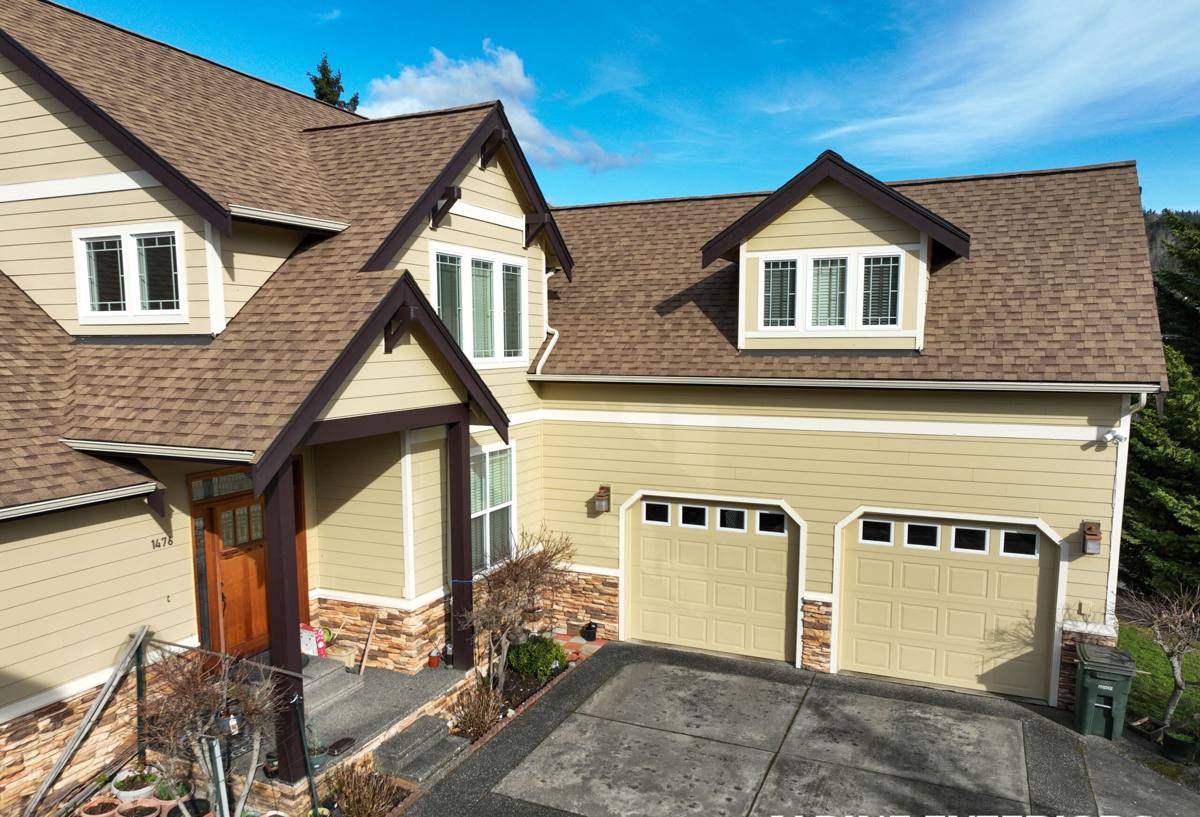
Signs a Sunnyland Roof Needs Repair — Not a Full Tear-Off
Most of the roofs we look at in this neighborhood don't need full replacement. They need targeted repair before a small problem becomes a big one. Here's what we tell homeowners to watch for:
- Moss buildup that's thick enough to hold water against the shingles, especially on north- and east-facing slopes
- Granules collecting in gutters or at downspout outlets — a sign the shingle surface is wearing thin
- Curling, cupping, or cracked shingles, particularly on slopes that get afternoon sun after being wet all morning
- Rust streaks or soft spots around chimney flashing, vent boots, and skylight curbs
- Water stains on interior ceilings or in the attic, even faint ones, after a heavy rain event
- Sagging or a spongy feel when walking a valley or roof-to-wall intersection
- Daylight visible through the roof deck from inside the attic
Catching these early is what keeps a repair a repair, instead of turning into a deck replacement or a full re-roof. If you're not sure which category your roof falls into, that's exactly what a proper inspection is for — we'll tell you plainly if a patch will hold or if you're better off putting the money toward something more permanent.
What a Correct Roof Repair Actually Involves
Flashing comes first, not last
More leaks trace back to failed or poorly installed flashing than to worn shingles themselves. A repair that just swaps shingles over the same old flashing is treating the symptom, not the cause. We pull and inspect flashing at every valley, chimney, wall intersection, and penetration in the repair area before deciding what else needs to happen.
Matching materials, not just colors
A patch that doesn't match the existing roof's material weight, profile, and granule type will stand out and, worse, can create a weak seam where the two products meet. We source shingles and underlayment that match as closely as possible to what's already on the roof, and we're upfront when an exact match isn't available anymore.
Checking the decking underneath
Any time we open up a section of roof for repair, we check the sheathing underneath for soft spots, delamination, or rot — especially in a climate that stays damp as long as ours does. Rotten decking under a brand-new shingle is a repair that fails again within a year or two.
Ventilation isn't optional
Poor attic ventilation traps moisture, which speeds up moss growth from underneath and shortens the life of everything else we just repaired. Part of a proper repair visit is checking that intake and exhaust venting are actually doing their job, not just present.
Trouble Spots We See Most Often on Sunnyland Homes
Shaded, north-facing slopes
These slopes dry out slowest after Bellingham's frequent rain, which is exactly why they're the first place moss takes hold and the first place shingles fail early. Repair work here often includes moss removal and a look at whether zinc or copper strips make sense to slow regrowth.
Valleys and roof-to-wall intersections
Driving rain off the water pushes water sideways, not just straight down, and valleys and wall intersections are where that sideways water finds gaps in old flashing. These are consistently our most common repair calls in this neighborhood.
Homes with mixed roofing generations
Sunnyland has a good mix of older homes that have had partial re-roofs or add-on sections over the years, alongside newer builds. Where two different roofing generations meet is a common weak point, and repairs here need extra care to tie the sections together properly.
Our Repair Process, Start to Finish
- Inspection. We walk the roof (weather permitting) and the attic, checking flashing, decking, ventilation, and the shingle field — not just the spot you called about.
- Diagnosis. We tell you plainly what's causing the problem, not just where the symptom shows up.
- Written scope and price. You get a clear description of the repair, the materials involved, and the cost before any work starts — no surprise add-ons mid-job.
- The repair itself. Flashing, decking, underlayment, and shingles get addressed in that order, matched to the existing roof as closely as possible.
- Cleanup. Old material, nails, and debris get cleared from the roof, gutters, and yard before we consider the job done.
- Walk-through. We show you what was done and why, in plain terms.
Repair vs. Replacement: How We Help You Decide
Not every roof problem needs a full replacement, but some do — and we'd rather tell you that honestly up front than sell you a repair that won't last. Here's how we weigh it:
| Factor | Leans Toward Repair | Leans Toward Replacement |
|---|---|---|
| Roof age | Under roughly two-thirds of expected material lifespan | Near or past expected lifespan for the material |
| Extent of damage | Isolated to one slope, valley, or penetration | Spread across multiple slopes or the whole roof |
| Decking condition | Solid, no rot found on inspection | Soft, delaminated, or rotted in multiple areas |
| Repair history | First or second repair on this roof | Third or more repair in the same area within a few years |
| Shingle wear | Localized curling or granule loss | Widespread granule loss and brittleness across the field |
Materials We Work With for Repairs
Sunnyland has a mix of roof types, and repair materials need to match what's already up there. Here's a general look at how common options behave in our climate and where repairs fit in:
| Material | Common Repair Needs Here | Maintenance Trade-Off |
|---|---|---|
| Composition (asphalt) shingle | Flashing failure, granule loss, moss on shaded slopes | Most affordable to repair; needs periodic moss treatment |
| Cedar shake (older homes) | Split or cupped shakes, moss and moisture retention | Higher upkeep in our wet climate; repairs require matching aged wood tone |
| Metal roofing | Fastener backout, sealant failure at penetrations | Low moss risk but repairs need fastener-specific expertise |
We don't push homeowners toward a different material just because it's easier for us to install. If your roof is cedar or an older composition product, our job is to repair it correctly in its own material, and to be honest with you about how much longer that material realistically has left.
Why Hiring a Crew That Already Works in Sunnyland Matters
A roof repair done by a crew unfamiliar with this specific pocket of Bellingham is more likely to miss the details that actually matter here — how shaded a slope really gets through the winter, how the wind off the bay drives rain into certain wall intersections, or how much moss buildup is normal versus a sign of a bigger moisture problem. A crew that's worked other roofs in this neighborhood already knows the common trouble spots before they climb the ladder, which means a faster, more accurate diagnosis and fewer surprises once the repair is underway. It also means a crew that understands Whatcom County's permitting expectations and can move a repair along without unnecessary delay.
After the Repair: Keeping Moss and Moisture From Coming Back
A good repair buys you time, but a little maintenance protects that investment. In this climate, that matters more than in most places.
- Clear gutters and downspouts at least twice a year, more often under heavy tree cover
- Trim back overhanging branches to cut down on shade and debris buildup on the roof
- Treat moss on shaded slopes before it thickens into a moisture-holding mat
- Walk the attic after major storms and check for new stains or daylight
- Have the roof looked at every year or two, even when nothing seems wrong, so small issues get caught while they're still small
If you're seeing moss, a stain on the ceiling, or just want a second opinion on a roof that's starting to show its age, we're glad to take a look and give you a straight answer. Reach out for a free, no-pressure estimate using the form below.