 Bellingham Siding
 Windows Built for Sunnyland's Weather, Not Just Its Openings
Sunnyland is one of Bellingham's older, tree-shaded neighborhoods, and that history shows up in its windows. A lot of homes here still carry original wood sashes, early aluminum replacements from decades past, or a mismatched mix from different remodels over the years. None of that is unusual for a neighborhood this age, but it means no two Sunnyland window jobs look quite the same. Custom windows aren't a marketing term for us — they're the only realistic way to fit openings that were framed before modern window sizing existed, in a house that's had 50 or 70 years to settle and shift.
What makes this a Bellingham-specific job, and not just a generic window swap, is the climate load these windows have to carry. Whatcom County sits close enough to Bellingham Bay that salt-laden air reaches inland neighborhoods like Sunnyland, especially on windy days off the water. Add driving rain that comes in sideways during fall and winter storms, plus a moss season that can stretch from October through May in shaded, tree-covered lots, and you've got three separate stresses working on every window opening at once: corrosion, water intrusion, and sustained damp.
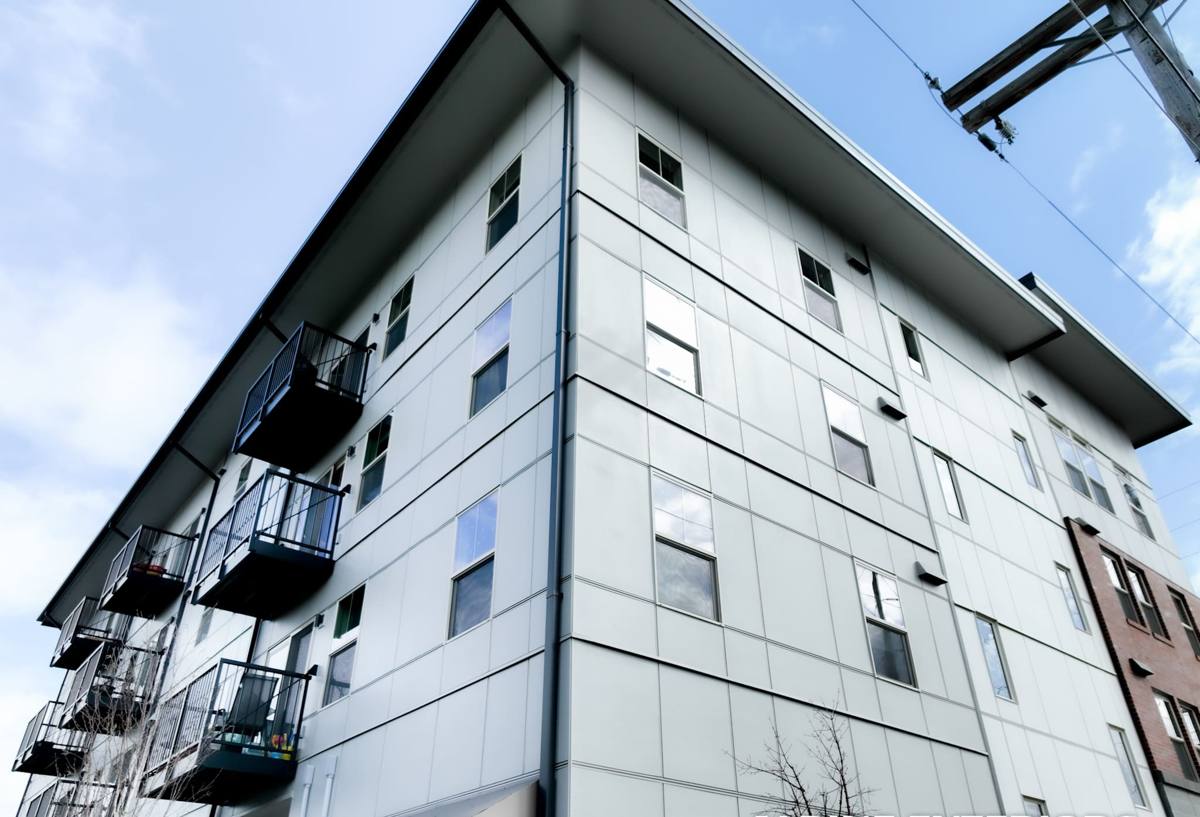
How Salt Air, Rain, and Moss Actually Damage Windows
Homeowners often assume window failure means a cracked pane or a broken latch. In practice, the damage that costs the most starts somewhere you can't see.
Salt air and metal components
Salt-bearing air accelerates corrosion on window hardware — hinges, balance springs, cranks, and especially older aluminum frames. Once corrosion starts on a hinge or crank mechanism, the window becomes harder to seal tightly, and a window that doesn't close flush lets in both air and moisture. This is a slower process than storm damage, but it's steady, and it's part of why we default to hardware rated for coastal exposure on anything within a few miles of the water.
Driving rain and flashing failure
Rain that hits a window straight on is manageable. Rain driven sideways by wind, which is common during Whatcom County's winter storm systems, tests the flashing and sill pan details around a window far more than the glass or frame itself. Most window leaks we find in older Sunnyland homes aren't glass failures — they're flashing that was never installed correctly, or wasn't updated when the window was last replaced.
Moss, shade, and sustained moisture
Tree cover keeps a lot of Sunnyland lots shaded and cool, which is part of the neighborhood's character, but shade also means siding and trim around windows dry out slower after rain. Combined with moss growth on north-facing walls and rooflines, that sustained dampness works into wood trim, sills, and any gaps in the water-resistive barrier around the window frame. Left alone, this is how you get soft sills and rot at the corners of a window opening long before the window itself actually fails.
Signs Your Sunnyland Home's Windows Need Attention
- Visible condensation between panes on double- or triple-glazed units (a sign the seal has failed)
- Soft or discolored wood trim at the sill or bottom corners of the frame
- Windows that are difficult to open, close, or latch fully
- Drafts you can feel near the frame edges on windy days
- Moss or dark streaking on siding directly below or beside a window
- Paint that bubbles or peels specifically around the window opening, not the wall generally
- Noticeably higher heating bills without other explanation
Any one of these on its own might just mean routine maintenance. Two or three together, especially soft trim plus condensation, usually means the window and the wall assembly around it need attention at the same time.
What "Custom" Means for a Job Like This
Custom windows fall into two categories, and getting this distinction right up front saves homeowners money and headaches later.
Retrofit (pocket) replacement
This is a new window built to fit inside the existing frame, which stays in the wall. It's faster, less invasive, and usually the right call when the existing frame is sound and you're mainly dealing with old glass, failed hardware, or poor energy performance. Most of our Sunnyland work falls into this category, since many original frames are still structurally fine even when the sashes inside them aren't.
Full-frame replacement
This removes the window down to the rough opening, including the old frame, so we can inspect and repair the framing, sill, and flashing underneath. This is the right call when there's visible rot, when water has clearly gotten behind the old unit, or when the opening itself is irregular enough that a standard pocket unit won't seal properly. It costs more and takes longer, but it's the only way to actually fix water damage rather than build a new window on top of it.
We don't default to one or the other. We open things up, look at the actual condition of the framing, and tell you honestly which one your house needs — not which one is easier for us to sell.
Frame Material Comparison for Coastal, Wet-Climate Homes
| Material | Coastal/salt air performance | Moisture handling | Maintenance |
|---|---|---|---|
| Vinyl | Does not corrode; good baseline choice | Good if installed with proper flashing; won't rot | Low — occasional cleaning |
| Fiberglass | Excellent; very stable in temperature and humidity swings | Excellent; dimensionally stable when wet or dry | Low |
| Wood (clad exterior) | Good on the exterior clad face; interior wood needs protection from any leaks | Vulnerable if the seal or cladding is compromised | Moderate — depends on cladding integrity |
| Aluminum (older/uninsulated) | Prone to corrosion and pitting near salt air over time | Conducts cold and can promote condensation | Higher — hardware and finish need monitoring |
We're upfront that we steer most Sunnyland customers toward vinyl or fiberglass, not because other materials are bad products, but because of the maintenance burden they place on a homeowner in this specific climate. A clad wood window is a fine product in a dry climate; here, it asks you to stay on top of caulking and finish inspection every year or two, or the wood underneath the cladding is the part that eventually pays for it.
How a Correct Installation Actually Works
The window unit itself is maybe a third of what determines whether it performs well for the next 20 years. The other two-thirds is installation detail that's invisible once the trim goes back on.
- Remove and inspect. We take out the old sash or full unit and check the rough opening, sill, and sheathing for rot, soft spots, or prior water staining.
- Repair the opening. Any compromised wood gets replaced before anything new goes in. Installing a new window over damaged framing just hides the problem.
- Install a sloped sill pan. This is the detail that gets skipped most often on budget installs. A proper sill pan directs any water that does get past the window back outside instead of into the wall cavity.
- Flash in the correct sequence. Housewrap and flashing tape go in shingle-style — each layer overlapping the one below it — so water is always directed downward and outward, never trapped behind a layer.
- Set and shim the unit level and square. A window that's slightly out of square binds, seals poorly, and wears its hardware faster.
- Insulate the gap correctly. Low-expansion foam or backer rod and sealant around the frame, without overfilling, which can bow the frame inward.
- Finish exterior trim and sealant. The visible caulk line is the last line of defense, not the primary one — if the flashing underneath is right, this joint has much less water pressure on it to begin with.
If any step in that sequence gets skipped, you can end up with a brand-new window that still leaks within a few winters — and by then it's hidden behind fresh trim and paint, so the cause isn't obvious until the damage has spread.
Our Process for Sunnyland Homeowners
Because we already work regularly in this part of Bellingham, we're familiar with the range of window openings and framing ages you find on Sunnyland's older lots. Our process on a typical job:
- An on-site assessment where we measure openings, check framing condition, and look at how each window is currently sealed and flashed
- A straightforward explanation of whether your home needs pocket replacement, full-frame replacement, or a mix of both across different windows
- A written estimate with material options, so you're choosing based on real trade-offs, not a single default product
- Scheduling that accounts for weather — we don't leave openings exposed during an incoming storm system, which matters more here than in drier climates
- Final walkthrough covering how to maintain the new windows through moss season and wet winters
What Drives the Cost
| Factor | Why it matters |
|---|---|
| Pocket vs. full-frame replacement | Full-frame costs more but is required when framing damage is present |
| Frame material | Vinyl is typically the most affordable; fiberglass costs more upfront but needs less upkeep |
| Number and size of openings | Larger or custom-shaped windows cost more to manufacture and install |
| Extent of hidden water damage | Rot repair to sills or sheathing adds cost but is not optional once found |
| Glazing package | Double vs. triple pane, and low-E coatings, affect both price and energy performance |
We don't quote a flat per-window price over the phone, because two houses with the "same" window count can have very different framing conditions once we actually open things up. What we can promise is a written estimate that separates the window cost from any framing repair, so you can see exactly what you're paying for.
Why It Matters That We Already Work in This Neighborhood
A contractor who's replaced windows across a range of Sunnyland homes has already seen the common framing quirks, the typical original construction details, and how different exposures — open to weather versus shaded and tree-covered — have aged locally. That's not a small thing when it comes to catching a flashing problem before it becomes a rot problem, or knowing which side of a house is going to need moss and moisture management versus which side mostly just needs weather-tight seals.
It also means we're not guessing about product performance in this climate. We've seen how different frame materials and hardware hold up here over years, not just what a manufacturer's data sheet claims for a generic coastal Pacific Northwest environment.
Maintaining New Windows Through Moss Season
Even a correctly installed window benefits from a little seasonal attention in a climate like this:
- Clear debris and moss from window wells and adjacent trim before fall rains set in
- Check exterior caulk lines once a year for cracking or separation
- Keep gutters clear so overflow isn't running down the wall next to a window
- Operate hardware (locks, cranks, hinges) a few times each season so moving parts don't seize from disuse plus damp air
- Watch for condensation between panes, which signals a seal failure rather than something that can be wiped away
None of this is heavy maintenance — it's the difference between a window system that lasts its full expected life and one that quietly fails at the seams a few years early.
Get a Straight Answer About Your Windows
If you're in Sunnyland and dealing with drafty, foggy, or hard-to-close windows, or you've noticed soft trim or moss creeping in around a frame, it's worth getting a second set of eyes on it before those problems spread into the wall. We'll give you a clear, no-pressure assessment of what your windows actually need — not an upsell. Use the form below to request a free estimate.