 Bellingham Siding
 Decking Built for Sunnyland's Specific Climate Load
Sunnyland sits close enough to Bellingham Bay that salt-laden air reaches the neighborhood's older homes and newer infill alike, and the tree canopy that makes the area pleasant to live in also means a lot of shade, damp leaf litter, and moss pressure on any outdoor structure. A composite deck built for Sunnyland has to handle three things at once: near-constant moisture from Whatcom County's long wet season, salt air that accelerates corrosion on fasteners and hardware, and heavy shade that keeps surfaces damp long after the rain stops. None of that is exotic — it's just what decking has to survive here, and it changes what "doing the job right" actually means compared to a deck built in a drier inland climate.
Composite decking earns its keep in this environment because it doesn't absorb water the way wood does, doesn't need annual staining, and resists the rot that eventually catches up with even well-maintained cedar or pressure-treated lumber. But composite is not maintenance-free, and it is not immune to bad installation. A composite deck built without attention to drainage, ventilation, and fastener choice will still grow moss, still trap moisture where it shouldn't, and still fail early — just more slowly than wood would.
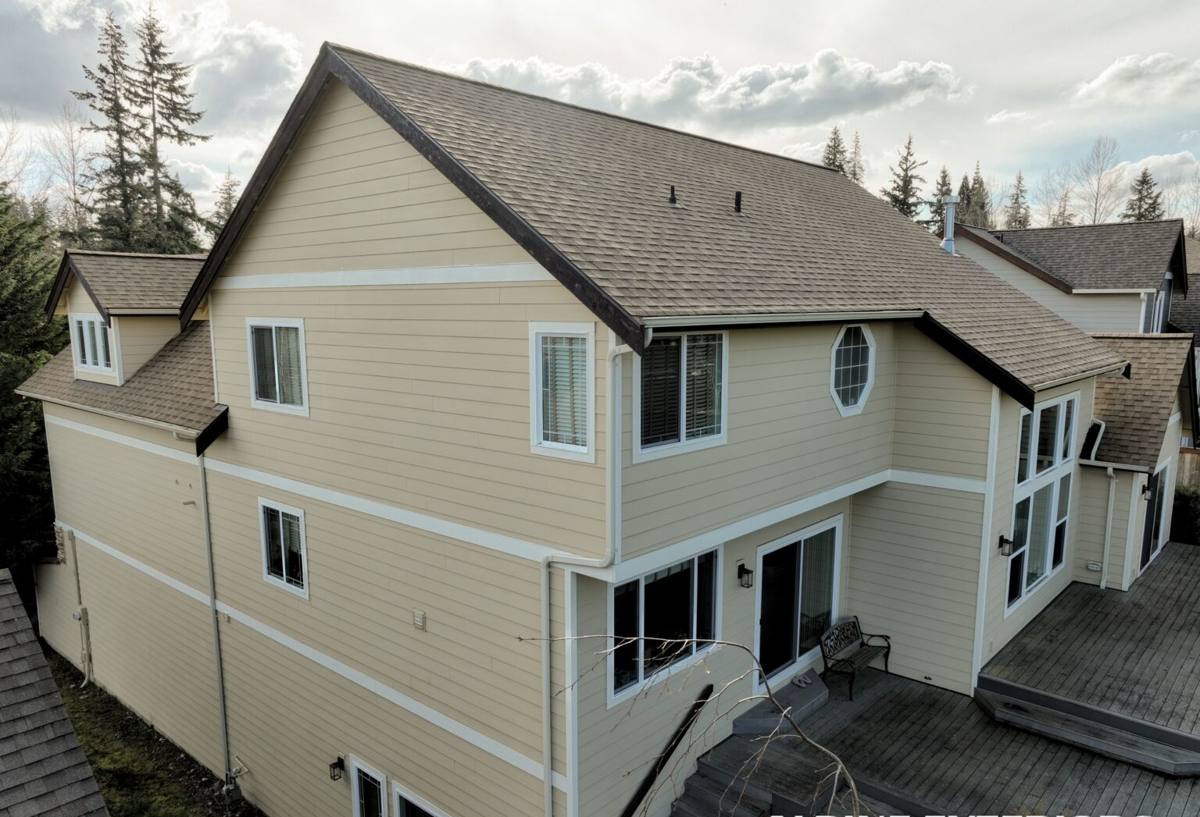
What Local Homes Actually Need From a Deck
Drainage That Doesn't Depend on the Weather Cooperating
Bellingham gets extended stretches of steady, low-intensity rain rather than short heavy downpours, which means water sits on surfaces longer than it would in a climate with quick drying between storms. A deck surface needs consistent slope away from the house, and any built-in drainage system underneath the boards needs to actually move water to daylight instead of pooling against the foundation or a ledger board.
Ventilation Under the Deck
Shaded, low-clearance decks in Sunnyland's older neighborhoods are some of the most common places we find hidden rot in the framing underneath — even when the decking itself is composite. Composite boards don't feed rot, but the joists, beams, and posts underneath almost always are wood or wood-based, and they need airflow to dry out between rain events. A deck built too close to grade, or boxed in without vents, stays damp indefinitely.
Hardware That Won't Corrode
Salt air moving inland from the bay is hard on standard fasteners and metal connectors over the years. Stainless steel or coated, marine-rated hardware costs more up front but avoids the rust streaks and weakened connections that show up on decks built with builder-grade screws and brackets.
The Part of the Job You Won't See Later
Most of what determines whether a composite deck lasts 10 years or 30 happens before the first composite board goes down. This is where cutting corners is easiest to hide and most expensive to fix later.
- Ledger board flashed and sealed correctly where the deck meets the house, so water can't track behind the siding
- Footings sized and set below frost depth, on solid bearing soil rather than fill
- Joist tape or a comparable moisture barrier on top of every joist, since composite boards trap moisture against the framing more than open wood decking does
- Adequate under-deck clearance and cross-ventilation, especially on shaded, ground-level decks common in Sunnyland's older lots
- Corrosion-resistant hardware throughout, not just at points that are easy to inspect
- Proper board spacing for composite's expansion and contraction, which is different from wood spacing
Skipping any one of these doesn't show up on day one. It shows up as a soft spot, a rust stain, or a section that starts to sag three or four years in — by which point it's a repair job instead of a five-minute fix during installation.
Choosing the Right Composite Board
Not all composite decking is built the same way, and the differences matter more in a wet, shaded climate than they would somewhere drier. The main split is between capped and uncapped composite.
| Feature | Capped Composite | Uncapped Composite |
|---|---|---|
| Moisture resistance | Sealed polymer shell resists water absorption | More susceptible to moisture uptake over time |
| Moss and algae resistance | Smoother surface, fewer places for growth to take hold | More porous surface, holds moisture longer |
| Fading and staining | Better color retention in UV and damp conditions | More prone to graying and staining |
| Upfront cost | Higher material cost | Lower material cost |
| Best fit | Shaded, damp, or salt-exposed sites — much of Sunnyland | Drier, sunnier sites with easy airflow |
Given how much of Sunnyland sits under tree cover with limited direct sun exposure, we generally steer homeowners toward capped composite for this specific area. It costs more, but the extra moisture and moss resistance does real work in a climate where a deck rarely gets a chance to fully dry out between rains.
How We Approach a Composite Deck Build in Sunnyland
- Site evaluation. We look at sun exposure, tree cover, existing drainage patterns, and how close the proposed deck sits to grade before recommending a board type or substructure approach.
- Framing and footings. Footings are set to proper depth for our soil and frost conditions, and framing is laid out with ventilation and future access in mind — not just what's fastest to build.
- Moisture management. Joist tape, flashing at the ledger, and correct slope are non-negotiable steps, done before any composite board is installed.
- Board installation. Hidden or exposed fastener systems, correct gapping for thermal movement, and attention to how boards run relative to drainage.
- Railing, stairs, and edge details. Fascia, post sleeves, and railing hardware matched for the same moisture and salt exposure as the deck field.
- Final walkthrough. We show homeowners what maintenance actually looks like for their specific board and site conditions, rather than handing over a generic care sheet.
Living With a Composite Deck Through a Bellingham Moss Season
Composite decking doesn't need sealing or staining, but "low maintenance" doesn't mean "no maintenance," especially under Sunnyland's tree cover. A composite surface can still grow a thin film of moss or algae if it's shaded and rarely swept off, and organic debris left sitting on any deck surface — wood or composite — will eventually leave a stain or feed growth.
- Sweep leaves and needles off the deck regularly through fall and winter rather than letting them compost in place
- Rinse the surface periodically with a garden hose; a pressure washer on a wide, low-pressure setting works too, but avoid narrow tips that can etch the surface
- Keep gutters and downspouts near the deck clear so water isn't dumping directly onto or under it
- Check under-deck vents once or twice a year to make sure they haven't been blocked by plantings, storage, or debris
- Inspect fasteners and railing hardware annually for early rust or corrosion, particularly on decks closer to the bay
What a Composite Deck Runs
Every deck is priced on its own specifics — size, height, stairs, railing style, and site access all move the number — but the factors below are the ones that most often separate a straightforward bid from a more involved one.
| Cost Factor | Why It Matters |
|---|---|
| Board tier (capped vs. uncapped) | Capped composite costs more per square foot but performs better in shaded, damp conditions |
| Deck height and footing depth | Taller decks and difficult soil require more substantial footings and structural framing |
| Site access | Sloped or tight-access Sunnyland lots can add labor time for material handling |
| Railing and stair complexity | Custom railing, multiple stair sections, or level changes add material and labor |
| Existing structure removal | Demolition and disposal of an old wood deck adds to the project scope |
| Ventilation and drainage work | Correcting poor under-deck airflow or grading adds upfront cost but prevents early repairs |
We'd rather walk a homeowner through these factors honestly during an estimate than quote a number that doesn't reflect what the site actually needs.
Why Local Experience Matters for This Job
A crew that's worked on decks throughout Bellingham and Whatcom County has already seen how composite performs on shaded, tree-covered lots like the ones common in Sunnyland — where a deck ages differently than one built on an open, sunny site across town. That experience shows up in small decisions: how much slope to build in, where to add extra ventilation, which hardware to spec for a property closer to the water. It's the difference between a deck that's simply installed and one that's actually built for where it sits.
If you're weighing composite decking for a home in Sunnyland, we're happy to walk the site, talk through board options, and put together a straightforward, no-pressure estimate — just fill out the form below to get started.