 Bellingham Siding
 Roofing in Sudden Valley: A Different Set of Conditions
Sudden Valley sits along Lake Whatcom in unincorporated Whatcom County, and roofs out here work harder than roofs on an open, sunny lot in town. Heavy tree canopy, lake humidity, and long stretches of shade mean a roof here is fighting moss, moisture, and organic debris almost year-round instead of just during the wet months. We've replaced and repaired enough roofs in this neighborhood to know that a roofing system spec'd for a typical Bellingham street doesn't always hold up the same way once you add mature conifers, sloped wooded lots, and lake-effect dampness into the mix.
This page is about roof replacement specifically for Sudden Valley homes — what tends to go wrong here, what a correct replacement includes, and what to expect if you hire us to do it.
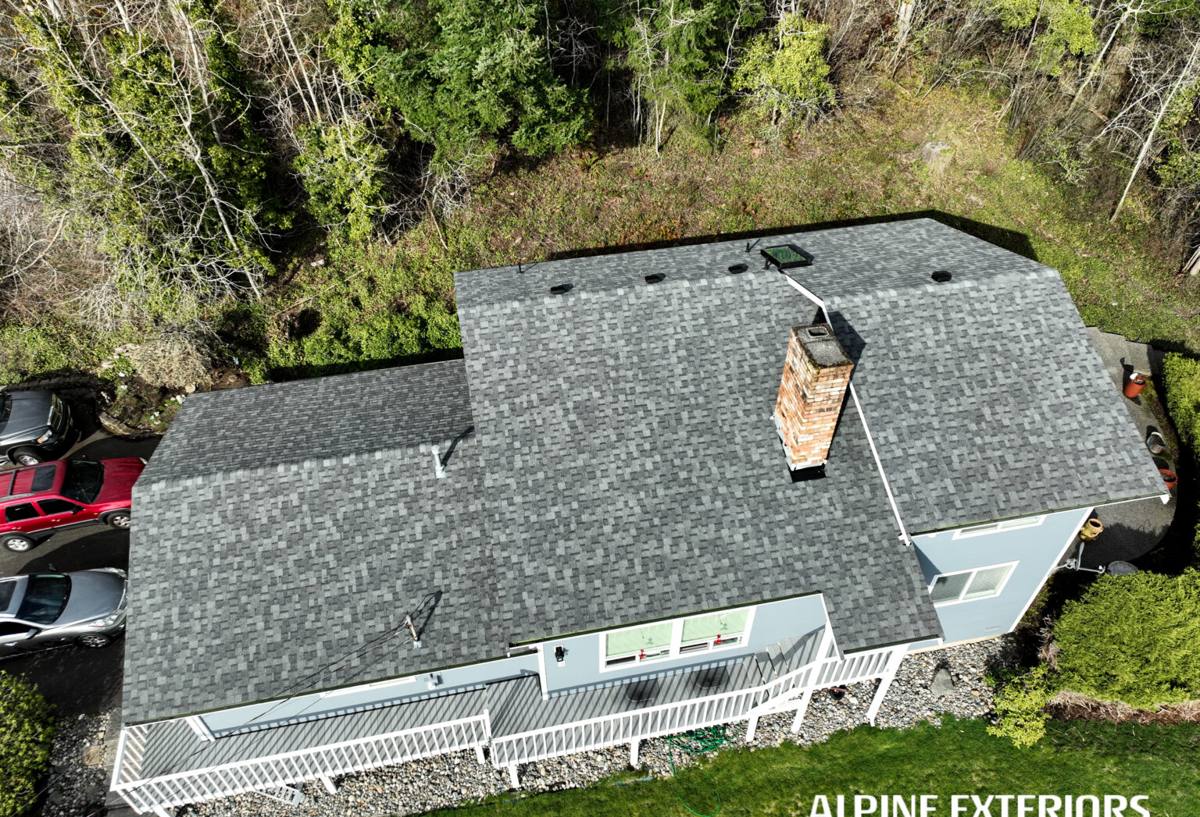
Why Sudden Valley Roofs Age Differently
Shade and Moss Load
Many Sudden Valley lots back up to trees or sit under partial canopy. Shaded roof sections dry out slower after rain, which gives moss, moss spores, and algae a head start compared to a roof in full sun. Moss isn't just cosmetic — as it mats together it holds water against the shingle surface, lifts shingle edges over time, and can work its way under improperly sealed laps. On older roofs we often see moss concentrated on the north-facing slopes and anywhere debris collects, like valleys and behind chimneys.
Needle and Leaf Debris
Conifer needles and leaf litter collect in valleys, against roof-to-wall transitions, and in gutters faster here than on open lots. That debris holds moisture, slows drainage, and accelerates granule loss on asphalt shingles. It also clogs valley metal and gutters, which pushes water where it shouldn't go during a heavy rain event.
Lake Humidity and Driving Rain
Being close to Lake Whatcom adds ambient moisture to the air on top of Whatcom County's normal rainfall pattern. Combine that with wind-driven rain off the water during fall and winter storms, and you get water testing every seam, lap, and penetration on a roof — not just falling straight down onto it. A roof that's marginal on flashing or underlayment detail in a drier area can fail faster out here.
Signs a Sudden Valley Roof Needs Replacing, Not Patching
Not every roof problem in this neighborhood means a full replacement. But there's a point where patching starts costing more than it saves. We look for:
- Moss established across multiple slopes, not just isolated spots — a sign the mat has been holding moisture for more than one season
- Granule loss heavy enough that you can see bare or shiny patches on the shingle surface
- Soft spots or sag when walking the roof, which usually points to deck damage underneath
- Repeated leaks around the same valley, chimney, or skylight despite prior repairs
- Shingles cupping, curling, or cracking, especially on the shaded slopes
- Visible daylight or water staining in the attic along the roof plane
- A roof already at or past its expected service life for its material and exposure
If a roof shows two or three of these at once, patching is usually a short-term move. We'll say so plainly rather than sell a repair we don't think will hold.
What a Correct Roof Replacement Includes Here
Tear-Off and Deck Inspection
We remove the existing roofing down to the deck rather than layering over old material. That's the only way to actually see the sheathing — on shaded, moss-prone roofs we routinely find soft or delaminated deck sections under areas that looked fine from the ground. Any damaged sheathing gets replaced before anything new goes down; installing new roofing over a compromised deck just hides the problem.
Underlayment Built for Wet, Shaded Conditions
Given the humidity and driving rain this area sees, we don't treat underlayment as a formality. Synthetic underlayment with good lap detail, plus self-adhered membrane in valleys and along eaves, gives the roof a second line of defense if wind-driven rain gets under the primary roofing material — which it will, eventually, on any roof.
Valley and Flashing Detail
Valleys are where debris collects and water concentrates, so we pay particular attention to valley metal or membrane, sizing it for actual water volume rather than the minimum. Flashing at chimneys, skylights, sidewalls, and any roof-to-wall transition gets replaced as part of the job, not reused — old flashing is one of the most common hidden leak sources we find when we tear off a roof in this neighborhood.
Ventilation
Shaded, humid roofs benefit from ventilation that actually moves air, not just code-minimum vents. Balanced intake at the eaves and exhaust at the ridge helps the deck dry out between rain events and reduces the moisture load that feeds moss and mildew from underneath.
Material Selection for the Site
We'll walk the specific lot — how much shade it gets, which slopes face north, how close the tree line is — before recommending a material and algae-resistance level. A roof on an open, sunnier Sudden Valley lot can get away with less aggressive moss protection than one tucked under heavy canopy.
Comparing Roofing Options for Shaded, Wooded Lots
| Material | How it handles moss/shade | Maintenance | Typical lifespan here |
|---|---|---|---|
| Standard asphalt shingle | Needs algae-resistant granules and regular cleaning on shaded slopes | Periodic moss treatment and gutter/valley clearing | Shorter on heavy-shade slopes without upkeep |
| Algae-resistant (AR) asphalt shingle | Copper- or zinc-infused granules slow algae/moss growth | Still benefits from occasional cleaning in heavy shade | Noticeably better than standard shingle on shaded roofs |
| Metal roofing | Sheds debris and dries faster; moss struggles to establish on a smooth, sloped metal surface | Low — mostly gutter and valley debris clearing | Long-term option, higher upfront cost |
| Cedar shake | Holds moisture and organic debris more readily; needs active upkeep to resist rot in shaded conditions | High — regular treatment and inspection | Shorter in continuous shade without diligent maintenance |
We don't push one material on every job. A full-sun lot on the golf course side of the neighborhood has different needs than a heavily wooded lot closer to the lake, and we'll explain the trade-offs for your specific site rather than default to whatever's easiest to sell.
Our Process for a Sudden Valley Replacement
1. On-Site Walkthrough
We inspect the roof, attic, and surrounding tree cover in person. We're looking at slope orientation, existing moss and debris patterns, ventilation, and any deck concerns visible from inside the attic.
2. Honest Scope and Estimate
You get a written scope covering tear-off, deck repair allowance, underlayment, flashing, ventilation, and material — with the reasoning behind each recommendation, not just a bottom-line number.
3. Scheduling Around Weather
Given how much rain and canopy this area gets, we plan tear-off and dry-in around forecast windows so the deck isn't left exposed longer than necessary.
4. Tear-Off, Deck Repair, and Dry-In
Old material comes off, the deck gets inspected and repaired as needed, and the roof is dried in with underlayment the same day whenever possible.
5. Installation
Roofing material, valley and flashing work, and ventilation go in according to manufacturer spec and the site-specific detailing we planned for.
6. Final Walkthrough and Cleanup
We walk the finished roof with you, clear debris and fasteners from the property and gutters, and go over basic care — including a realistic moss-prevention schedule for the specific slopes that need it.
Why a Crew That Already Works Sudden Valley Matters
A roofing crew unfamiliar with this neighborhood can underestimate how much shade and moss load a given lot actually gets, or size ventilation and valley capacity for average conditions instead of this area's conditions. Working here regularly means we already know to check the north slopes more carefully, to expect deck surprises on older shaded roofs, and to size valley and drainage detail for real debris volume rather than a textbook minimum. That local knowledge shows up in fewer callbacks and a roof that's actually built for the lot it's on, not a generic lot in a drier part of town.
It also matters for access — Sudden Valley's terrain and tree cover can make staging, ladder placement, and material delivery more involved than a flat, open lot. Knowing the neighborhood ahead of time means fewer surprises on job day.
Maintaining a New Roof in This Neighborhood
Even a correctly installed roof needs some upkeep in a shaded, wooded setting. A short seasonal routine goes a long way:
- Clear needles and leaf debris from valleys and gutters at least twice a year, more often under heavy canopy
- Check north-facing and heavily shaded slopes for early moss growth before it mats
- Trim back overhanging branches where practical to reduce debris load and let more light reach the roof
- Have gutters and downspouts checked for clogs before the fall rain season starts
- Get a quick professional look after any major windstorm, since falling branches and debris are more common on wooded lots
What Roof Replacement Typically Involves Cost-Wise
Pricing depends on roof size, pitch, layers to remove, deck condition, and material choice — we won't quote a number without seeing the roof. What we can say honestly: shaded, moss-prone Sudden Valley roofs more often need deck repair than roofs on open, sunny lots, and that repair allowance is the single biggest variable that shifts a quote up or down once tear-off starts. Budgeting some flexibility for deck repair, rather than assuming a bare minimum, avoids surprises mid-project.
If your roof is showing moss, wear, or repeated leaks, we're happy to come take a look and give you a straight assessment — no pressure, no obligation. Use the form below to request a free estimate for your Sudden Valley roof replacement.