 Bellingham Siding
 Cordata's Weather Is Hard on Roofs — Here's Why
Cordata sits in north Bellingham, close enough to Bellingham Bay and the Strait of Georgia that salt-laden air is a fact of life, not an occasional nuisance. Add Whatcom County's long, wet fall-through-spring stretch, and you've got a roof climate that punishes shortcuts. Salt air accelerates corrosion on exposed fasteners, flashing, and metal roof components. Driving rain off the water — especially in wind events that come through sideways rather than straight down — finds every gap in flashing, underlayment, and shingle seals that a calm-weather rain never would. And because this part of Washington rarely gets a hard freeze or a long dry stretch, moss and moisture-loving organic growth get months at a time to establish themselves on north-facing slopes and shaded sections of roof.
None of that means every roof in Cordata is in trouble. It means storm damage here tends to compound with existing wear in ways that aren't always obvious from the ground. A wind event that would be cosmetic on a newer, well-maintained roof can turn into an active leak on one that already has moss holding moisture against the shingles or fasteners that have started to corrode.
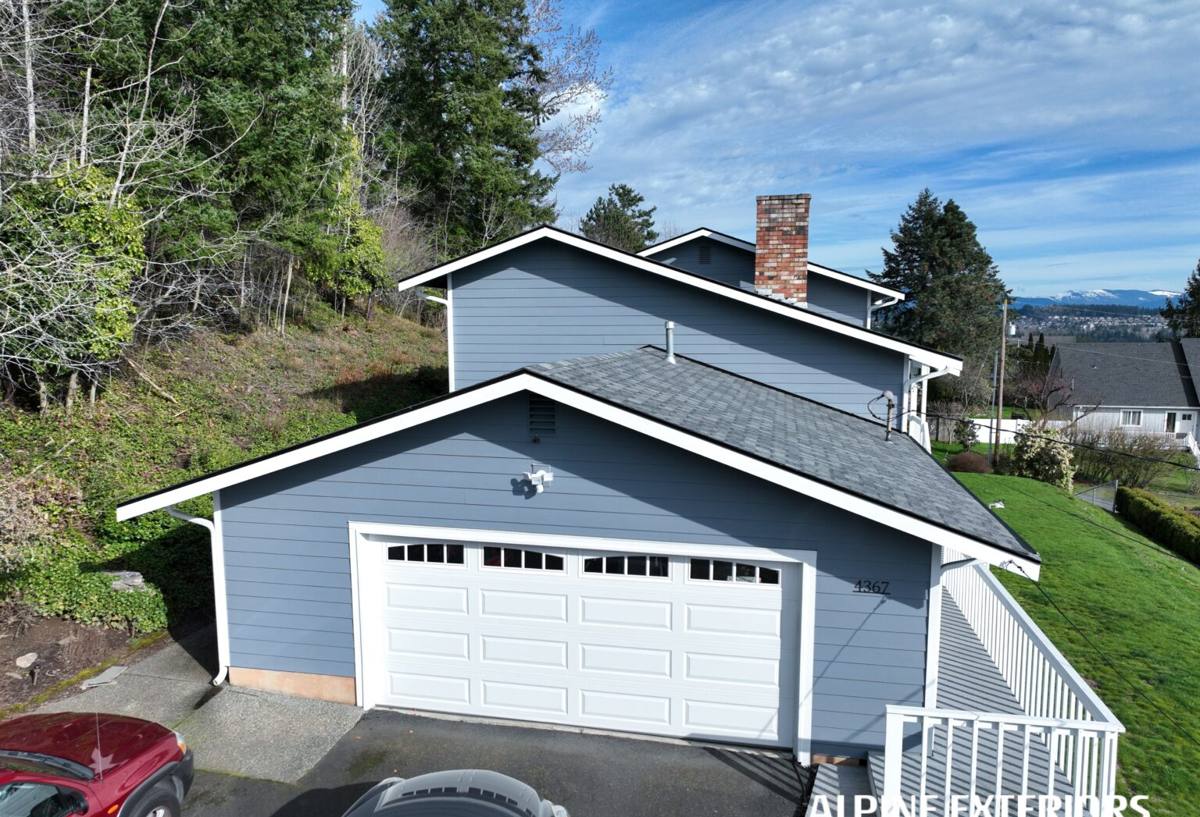
What Actually Counts as Storm Damage
Wind
Wind damage isn't always missing shingles. More often it's lifted or creased shingle tabs that have broken their seal but are still sitting in place — easy to miss from the ground, and exactly the kind of thing that lets the next rain get underneath. Ridge caps and edge shingles, which take the brunt of uplift, are usually the first to show it.
Rain and wind-driven moisture
Straight-down rain and sideways rain behave differently on a roof. Wind-driven rain can push water up and under shingle edges, around chimney and vent flashing, and into valleys that were never designed to handle water moving against the natural flow. This is where most storm-related leaks actually originate — not from a dramatic hole, but from flashing and seals that were adequate for normal rain and got overwhelmed by wind.
Moss and trapped moisture
Moss itself isn't "storm damage," but it's a multiplier. Moss holds water against the roof surface, keeps shingles from drying out between rain events, and can work its way under shingle edges and tabs. A storm that lifts or cracks shingles in a moss-affected area tends to cause more water intrusion, faster, than the same storm would on a clean roof.
What a Correct Storm Repair Involves
Start with an honest assessment, not a quote off a drive-by
A proper storm damage assessment means getting on the roof, not just looking at it from the driveway. That includes checking flashing at every penetration (chimneys, vents, skylights), inspecting valleys, checking the ridge, and looking at the decking underneath in any area where shingles are missing or lifted. If water has been getting in for a while, the decking itself may be soft or delaminating — and no amount of new shingles fixes that if it's not addressed first.
Fix what's underneath, not just what's visible
Shingles are the layer everyone sees, but they're not the only layer doing the work. Underlayment, flashing, and proper fastening are what actually keep water out. A repair that replaces damaged shingles but ignores compromised flashing or underlayment is a repair that leaks again in the next storm — sometimes within a season.
Match materials honestly
Exact shingle color matches aren't always possible, especially on an older roof where the original product has weathered or been discontinued. A straightforward repair job tells you that up front, offers the closest reasonable match, and explains where the mismatch will and won't be visible — rather than promising a perfect match and delivering something else.
Our Process, Start to Finish
- Inspection. We get on the roof and document what's actually damaged — not just the obvious spots, but flashing, valleys, and decking condition.
- Plain-language explanation. You get told what's damaged, what's causing it, and what it'll take to fix — before any work starts.
- Written scope and estimate. No verbal-only agreements. You see exactly what's being repaired and what it involves.
- Repair work. Damaged shingles, flashing, and underlayment addressed together, not shingles-only patchwork.
- Site cleanup. Debris, old materials, and fasteners cleared — a storm repair shouldn't leave its own mess behind.
- Follow-up. If a repair doesn't hold or something was missed, that's on us to make right.
Repair or Replace? What Actually Decides It
Homeowners often ask this before they even know the extent of the damage. The honest answer depends on a handful of factors, not a single rule of thumb.
| Factor | Repair usually makes sense | Replacement is usually the better call |
|---|---|---|
| Extent of damage | Isolated to one slope, valley, or section | Multiple slopes or widespread lifted/missing shingles |
| Roof age | Roof is well within its expected service life | Roof is already near or past the age its materials are rated for |
| Decking condition | Decking is sound underneath the damaged area | Decking is soft, delaminated, or shows rot from long-term moisture |
| Material availability | Existing shingle is still available or a close match exists | Product is discontinued and mismatch would be significant |
| Underlying moss/organic damage | Moss is surface-level, no trapped moisture found on inspection | Moss has been present long enough to compromise underlayment broadly |
Costs vary a lot depending on which side of that table a given roof falls on. A localized flashing or shingle repair might run a few hundred dollars; damage spread across multiple slopes, or repair work that uncovers decking problems, can run well into the thousands. Anyone quoting a firm number before getting on the roof is guessing.
Local Factors That Change the Job in Cordata
A few things specific to this area affect how we approach a repair:
- Tree canopy: Mature trees common to established Cordata neighborhoods mean more debris load during wind events and more shade, which extends how long moss and moisture stay active on north- and east-facing slopes.
- Salt air exposure: Metal flashing, fasteners, and vent boots corrode faster this close to the water than they would further inland, which shortens the realistic lifespan of those components even on an otherwise sound roof.
- Extended moss season: Whatcom County's mild, wet stretch gives moss and algae far more months of active growth than drier climates, so a roof here needs moss addressed as routine maintenance, not a one-time cleanup.
- Roof age mix: Cordata has a range of home ages, and older roofs in the area are more likely to be carrying legacy flashing or underlayment that wasn't built to today's standards for wind-driven rain.
Why a Bellingham-Based Crew Matters Here
A crew that works Whatcom County regularly knows what moss-related versus wind-related damage actually looks like on a roof in this climate, rather than treating every job like it's in a drier part of the state. That matters for accurate assessments — telling the difference between a roof that needs a targeted flashing repair and one where moss has been quietly doing damage for a couple of seasons takes local pattern recognition, not just a general roofing background.
It also matters for response time after an actual storm event. A local crew based in Bellingham can get out to Cordata quickly to tarp an active leak or assess damage before it gets worse, instead of a homeowner waiting on a company dispatching from out of the area. And because we're local, we're still around next season if a repair needs a follow-up look — not a name that showed up after a storm and moved on.
After the Repair: Keeping Your Roof Ahead of the Next Storm
A good repair addresses the immediate damage. Staying ahead of the next storm is mostly about a short list of maintenance habits that matter more in this climate than in drier ones:
- Have moss and organic growth removed before it spreads under shingle edges, not after.
- Keep gutters and valleys clear so wind-driven rain has somewhere to go instead of backing up under shingles.
- Check flashing around chimneys, vents, and skylights every year or two — these are the most common failure points in this climate, not the field of the roof itself.
- Trim back tree limbs that overhang the roof to reduce debris load and shade-driven moss growth.
- After any significant wind event, do a visual check (or have one done) for lifted tabs, even if nothing looks obviously wrong from the ground.
Getting Started
If you've had a storm come through Cordata and you're not sure whether what you're looking at is cosmetic or something that needs attention now, an honest inspection is the place to start. We'll give you a straight answer about what's actually going on, what it'll take to fix it, and what it's likely to cost — no pressure to sign anything on the spot. Reach out for a free estimate using the form below.