 Bellingham Siding
 Why New-Construction Windows Are a Different Job Than Replacements
A lot of homeowners lump "new windows" into one category, but new-construction windows and replacement windows are installed differently, and the difference matters more in Bellingham than it does in a drier climate. New-construction windows come with a nailing fin around the frame that gets fastened directly to the sheathing and integrated into the wall's weather-resistive barrier before the siding goes on. Replacement windows, by contrast, are usually inserted into an existing frame with the old exterior trim staying in place. If you're building new on South Hill, doing a full tear-off addition, or re-siding down to the sheathing, you're in new-construction territory whether you planned on it or not.
The Window Opening Is Part of the Wall, Not a Hole in It
Every window opening is a break in the drainage plane of the house. Done right, the flashing and house wrap around that opening shed water down and out, the same way shingles on a roof lap over each other. Done wrong, that same opening becomes the spot where water gets behind the siding and into the wall cavity, usually with no visible sign until there's rot, stains, or a soft spot in the trim years later. New-construction installation gives us the chance to build that drainage path correctly from the studs out, which is the whole advantage of doing it at this stage instead of retrofitting later.
Nailing Fins Demand More Precision, Not Less
Because the fin is fastened to the sheathing and then covered by house wrap and siding, mistakes get buried. There's no going back to "fix it a little" once trim is on. That means square, level, plumb, and correctly flashed has to happen the first time, on every opening, before the crew moves to the next step of the build.
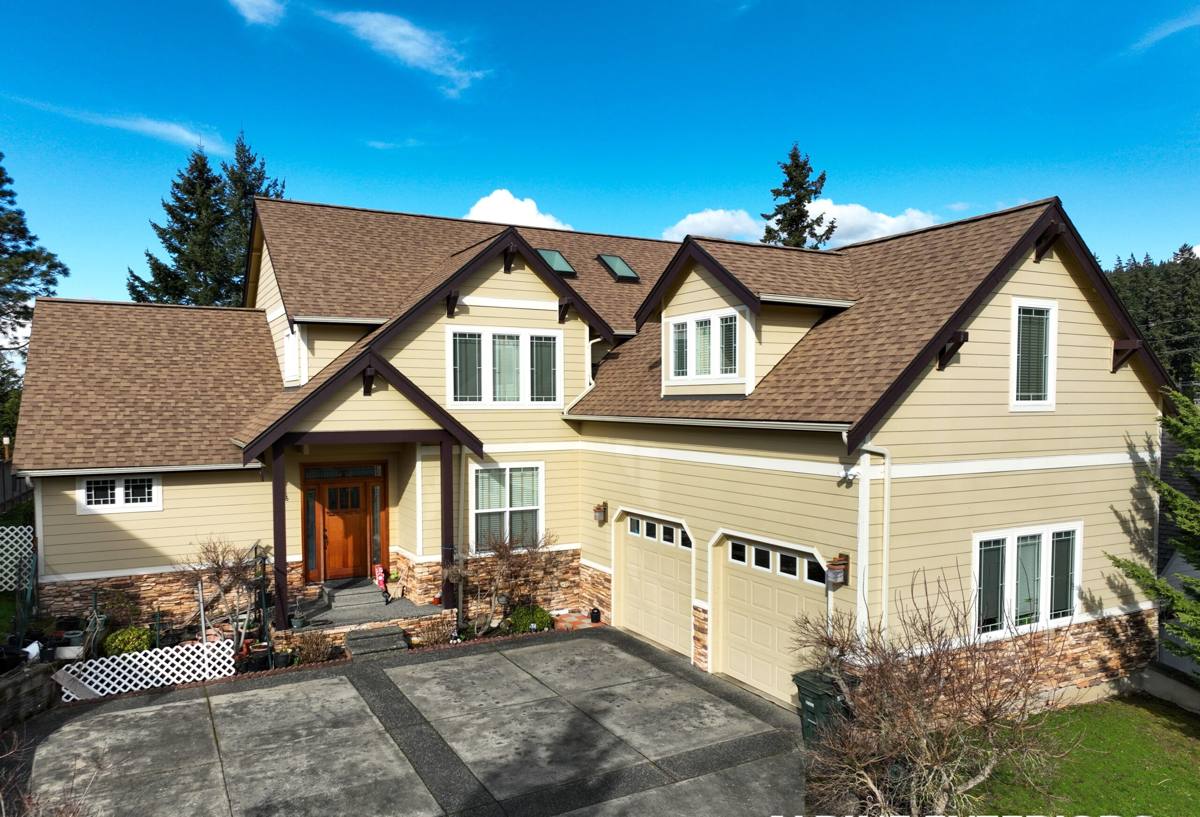
What South Hill's Weather Actually Asks of a Window Installation
Bellingham sits right on the water, and South Hill's elevation puts homes there in a spot that catches more wind and weather than the flatter neighborhoods below. Whatcom County's marine climate means near-constant moisture exposure for most of the year, and a South Hill lot usually gets it from more directions than a sheltered lot would.
Wind-Driven Rain
Storms coming off the Sound and the Bay don't just drop rain straight down — wind pushes it sideways into walls and window openings, especially on south and west-facing elevations that face open water or open sky. A window that would perform fine in a calm climate can leak on a hillside lot if the flashing details aren't built to handle rain that's arriving at an angle, not just from above.
Salt Air and Hardware Fatigue
Being close enough to Bellingham Bay to catch the wind also means catching some salt in that air. Salt accelerates corrosion on exposed fasteners, hinges, and lower-grade hardware over time. It's rarely dramatic — it shows up as stiff cranks, pitted screws, or a locking mechanism that doesn't seat the way it used to. We factor that into what hardware and fastener specs we'll accept on a South Hill job.
A Long Moss Season
Whatcom County's wet season runs long, and anywhere shaded or north-facing stays damp for months at a stretch. Moss and algae don't just grow on roofs — they build up on sills, in weep holes, and in the tracks of sliders and casements if those details weren't designed to drain and dry out. A window installed with clogged or poorly sloped weep paths will hold water against the frame all winter instead of shedding it.
Getting the Flashing Sequence Right, Every Time
The actual installation work follows a specific order, and skipping or reversing a step is where most window leaks start. Here's the sequence we hold every crew to, regardless of which builder or GC we're working under on a given South Hill project:
- Rough opening checked for square, level framing before the window ever shows up on site.
- Sill pan flashing installed first, sloped to drain water toward the exterior, not toward the framing.
- Window set, shimmed, and fastened through the nailing fin per the manufacturer's structural requirements — not just "however many nails fit."
- Jamb and head flashing installed in the correct shingle-lap order so each layer overlaps the one below it.
- House wrap integrated so the top flashing tucks behind the wrap and the sides and bottom lap over it, keeping water moving down and out at every layer.
- Interior air sealing at the rough opening, which matters for both energy performance and keeping interior moisture from condensing inside the wall cavity.
None of these steps are unique to us — they're standard best practice from window and house wrap manufacturers. The difference between a crew that does this reliably and one that doesn't usually isn't knowledge, it's discipline on a jobsite where a dozen trades are trying to move fast.
Choosing a Window Frame Material for New Construction Here
Builders and homeowners on South Hill ask us to install a range of window products, and the right call depends on budget, maintenance appetite, and how exposed the specific elevation is. We don't push one material as universally "best" — we walk through the honest trade-offs for this climate.
| Frame Material | Upfront Cost | Moisture & Salt-Air Behavior | Maintenance |
|---|---|---|---|
| Vinyl | Lowest | Won't rot or corrode; seals and hardware are the weak point over time | Low — occasional cleaning of tracks and weep holes |
| Fiberglass | Mid to upper | Very stable in wet, wind-loaded conditions; expands/contracts close to glass | Low |
| Wood-clad (exterior clad, wood interior) | Highest | Good if flashed correctly; cladding must stay sealed at joints or moisture can reach the wood core | Higher — clad joints and any exposed wood need periodic inspection |
| Bare wood (uncladded exterior) | Mid to high | Least forgiving of our wet season; requires disciplined finish maintenance | Highest — we generally steer new builds here away from this on exposed elevations |
For a hillside lot catching more wind and salt air than average, we lean homeowners toward vinyl or fiberglass on exposed elevations, and reserve wood-clad for more sheltered sides of the house where the look matters and the weather exposure is lower. This is a maintenance-and-moisture judgment call, not a statement that any one product is bad — it's about matching the material to what a specific wall will actually face over the next twenty winters.
How We Work New-Construction Windows Into a South Hill Build
Coordinating With Builders and Other Trades
On a new build or addition, windows go in at a specific point between framing and siding, and we don't work in isolation. We coordinate directly with the general contractor or framer on rough opening sizes before units are ordered, confirm house wrap has been installed correctly before we start flashing, and sign off with whoever's doing siding next so they understand how our flashing laps are supposed to interact with theirs. Gaps between trades are where details get missed, so we treat that handoff as part of the job, not an afterthought.
Timing Around Our Weather
Bellingham doesn't give you long, guaranteed dry stretches most of the year. We plan window installation days around forecasts, not just the builder's schedule, and we keep openings protected with temporary weather barriers if a delay means an opening sits exposed overnight. Setting a window fin into wet sheathing or rushing flashing between rain bands is exactly how long-term leaks get built into a house that looks finished on day one.
Why Local Experience on This Particular Hillside Matters
A crew that already works South Hill regularly knows which elevations on which streets take the worst of the wind, which lots sit in more shade and hold moisture longer, and generally how permitting and inspection expectations run in this part of Bellingham. That's not something you can fully substitute with a generic install checklist. It shows up in small decisions — an extra course of flashing tape on a west-facing gable end, choosing a higher wind-load rated unit for an exposed upper floor, or flagging a sill detail to the framer before the wall is closed in rather than after.
Mistakes We See on Hillside New-Construction Jobs
Most of the callbacks we get asked to fix on hillside builds trace back to a short list of avoidable errors: house wrap installed but not actually lapped correctly at window openings, flashing tape applied to a dusty or damp surface so it never fully bonds, weep holes left uncleared of construction debris before final inspection, and fastener schedules that don't match what the manufacturer's wind-load rating actually requires. Each of these is fixable in an afternoon during construction and expensive to fix once siding and interior finishes are on. Building it right the first time is always the cheaper option.
What to Check After the Windows Are In
Once your new-construction windows are installed and the house is buttoned up, a little seasonal attention keeps them performing the way they were designed to:
- Clear debris and moss from exterior sills and weep holes at least once before the wet season starts each fall.
- Check that locking hardware still cranks and seats smoothly — stiffness can be an early sign of salt-air corrosion worth addressing before it gets worse.
- Look at caulk lines around trim for cracking or gaps after the first full winter, since new construction settles slightly in its first year.
- Watch for any interior condensation on window glass in cold snaps, which can point to an air-sealing gap at the rough opening rather than the window unit itself.
- Keep gutters and downspouts near window openings clear so overflow isn't running down the wall and across the window head.
If you're building, adding on, or re-siding on South Hill and need new-construction windows installed correctly the first time, we're happy to come take a look and give you a straightforward, no-pressure estimate. Use the form below to get started.