 Bellingham Siding
 Why South Hill Decks Take More of a Beating Than People Expect
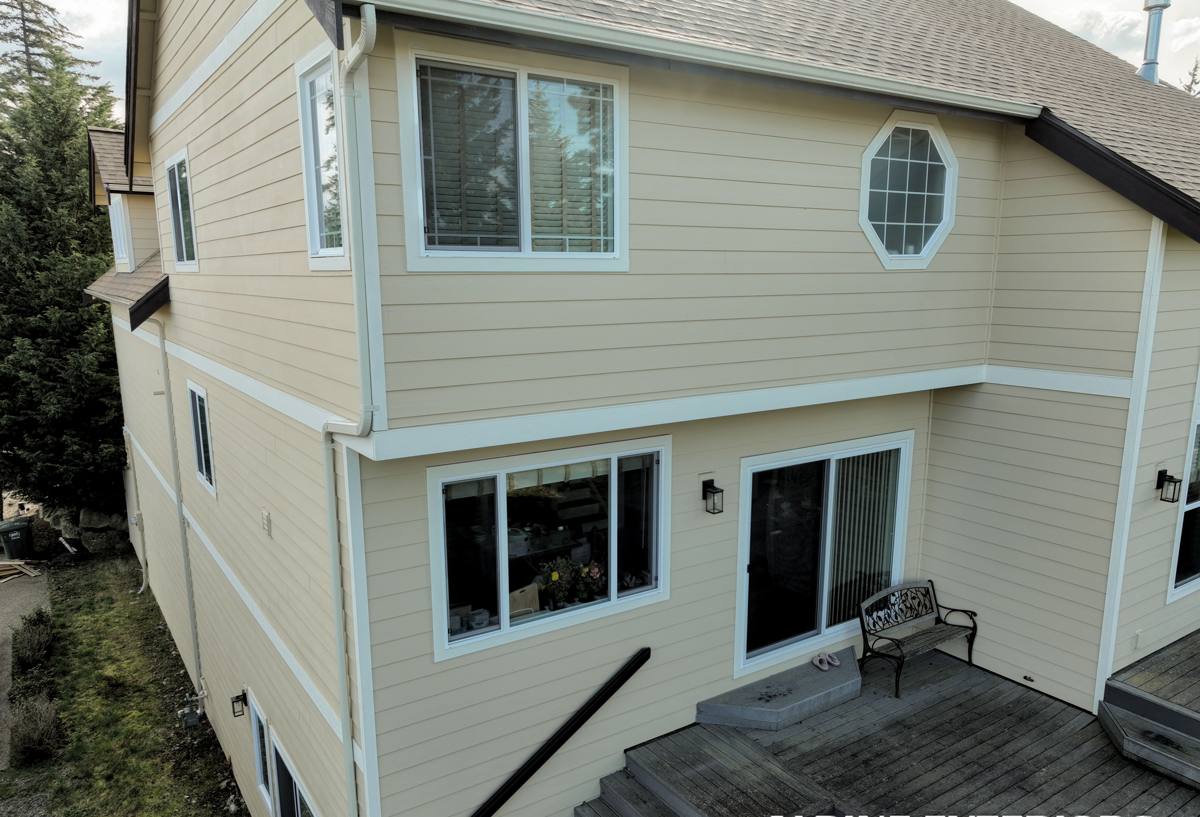
South Hill sits up on the slope above downtown Bellingham, which means it catches wind and moisture off Bellingham Bay in a way that flatter, more sheltered neighborhoods don't. Homeowners up here often assume the elevation and tree cover buy them some protection from weather damage. In practice, it cuts the other way: more exposure to driving rain on west- and south-facing decks, more salt-laden air drifting up from the water on windy days, and more shade from mature trees that keeps everything damp longer after a storm passes. That combination is hard on any outdoor structure, but it's especially hard on a deck, since a deck is horizontal, walked on, and built low to the ground where moisture collects.
A deck that looks fine after year one can start showing real problems by year three or four if it wasn't built with this climate in mind. That's the gap we see most often when we're called out to look at an older deck in South Hill — not bad materials, but a build that didn't account for how much water this area actually sees and how long it takes to dry out.
What Whatcom County's Climate Actually Does to a Deck
Driving Rain
Bellingham doesn't just get rain, it gets rain that comes in sideways during winter windstorms. On an exposed South Hill lot, that means water gets driven up under railings, into fastener holes, and behind fascia boards — not just onto the deck surface where it can run off. Any gap in flashing or any spot where water can sit against a ledger board becomes a slow leak point over a few winters.
Salt Air
Being close enough to the bay to get salt in the air matters more for the metal hardware than for the decking material itself. Fasteners, brackets, and railing hardware that aren't rated for coastal exposure will corrode faster here than the same parts would fifty miles inland. Once a fastener starts rusting, it weakens the connection long before it's visually obvious.
Moss Season
Bellingham's moss season runs long — realistically much of the fall through spring stretch, especially on decks that get afternoon shade. Moss holds moisture directly against whatever it's growing on. On wood decking that means rot. On composite decking it's mostly a slip hazard and a cleaning chore, but it still needs airflow underneath the deck and good drainage to keep from becoming a permanent problem rather than a seasonal one.
Why Composite Makes Sense for This Neighborhood
Composite decking was built to solve exactly the problem South Hill homes have: constant moisture cycling. Unlike wood, composite boards don't absorb water into their fibers, so they don't swell, crack, cup, or rot the way untreated or even pressure-treated lumber eventually will under year-round wet conditions. That doesn't mean composite is maintenance-free — it isn't — but it removes rot as the failure mode you have to worry about, which is the single biggest reason wood decks fail in this climate.
The trade-off is that composite is less forgiving of a sloppy installation. Because the boards don't breathe or dry out the way wood does, any mistake in spacing, ventilation, or drainage during the build gets locked in and shows up later as moss buildup, staining, or moisture trapped against the framing underneath. That's a framing and process problem, not a decking-material problem, and it's why we treat the substructure with the same care as the visible boards.
What a Correct Composite Deck Install Involves Here
Framing and Ledger Attachment
The ledger board — where the deck attaches to the house — is the single most common failure point on any deck, composite or wood. It needs proper flashing that directs water away from the house wall, not just a bead of caulk. On a South Hill home taking driving rain from one dominant direction, we pay close attention to which side of the house the ledger sits on and detail the flashing accordingly.
Joist Spacing and Deflection
Composite boards generally need tighter joist spacing than wood — usually 16 inches on center, sometimes less on angled or picture-frame layouts — because composite has more flex than solid lumber. Following the manufacturer's spec sheet for the specific board profile isn't optional; it's what keeps the deck from developing a bounce or soft spots over time.
Ventilation Underneath
This is the detail that gets skipped most often and matters most in a wet climate. Composite decking needs airflow underneath to let moisture that collects between and under the boards actually evaporate. Decks built low to the ground, or enclosed with solid skirting, trap humid air against the underside of the boards and framing — which is exactly the environment moss and mildew want, and exactly what accelerates corrosion on any exposed fasteners.
Fastener and Hardware Selection
Given the salt air off the bay, we use stainless steel or coated fasteners rated for coastal/corrosive environments rather than standard galvanized hardware. It costs more up front. It also means the hardware isn't the thing that fails first.
Board Gapping and Drainage
Boards need consistent gapping — both between boards and at the perimeter — so water actually sheds off the deck surface instead of pooling. On a deck with any shade cover, that gapping is also what keeps moss from getting a foothold along board edges where standing moisture lingers longest.
Composite vs. the Alternatives for a South Hill Deck
| Material | How it handles our rain/moisture | Moss & salt-air resistance | Long-term upkeep |
|---|---|---|---|
| Pressure-treated wood | Absorbs water; prone to cupping and rot over time in constant damp exposure | Moss takes hold easily on shaded, damp wood; standard fasteners corrode faster near the bay | Annual staining/sealing, ongoing rot inspection |
| Cedar or other natural wood | Better rot resistance than treated pine, but still absorbs moisture and moves seasonally | Still susceptible to moss and mildew in shaded, wet spots | Regular sealing, higher material cost, shorter realistic lifespan here |
| Composite decking | Doesn't absorb water into the board itself; performance depends on correct ventilation and drainage in the build | Won't rot from moss, but still needs periodic cleaning to prevent surface staining and slip risk | Occasional washing; no sealing or staining required |
| PVC/cellular decking | Fully water-resistant like composite, lighter weight | Similar moss/salt performance to composite | Low upkeep; typically higher material cost than composite |
Our Process for a South Hill Composite Deck Project
- On-site assessment: We look at sun exposure, prevailing wind and rain direction, existing drainage, and how close the deck sits to grade — all of which shape the framing and ventilation plan before we ever talk board selection.
- Framing and flashing plan: We spec joist spacing, ledger flashing, and fastener hardware based on that assessment, not a one-size-fits-all default.
- Board and color selection: We walk through composite lines and profiles with you, including how different colors and textures show (or hide) moss growth and water spotting over time.
- Build: Framing, flashing, ventilation gaps, and fastener installation, followed by board installation with manufacturer-spec gapping.
- Final walkthrough: We go over drainage, any transitions (stairs, railings, house entry points), and a basic maintenance rundown specific to your deck's exposure.
Keeping a Composite Deck in Good Shape Through the Wet Season
- Sweep off leaves and debris regularly in fall — wet leaves left sitting are one of the fastest ways to get surface staining and a head start on moss
- Rinse the deck a few times during the wettest months to keep moss spores from settling into the board texture
- Check that gaps between boards and along the perimeter haven't been blocked by planters, mats, or debris buildup, since that's what allows water to sit instead of drain
- Confirm under-deck skirting or lattice still allows airflow — don't seal it up tight for appearance reasons alone
- Inspect visible fasteners and railing hardware once a year for early rust or corrosion, especially on decks with a clear line of sight to the bay
- Keep an eye on any spots that stay shaded most of the day — those are where moss will show up first and need attention
Why It Matters That We Already Work This Neighborhood
South Hill's mix of elevation, tree cover, and bay exposure isn't the same as a deck build in a flat, open subdivision elsewhere in Whatcom County. A crew that's worked decks in this specific area already knows which direction the driving rain tends to come from on a given street, how much shade a lot is realistically going to get through moss season, and which framing and hardware choices hold up versus which ones need revisiting in a few years. That's not something you get from a spec sheet — it's from having already dealt with the callbacks on jobs that didn't account for it.
We'd rather spend the extra time on ventilation detailing and hardware selection up front than have a homeowner call us in three years about moss buildup or a soft spot near the ledger. That's the standard we hold ourselves to on every composite deck we build in this area, not just the ones where it's convenient.
Get a Straight Answer for Your Deck
If you're weighing a new composite deck or replacing an aging wood deck in South Hill, we're happy to take a look, walk the site, and give you an honest read on what your specific lot's sun, rain, and shade exposure calls for. There's no pressure and no cost to get a written estimate — just a clear picture of what the job actually involves before you decide anything.