 Bellingham Siding
 Why South Hill Roofs Take a Different Kind of Beating
South Hill sits up above the rest of Bellingham, and that elevation cuts both ways. Homes up here get some of the best views in Whatcom County, but they also catch more wind off Bellingham Bay, more direct exposure during driving rain events, and — because so many lots are shaded by mature trees — a longer moss and algae season than roofs down in the flats. An asphalt shingle roof on South Hill isn't fighting the same battle as one in a newer, treeless subdivision. It's fighting salt-laden air, wind-driven rain that finds every weak seam, and organic growth that never fully dries out between fall and spring.
None of that means asphalt shingles are the wrong choice for this neighborhood — they're still one of the most cost-effective, proven roofing systems available, and the right shingle installed correctly holds up fine here. It just means the install details matter more on South Hill than they would somewhere drier and more exposed to open sun. A roof that would be fine for twenty years in a different climate can start showing granule loss, moss lines, and soft decking in half that time if it was installed without accounting for what this specific hillside does to a roof.
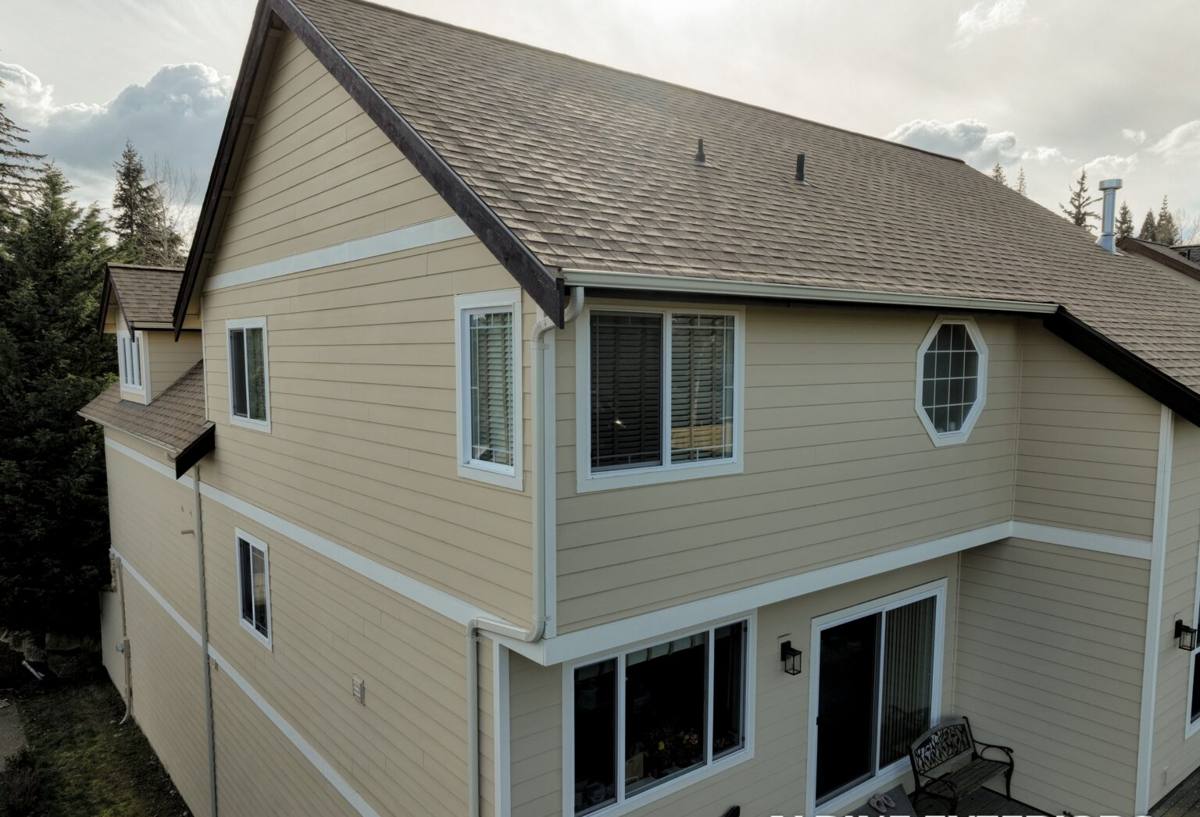
What a Correct Asphalt Shingle Install Actually Involves
A shingle roof is a system, not just a layer of shingles nailed to plywood. On a South Hill home, we pay particular attention to the parts that determine whether moisture gets trapped under the shingles rather than shedding off of them.
The Underlayment and Ice/Water Barrier
Synthetic underlayment goes down over the full deck, with self-adhering ice-and-water membrane at eaves, valleys, and any low-slope transitions where wind-driven rain is most likely to be pushed backward under the shingle edge. Given how much sideways rain this area sees off the bay, we don't treat this as an optional upgrade — it's standard practice here.
Flashing at Every Penetration
Chimneys, skylights, vent pipes, and wall-to-roof intersections are where the overwhelming majority of shingle roof leaks actually start — not in the field of the roof itself. Step flashing, counter-flashing, and properly lapped pipe boots are installed fresh, not reused from the old roof, and sealed with materials rated for our wet climate rather than a general-purpose caulk that will crack in a season or two.
Ventilation
Balanced intake and exhaust ventilation keeps the attic close to outdoor temperature and humidity. Without it, moist air condenses on the underside of the deck, which rots sheathing from the inside and shortens shingle life from the top down — a problem that shows up faster on shaded South Hill roofs where the deck never gets a good chance to dry out.
Nailing Pattern and Fastener Count
Manufacturer nailing patterns exist for a reason, and wind exposure on this hill is a reason to follow them exactly — correct nail placement, count, and depth, every course, not just on the parts that show.
Shingle Options: What We Recommend and Why
Not every shingle product handles moss and moisture the same way. We generally steer South Hill homeowners toward algae-resistant, mid-to-upper-tier architectural shingles rather than the cheapest three-tab option, and here's the honest reasoning:
| Shingle Type | How It Handles This Climate | Trade-Offs |
|---|---|---|
| Standard 3-tab | Adequate wind rating, but algae/moss streaking shows sooner without copper-infused granules | Lowest upfront cost, shortest realistic lifespan here |
| Architectural / dimensional | Thicker mat, better wind and impact resistance, algae-resistant granule options widely available | Higher material cost, but far more forgiving in wet, shaded conditions |
| Premium/designer laminate | Best long-term algae and wind performance, strongest warranties | Highest upfront cost; only worth it if you plan to stay in the home long-term |
We don't push premium product as an upsell for its own sake — for a lot of South Hill homes, a quality architectural shingle with algae-resistant granules is the right balance of cost and performance. Where we do push back is on installing bargain-tier shingles under heavy tree cover; the maintenance burden and shortened lifespan usually cost more over ten years than the upfront savings were worth.
Moss, Algae, and Tree Cover: The Ongoing Maintenance Reality
Moss doesn't just sit on top of shingles — it lifts them, holding moisture against the granule surface and, over years, working its way under the shingle edge. On heavily treed South Hill lots, moss and algae aren't a one-time problem you solve during installation; they're an ongoing condition you manage.
- Zinc or copper strips near the ridge let rain carry metal ions down the roof slope, which discourages new moss growth between cleanings
- Keeping tree limbs trimmed back from the roofline reduces shade, debris buildup, and the leaf litter that holds moisture against shingles
- Gutters clear of needles and leaves so water actually leaves the roof instead of backing up under the eaves
- Periodic soft-washing (not pressure washing, which strips granules) to remove moss and algae before it takes hold
- Prompt replacement of any shingles that have already lifted or cracked from trapped moisture, rather than waiting for a full re-roof
We're upfront with South Hill customers that a shaded, tree-covered lot will need more roof attention over time than an open one — that's a function of the site, not a flaw in the roof. Planning for it keeps small moss patches from turning into decking repairs.
Our Process, Start to Finish
- On-site inspection — we look at the current roof, attic ventilation, decking condition, and how tree cover and slope orientation are affecting your specific roof
- Written estimate — a clear scope covering tear-off, underlayment, flashing, shingle product, and ventilation, so there's no ambiguity about what's included
- Tear-off and deck inspection — old material comes off down to the deck, and any soft or damaged sheathing is identified and replaced before anything new goes down
- Underlayment, flashing, and ice/water barrier installation — the parts that determine whether the roof actually keeps water out
- Shingle installation — following manufacturer nailing patterns and exposure specs, course by course
- Ventilation check — confirming intake and exhaust are balanced for the attic size
- Site cleanup and magnetic nail sweep — yard, driveway, and landscaping cleared of debris and stray fasteners
- Final walkthrough — reviewing the finished work and warranty paperwork with you before we consider the job done
Signs Your South Hill Roof Needs a Closer Look
- Visible moss lines or dark streaking running down from the ridge, especially on shaded slopes
- Granules collecting in gutters or at the base of downspouts
- Shingles that look curled, cupped, or lifted at the edges
- Daylight visible through the attic roof deck, or damp insulation after a heavy rain
- Soft spots underfoot if you're ever up there checking gutters
- A roof approaching 18–20 years old that has never had a full inspection
Any one of these on its own isn't necessarily an emergency, but on a South Hill roof they tend to compound faster than they would on a drier, more exposed site — worth a look before the next wet season rather than after.
What Affects the Cost
Every roof is different, and we won't quote a number without seeing yours, but these are the main factors that move the price up or down on a typical South Hill asphalt shingle project:
| Factor | Why It Matters |
|---|---|
| Roof size and number of planes | More squares and more cuts around hips, valleys, and dormers means more labor and material |
| Current deck condition | Rotted or soft sheathing found under tear-off adds replacement cost, but skipping it isn't an option |
| Shingle tier selected | Standard 3-tab, architectural, and premium laminate carry different material costs and warranty lengths |
| Roof pitch and access | Steep pitches and lots with limited driveway or crane access take longer and require more safety setup |
| Ventilation upgrades | Adding or correcting intake/exhaust vents where the existing setup is inadequate |
| Layers of existing roofing | A roof with multiple old layers requires more tear-off labor and disposal |
As a rough guide, most full asphalt shingle roof replacements on typical South Hill homes fall in the mid-five-figure range, with smaller roofs or straightforward repairs well below that and larger, complex rooflines above it. We'll always give you the real number for your roof in writing before any work starts.
Why It Matters to Hire a Crew That Already Works This Neighborhood
South Hill has its own logistics — narrow or steep driveways, mature trees close to the house, older homes with roof framing that doesn't always match modern deck sizing, and in some cases neighborhood or permit considerations that a crew unfamiliar with the area won't think to check. A contractor who already works this hillside knows to plan for tree protection during tear-off, knows which older South Hill homes tend to need deck repair versus a straightforward overlay-and-replace, and isn't learning the site logistics on your dime.
We're a Bellingham-based exterior contractor, and roofing is part of the same trade as the siding, trim, and gutter work we do across Whatcom County — which matters because a roof doesn't exist in isolation from the rest of your home's exterior. Flashing where the roof meets a wall, drip edge behavior along fascia, and gutter placement all interact with the siding and trim system. Handling both under one crew means those transitions get built correctly the first time instead of becoming a finger-pointing exercise between separate roofing and siding companies later.
Materials and Warranty Standards
We install manufacturer-rated shingle systems and follow the installation requirements those manufacturers set for material warranty coverage — meaning underlayment, flashing details, and ventilation are handled to the standard the shingle warranty actually requires, not just to a minimum that gets a roof to look finished. We'll walk you through the specific manufacturer and warranty terms for whichever shingle line fits your project and budget, along with our own workmanship coverage, before you sign anything.
If you're weighing a repair against a full replacement, or just want an honest read on how much life is left in your current roof, we're happy to take a look. Reach out for a free, no-pressure estimate — the form below gets you started.