 Bellingham Siding
 Siding Replacement Built for Silver Beach's Conditions
Silver Beach sits along Lake Whatcom on Bellingham's east side, tucked under heavy tree canopy that keeps the neighborhood shaded, cool, and — for siding — persistently damp. Add in the salt-tinged marine air that rolls off Bellingham Bay and settles across Whatcom County, along with the region's long stretch of driving rain from fall through spring, and you get a climate that is genuinely hard on exterior walls. Homes here don't fail the way homes in a dry inland climate fail. They fail from the inside out, where moisture gets behind the siding and stays there.
We do siding replacement work across Bellingham, and Silver Beach comes with its own set of patterns we watch for: north- and shade-facing walls that never fully dry out, moss and algae creeping up from grade level, and older siding systems that were never designed to handle this much sustained moisture. This page covers what a correct siding replacement looks like for a Silver Beach home, and why the details matter more here than almost anywhere else in the county.
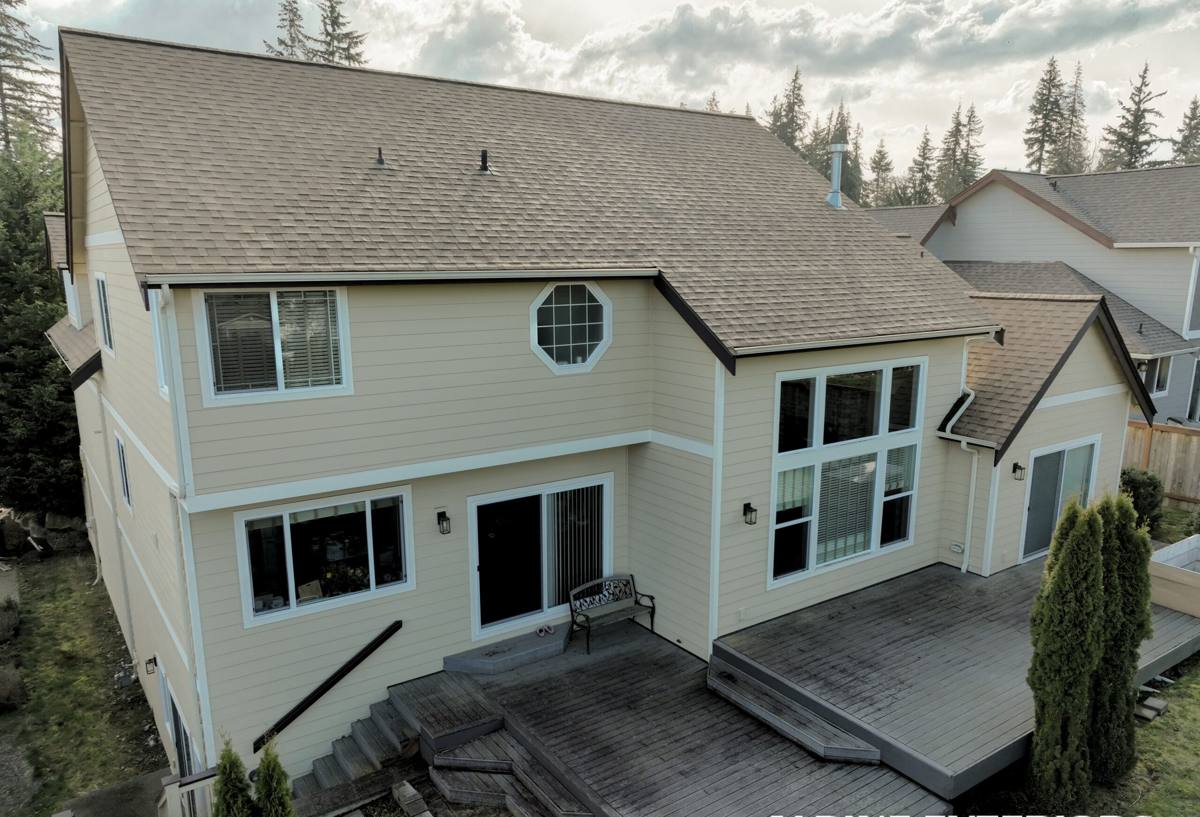
Why Lake-Side, Tree-Shaded Homes Wear Siding Out Faster
Three things compound on a property like the ones near Silver Beach, and each one shortens the life of the wrong siding material:
- Shade and airflow. Mature trees block sun and wind, so walls that would dry out in an afternoon on an open lot stay damp for days after a storm.
- Lake and marine moisture. Proximity to Lake Whatcom adds humidity on top of the region's already-wet marine climate, which means more days per year where wood-based and moisture-sensitive sidings are absorbing water instead of shedding it.
- Moss and organic growth. Bellingham's moss season runs long — often eight or nine months of the year in shaded spots — and moss holds water against the siding surface far longer than open exposure would.
None of this is unique to Silver Beach in kind, but it's more concentrated here than in sunnier, more open parts of Bellingham. That's exactly why the siding material and the installation details matter so much on a replacement job in this neighborhood.
What This Means for Different Siding Materials
Wood-based products — cedar, primed spruce, LP SmartSide — depend on paint film and edge sealing to keep water out. In a low-airflow, high-moisture pocket like Silver Beach, that paint film is under constant stress, and any gap in the seal (a cut end, a nail hole, a caulk joint that's opened up) becomes an entry point. Vinyl siding doesn't rot, but it doesn't stop water either — it's designed to let moisture pass behind it and drain, which only works if the wall assembly behind it is doing its job, and vinyl's flexibility and seams give moss and algae plenty of texture to grab onto. This is part of why we standardized on James Hardie fiber cement for every replacement job we do, in Silver Beach and everywhere else — it's a non-combustible material that doesn't feed mold or rot the way wood-based products can, and it holds a factory finish that isn't relying on field-applied paint to keep water out.
Signs a Silver Beach Home Needs Siding Replacement, Not Just Repair
Not every siding problem calls for a full tear-off. But in this climate, patch jobs on failing siding often just relocate the problem. Watch for these signs that replacement — not another round of caulk and paint — is the right call:
- Soft or spongy spots when you press on the siding, especially near the bottom courses and around window trim
- Paint that keeps failing in the same spots within a year or two of repainting
- Persistent moss or black streaking that comes back within months of cleaning
- Visible gaps, warping, or cupping in individual boards or panels
- Musty smell or visible staining on interior walls that share an exterior wall with a shaded side of the house
- Siding that's original to a home built more than 20–25 years ago, particularly if it's cedar, hardboard, or an early-generation composite
If you're seeing one or two of these in isolated spots, a repair may hold for a while. If you're seeing several at once, or the damage is concentrated on the shaded and lake-facing sides of the house, it's usually cheaper in the long run to replace that wall section — or the whole exterior — correctly, rather than keep chasing individual failures.
What a Correct Siding Replacement Actually Involves
Siding replacement is not just swapping old boards for new ones. In a moisture-heavy neighborhood like Silver Beach, the work that happens underneath the visible siding is what determines whether the new job lasts 30 years or fails again in five. A correct job includes:
1. Full Tear-Off and Inspection
We remove the old siding down to the sheathing so we can actually see what's underneath — not guess at it. This is where hidden rot, failed flashing, or old water damage around windows and doors gets found and dealt with before it's sealed back up behind new siding.
2. Sheathing Repair
Any water-damaged or rotted sheathing gets cut out and replaced. Covering damaged sheathing with new siding just hides a problem that will keep spreading behind the wall.
3. Weather-Resistive Barrier
A new, properly lapped weather-resistive barrier goes over the sheathing. This layer — not the siding itself — is the home's real defense against wind-driven rain getting into the wall assembly, and it needs to be installed shingle-style, overlapped correctly at every seam.
4. Flashing at Every Penetration
Windows, doors, hose bibs, vents, and any other wall penetration get flashed to shed water outward, not into the wall. This is one of the most common points of failure we find when we tear off older siding — flashing that was missing, reversed, or taped instead of properly lapped.
5. Correct Fastening and Clearance
James Hardie siding has specific nailing patterns, fastener types, and clearance requirements from grade, decks, and roof lines — all of it exists to keep the bottom edge of the siding from sitting in standing water or splash-back, which is a common failure point on homes near grade-level landscaping or lake-adjacent yards.
6. Caulking and Paint Only Where Specified
James Hardie's ColorPlus finish is factory-applied and doesn't rely on field caulking at every joint the way older systems do. We caulk and seal only where the manufacturer's install spec calls for it — over-caulking can trap moisture instead of keeping it out.
Why We Install Only James Hardie Fiber Cement
We made a decision years ago to install one siding system, and only one: James Hardie fiber cement. We don't install vinyl, LP SmartSide, Cemplank, Allura, primed spruce, or cedar. That's not a marketing position — it's a practical one, built on what actually holds up in this climate over decades, not just through the first few winters.
James Hardie's fiber cement is engineered specifically for wet climates like ours, with product lines built for the Pacific Northwest's moisture exposure. It's non-combustible, it doesn't feed rot or mold the way wood-based sidings can, and its ColorPlus factory finish is baked on under controlled conditions rather than applied on-site — which matters a great deal in a neighborhood where humidity and shade make field-applied paint an ongoing maintenance liability. It also carries a strong transferable warranty, which is worth something to homeowners who may sell in a market where buyers are increasingly asking about siding material and age.
We're not saying every other product is worthless — vinyl and wood siding both have their place and their advocates. We're saying that after years of doing this work in Whatcom County's specific conditions, Hardie is the one system we're willing to put our name behind, and the only one we install.
Our Process for a Silver Beach Project
- Walkthrough and assessment. We look at your current siding, note problem areas, and check the specific exposure of your lot — shade, drainage, distance from the lake, tree cover.
- Written estimate. You get a clear scope of work and pricing before anything starts, including what's being torn off, what's being replaced underneath, and which Hardie product and profile fits the home.
- Tear-off and inspection. Old siding comes off, sheathing and framing get inspected, and we flag anything unexpected before covering it back up.
- Repair and prep. Damaged sheathing is replaced, weather-resistive barrier goes on, and flashing is installed at every window, door, and penetration.
- Hardie installation. Siding goes on to manufacturer spec — nailing pattern, clearances, joint treatment — by a crew that installs this product regularly, not occasionally.
- Final walkthrough. We go over the finished work with you before calling the job done.
Cost Factors for Silver Beach Siding Replacement
Every home is different, and we won't quote a number without seeing the property, but these are the main factors that move the price up or down on a Silver Beach job:
| Factor | Why It Matters |
|---|---|
| Extent of hidden damage | Rotted sheathing or framing found during tear-off adds repair scope beyond the siding itself |
| Home size and wall complexity | More corners, gables, and trim details mean more cutting, fitting, and labor time |
| Siding profile and accessories | Lap siding, panel systems, and trim/soffit work are priced differently based on material and labor |
| Access and site conditions | Sloped lots, tree-crowded yards, and limited staging space near the lake can affect crew efficiency |
| Existing paint or coating removal | Older lead-era or heavily coated siding may require extra handling and disposal steps |
Care After Installation
Correctly installed Hardie siding is low-maintenance, but "low" isn't "none" — especially in a shaded, moisture-heavy spot like Silver Beach. A short annual routine keeps it performing the way it's designed to:
- Rinse siding with a garden hose once or twice a year to knock off pollen, dust, and early moss growth before it takes hold
- Keep gutters clear so overflow isn't splashing back onto the lower courses of siding
- Trim back branches and shrubs that keep siding in constant shade or brush against it
- Check caulk joints around windows and trim annually and have any cracked sealant redone
- Watch for moss buildup at grade level or under eaves and clean it before it spreads
Why a Crew That Already Works Silver Beach Matters
Siding installation instructions read the same everywhere, but knowing where a specific neighborhood's problems actually show up is what separates a correct install from a technically-compliant one that still fails early. A crew that's worked Silver Beach knows which walls need extra attention to flashing and clearance because of shade and slope, understands how moss behaves on lake-adjacent, tree-covered lots, and isn't guessing at how Whatcom County's climate interacts with the product going on the wall. That local pattern recognition doesn't replace following the manufacturer's install spec — it's what makes sure that spec gets applied correctly to the parts of your home that actually need it most.
If your Silver Beach home has siding that's showing its age, or you're just not sure whether you're looking at a repair or a full replacement, we're happy to come take a look. The estimate is free, there's no pressure, and you'll get a straight answer about what your home actually needs.