 Bellingham Siding
 Why Silver Beach Roofs Wear Differently Than Roofs Inland
Silver Beach sits close enough to open water that the air itself works against a roof year-round. Homes here deal with a combination most inland Bellingham neighborhoods don't see at the same intensity: heavy tree cover that shades roof planes and feeds moss growth, wind-driven rain that gets pushed sideways into laps and flashing instead of falling straight down, and a near-constant low-grade dampness in the air that keeps roofing materials wet longer between dry stretches. None of these things alone is unusual for Whatcom County. Together, on the same roof, year after year, they shorten the useful life of shingles, wear out flashing seals faster, and turn small gaps into active leaks sooner than a textbook maintenance schedule would predict.
Moss and Shade
Mature tree canopy is part of what makes Silver Beach a nice place to live, but it also means roof surfaces stay shaded and damp far longer after a rain than a roof out in the open. Moss doesn't just look bad — it lifts shingle edges as it grows, holds moisture against the roof deck, and works its way under laps where it has no business being. Left alone for a few seasons, moss growth can shorten a roof's remaining service life significantly, turning what should have been a repair into a full section replacement.
Wind-Driven Rain
Rain that falls straight down is easy for a roof to shed. Rain that's pushed sideways by wind off the water is a different problem — it finds its way up under shingle tabs, into nail penetrations, and around flashing that was installed for vertical water, not lateral pressure. This is one of the most common reasons we get called out to homes that "never had a leak before."
Salt and Moisture in the Air
Metal components — flashing, fasteners, vent caps, gutter hardware — corrode faster when they're regularly exposed to salt-tinged, humid air. A fastener that would last decades in a dry inland climate can start losing its grip years earlier here. That matters because most roof leaks don't start with a torn shingle; they start with a failed fastener or a flashing seam that's lost its seal.
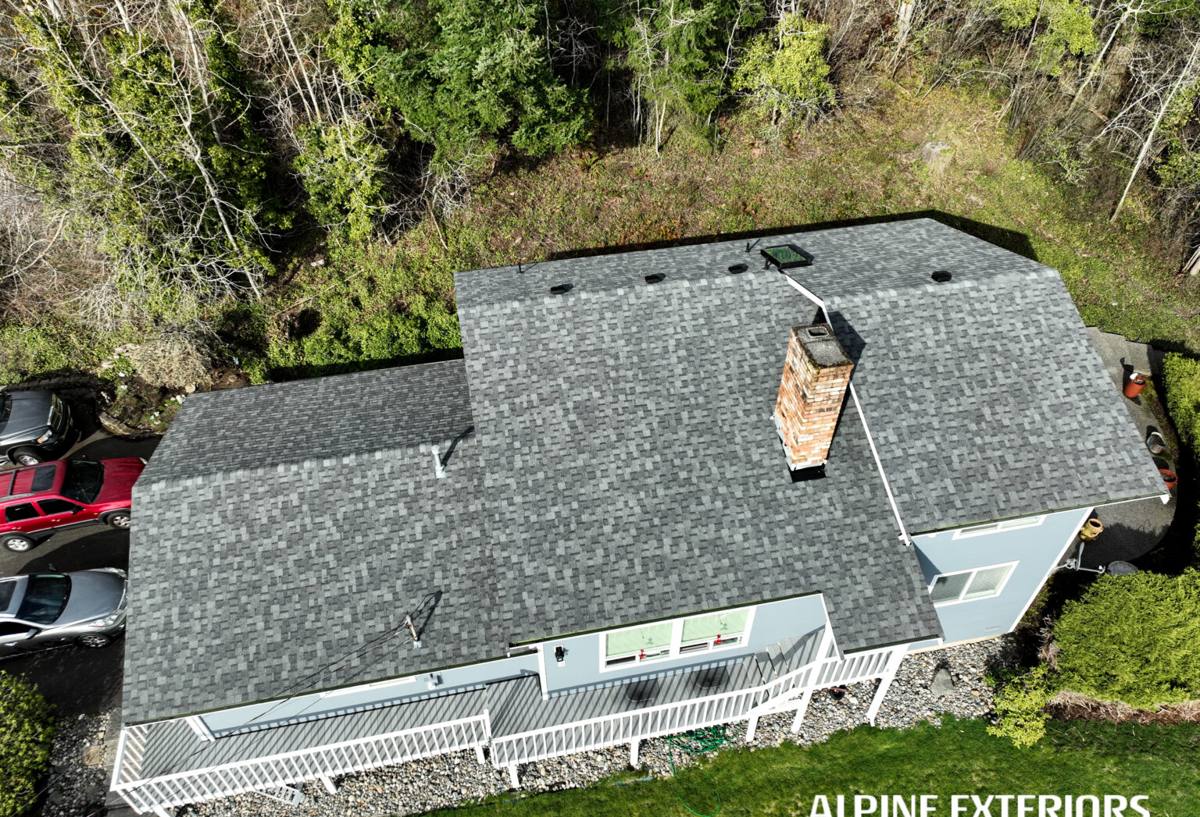
Signs a Silver Beach Roof Needs Repair, Not Just a Look
A lot of roof damage in this neighborhood is easy to miss from the ground, especially under tree cover. Here's what we'd want a homeowner to check for or mention when they call:
- Dark streaking or visible moss patches on north-facing or shaded roof slopes
- Granules collecting in gutters or at the base of downspouts
- Curling, cupping, or lifted shingle edges, especially on wind-exposed slopes
- Water stains on interior ceilings or in the attic, even faint ones
- Soft or spongy spots when walking a flat or low-slope section
- Rusted or discolored flashing around chimneys, skylights, or roof-to-wall transitions
- Daylight visible through the roof deck from inside the attic
- Gutters overflowing during normal rain rather than only during storms
Any one of these on its own might be minor. Two or three together, especially combined with tree cover and a west- or south-facing exposure to prevailing storms, usually means it's time for a closer look before the next wet season.
What a Correct Roof Repair Actually Involves
A roof repair that actually solves the problem — instead of just covering the visible symptom — follows the same basic sequence regardless of the roof's age or material.
1. Find the Real Source
Water rarely leaks where it shows up inside the house. It travels along the deck, framing, or underlayment before it finds a path down through drywall or insulation. A repair that just patches the spot above the interior stain often misses the actual entry point, which is why the same leak can "come back" after a quick fix.
2. Check What's Underneath
Once shingles or roofing material are pulled back, the deck and underlayment need to be checked for rot, delamination, or prior water damage. Soft or delaminated decking has to be replaced before new material goes down — patching over compromised decking just hides the problem for another season.
3. Address the Actual Failure Point
This is usually flashing, fasteners, underlayment, or a small area of damaged shingles — not the whole roof. Flashing around chimneys, skylights, vents, and roof-to-wall intersections is where the majority of leaks in this climate originate, because those are the transitions where wind-driven rain has the most opportunity to get pushed uphill or sideways.
4. Match Materials and Method
New material needs to tie into the existing roof correctly — proper overlap, correct fastener pattern, and flashing that's integrated with the existing underlayment rather than just caulked over the top. Caulk and roof cement have their place, but they're a short-term seal, not a substitute for correct flashing work.
Common Repairs We Handle in Silver Beach
| Repair Type | Typical Cause Here | What's Involved |
|---|---|---|
| Flashing repair/replacement | Corrosion, wind-driven rain, thermal movement | Remove and re-flash chimney, vent, or wall transitions with corrosion-resistant material |
| Moss and organic growth removal | Heavy shade, standing dampness | Careful removal (not pressure-washing), treatment, and inspection of shingle condition underneath |
| Localized shingle replacement | Wind lift, granule loss, age in a shaded microclimate | Remove damaged section, inspect deck, install matching material with correct overlap |
| Fastener and seal repair | Salt-air corrosion, thermal cycling | Replace corroded fasteners, reseal penetrations, check surrounding material for secondary damage |
| Deck repair | Long-term undetected leak, rot | Cut out and replace compromised decking before new roofing goes back down |
| Gutter and drainage correction | Debris from tree cover, undersized runs | Clear, adjust pitch, or resize to keep water moving off the roof edge instead of pooling |
Repair or Replace? How We Help You Decide
Not every issue on a Silver Beach roof means the whole roof needs to come off. But a repair that's really a stopgap on a roof near the end of its life isn't doing anyone a favor either. We look at a few honest factors before recommending either direction.
| Factor | Leans Toward Repair | Leans Toward Replacement |
|---|---|---|
| Roof age | Under roughly 15 years, or newer material | Approaching or past its material's expected service life |
| Extent of damage | Isolated to one section or penetration | Spread across multiple slopes or recurring in different spots |
| Deck condition | Solid, dry decking under the damaged area | Widespread soft spots or rot found during inspection |
| Granule loss | Minimal, concentrated near flashing | Heavy and even across most slopes |
| History of leaks | First occurrence or single known cause | Repeated leaks in different locations over recent years |
We'll tell you plainly which side of that table your roof falls on, and why — including when a repair is genuinely the right call and a full replacement would be spending money you don't need to spend yet.
Our Process, From Call to Completed Repair
We keep this straightforward, because homeowners dealing with a leak or a moss-covered roof don't need extra steps.
Inspection
We look at the whole roof, not just the spot you called about — in this climate, one visible problem area often has a second one starting nearby that hasn't shown symptoms yet. We check the deck condition where accessible, the flashing at every penetration, and the gutter and drainage path.
Straight Answer
You get a clear explanation of what's actually wrong, what caused it, and what the repair involves — in plain language, not a sales pitch. If the roof is closer to replacement territory, we'll say so and explain why, rather than quoting a repair that won't hold.
The Repair
We do the work to the same standard whether it's a small flashing fix or a larger section replacement: proper tear-out of the damaged area, deck inspection and repair if needed, correct flashing integration, and matched materials so the repaired section performs and weathers consistently with the rest of the roof.
Cleanup and Walkthrough
We clear debris and old material from the site and walk you through what was done and why, including anything worth keeping an eye on going forward — like a shaded slope that's likely to need moss treatment again in a few years.
Materials and Methods We Use — and Why
We choose flashing, fasteners, and sealing methods with this specific climate in mind rather than defaulting to whatever's cheapest or fastest to install. In a marine-influenced climate with heavy shade and wind-driven rain, corrosion-resistant flashing and fasteners cost a bit more upfront but avoid a repeat service call in a few years when standard-grade hardware starts failing. Underlayment gets the same treatment — a self-adhering, water-resistant underlayment at vulnerable transitions like valleys and roof-to-wall intersections holds up better here than a standard felt layer, because it doesn't rely purely on a shingle overlap to keep wind-driven rain out. We're upfront that these choices sometimes cost a little more than the bare minimum. We think that's the honest trade-off in this location: spend a bit more on the parts that fail first, or plan on redoing the same repair sooner than you should have to.
Why Hiring a Crew That Already Works Silver Beach Matters
A roofer who mostly works drier, less shaded neighborhoods can still do competent general roofing work — but they may not immediately recognize how much faster moss builds back in heavy shade here, or how far wind-driven rain can travel up under a lap on a wall facing open water. Crews who work this neighborhood regularly know which slopes tend to hold moisture longest, which flashing details need extra attention given the wind exposure, and roughly how often a given roof type needs a maintenance check in this microclimate. That local pattern recognition is what separates a repair that holds for years from one that needs revisiting after the next big storm season.
It also means faster, more accurate estimates. We're not guessing at how Bellingham's coastal-influenced weather affects a given roof type — we've seen the same conditions play out on similar homes nearby, and that experience shows up in both the diagnosis and the fix.
Get a Straight Answer on Your Roof
If you're seeing moss buildup, a stain on the ceiling, or you just want a second set of eyes on a roof that's a few years past its last inspection, we're glad to take a look. We'll give you a clear, no-pressure estimate and an honest read on whether you're looking at a targeted repair or something bigger — use the form below to get started.