 Bellingham Siding
 New Roof Installation Built for Silver Beach's Climate
A new roof is one of the biggest investments a homeowner makes in a house, and in Silver Beach it has to work harder than roofs in drier parts of the country. Between the salt-laden air moving off the water, the steady driving rain that defines a Whatcom County winter, and a moss season that can run most of the year, a roof here is under near-constant environmental pressure. Installing a new roof correctly in this neighborhood isn't just about swapping old shingles for new ones — it's about choosing materials and installation details that are matched to what this climate actually does to a roof over time.
This page covers what homeowners in Silver Beach should know before a new roof installation: what the local climate demands, what a properly installed roof includes, how our process works from estimate to cleanup, and why hiring a crew with real experience in this specific area matters more than it might in a milder climate.
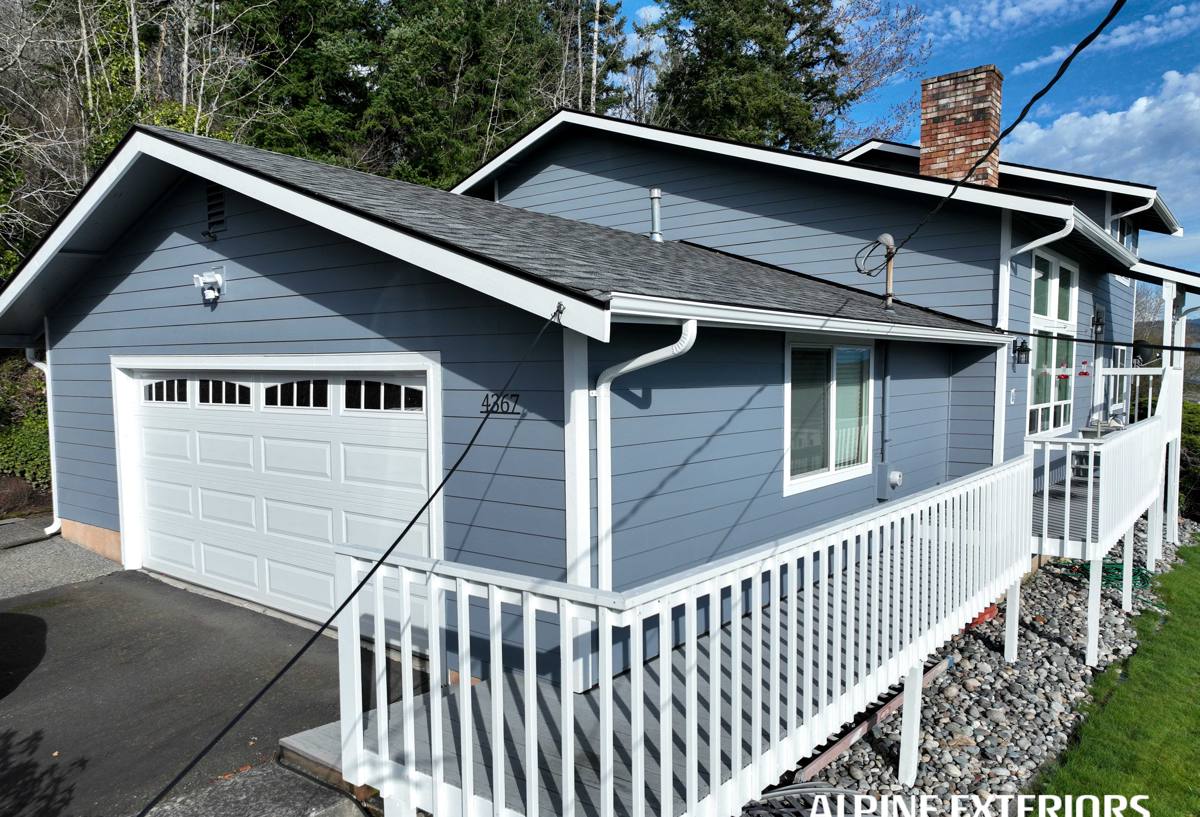
What Bellingham's Weather Does to a Roof
Roofing failures rarely come from one dramatic event. They come from small weaknesses that get exploited, week after week, by conditions that don't let up. In and around Silver Beach, there are three factors that do most of the damage over a roof's lifespan.
Salt Air and Metal Corrosion
Bellingham sits on the water, and the marine air that moves through the city carries fine salt particles that accelerate corrosion on exposed metal. This matters more than most homeowners realize, because a roof has a lot of metal in it even when the roofing material itself isn't metal: flashing, fasteners, vent caps, gutter hardware, and drip edge. Standard fasteners and unprotected flashing corrode faster near the coast than they would inland, which is why material grade and fastener selection matter as much as the shingle brand.
Driving Rain and Wind-Driven Water
Whatcom County doesn't just get rain — it gets sustained, wind-driven rain that pushes water sideways and uphill under normal circumstances. That means water finds its way into gaps that would stay dry in a calmer climate: under shingle tabs, around vent boots, at wall-to-roof transitions, and along valleys. A roof that's technically watertight in a light rain can still leak in a Whatcom County storm if the underlayment, flashing laps, and fastening pattern weren't installed with wind-driven water specifically in mind.
A Long Moss Season
Shade, moisture, and mild temperatures are exactly what moss needs to thrive, and this area has all three for most of the year. Moss doesn't just look bad — it holds moisture against the roofing surface, lifts shingle edges as it grows, and breaks down the granule surface that protects asphalt shingles from UV and weathering. A roof installed without moss-resistant details (zinc or copper strips, proper ventilation, adequate slope drainage) will need moss treatment far more often than one designed with this climate in mind from the start.
Signs a Silver Beach Roof Needs Replacement, Not Another Repair
Not every roof problem calls for full replacement, but there's a point where patching becomes a waste of money. These are the signs we look for when we're asked to evaluate whether a roof should be repaired or replaced:
- Granule loss heavy enough that you're finding granules in gutters and downspouts regularly
- Shingles that are cracking, cupping, or curling at the edges rather than lying flat
- Moss or algae established across large sections rather than isolated patches
- Soft spots or sagging in the roof deck when walked, which usually means water has reached the sheathing
- Daylight visible through the roof deck from inside the attic
- Repeated leaks in different spots after previous repairs, suggesting the underlayment has failed broadly rather than at one point
- A roof at or past its material's expected service life combined with two or more of the issues above
One or two of these on their own might mean a repair is enough. Several together usually mean the roofing system as a whole has reached the end of its useful life and further patching is just delaying an inevitable full replacement.
Choosing the Right Roofing System for This Area
There's no single "best" roofing material — the right choice depends on your home's style, your budget, and how much long-term maintenance you're willing to take on. Here's how the common options stack up for a climate like ours:
| Material | How it handles this climate | Maintenance | Typical service life |
|---|---|---|---|
| Architectural asphalt shingle | Good wind rating and water shedding when installed with proper underlayment; needs moss control | Periodic moss/debris removal, gutter checks | 25–30 years |
| Standard 3-tab shingle | Lower wind resistance and thinner profile than architectural shingle; still viable but less margin in storms | Same moss/debris upkeep, closer inspection after wind events | 15–20 years |
| Metal roofing (standing seam or panel) | Sheds water and moss very effectively; needs coastal-grade fasteners and coatings to manage salt exposure | Low; occasional fastener and sealant check | 40–50+ years |
| Cedar shake | Traditional look but holds moisture and is more moss- and rot-prone in a wet marine climate without diligent upkeep | High — regular treatment and moss removal | 20–30 years with maintenance |
For most Silver Beach homes, a quality architectural asphalt shingle with proper flashing and ventilation is the right balance of cost, appearance, and durability. Metal is worth considering for homeowners who want to minimize long-term maintenance and are comfortable with the higher upfront cost. We'll walk through the honest trade-offs for your specific roof rather than steering everyone toward one product.
What a Correct New Roof Installation Actually Involves
The material on top is only part of the story. Most roof failures we're called out to inspect trace back to something installed incorrectly underneath the shingles, not a defective product. A proper installation includes:
Full Tear-Off and Deck Inspection
We remove the old roofing down to the deck rather than layering over it. This lets us actually see the sheathing, check for soft or rotted spots, and replace any damaged wood before new material goes on. Roofing over a compromised deck just hides a problem that will resurface.
Underlayment Matched to Wind-Driven Rain
Given how much of our rain moves sideways rather than straight down, underlayment selection and lap direction matter. We use synthetic underlayment with ice-and-water shield reinforcement at the eaves, valleys, and any low-slope transitions — the areas most exposed to wind-driven water and ponding.
Ventilation That Fights Moisture and Moss
A roof that can't breathe traps moisture in the attic, which shortens the life of the decking from underneath and keeps the roofing surface damp longer after rain — exactly the condition moss needs. Balanced intake and exhaust ventilation is part of a correct installation, not an optional upgrade.
Flashing Details at Every Transition
Chimneys, skylights, dormers, and wall intersections are where the overwhelming majority of roof leaks start. Properly stepped and counter-flashed transitions, with corrosion-resistant metal given the salt air, are non-negotiable details — not places to cut corners to save time.
Our Process for a Silver Beach Re-Roof
- On-site inspection and estimate. We look at the existing roof, attic ventilation, and any problem areas, and give you a clear, written estimate — no pressure, no vague allowances.
- Material selection. We walk through the realistic options for your home and budget, including the honest maintenance trade-offs of each.
- Scheduling around the weather. We plan installation windows with Whatcom County's rain patterns in mind and stage material and tarping to keep your home protected if weather shifts mid-job.
- Tear-off, deck repair, and installation. Old roofing comes off, the deck is inspected and repaired as needed, and the new system goes on with underlayment, flashing, and ventilation matched to this climate.
- Cleanup and final walkthrough. We magnet-sweep for nails, clear debris, and walk the finished roof with you before we consider the job done.
Timeline, Disruption, and What to Expect
Most single-family roof replacements in this area take one to three days on the roof itself, depending on size, pitch, and how much deck repair is needed, plus additional time if weather forces a pause. You should expect noise during tear-off and installation, a dumpster or trailer on-site for debris, and some foot traffic around the perimeter of the house. We tarp and protect landscaping and gutters before work starts and do a full cleanup pass at the end, including a magnetic nail sweep of the surrounding ground.
Why Local Experience in Silver Beach Matters
A roofing crew that mainly works drier climates will often default to standard details that are fine elsewhere but leave gaps here — lighter underlayment, standard fasteners instead of corrosion-resistant ones, or ventilation that doesn't account for how much moisture this area holds through the fall and winter. Crews who work Whatcom County regularly know which details actually matter for salt air exposure, wind-driven rain, and moss pressure, because they see the failures caused by skipping them. That local pattern recognition is the difference between a roof that just looks new and one that's actually built to hold up here.
If you're weighing a repair against a full replacement, or you just want an honest look at what condition your roof is in, we're happy to come out and take a look. The estimate is free, there's no pressure to commit on the spot, and you'll get a straight answer about what your roof actually needs — use the form below to get started.