 Bellingham Siding
 Siding Repair for Sehome Homes
Sehome sits close in to downtown Bellingham, on ground that catches the same weather pattern as the rest of Whatcom County: onshore moisture off Bellingham Bay, long stretches of drizzle rather than hard downpours, and a moss season that can run from early fall well into spring. Homes in this part of Bellingham range from older in-town construction to newer infill, and siding repair needs on both look different from what you'd see in a drier climate. The damage is rarely dramatic. It's slow — a soft spot behind a downspout, a seam that's opened up half a millimeter at a time, a north wall that never quite dries out between rains.
That slow pattern is exactly why siding repair gets put off longer than it should. A hairline crack or a patch of discoloration doesn't look urgent. But once moisture finds a way behind the cladding in a climate this consistently damp, it doesn't need a storm to do damage — it just needs time. Repairing siding correctly in Sehome means understanding where water is actually getting in, not just cosmetically covering the spot where it shows.
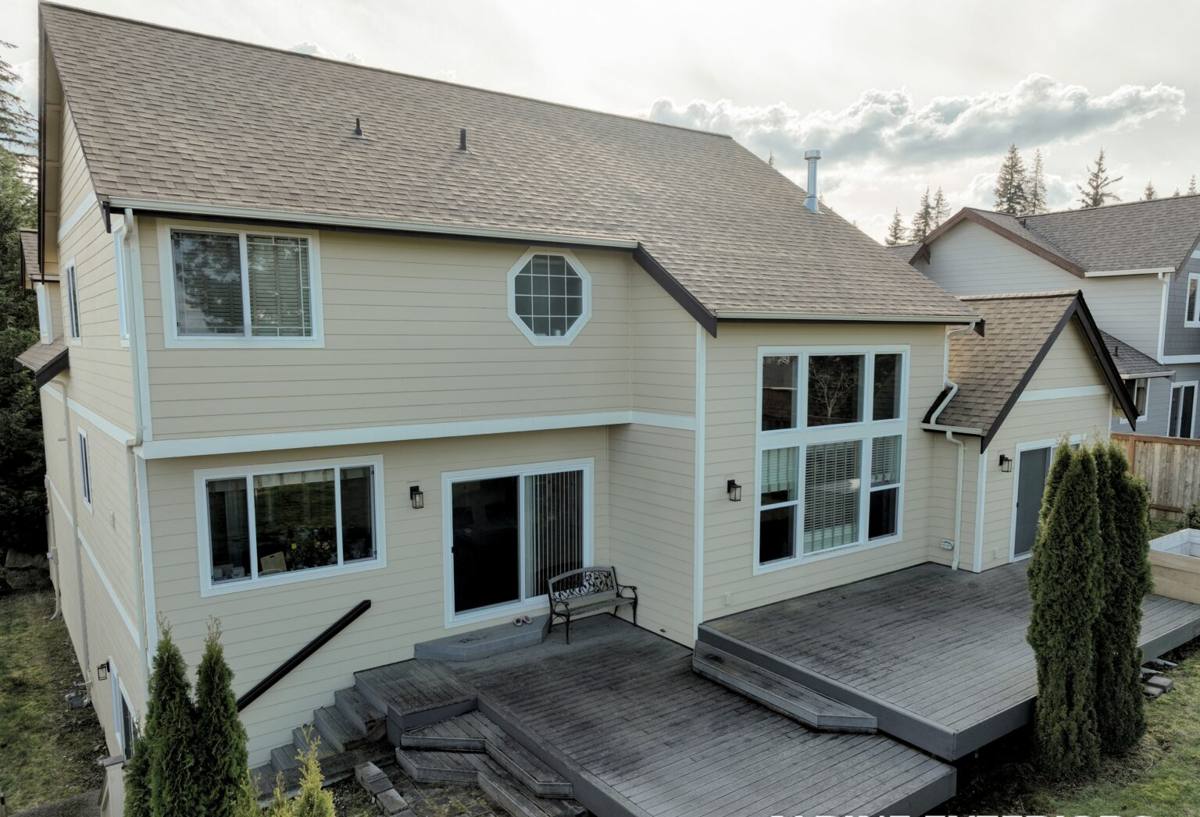
What Bellingham's Climate Does to Siding Over Time
Whatcom County doesn't get the violent weather some regions do, but it makes up for that with duration. A wall that stays damp for six months out of the year behaves very differently than one that dries out in a week after a storm. A few climate-driven patterns we see consistently on repair calls in and around Sehome:
- Moss and algae growth on north- and shade-facing walls, which holds moisture against the siding surface longer than an open, sun-exposed wall would experience
- Caulk and sealant failure at trim joints and butt seams, since Bellingham's freeze-thaw cycles are mild but frequent, working joints open gradually rather than all at once
- Paint and finish breakdown on painted wood or fiber cement that wasn't factory-finished, since repeated wetting cycles are harder on field-applied paint than on a baked-on factory finish
- Salt-influenced air off the bay, which can accelerate corrosion on exposed fasteners and metal trim accessories over the years
- Soft or delaminated material where wood-based or improperly sealed panel products have absorbed moisture at cut edges and butt joints
None of this is unique to Sehome specifically — it's Bellingham weather, and it affects every neighborhood in the city to some degree. But density, tree cover, and lot orientation vary block by block, and a repair crew that has worked in this specific area develops a feel for which walls and details tend to fail first in this kind of setting.
Signs Your Siding Actually Needs Repair
Homeowners often wait for visible holes or missing pieces before calling anyone. By that point, the underlying damage is usually larger than the visible symptom. Watch for these earlier signs instead:
- Soft, spongy, or slightly bowed sections when you press on the siding by hand
- Persistent dark staining or streaking that reappears shortly after cleaning
- Visible cracking at panel ends, corners, or anywhere siding meets trim
- Peeling or bubbling paint, especially in a pattern that follows seams rather than random spots
- Gaps or separation at butt joints and corner boards that weren't there a year or two ago
- A musty smell near an exterior wall inside the house, which can indicate moisture has already reached the sheathing
- Visible moss or algae buildup that keeps a section of wall damp longer than the rest of the house
Any one of these on its own might be minor. Several together, especially on the same wall, usually mean water has been finding its way in for a while.
What a Correct Repair Actually Involves
A siding repair that's done right is not just about matching the outside surface. It has to address what's happening behind the cladding, or the same failure shows up again in a season or two. A proper repair process includes:
1. Diagnosis before demolition
Before any siding comes off, we identify why that section failed. Was it a flashing detail, a caulking gap, a grading or drainage issue at the base of the wall, or simple age and wear? Cutting out and replacing siding without answering that question just resets the clock on the same problem.
2. Checking what's underneath
Once the damaged section is opened up, we look at the water-resistive barrier, the sheathing, and any framing behind it. In a climate as consistently damp as Bellingham's, it's common to find the visible siding damage is smaller than what's happened to the layers behind it. This is the point where a repair sometimes needs to expand slightly in scope — better to catch it now than patch over compromised sheathing.
3. Correcting the underlying detail
If the original failure point was a flashing or drainage issue, that gets fixed as part of the repair, not left in place to cause the same damage again. This is often the difference between a repair that lasts and one that needs redoing.
4. Matching materials and finish
Replacement sections need to match the existing siding in profile, exposure, and color as closely as possible. On homes with older or discontinued siding profiles, this sometimes means a broader conversation about whether a full wall or elevation should be redone for a clean, consistent look rather than a visible patch.
5. Sealing and finishing correctly
Proper caulking at the right joints (and not over-caulking joints designed to be left open for drainage) and touch-up or factory-matched finish work are what make a repair disappear into the rest of the wall.
Repair or Replace? How We Help You Decide
Not every damaged section needs a full re-side, and not every repair call ends with just a patch. The right call depends on how widespread the damage is and what condition the rest of the siding is in.
| Situation | Usually Repair | Usually Replace (Full Elevation or Whole House) |
|---|---|---|
| Damage confined to one or two isolated sections | Yes | No |
| Underlying wall assembly (sheathing/framing) is sound | Yes | Depends on findings |
| Siding is old, discontinued, or already showing widespread wear | Rarely a good long-term fix | Yes |
| Moisture damage found behind multiple separate sections | No | Yes |
| Original material is wood-based or vinyl nearing end of service life | Short-term only | Yes, especially if replacing anyway |
| Cosmetic issue only (fading, minor surface wear) | Often just cleaning/refinishing, not a structural repair | No |
We'll always give you a straight answer on which category your home falls into, including when the honest recommendation is a smaller, less expensive repair rather than pushing a full replacement you don't need yet.
Our Process for a Sehome Repair Call
- On-site assessment — we walk the exterior, check the specific areas you're concerned about, and look at the rest of the house for related issues you may not have noticed
- Diagnosis — we identify the likely cause, not just the visible symptom, before recommending a scope of work
- Written estimate — a clear scope and price, with repair and (if relevant) replacement options explained side by side
- Careful removal — damaged material comes out without unnecessary disturbance to sound adjacent siding
- Correcting the cause — flashing, sealant, or drainage details get fixed as part of the job, not left as-is
- Matched replacement material — installed to manufacturer spec, with attention to fastening, clearances, and joint treatment
- Final walkthrough — we review the completed work with you before considering the job done
Why Material Choice Matters for a Long-Term Fix
When a repair calls for new siding sections, what you replace it with matters as much as the workmanship. We install James Hardie fiber cement exclusively, and there's a practical reason that applies directly to repair work: Hardie's HZ5 product line is engineered specifically for climates with sustained moisture exposure, and its factory-applied ColorPlus finish holds up to repeated wet-dry cycling far better than field-applied paint. That matters in a place like Bellingham, where a repaired section needs to keep matching the rest of the house for years, not just look right on installation day.
Fiber cement is also non-combustible and dimensionally stable, so a patched section isn't more prone to swelling, warping, or attracting moisture at cut edges the way wood-based products can be. We won't install LP SmartSide, vinyl, or other alternatives even for a small repair section — matching a compromised material to itself just extends the same weaknesses into the repair.
If your existing siding is Hardie already, a repair is usually a clean match. If it's a different material nearing the end of its service life, we'll walk you through what a full re-side with Hardie would look like as an alternative to repeated patch repairs, without pressure either way.
Cost Factors for Siding Repair
Repair costs vary widely based on scope, so we won't quote a number without seeing the job. What actually drives the price:
| Factor | Why It Matters |
|---|---|
| Size and number of damaged sections | More linear footage and more separate repair areas both add labor and material |
| Condition of sheathing/framing behind the siding | Rot or moisture damage found underneath adds carpentry work beyond the siding itself |
| Accessibility | Second-story walls, steep grades, or tight side yards common in Bellingham's older lots take longer to work safely |
| Material matching | Matching an older or discontinued profile can require sourcing a close match or reworking a larger area for a consistent look |
| Underlying cause | A flashing or drainage fix adds scope but prevents the repair from failing again |
Why Hiring a Crew That Already Works in Sehome Matters
Siding repair is one of those jobs where local familiarity actually changes the outcome. A crew that regularly works in and around Bellingham neighborhoods like Sehome has already seen how the local combination of tree cover, bay-driven moisture, and mixed housing stock plays out on real walls — which orientations fail first, which original installation shortcuts tend to cause trouble ten or fifteen years later, and what a proper fix looks like on the specific mix of construction styles found in this part of the city. That's different from a traveling crew doing one job and moving on.
It also matters for accountability. A local, established contractor is the one you call if something needs adjustment after the fact — not a name you can't reach again. When you're trusting someone to identify a hidden moisture problem correctly the first time, that track record and local presence is worth something.
Caring for Your Siding After a Repair
A repair holds up longer with a small amount of ongoing attention, especially in a climate that stays damp as much of the year as Bellingham's does:
- Rinse moss and algae off shaded or north-facing walls once or twice a year before it builds up a heavy layer
- Keep gutters clear so overflow doesn't run down the wall face repeatedly
- Trim back vegetation and tree cover that keeps a section of wall shaded and damp longer than the rest of the house
- Check caulked joints every year or two and have any that have opened up resealed before water gets behind them
- Address small issues — a soft spot, a new crack, a stain — while they're still small
If you're noticing early signs of trouble on your Sehome home's siding, or you already know a section needs attention, we're glad to take a look and give you a straightforward assessment. Reach out for a free, no-pressure estimate using the form below.