 Bellingham Siding
 What Silver Beach's Location Puts Your Siding Through
Homes in the Silver Beach area of Bellingham sit inside one of the wetter, mossier corners of Whatcom County, and the siding on those homes works harder for it than siding does almost anywhere inland. Marine air off the Salish Sea carries salt and moisture that settle into every seam, joint, and fastener on a home's exterior. Add Bellingham's long stretch of driving rain each fall and winter, plus the shaded, damp conditions that let moss and algae take hold on north- and west-facing walls, and you get a climate that finds every weak point in a siding system within a few years, not a few decades.
That's not a reason to panic about your house. It's a reason to be specific about what goes on it and how. A product and installation method that holds up fine in a dry inland climate can fail early here, and a lot of the siding problems we get called out to look at in this part of Bellingham trace back to a mismatch between the product, the detailing, and the job it was actually asked to do.
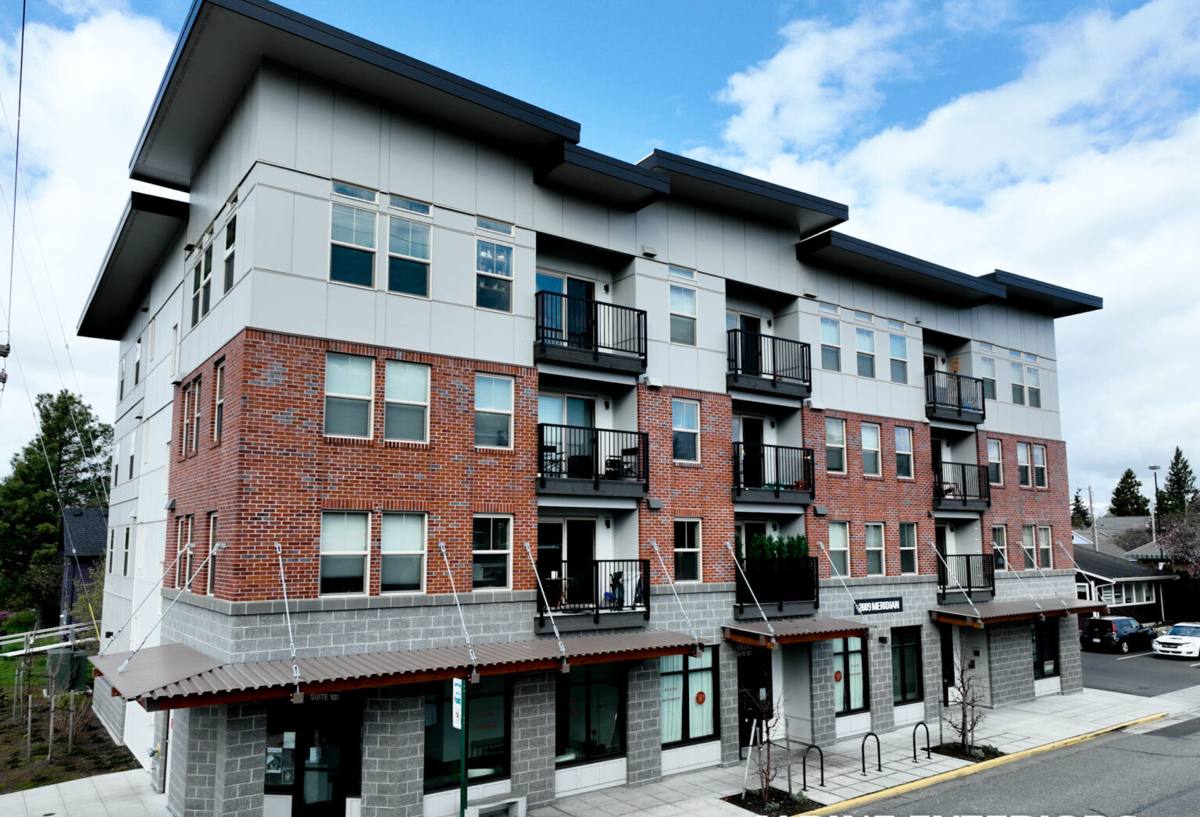
How Salt Air, Rain, and Moss Actually Damage Siding
Salt-Laden Marine Air
Salt carried in marine air is mildly corrosive and hygroscopic, meaning it pulls moisture out of the air and holds it against whatever surface it lands on. Over years, that constant low-grade dampness speeds up rust on unprotected fasteners, breaks down cheap caulking faster than the manufacturer's warranty assumes, and softens paint films that weren't built to handle it.
Driving, Wind-Blown Rain
Bellingham doesn't just get rain, it gets rain pushed sideways by wind coming off the water, which finds horizontal laps, unsealed trim joints, and poorly flashed windows that would stay dry in a straight-down storm. Once water gets behind siding, the question isn't whether it causes damage, it's how long the wall assembly takes to dry out before the next storm arrives.
A Long Moss and Algae Season
Whatcom County's moss season runs most of the year on shaded exterior walls, especially anything facing north or sitting under eaves and mature trees, which is common on Silver Beach lots. Moss holds moisture against the siding surface far longer than open air would, which is exactly the condition that rots wood-based products and stains poorly finished surfaces.
Why Fiber Cement Is the Right Material for This Climate
Every siding material handles moisture, salt, and moss differently, and in a climate like Bellingham's those differences show up faster than they would somewhere drier. Vinyl expands and contracts with temperature swings, which opens gaps at seams over time and gives moss and grime somewhere to collect. Wood products, including primed spruce and cedar, are only as good as their finish and depend on diligent, ongoing maintenance to keep moisture out of exposed grain and cut ends. Engineered wood products like LP SmartSide use a wood strand core that is more moisture-resistant than solid wood but still vulnerable at cut edges and butt joints if those details aren't sealed correctly and kept sealed year after year.
| Material | Moisture & Salt Air Behavior | Moss & Algae Resistance | Ongoing Maintenance |
|---|---|---|---|
| Vinyl siding | Doesn't rot, but seams gap and warp with heat and cold cycling | Low-maintenance surface, but grime and moss still cling to seams and J-channels | Low, but damage is often unrepairable in place |
| Primed spruce or cedar | Absorbs moisture at any break in the finish; salt air accelerates finish failure | Vulnerable where moss holds moisture against exposed or cracked wood | High — regular repainting and caulk inspection required |
| LP SmartSide (engineered wood) | Better than solid wood, but cut edges and joints must stay sealed | Moderate; failure at unsealed seams can allow moss-driven rot to start | Moderate — edge sealing and finish upkeep matter |
| James Hardie fiber cement | Non-combustible, doesn't absorb and swell like wood; engineered for wet climates | Dense, stable surface resists moss-driven deterioration far longer | Low — occasional washing and caulk checks |
Why We Install Only James Hardie Fiber Cement
We don't install vinyl, LP SmartSide, Cemplank, Allura, primed spruce, or cedar, and that's a deliberate standard, not an accident of what we happen to stock. Each of those products has legitimate uses and reasonable manufacturers stand behind them. But in a climate that combines salt-laden marine air, sustained wind-driven rain, and a moss season that runs most of the year, we've found the trade-offs of those alternatives — expansion and seam gaps, finish and edge maintenance, moisture sensitivity at cuts and joints — show up as callbacks sooner than homeowners expect.
James Hardie fiber cement is engineered specifically around climate exposure, with HZ5 formulations built for wetter regions like ours. It doesn't swell or rot the way wood-based products can, it holds a factory-applied ColorPlus finish far longer than field-applied paint, and it carries a strong transferable warranty backed by a manufacturer with decades of track record in exactly this kind of weather. Standardizing on one product lets us install it correctly every time instead of juggling different methods and warranty terms across several materials.
What a Correct Siding Installation Actually Involves
Water-Resistive Barrier and Flashing First
The siding itself is the last layer, not the first line of defense. A correct install starts with an intact water-resistive barrier, properly lapped and taped, and flashing at every window, door, and horizontal transition so that any water that does get past the siding has a way out instead of a way in. This is the step that gets rushed on a bad job and the one most responsible for the rot and staining we see on older homes in wet coastal climates.
Fastening and Gapping to Spec
James Hardie publishes specific fastening patterns, nail penetration depth, and gap requirements at butt joints, corners, and trim, and those specs exist because of exactly the moisture and movement conditions this region produces. Skipping or approximating them doesn't show up as a problem on install day; it shows up two, five, or ten years later as a callback.
Trim, Corners, and Caulking
Corner boards, window trim, and butt joints are where most water intrusion actually starts, because they're where two materials meet. We detail these points to shed water rather than trap it, and we use caulking rated for exterior movement and UV exposure rather than whatever tube is cheapest, since a failed bead at a corner board is a slow, hidden path for water straight into the wall.
Factory Finish, Not Field Paint
ColorPlus finish is baked on and cured at the factory before the boards ever reach the jobsite. That gives it more consistent coverage and better long-term adhesion than a coat of paint rolled on in the field, which matters a great deal in a climate where paint film is under near-constant moisture stress for most of the year.
Our Process on Silver Beach Homes
Site Assessment
We start with a walk-through of the exterior, noting exposure direction, moss and moisture staining, existing trim and window flashing condition, and anything specific to the lot — shade from trees, wind exposure, drainage — that will shape the install plan.
Tear-Off and Sheathing Inspection
Once the old siding comes off, we check the sheathing and water-resistive barrier underneath before anything new goes on. This is often the first real look anyone has had at that layer in years, and it's the point where hidden moisture damage from a prior install gets caught and addressed instead of covered back up.
Installation and Final Details
Hardie panels and trim go on to manufacturer spec, with attention to the gapping, fastening, flashing, and caulking details covered above. We finish with a walk-through so you understand what was done and why, and what, if anything, to keep an eye on going forward.
Maintenance a Silver Beach Home Actually Needs
Correctly installed Hardie siding is low-maintenance, not no-maintenance. A short annual routine keeps it performing the way it's built to:
- Rinse siding once or twice a year with a garden hose to clear salt residue, pollen, and grime before it builds up
- Check caulking at trim, window, and door joints annually and re-caulk anywhere it has cracked or pulled away
- Trim back tree limbs and shrubs that keep any wall shaded and damp longer than the rest of the house
- Address moss on nearby roofing or walkways promptly so spores have less chance to spread onto siding
- Walk the exterior after major storms and note any impact damage or loose trim before it becomes an entry point for water
Choosing a Contractor Who Already Works This Neighborhood
A crew that's worked in Bellingham's marine climate knows to slow down on flashing details, knows what a properly gapped joint looks like after a few winters, and knows which parts of a Silver Beach lot — tree cover, wind exposure, drainage — tend to need extra attention. A crew whose experience is mostly in drier climates isn't doing anything wrong on purpose, but they're also not necessarily building in the margin this weather demands.
Ask any contractor bidding your siding replacement how they handle water-resistive barrier inspection, what their fastening and gapping practices are, whether they're a certified installer for the product they're proposing, and whether they pull the required permits and carry proper insurance. A contractor who's confident in their process will walk you through it without hesitation.
What Affects the Cost of a Siding Installation
Every home is different, so an honest number only comes from an in-person look, but a few factors consistently move the price: the square footage and complexity of the exterior (dormers, trim detail, and multiple stories add labor), what's found underneath during tear-off (sheathing repair or rot remediation adds cost but shouldn't be skipped), the specific Hardie product line and ColorPlus color selected, and site access on a given lot. We provide a detailed, itemized quote after the site assessment so you know exactly what you're paying for and why, not just a lump-sum figure.
If you're weighing a siding replacement on a Silver Beach home, we're glad to walk the exterior with you and give you a straightforward, no-pressure estimate, with no obligation to move forward until you're ready.