 Bellingham Siding
 Building New in Sehome? Get the Windows Right the First Time
Sehome sits close enough to Bellingham Bay that new-construction homes here deal with a different set of conditions than a build out in the county. Salt-laden air off the water, long stretches of driving rain, and a moss season that seems to start earlier every year all put real demands on a window install. When a house is going up from the studs out, the window package and the flashing details around it are one of the few chances to get this right before siding, trim, and paint cover everything up. Get it wrong at this stage and you're not looking at a caulk touch-up in five years — you're looking at torn-out siding and water damage behind the wall.
We install new-construction windows on homes throughout Bellingham and Whatcom County, and Sehome's mix of older lots being redeveloped and infill new builds means we're regularly coordinating with builders and homeowners on window openings before the weather-resistive barrier even goes up. This page covers what that job actually involves and what to expect if you're planning a new build or a from-the-studs remodel in Sehome.
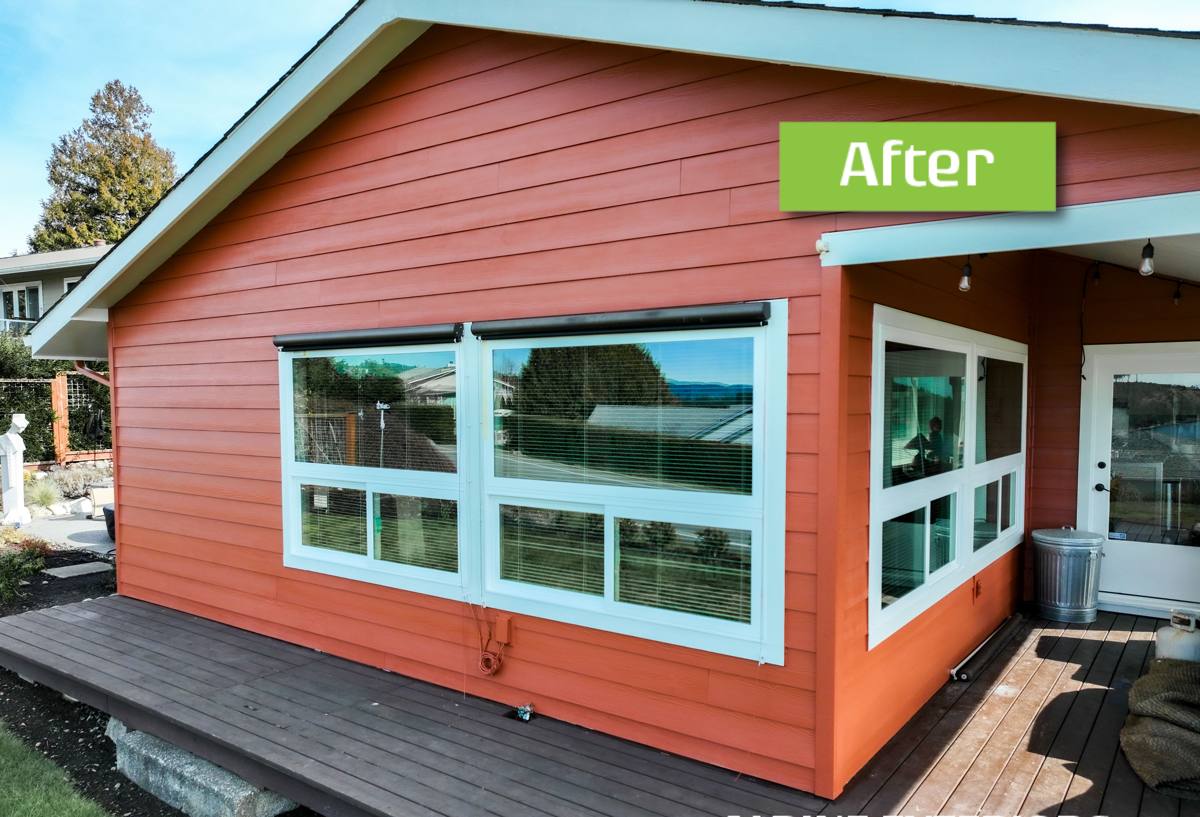
What Bellingham's Climate Asks of a New-Construction Window Install
Window performance in this part of Whatcom County comes down to three things: how well the opening sheds water, how well the frame resists the salt air near the bay, and how well the whole assembly holds up to months of damp, moss-friendly weather every year.
Driving Rain and Wind-Driven Wet
Bellingham doesn't just get rain — it gets rain pushed sideways by wind off the water often enough that a window install has to assume wind-driven moisture will hit the wall, not just fall straight down on it. That means proper pan flashing under every rough opening, correctly lapped house wrap, and sealant details that direct water back out rather than trapping it in the wall cavity.
Salt Air Near the Bay
Sehome's proximity to Bellingham Bay means airborne salt is a slow but real factor on exposed metal — hardware, cladding, and fasteners. It's not the same exposure you'd get right on the waterfront, but it's enough that we pay attention to corrosion-resistant fasteners and hardware finishes rather than treating every install like it's inland.
Moss and Sustained Damp
Long gray stretches with little drying time between rain events are exactly the conditions moss and mildew like. On new construction, that's less about the window itself and more about how water is managed at the sill and head flashing — any spot where water can pool or linger is a spot where growth and rot eventually follow. Getting the pitch and drainage right at install time is cheaper than fighting moss on a finished sill for the next twenty years.
What a Correct New-Construction Window Install Actually Includes
"New-construction" window (as opposed to a retrofit or pocket replacement) refers to windows with a nailing fin, installed into a framed rough opening before the exterior finish goes on. Done right, the sequence looks like this:
- Rough opening check. Verify the opening is square, plumb, and sized correctly for the window unit — before flashing goes on, not after.
- Sill pan flashing. A sloped, sealed pan at the bottom of the opening so any water that gets past the window has somewhere to go besides your framing.
- Weather-resistive barrier integration. House wrap or building paper lapped correctly around the opening — this is where a huge share of long-term leaks originate if it's rushed.
- Window setting and fastening. The unit set level, plumb, and square in the opening, shimmed correctly, and fastened per the manufacturer's schedule — not just "close enough."
- Flashing tape at the nailing fin. Properly lapped tape at the sides and head, following a shingle-style sequence so water always sheds outward and down.
- Head flashing. A drip cap or integrated head flashing above the window so water is directed around the opening, not down the face of it.
- Interior and exterior sealant. Backer rod and sealant where called for, without over-caulking gaps that should be left to drain or vent.
Skip or rush any one of these steps and the window itself doesn't matter much — a premium unit installed with a sloppy sill pan will leak just the same as a budget one.
Our Process for Sehome New-Construction Projects
1. Plan Review and Coordination
For new builds, we look at the window schedule and rough opening sizes early, ideally before framing is finalized, so there are no surprises when units arrive. We coordinate directly with builders, GCs, or homeowners acting as their own GC.
2. Product Selection
We walk through frame material, glass packages, and performance ratings suited to a bay-adjacent Bellingham lot — this isn't the same conversation we'd have for a build twenty miles inland in drier, less wind-exposed terrain.
3. Flashing and Install
Our crews follow a consistent flashing sequence on every opening — same order of operations whether it's a two-window addition or a full house. Consistency is what prevents the "it depends who was on the crew that day" leaks.
4. Inspection Before Siding Closes It Up
Before siding or trim covers the flashing, we do a final look at every opening. This is the last point where a mistake is a five-minute fix instead of a tear-out.
5. Walkthrough
Once windows are set, we walk the homeowner or builder through what was done and answer any questions about care, warranty, or how the flashing system works — so you know what's behind the wall, not just what you can see.
Choosing a Window Package for a Sehome Build
There's no single "best" window for every project — the right call depends on budget, the home's design, and how exposed the specific lot is to wind and rain. Here's how the common frame materials generally compare for this climate:
| Frame Material | How It Handles Bellingham's Wet Climate | Maintenance | Typical Cost Position |
|---|---|---|---|
| Vinyl | Good moisture resistance, won't rot or corrode | Low — occasional cleaning | Most affordable |
| Fiberglass | Excellent — stable in wet/dry cycling, resists warping | Low | Mid to upper range |
| Wood (clad exterior) | Good if cladding and flashing are done correctly; raw wood exposure is a liability here | Higher — exterior clad reduces upkeep, but interior wood still needs attention | Upper range |
| Aluminum | Prone to condensation and, near the bay, some corrosion risk over time without proper finish | Moderate | Varies |
We'll give you a straight opinion based on your lot, your budget, and how exposed the elevation facing the weather actually is — not a push toward whatever we happen to have the most of in the shop.
Common Mistakes We See on New-Construction Window Jobs
- Skipping or improvising sill pan flashing to save time
- House wrap lapped backwards or not sealed at the corners of the opening
- Fasteners that don't match the exposure — an issue that shows up as staining or corrosion years later, especially closer to the bay
- Over-caulking a window instead of flashing it, which traps moisture that has nowhere to escape
- Setting windows out of square "because the opening was close enough"
- No final flashing inspection before siding crews close up the wall
Most of these aren't expensive to avoid — they just take a crew that treats flashing sequence as non-negotiable rather than optional.
Why Local Experience in Sehome and Bellingham Matters
A window contractor who mostly works dry inland climates can still install a window correctly on paper and still get the flashing sequence wrong for what Whatcom County actually throws at a house. Crews who work Bellingham and Sehome regularly already know: which elevations catch the worst of the wind-driven rain, how much slope a sill pan needs given how much water actually hits it here, and where moss and standing moisture tend to start on a new build if drainage details are shorted. That local pattern recognition is worth more than a manufacturer's install manual on its own — the manual gives you the minimum; the local experience tells you where this specific climate pushes past the minimum.
New-Construction Windows vs. Replacement: Know Which Job You're Getting
It's worth being clear on the distinction, since it changes the whole approach:
- New-construction windows have a nailing fin and are installed into an open, unfinished rough opening — used for new builds and additions, or full-wall remodels down to the studs.
- Replacement windows (pocket or insert style) fit into an existing finished opening without disturbing the surrounding siding or trim — used when you're swapping out old units in a home that's already built.
If your Sehome project is a new build or you're opening walls down to framing, you want the new-construction approach and the full flashing sequence described above. If your siding and trim are already in place and staying, that's a different job with a different set of trade-offs — ask us which category your project actually falls into before you get quotes, since the two aren't priced or scoped the same way.
What Affects the Cost of a New-Construction Window Job
Pricing varies project to project, but the main cost drivers on a Sehome new-construction window package are generally:
| Factor | Why It Matters |
|---|---|
| Number and size of openings | More and larger units mean more material and labor |
| Frame material chosen | Vinyl, fiberglass, and clad-wood carry different price points |
| Glass package | Upgraded glazing for energy performance or sound adds cost |
| Elevation exposure | A wall that takes the brunt of wind-driven rain may warrant extra flashing detail |
| Access and site conditions | Scaffolding, tight lots, or multi-story openings add labor time |
| Coordination complexity | Working alongside other trades on an active build site vs. a standalone project |
We give straightforward, itemized estimates so you can see exactly what's driving the number — no vague lump-sum guessing.
Ready to Talk About Your Sehome Project?
Whether you're framing a new home, adding on, or opening up a wall for a major remodel in Sehome, we're happy to walk the site, look at your window schedule, and give you a straight read on what the job needs. Reach out for a free, no-pressure estimate using the form below.