 Bellingham Siding
 Why Sehome's Climate Is Hard on Ordinary Siding
Sehome sits close enough to Bellingham Bay that homes here deal with a specific combination of stressors: salt-laden air moving in off the water, long stretches of driving rain that comes in sideways during winter storms, and a moss and algae season that can run most of the year given how little the north and shaded sides of a house ever fully dry out. Add in the tree cover that gives the neighborhood its character, and you get siding that stays damp longer than it would in a drier, more open part of Whatcom County.
None of that is unusual for western Washington. But it does mean that siding choices which perform fine in a dry climate — or even in a milder wet climate — get tested hard here. Paint film breaks down faster under constant moisture cycling. Fasteners that aren't corrosion-rated can bleed rust through paint within a few years. Wood-based products absorb water at cut edges and around penetrations, and once that starts, rot follows. We install James Hardie fiber cement siding exclusively because it's engineered for exactly this kind of exposure, and because we've seen what happens to homes sided with products that weren't.
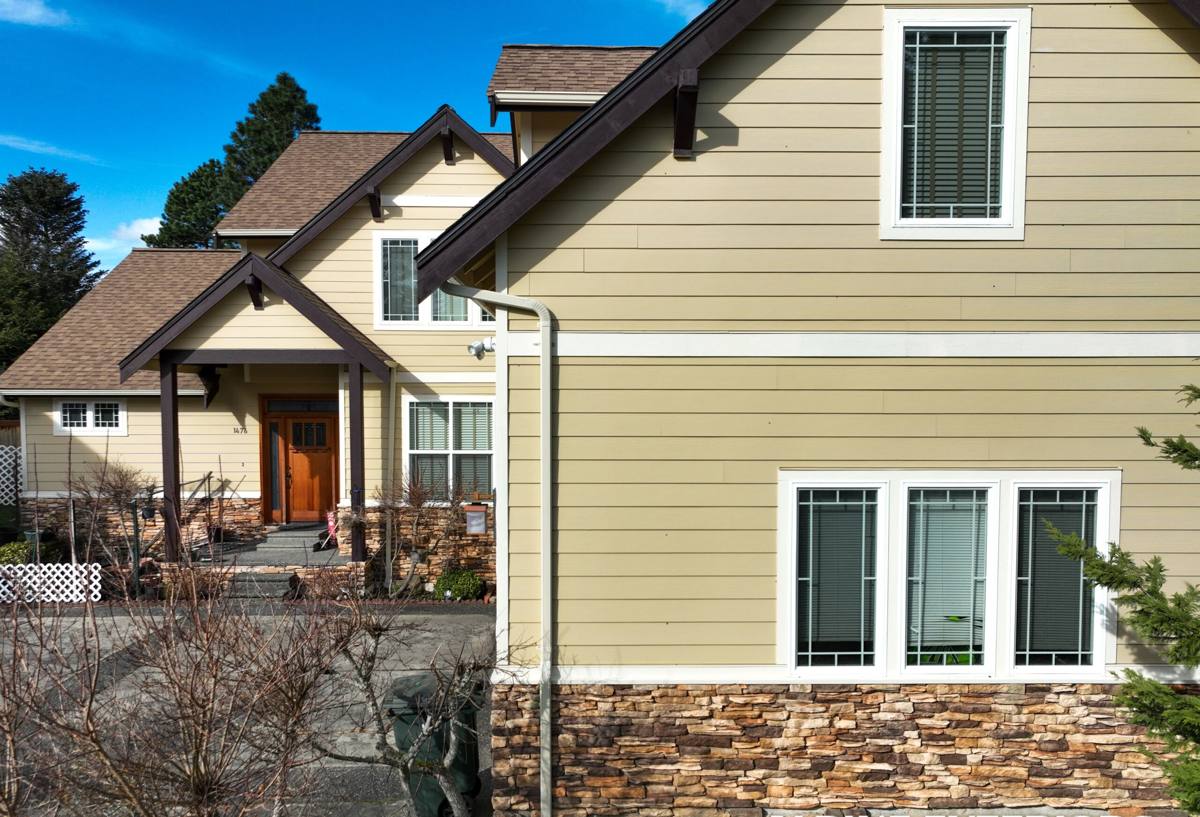
What Sehome's Housing Stock Actually Needs
A Mix of Older and Newer Homes
Sehome has a lot of older housing stock alongside newer infill, which means siding crews here regularly run into original sheathing, older window flashing details, and add-on work from past decades that wasn't always done to current standards. A siding replacement on a home like this isn't just a swap of the outer skin — it's a chance to check what's underneath and fix moisture problems before they get sealed back up behind new material.
Shade, Slope, and Slow-Drying Walls
Mature trees and hillside lots are common in this part of Bellingham, and they create walls that stay shaded and damp well after a storm has passed elsewhere. Those are the walls where moss gets a foothold first and where poor drainage detailing shows up as staining, soft trim, or paint failure years before the rest of the house.
Why We Only Install James Hardie
We don't install LP SmartSide, vinyl, Cemplank, Allura, or bare cedar or spruce siding. That's a deliberate standard, not a sales preference, and it comes down to how each of those products behaves over a 20- to 30-year span in a climate like Sehome's.
- Vinyl is affordable and low-maintenance in mild climates, but it expands and contracts with temperature swings, can crack in cold snaps, and offers no fire resistance — a real consideration as wildfire smoke and dry-season fire risk have become a bigger part of Pacific Northwest summers.
- LP SmartSide and other engineered wood products use a wood-strand core. If the factory coating is ever compromised — at a cut edge, a fastener hole, or a poorly flashed joint — moisture can wick into that core and cause swelling or rot, and once that starts it's difficult to catch early.
- Bare cedar or primed spruce can look great, but it demands a repainting and caulking cycle every few years to keep water out, and in a climate with this much rain, that maintenance window shrinks fast.
James Hardie fiber cement is cement, sand, and cellulose fiber — it doesn't rot, it isn't attractive to insects, and it's non-combustible. Hardie's HZ5 product line is specifically formulated for climates with extended moisture exposure and freeze-thaw cycling, which describes Sehome's winters well. The factory-applied ColorPlus finish is baked on under controlled conditions rather than field-painted, so it holds color and resists the fading and peeling that site-applied paint struggles with here.
What a Correct Fiber Cement Installation Involves
Moisture Management Behind the Siding
The siding itself is only part of the system. A correct install includes a drainage plane (weather-resistant barrier), properly lapped and sealed flashing at every window, door, and penetration, and a rainscreen gap where conditions call for it so water that does get behind the cladding can drain and the wall can dry. This is the step that separates a siding job that lasts three decades from one that develops hidden rot in five years — and it's the step that's easiest to skip if a crew is moving fast.
Fastening, Clearances, and Caulking
Hardie specifies exact nailing patterns, fastener types, and minimum clearances from grade, roof lines, and decks. In a bay-adjacent climate, we use corrosion-resistant fasteners throughout — this matters more here than it would inland, since salt air accelerates corrosion on anything less than a properly rated fastener. Butt joints and trim intersections get sealed with a quality, paintable sealant rated for exterior use, not just caulked and hoped for.
Cut Edges and Field Painting
Every field-cut edge of a Hardie board should be sealed with touch-up paint before installation, since a raw cut edge is the one part of the board without factory protection. Skipping this step is a common shortcut that shows up as edge staining or paint failure at joints within a few years.
| Factor | James Hardie Fiber Cement | Vinyl | Wood / Engineered Wood |
|---|---|---|---|
| Moisture resistance | Excellent — cement-based, won't rot | Good, but seams can trap water | Variable — core can swell if coating is breached |
| Fire resistance | Non-combustible | Melts/deforms under heat | Combustible |
| Maintenance cycle | Occasional wash; factory finish holds color for years | Low, but brittle over time | Repaint/reseal every few years |
| Typical lifespan (installed to spec) | 30+ years | 15-25 years | 10-20 years depending on exposure |
| Performance in salt air / driving rain | Strong — HZ5 line engineered for it | Fair | Weakest link if detailing fails |
Our Process for a Sehome Siding Job
- On-site assessment — we look at existing siding, trim, flashing, and sheathing condition, paying particular attention to shaded and north-facing walls where moisture problems tend to hide first.
- Tear-off and substrate check — old siding comes off and we inspect the sheathing and framing underneath for rot or prior water damage before anything new goes up.
- Weather barrier and flashing — a new drainage plane and correctly lapped flashing go in at every penetration, window, and door.
- Hardie installation — boards, panels, or shingles installed to manufacturer spec, with corrosion-resistant fasteners and sealed cut edges throughout.
- Trim, caulking, and final detail — joints sealed, touch-up paint applied, and a final walk-through to confirm clearances and finish quality.
- Site cleanup — full cleanup of the property, including magnetic sweep for stray fasteners.
Living With Fiber Cement Siding in a Wet, Salt-Air Climate
Even a low-maintenance product benefits from a little attention in this climate. We recommend an annual visual check for moss or algae buildup, especially on shaded walls, and a gentle wash rather than a high-pressure blast, which can force water behind trim and siding joints. Keep an eye on caulking at trim intersections over the years — sealant is the one component that wears faster than the siding itself and is a simple, inexpensive thing to refresh before it becomes a moisture entry point.
Because Sehome's tree cover keeps some walls damp longer, trimming back vegetation that shades siding directly can meaningfully slow moss growth and extend the time between cleanings.
Why Hiring a Crew That Already Works in Sehome Matters
A siding installer who works regularly in this part of Bellingham already understands the permitting expectations for the City of Bellingham and Whatcom County, knows what original construction in this neighborhood tends to look like underneath the old siding, and isn't guessing at how to detail a wall that stays shaded and damp for half the year. That local pattern-recognition is what catches a hidden moisture problem before it gets sealed behind new siding, rather than after.
- Ask whether the crew is a certified James Hardie installer, not just someone who has "used it before."
- Ask how they handle flashing at windows and roof-to-wall intersections — this is where most siding failures actually start.
- Ask what fastener type they use, and confirm it's corrosion-resistant given the bay-adjacent air.
- Ask whether cut edges get field-painted before installation.
- Ask for the manufacturer warranty terms in writing, and whether it's transferable if you sell the home.
Get a Straight Answer for Your Home
Every Sehome home carries its own mix of sun exposure, tree cover, and existing siding condition, and that's worth a real look before anyone talks numbers. If you'd like an honest assessment of what your siding needs and what correct James Hardie installation would involve for your specific home, request a free, no-pressure estimate using the form below.