 Bellingham Siding
 Board & Batten in Sehome: A Style That Fits the Neighborhood
Sehome sits close to downtown Bellingham and Western Washington University, and it's one of those Whatcom County neighborhoods where you see real variety in housing stock — older bungalows and craftsman-era homes mixed in with newer infill construction and rental conversions. Board & batten siding works well across that mix. The vertical lines read as clean and modern on newer builds, but the style itself is old enough that it doesn't look out of place on a house from decades past. It's also a practical choice for gable ends, dormers, and accent walls where homeowners want to break up a large expanse of siding without switching materials entirely.
We get calls from Sehome homeowners for two different reasons: some want board & batten as a full re-side, and others want it as an accent on top of lap siding elsewhere on the house. Both are common, and both need to be planned the same way — with real attention to how water moves down a vertical panel and where it's allowed to go when it gets behind the surface.
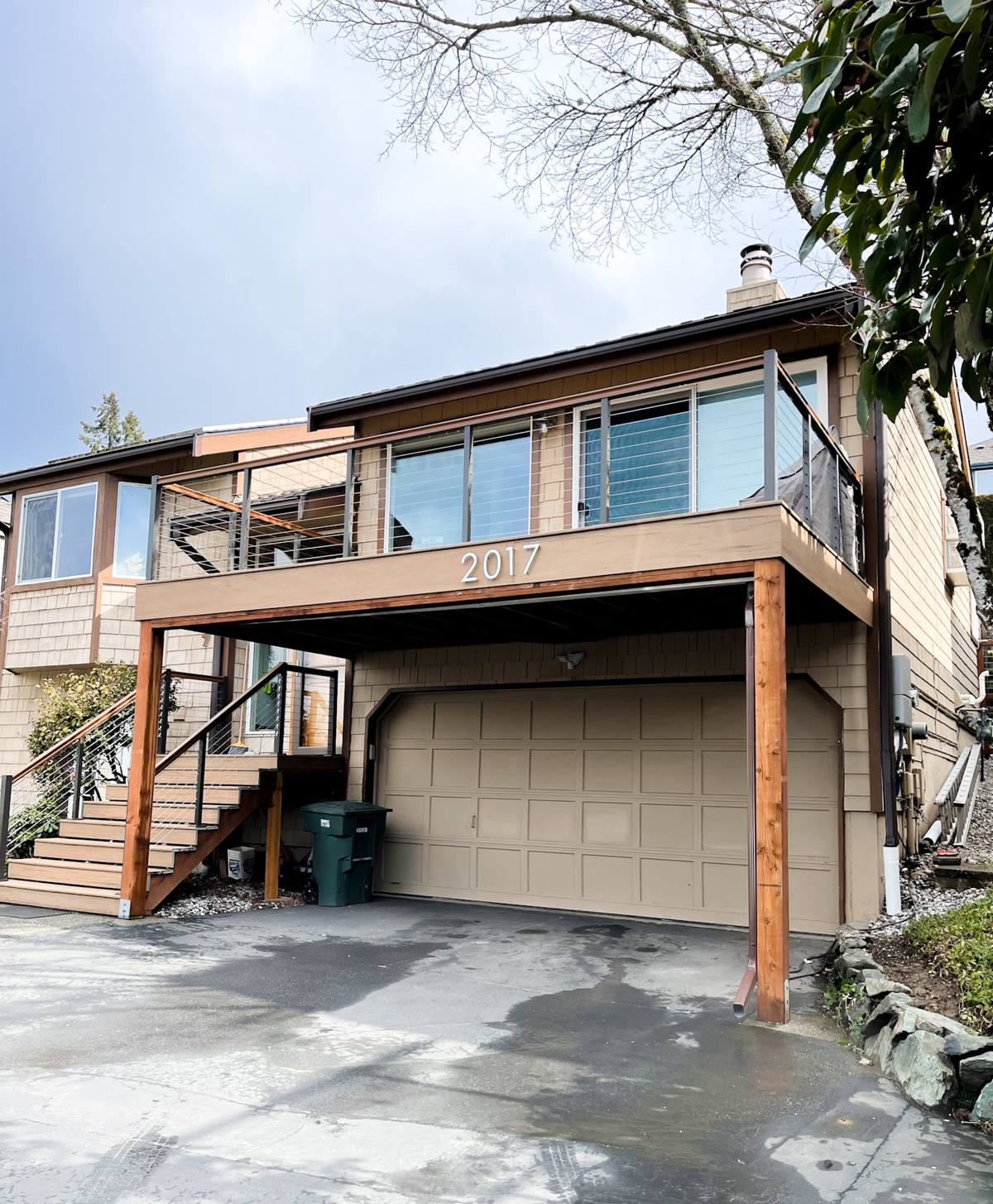
What Bellingham's Climate Actually Does to Vertical Siding
Board & batten has more vertical seams than most siding styles, and every one of those seams is a place water can find its way in if it isn't detailed correctly. In Bellingham, that matters more than it would somewhere dry. The combination of salt air off the Sound, driving rain that comes in sideways during fall and winter storms, and a moss season that can stretch for months puts real, ongoing stress on any exterior wall system.
Salt Air
Proximity to Bellingham Bay means airborne salt reaches homes well inland, including much of Sehome. Salt accelerates corrosion on fasteners, flashing, and any exposed metal trim. Cheap or under-spec'd fasteners show rust streaks down board & batten siding faster than on lap siding, simply because there are more vertical joints for water and salt-laden moisture to sit against.
Driving Rain
Wind-driven rain doesn't just fall on a wall — it gets pushed into it. Vertical board & batten needs a real drainage plane behind it, not just caulk at the seams, because caulk alone will eventually fail and rain pushed sideways will find that failure point.
Moss Season
Shaded, north-facing walls in Sehome — especially anywhere tree cover blocks direct sun — stay damp for extended stretches. Moss and algae take hold on surfaces that hold moisture, and board & batten's vertical battens create small ledges and shadow lines where organic growth gets a foothold if the material and finish aren't up to it.
What a Correct Board & Batten Job Actually Involves
Board & batten looks simple from the curb — vertical boards, battens over the seams — but the assembly behind it is what determines whether it lasts 10 years or 40. A correct installation includes:
- A weather-resistant barrier installed and lapped correctly, with all penetrations sealed
- A rainscreen gap (furring strips or a drainage mat) so any moisture that gets behind the panel has somewhere to drain and dry out, instead of sitting against the sheathing
- Correct fastener type, length, and spacing — into framing, not just sheathing, and rated for the coastal, high-moisture exposure common around Bellingham
- Properly flashed window and door openings, with head flashing that actually sheds water onto the surface below rather than behind it
- Batten placement over real structural framing wherever possible, not just cosmetic overlay
- Correct bottom clearance off grade, decks, and roof lines so the siding isn't sitting in standing water or snow load
Skipping the rainscreen gap is the most common shortcut we see on board & batten jobs that come to us for repair. Without it, any moisture that gets past the outer surface — through a nail hole, a seam, or wind-driven rain — has nowhere to go. It sits against the sheathing, and over a few wet seasons that turns into rot, even if the face of the siding still looks fine.
James Hardie Board & Batten: What We Install and Why
We install James Hardie fiber cement exclusively — no vinyl board & batten, no LP SmartSide, no cedar, no primed spruce. For board & batten specifically, that means HardiePanel vertical siding paired with Hardie trim battens, finished in factory-applied ColorPlus, and specified in Hardie's HZ5 climate line built for the Pacific Northwest's wet, coastal exposure.
Why Fiber Cement for This Style
Fiber cement doesn't absorb water the way wood-based products do, so it doesn't swell, cup, or delaminate at the seams the way cedar or engineered wood board & batten can after repeated wet-dry cycles. It's also non-combustible, which matters to insurers and to homeowners thinking about long-term risk, not just curb appeal.
ColorPlus Finish
Factory-applied ColorPlus finish is baked on under controlled conditions, which gives it better adhesion and color consistency than field-applied paint. On a style with this many seams and edges, a finish that resists peeling and fading at cut lines and joints is worth more than it sounds — it's the difference between a house that looks uniform after eight years and one with visible touch-up patches.
The Trade-Off We're Honest About
Fiber cement is heavier and less forgiving to install than vinyl or engineered wood — it has to be cut, fastened, and flashed to spec, and it doesn't hide a rushed installation the way some lighter materials do. That's exactly why installation quality matters as much as the product choice. A good material installed poorly will still fail early.
Comparing Board & Batten Material Options
Homeowners researching board & batten for a Sehome property usually come across several material options. Here's an honest comparison of how they hold up under Bellingham's conditions specifically:
| Material | Moisture Behavior | Moss/Algae Resistance | Maintenance | Typical Lifespan |
|---|---|---|---|---|
| James Hardie fiber cement | Does not absorb or swell; stable at seams | Factory finish resists growth better than raw wood | Occasional rinse; repaint not required for decades | 30+ years to warranty period |
| Cedar board & batten | Absorbs moisture; prone to cupping and swelling at battens | Susceptible without frequent treatment | Regular staining/sealing required | 15-25 years with upkeep |
| Engineered wood (LP-type) | Resists moisture better than solid wood but can swell at cut edges if not sealed | Moderate; depends on coating | Field-painted finish needs periodic repainting | 20-30 years |
| Vinyl board & batten | Doesn't absorb water but traps moisture behind panels if not vented | Prone to algae film in shaded, damp areas | Low, but color fades and can't be repainted easily | 15-25 years |
The numbers above are general ranges, not guarantees — actual performance always comes down to installation quality, sun exposure, and how sheltered or exposed a given wall is.
Our Process for a Sehome Project
When we take on a board & batten job in Sehome, the process generally looks like this:
- On-site assessment — we look at existing siding condition, sheathing moisture where accessible, drainage patterns around the foundation, and sun/shade exposure on each wall
- Scope and material plan — we spec panel width, batten spacing, and trim details based on the home's style and the specific walls being sided
- Tear-off and inspection — removing old siding lets us catch hidden rot or moisture damage before it's covered up again
- Weather barrier and rainscreen installation — this is the step that determines long-term performance and it doesn't get shortcut
- Panel and batten installation — fastened to spec, flashed at every opening and transition
- Final walkthrough — we go over the finished work with the homeowner before calling the job done
Why Hiring a Crew That Already Works in Sehome Matters
Bellingham's building department and inspection requirements don't change block by block, but the practical realities of a job do. A crew that's already worked in Sehome has a feel for which walls in that part of town tend to stay damp longest, how tree cover affects drying time after a job, and where drainage tends to collect around older lots. That local pattern-recognition doesn't replace a proper site assessment, but it means fewer surprises once tear-off starts.
There's also a simple accountability argument. A contractor based in Whatcom County, with a track record of jobs around Bellingham, is going to be there in five years if a warranty question comes up. That's not true of every out-of-area crew or general handyman offering siding as a side service.
Maintaining Board & Batten Siding in Sehome
Even with a correctly installed, fiber cement system, a little seasonal attention keeps things performing well. Watch for:
- Streaking or discoloration below fasteners or trim, which can signal a metal component starting to corrode
- Green or black growth concentrating on shaded, north-facing battens — a sign that section is staying wet longer than others
- Gaps opening up at caulked joints around windows, doors, or trim boards
- Soft spots or visible swelling at the base of the wall, near grade, decks, or downspouts
- Debris or plant growth building up against the bottom of the siding, which traps moisture against the material
None of these are emergencies on their own, but they're worth a call if you notice them, especially heading into the wetter months.
If you're weighing board & batten for a home in Sehome, we're glad to take a look and give you a straight answer on what it would take — no pressure, no obligation. Fill out the form below and we'll set up a free estimate.