 Bellingham Siding
 Fairhaven Roofs Take a Different Kind of Beating
Fairhaven sits close enough to Bellingham Bay that salt-laden air is a constant, not an occasional visitor. Combine that with Whatcom County's long wet season, driving rain off the water, and the shade from mature evergreens that keeps roof surfaces damp for days after a storm, and you get a climate that ages roofing materials faster than a typical inland neighborhood. A roof that would last two more winters in a drier part of the state can be down to bare granules and soft decking here if it wasn't installed with this exposure in mind.
Roof replacement in Fairhaven isn't just about swapping old shingles for new ones. It's about correcting whatever let the old roof fail early — usually ventilation, flashing, or underlayment choices that weren't matched to a marine, moss-prone environment — so the new roof doesn't repeat the same slow failure on the same timeline.
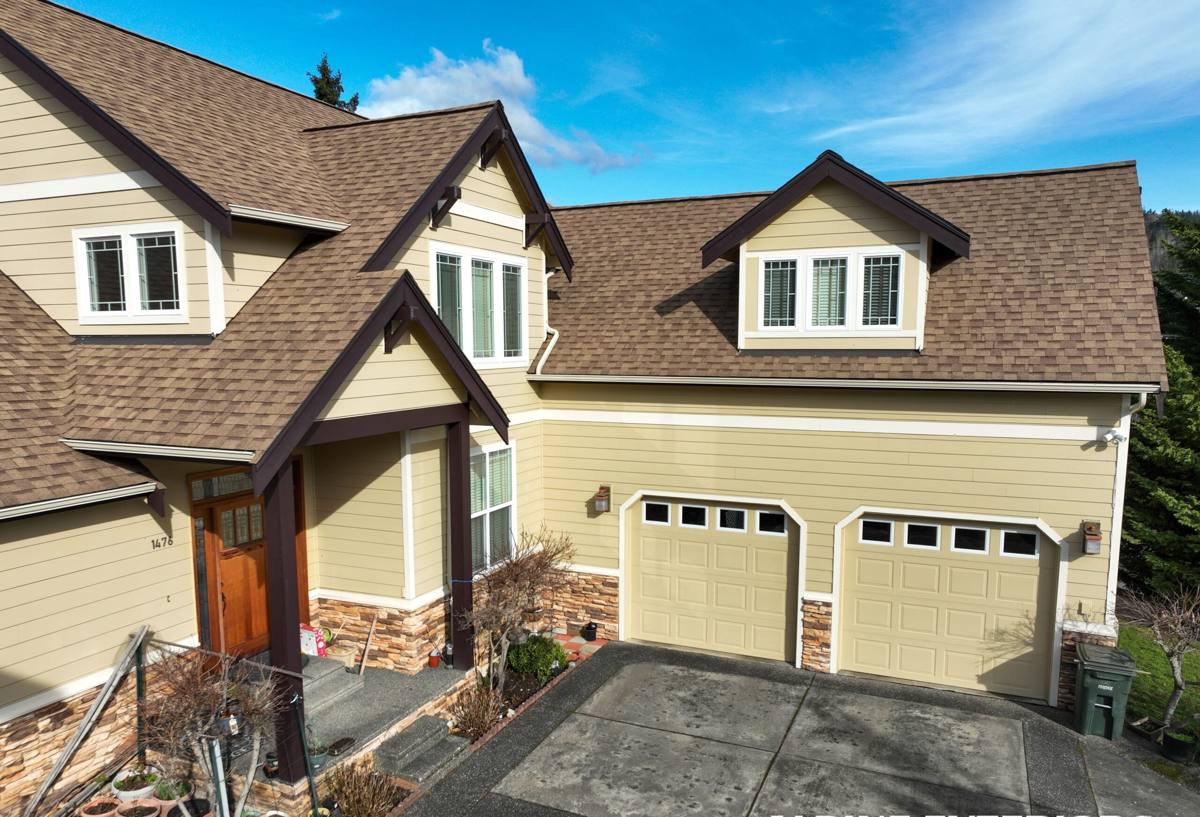
How Salt Air, Rain, and Moss Actually Damage a Roof
Salt Air and Metal Fatigue
Airborne salt accelerates corrosion on exposed fasteners, flashing, and metal roofing panels. Standard galvanized nails and unprotected flashing can start rusting years ahead of schedule this close to the bay, which is why fastener and flashing material selection matters more here than it would twenty miles inland.
Driving Rain and Wind-Driven Water
Storms moving in off the water don't just fall straight down — wind pushes rain sideways, up under shingle tabs, and into any gap in flashing around chimneys, vents, and skylights. A roof built for calmer weather often has just enough margin for error that it holds up fine elsewhere but leaks in Fairhaven.
Moss and Sustained Moisture
Shade, humidity, and a mild climate add up to a long moss season in this part of Whatcom County. Moss doesn't just look bad — it holds water against the roofing surface, works its way under shingle edges, and lifts material over time. On older or poorly ventilated roofs, moss growth is often the first visible sign that moisture is being trapped rather than shed.
Signs a Fairhaven Roof Needs Replacement, Not Another Repair
Every roof reaches a point where patching stops making financial sense. Knowing where that line is saves homeowners from spending repair money on a roof that's already past the point of return.
- Granule loss heavy enough that you're finding shingle grit in gutters and downspouts every season
- Shingles that are cracked, curling at the edges, or missing outright in more than one area
- Moss or dark algae staining that comes back within months of cleaning
- Soft or spongy spots underfoot when walked, which usually means the decking underneath has taken on water
- Daylight visible through the roof deck from inside the attic
- Repeated leaks around the same penetration — chimney, vent pipe, or skylight — despite prior flashing repairs
- A roof already at or past the manufacturer's expected service life for its material type
One or two of these on their own might still be repairable. Several at once, especially on a roof already fifteen to twenty-five years old depending on material, usually means replacement is the more honest recommendation.
What a Correct Roof Replacement Actually Involves
Tear-Off and Deck Inspection
We remove the old roofing down to the deck rather than layering new shingles over old — layering traps moisture and hides the exact problem that's causing early failure. Once the deck is exposed, every sheet of plywood or OSB gets checked for soft spots, delamination, or rot. Any bad decking is cut out and replaced before anything new goes down; installing new roofing over a compromised deck just resets the clock on the same failure.
Underlayment Suited to a Wet, Windy Site
Underlayment is the roof's backup layer if wind or wear ever gets past the surface material, and it matters more on a site exposed to driving rain off the bay. We use synthetic or self-adhering underlayment in vulnerable areas — eaves, valleys, and around penetrations — rather than relying on standard felt everywhere, because those spots are where wind-driven water actually gets tested.
Flashing and Fastener Choices
Given the salt exposure this close to the water, we favor corrosion-resistant flashing and fasteners over standard galvanized options wherever the budget allows it. It costs a little more up front and saves a homeowner from discovering rust streaks and failed flashing seams five years earlier than they should.
Ventilation Correction
A huge share of the moss, rot, and premature aging we find on Fairhaven roofs traces back to poor attic ventilation, not just weather exposure. If intake and exhaust venting aren't balanced, heat and moisture get trapped under the roof deck, which shortens shingle life from underneath even while the top surface still looks fine. Replacement is the right time to fix this, because the deck and roofline are already exposed.
Final Details
Drip edge, ridge caps, valley metal, and pipe boots all get installed to manufacturer spec, not shortcut spec. These are small components, but they're disproportionately responsible for leaks when they're skipped or installed loosely.
Choosing a Roofing Material for This Climate
There's no single "best" roofing material for every home — the right choice depends on budget, roof pitch, the home's architecture, and how much long-term maintenance the homeowner wants to take on. Here's how the common options compare specifically for a salt-air, high-moss environment like Fairhaven.
| Material | Moss & Moisture Resistance | Salt Air Durability | Typical Lifespan | Maintenance Load |
|---|---|---|---|---|
| Architectural asphalt shingle | Good with proper ventilation; algae-resistant granules help | Good; corrosion risk limited to fasteners and flashing | 25–30 years | Moderate — periodic moss treatment |
| 3-tab asphalt shingle | Fair; less wind and moisture margin than architectural | Good, same fastener considerations | 15–20 years | Moderate to higher over time |
| Standing seam metal | Very good; sheds moisture and moss has little to grip | Depends heavily on coating quality near salt air | 40–60 years | Low, but coating matters |
| Cedar shake | Poor without diligent upkeep; holds moisture, feeds moss | Fair; wood is unaffected by salt but sensitive to constant damp | 20–30 years with upkeep | High — regular treatment required |
| Synthetic composite shingle | Good; engineered to resist moisture uptake | Good | 30–50 years | Low to moderate |
For most Fairhaven homes, a quality architectural asphalt shingle with algae-resistant granules and correct ventilation is the practical middle ground — it holds up well to the local climate without the coating-maintenance demands of metal or the moisture upkeep that cedar requires this close to the water. Homes with the budget and roof pitch for standing seam metal get excellent long-term performance, provided the coating and fastener system are matched to a marine environment rather than a generic inland spec.
Our Process, Start to Finish
- On-site inspection: We walk the roof and attic in person, not just a drive-by look from the ground, and document decking condition, ventilation, and flashing points before quoting anything.
- Written estimate: A clear scope of work and price, including what happens if decking replacement turns out to be needed once tear-off begins.
- Material selection: We walk through the trade-offs above based on your budget, roofline, and how much long-term maintenance you want to take on — no pressure toward the most expensive option.
- Scheduling around weather: Whatcom County's wet season means timing matters. We plan tear-off in sections and keep the home dried-in at every stage of the job, so an unexpected shower off the bay doesn't turn into an interior problem.
- Tear-off, deck repair, and installation: Full removal, deck inspection and repair, underlayment, flashing, ventilation correction, and material installation as outlined above.
- Site cleanup: Magnetic sweep for stray fasteners, debris removal, and a final walkthrough so you can see the completed work and ask questions before we consider the job done.
Why Local Fairhaven Experience Matters
Fairhaven includes some of Bellingham's older housing stock, including homes in and around its historic district, alongside newer construction closer to the waterfront. Roof pitch, original construction methods, and how much tree cover surrounds a given lot all vary block by block, and all of it affects how a roof should be built and maintained here. A crew that's worked this specific neighborhood knows which streets sit in near-constant shade and need extra ventilation attention, which properties get the most direct exposure to wind off the bay, and how to work around narrower lots and mature landscaping without unnecessary damage to yards or plantings.
That local familiarity also means realistic scheduling. We know how Whatcom County's fall and winter storm patterns affect roofing work, and we plan jobs to minimize the number of days a home sits with an open roof deck.
Protecting the Investment After Installation
A correctly installed roof still benefits from basic seasonal attention, especially in a moss-prone climate. None of this is complicated, but skipping it shortens the life of even a well-built roof.
- Keep gutters and downspouts clear so water isn't backing up under the roof edge during heavy rain
- Trim back overhanging branches to reduce shade and debris buildup, both of which feed moss growth
- Have moss growth treated early rather than left to spread — light growth is a quick fix, established growth is not
- Check attic ventilation isn't blocked by insulation or storage that's crept over intake vents
- Schedule a walk-through inspection every year or two, particularly after major windstorms
What Roof Replacement Typically Costs
Exact pricing depends on roof size, pitch, material choice, and what tear-off reveals about the decking, so we won't quote a number without seeing the roof in person. In general terms, a straightforward asphalt shingle replacement on an average Fairhaven home sits in the lower-to-middle range of residential roofing costs, while standing seam metal, synthetic composite materials, or roofs with steep pitches, multiple valleys, or extensive decking repair run higher. The most reliable way to know where your project lands is a free, on-site estimate rather than a rough number based on square footage alone.
Get a Straight Answer About Your Roof
If your Fairhaven roof is showing granule loss, recurring moss, or leaks that keep coming back in the same spot, it's worth getting an honest, in-person opinion before spending more on repairs. We'll walk the roof, explain what we find in plain terms, and give you a written estimate with no pressure attached — use the form below to request a free roof replacement estimate.