 Bellingham Siding
 Roof Repair for Sudden Valley's Lake Whatcom Climate
Sudden Valley sits along Lake Whatcom, wrapped in mature evergreen forest, just outside Bellingham in Whatcom County. That setting is a big part of what makes the neighborhood attractive — and it's also exactly why roofs here need a different level of attention than roofs in more open, sun-exposed parts of town. Heavy tree canopy, lake-effect moisture, and long stretches of gray, damp weather mean shingles and roof systems in Sudden Valley are under near-constant low-level stress, even when nothing looks obviously wrong from the ground.
We repair roofs across Whatcom County, and Sudden Valley shows up on our schedule often enough that we know its patterns: where moss builds up first, which roof orientations hold moisture longest, and which repair shortcuts fail within a year or two in this environment. This page covers what roof repair actually involves here, what a correct job looks like, and how to think about repair versus replacement before you spend money either way.
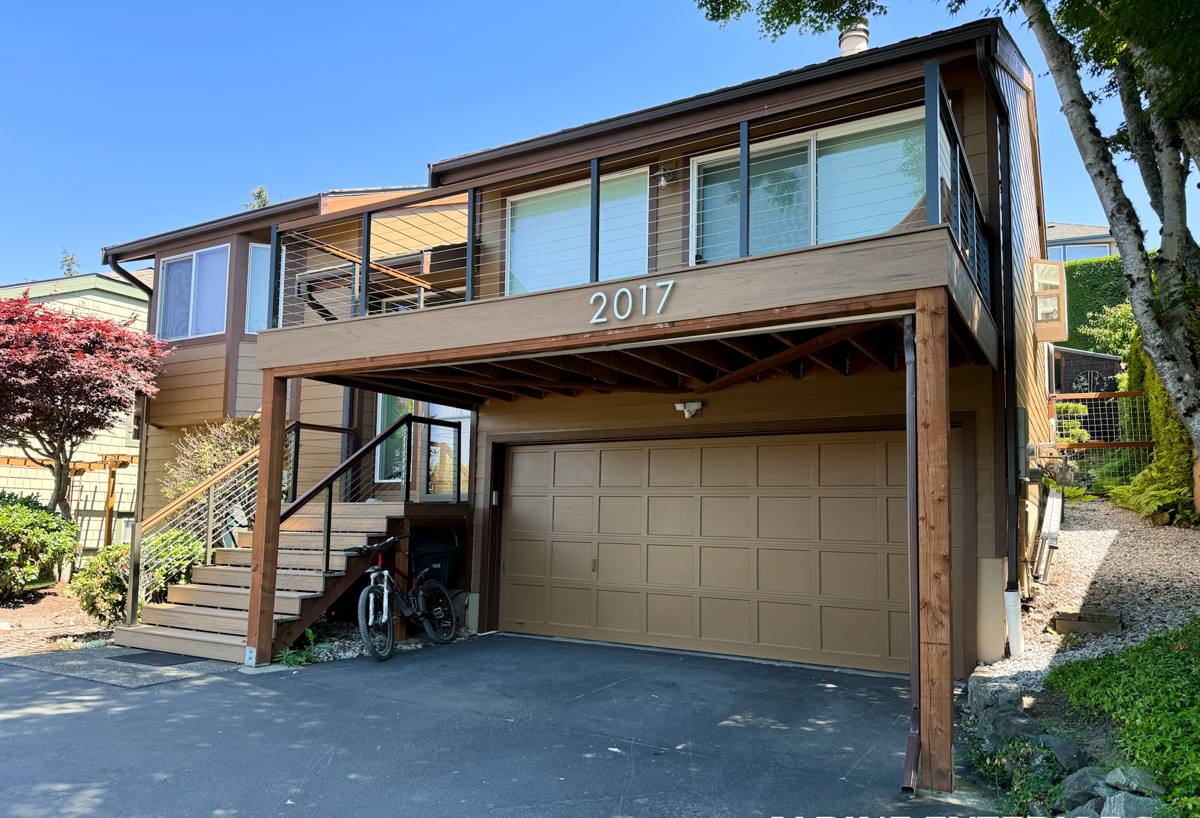
Why Sudden Valley Roofs Age Differently
Two homes with identical roofs — same age, same shingle brand — can wear at very different rates depending on where they sit. In Sudden Valley, a few local conditions consistently drive that difference.
Shade and Moss Season That Doesn't Really End
Tree cover keeps roofs shaded and slow to dry out after rain. Combined with Whatcom County's long, wet stretch from fall through spring, that shade turns into an extended moss and moisture season — often longer than what homes see closer to downtown Bellingham or in more open subdivisions. Moss isn't just cosmetic. Once it establishes on a shingle roof, its root structure lifts shingle edges, holds standing moisture against the roof deck, and accelerates granule loss. Left unchecked, a moss-covered slope ages years faster than a clean one.
Driving Rain and Wind Off the Lake
Lake Whatcom generates its own localized wind and rain patterns, and storms moving through the valley can drive rain sideways under improperly sealed flashing, ridge caps, and shingle laps. Homes tucked among trees also take on falling limbs and needle debris during wind events, which can crack or puncture shingles in spots that aren't visible unless you're actually up on the roof looking.
Regional Marine Air
Whatcom County's broader climate — shaped by its proximity to Bellingham Bay and the Puget Sound marine layer — adds a steady dose of salt-tinged moisture to the mix across the region. It's a slower factor than moss or wind damage, but over years it contributes to fastener corrosion and accelerates wear on metal flashing and exposed hardware, which is one more reason repairs need to use the right materials, not just the cheapest ones.
Common Roof Problems We See and Fix in Sudden Valley
Most roof repair calls in this area fall into a handful of recurring categories. If you're seeing any of the following, it's worth having a roof looked at before the next heavy rain:
- Moss or algae buildup along shaded slopes, especially north-facing sections and areas under overhanging branches
- Curling, cracked, or missing shingles, often on roof faces exposed to prevailing wind off the lake
- Water stains on interior ceilings or upper walls, particularly near chimneys, skylights, or where two roof planes meet
- Damaged or corroded flashing around chimneys, vents, and valleys
- Sagging or spongy spots on the roof deck, a sign moisture has been getting underneath the roofing material for some time
- Clogged gutters and downspouts from needle and leaf debris, which backs water up under the roof edge
- Granule loss showing up in gutters, a sign shingles are past their effective lifespan in specific areas
- Visible daylight through the attic roof deck, or damp insulation below the roofline
What a Correct Roof Repair Actually Involves
Diagnosis Before Any Patching
A repair that isn't diagnosed correctly usually just delays the real problem. Before we patch anything, we get on the roof and trace the issue back to its actual source — which is often several feet away from where the water stain shows up inside the house. Water travels along the roof deck and rafters before it drips, so a leak over the kitchen might trace back to a failed flashing seam near the ridge. We also check the attic side when accessible, since sheathing condition tells you a lot about how long moisture has been an issue.
Matching Materials and Technique to the Existing Roof
A repair only holds up if the materials and method match what's already on the roof — same or compatible shingle profile, correct underlayment at the repair zone, and flashing detail that ties in properly with the surrounding courses. Mismatched shingles or a rushed tie-in are one of the most common reasons a "fixed" leak reappears the following winter.
Addressing the Cause, Not Just the Symptom
If moss caused the failure, a proper repair includes safe moss and debris removal, not just a shingle swap on top of the underlying problem. If ventilation is driving moisture buildup in the attic, we'll flag that too — patching a leak without addressing poor ventilation just buys time before the next issue shows up nearby.
Roof Repair or Roof Replacement? How to Think About It
Not every roof problem in Sudden Valley needs a full replacement, and not every issue is a simple patch, either. The table below outlines the factors we walk through with homeowners when deciding which direction makes sense.
| Factor | Leans Toward Repair | Leans Toward Replacement |
|---|---|---|
| Roof age | Under roughly 12-15 years, asphalt shingle | Approaching or past manufacturer lifespan |
| Extent of damage | Isolated to one slope, valley, or penetration | Multiple slopes, widespread granule loss |
| Moss condition | Surface moss, roof deck still sound | Moss growth has caused deck rot or lifted shingles broadly |
| Decking condition | Dry, solid sheathing under the affected area | Soft, spongy, or visibly rotted decking |
| Leak history | First occurrence, clear single source | Recurring leaks in different spots over time |
| Shingle availability | Matching shingles still obtainable | Discontinued profile, no reasonable match |
When a roof falls in a gray area, we'll tell you honestly. There's no benefit to us talking a homeowner into a full replacement when a well-done repair will genuinely hold — and no benefit to patching a roof that's going to need replacing within a year or two anyway.
Our Roof Repair Process
- Inspection. We walk the roof and attic (where accessible) to find the actual source of the problem, not just the visible symptom.
- Written scope and estimate. You get a clear explanation of what's wrong, what we recommend, and what it costs before any work starts.
- Debris and moss clearing. If moss, needles, or organic buildup are part of the problem, we clear them safely before repair work begins.
- Repair work. Damaged shingles, flashing, or decking are replaced with matching materials and proper technique — not just surface patching.
- Sealing and tie-in. All repair edges are integrated with the surrounding roofing so water sheds correctly across the whole system, not just around the patch.
- Cleanup and walkthrough. We clear debris from the property and go over what was done, including any maintenance recommendations specific to your roof's exposure and tree cover.
Moss, Debris, and Ongoing Maintenance
Because of the tree cover around Lake Whatcom, moss and needle buildup aren't a one-time fix in Sudden Valley — they're an ongoing maintenance item, similar to gutter cleaning. A few habits go a long way toward avoiding repeat repair calls:
- Keep overhanging branches trimmed back where reasonably possible to reduce shade and debris accumulation
- Clear moss buildup before it thickens — light moss is a simple removal job, established moss often means shingle damage underneath
- Clean gutters and downspouts at least once, ideally twice, per year given the volume of needle debris in wooded areas
- Have the roof inspected after major wind or storm events, even if nothing looks obviously damaged from the ground
- Check attic ventilation periodically — good airflow helps roofs dry out faster between rain events, which matters more in shaded, low-sun areas
We don't recommend pressure washing moss off a roof. High-pressure water forces moisture under shingles and strips protective granules, which tends to shorten a roof's remaining life rather than extend it. Low-pressure or hand removal, followed by proper treatment, is the safer approach for asphalt shingle roofs.
Materials and Honest Cost Factors
Roof repair costs vary widely based on what's actually wrong, so we're cautious about quoting numbers without seeing the roof. That said, homeowners planning ahead should know what tends to move the price up or down.
| Cost Factor | Why It Matters |
|---|---|
| Roof pitch and access | Steeper roofs and limited access around trees or landscaping take longer and require more safety setup |
| Extent of decking damage | Rotted sheathing found under damaged shingles adds material and labor beyond a surface-level patch |
| Flashing complexity | Chimneys, skylights, and multiple roof valleys involve more detailed, time-consuming flashing work |
| Shingle matching | Older or discontinued shingle profiles can be harder to source and may affect appearance consistency |
| Moss and debris removal | Heavier buildup requires more labor time before repair work can even begin |
As a general guide, small, isolated repairs — a section of damaged shingles, a single flashing fix — are typically a modest, contained expense. Repairs involving deck rot, multiple leak points, or extensive moss remediation move up from there. We'll always break down the scope so you understand what you're paying for and why.
Why Hire a Crew That Already Works in Sudden Valley
Roofing crews that mostly work flat, open, sun-exposed neighborhoods don't always account for what tree cover and lake-driven weather do to a roof over time. A repair approach that's fine for a roof in full sun downtown can under-address what's actually happening on a shaded, moss-prone slope near the lake. Working this specific area regularly means we already understand the exposure patterns, the moss cycles, and the storm behavior specific to Sudden Valley — which shows up in more accurate diagnoses and repairs that hold up through the next wet season instead of needing a repeat visit.
We're also familiar with the practical side of working in a wooded, private community: careful site access, respectful cleanup around landscaping, and coordination that fits the neighborhood rather than working against it.
Get a Straightforward Roof Assessment
If you're dealing with a leak, visible moss, storm damage, or just want an honest read on your roof's condition before the next Whatcom County winter sets in, we're happy to take a look. Use the form below to request a free, no-pressure estimate — we'll tell you plainly what we find and what, if anything, needs to happen next.