 Bellingham Siding
 Why Puget-Area Roofs Take a Different Kind of Beating
Homes in the Puget area of Bellingham deal with a specific combination of weather stress that inland roofs don't see as often. You're close enough to Bellingham Bay and the Sound to get salt-laden air working on your metal flashing, fasteners, and gutters year-round. Add Whatcom County's long wet season, the wind-driven rain that comes off the water during winter storms, and the shade and moisture that let moss take hold on north-facing slopes, and you've got a roof that ages differently than one out in the county's drier pockets. None of this means Puget homes need exotic materials or gimmicks — it means storm damage repair here has to account for salt air corrosion, sustained moisture, and wind in a way a generic repair job might miss.
This page covers exactly one job: repairing storm-related roof damage on Puget-area homes, done by a crew that already knows what this stretch of Bellingham throws at a roof.
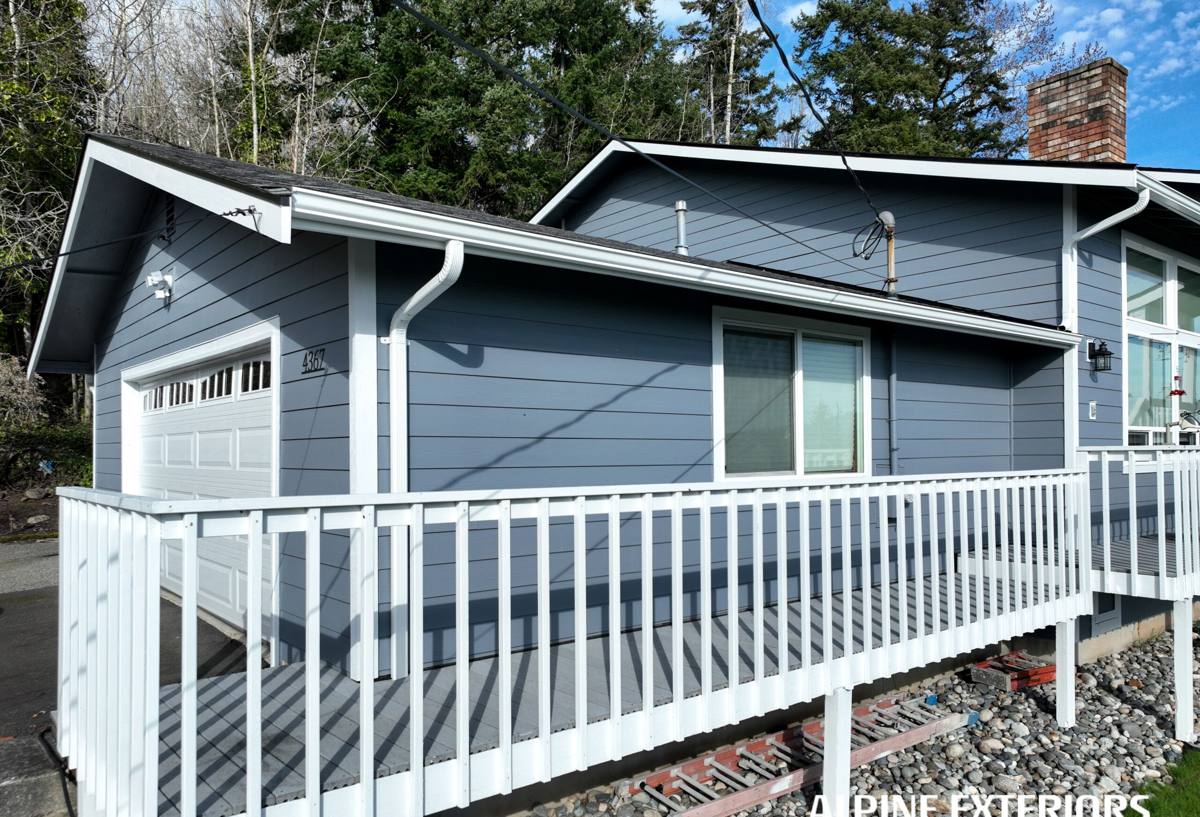
What Actually Counts as Storm Damage Here
Not every roof problem after a windstorm is dramatic. In our experience working this area, storm damage on Puget roofs tends to show up in a handful of recurring ways:
Wind-Lifted or Missing Shingles
Sustained wind off the water can lift shingle tabs, break the adhesive seal strip, or tear shingles off entirely, especially on ridges, edges, and any slope with a poor initial nailing pattern. A shingle doesn't have to be missing to be compromised — a lifted tab that reseals crooked is a future leak.
Wind-Driven Rain Intrusion
Rain that's moving sideways during a storm can get pushed up and under flashing, around chimneys, and into any gap that would never leak in calm weather. This is one of the most common ways Puget homeowners end up with a ceiling stain weeks after a storm, with no obvious hole in the roof.
Debris and Limb Impact
Falling branches and wind-blown debris can crack shingles, dent metal flashing, or puncture the roof deck outright. Impact damage is often smaller than it looks from the ground and gets missed until it's found up close.
Storm-Accelerated Moss and Algae Damage
Moss itself isn't storm damage, but a long, wet storm season accelerates it fast. Moss holds moisture against the shingle surface, and on a roof that's already lost some grit or granules from wind and rain, that moisture speeds up wear on exactly the spots that are already weakest.
What a Correct Storm Damage Repair Actually Involves
A repair that's done right starts with an honest look at the whole roof, not just the spot the homeowner noticed. Storm damage is often worse — or better — than it appears from the ground, and a rushed patch job on the visible symptom tends to leave the actual entry point for water untouched.
| Step | What We're Checking |
|---|---|
| Ground and eye-level walk-around | Visible shingle displacement, gutter damage, downed debris, obvious impact marks |
| Roof surface inspection | Lifted or missing shingles, exposed nail heads, cracked tabs, granule loss patterns |
| Flashing and penetrations | Chimney, vent, and skylight flashing for gaps, corrosion, or wind-lifted edges |
| Decking check at damaged areas | Soft spots, water staining, or rot under compromised shingles |
| Gutters and drainage | Detached sections, debris blockage, and whether water is being carried away from fascia and siding |
| Interior spot-check where relevant | Attic or ceiling signs of moisture that don't match the visible exterior damage |
Once we know the actual extent of the damage, the repair itself generally means removing and replacing the affected shingles (not just caulking over the problem), re-securing or replacing damaged flashing, checking that the underlayment beneath the repair area is still intact, and confirming the deck is sound before anything new goes down. If moss has been part of the picture, that gets addressed as part of the same visit rather than left to keep working on the repaired area.
Repair vs. Replacement: How We Decide
Not every storm-damaged roof needs a full replacement, and we're not going to tell you it does. The honest question is whether the damage is isolated or whether it's exposing a roof that was already near the end of its useful life.
| Factor | Leans Toward Repair | Leans Toward Replacement |
|---|---|---|
| Roof age | Under roughly two-thirds of expected lifespan | Already near or past expected lifespan |
| Extent of damage | Isolated to one slope or area | Spread across multiple slopes or the whole roof |
| Shingle match availability | Matching shingles still obtainable | Product discontinued, patch would look mismatched |
| Decking condition | Sound decking under the damaged area | Soft, rotted, or water-stained decking found |
| History of prior storm hits | First significant damage event | Repeated repairs in the same areas over recent years |
We'll walk you through which column your roof falls into and why, in plain terms, before we recommend either path.
Our Process, Start to Finish
- Initial call and scheduling — we get a sense of when the damage occurred and what you've noticed, and get someone out to look at it.
- On-site inspection — a full assessment of the roof, not just the reported problem area, documented with photos.
- Straight explanation of findings — what's damaged, what's not, and what we'd actually recommend if it were our own roof.
- Written estimate — a clear scope of work and cost before anything starts.
- Repair work — completed with attention to matching your existing roofing material and securing everything against the next storm, not just the last one.
- Final walk-through — we show you what was done and answer any questions before we consider the job finished.
Building Repairs for Salt Air, Sustained Moisture, and Moss
How we repair a roof in the Puget area is shaped by the conditions it has to survive. A few standards we hold ourselves to on this kind of work:
Corrosion-Aware Fasteners and Flashing
Salt-laden air off Bellingham Bay accelerates corrosion on lower-grade metal fasteners and flashing over time. On repairs in near-water areas, we favor materials and fastener grades that are built to hold up under that exposure rather than the cheapest option that happens to fit.
Ventilation That Matches the Climate
Whatcom County's wet season means trapped moisture in an attic or roof assembly has more time to do damage than it would in a drier climate. Part of a proper storm repair is confirming existing ventilation is doing its job — poor ventilation left unaddressed will undercut even a well-done shingle repair.
Moss and Algae Treatment as Part of the Job
If moss contributed to the damage or is actively working on the surrounding shingles, we address it as part of the repair rather than leaving it to keep degrading the area we just fixed. That's a maintenance step, not a one-time fix — more on that below.
Insurance and Storm Damage Claims
Many homeowner's policies in Washington cover sudden storm damage — wind, impact from falling debris, and similar events — though coverage details, deductibles, and exclusions vary by policy and insurer. We're not your insurance company and we won't promise a specific outcome, but we can provide clear photo documentation and a written scope of damage that you can hand to your adjuster. If you're planning to file a claim, it's worth having a roofer document the damage before repairs begin, since some insurers want to see the condition as-is first.
Why Hiring a Crew That Already Works Puget Matters
A roofer who's unfamiliar with this part of Bellingham is starting from zero on every job — figuring out for the first time how salt air treats their fastener choice, or underestimating how fast moss comes back on a shaded, moisture-heavy slope. A crew that already works in the Puget area has already seen how local roofs age, which repair shortcuts don't hold up here, and how storms off the Sound tend to hit differently than they do a few miles inland. That translates into fewer surprises, a faster and more accurate inspection, and repairs that are built for the conditions your roof actually faces rather than a generic set of assumptions.
A Homeowner's Post-Storm Checklist
After a significant windstorm or heavy rain event, it's worth doing a quick check before damage has a chance to get worse:
- Look for shingle debris in the yard or gutters — a sign shingles were torn loose somewhere on the roof
- Check gutters and downspouts for detachment or blockage that could send water toward the fascia or foundation
- Scan interior ceilings, especially top-floor rooms, for new discoloration or damp spots
- Note any tree limbs that came down near or on the roofline, even if they missed the house
- Avoid climbing onto the roof yourself after a storm — wet, wind-damaged roofing is not safe footing
- Get an inspection sooner rather than later; a small wind-driven rain leak gets more expensive to fix the longer water sits behind it
If you've had storm damage, or you just want an honest read on how your roof is holding up against a Bellingham winter, we're happy to come take a look. The estimate is free, there's no pressure to move forward, and you'll get a straight answer either way — just fill out the form below to get started.