 Bellingham Siding
 Building a Deck That Actually Holds Up in Puget
Puget sits close enough to the water and the tree line that a deck here works harder than one built somewhere dry and inland. Homeowners in this part of Bellingham deal with a specific combination of conditions: salt-tinged air off the Sound, long stretches of driving rain, and a moss season that can run from October well into spring. A deck that's framed and fastened the way it would be in a drier climate will show problems within a few years — soft spots, streaking, rust bleed at the fasteners, slick green film on the boards. A deck built for this specific environment holds its structure and its looks a lot longer.
This page is about one job in one area: building decks for homes in and around Puget. Not a general overview of decking — the specific decisions that matter when the deck you're building has to survive Whatcom County winters year after year.
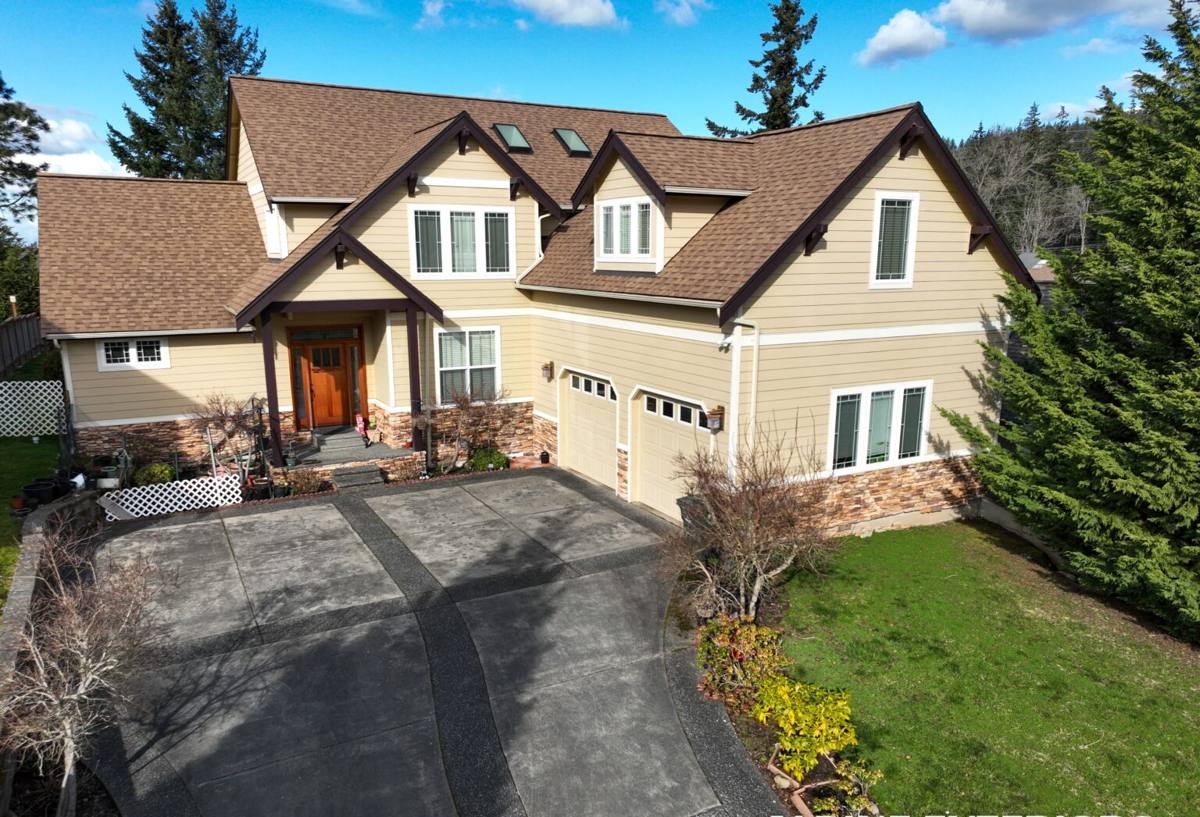
Why This Climate Is Harder on a Deck Than People Expect
Three things stack up against a deck in this part of Bellingham, and they compound each other:
- Salt air: Proximity to Puget Sound means airborne salt is a real factor for metal hardware, fasteners, and any exposed connectors — untreated or poorly coated metal corrodes faster here than it would twenty miles inland.
- Driving rain: Wind-driven rain doesn't just fall on a deck, it gets pushed sideways into ledger connections, under railing posts, and into any gap in the flashing. Water that would run off a flat surface elsewhere gets forced into joints here.
- Moss season: Shaded, damp decks in this region grow moss and algae on almost any surface that doesn't dry out quickly, and that buildup holds moisture against the wood or composite surface for months at a stretch.
None of these are exotic problems — they're just the reality of building outdoors in this part of Washington. The fix isn't complicated, but it does mean every part of the deck, from the footings to the fasteners to the board spacing, has to be chosen with these three factors in mind.
What "Built Right" Looks Like Structurally
Footings and Framing
Footings need to be sized and set below frost depth per Whatcom County code, and on sites with any slope or soft soil — common around Puget — that often means larger or deeper footings than a builder might use on flat, stable ground elsewhere. We check soil conditions on site rather than assuming a standard footing spec will work everywhere.
Ledger Attachment
The ledger board — where the deck attaches to the house — is the single most common failure point on decks in wet climates. It has to be properly flashed with the flashing lapped correctly over the house's water-resistive barrier, not just caulked and bolted. A poorly flashed ledger lets water track behind the siding and into the rim joist, and that kind of rot often isn't visible until it's advanced.
Joist Protection
Joist tape or an equivalent protective membrane over the top of each joist keeps standing water out of the wood where deck boards are fastened down. In a climate with this much annual rainfall, skipping this step shortens the life of the frame significantly, even if the visible decking looks fine.
Choosing Decking Material for Salt Air and Moss Season
There's no single "best" decking material — the right choice depends on how much maintenance you want to do, your budget, and how much shade and moisture the deck's location gets. Here's how the common options compare for a Puget-area install:
| Material | Moisture & Moss Behavior | Maintenance | Relative Cost |
|---|---|---|---|
| Pressure-treated wood | Prone to moss/algae in shaded spots; needs sealing to resist water uptake | Annual cleaning, periodic sealing/staining | Lowest upfront |
| Cedar | Naturally rot-resistant but still needs sealing to hold color and shed water | Regular cleaning and refinishing | Mid-range |
| Composite decking | Resists moisture absorption; can still grow surface moss/algae film in deep shade without cleaning | Periodic washing, no sealing or staining | Higher upfront |
| PVC decking | Fully moisture-resistant surface; least prone to holding algae film long-term | Occasional washing | Highest upfront |
For decks in shaded parts of a lot — which describes a fair number of sites around Puget given the tree cover in this area — we lean toward materials and board spacing that let air move underneath and between boards, since airflow does more to prevent moss than any sealant does on its own.
Fasteners, Flashing, and Hardware: The Part Nobody Sees
This is where a lot of decks in this region actually fail, and it has nothing to do with the decking surface itself. Standard fasteners and connectors will streak, weaken, or fail years ahead of schedule in salt-influenced air if they aren't rated for it. Our standard on Puget-area decks:
- Stainless steel or high-corrosion-rated coated fasteners at every connection, not just the visible ones.
- Hot-dip galvanized or stainless structural hardware for joist hangers, post bases, and ledger bolts.
- Flashing tape and membrane at every point where wood meets wood or wood meets masonry.
- Isolating dissimilar metals where they'd otherwise be in direct contact, to avoid galvanic corrosion.
It costs more to spec hardware this way, and it's the kind of detail that's invisible once the deck is finished. It's also the difference between hardware that's still solid at year fifteen and hardware that's rusting through by year five.
Drainage, Slope, and Getting Ahead of Moss
Moss doesn't grow because a deck is old — it grows because a surface stays damp longer than it should. A few structural decisions control that more than any cleaning routine can:
Board Spacing and Airflow
Gapping between boards needs to be wide enough to let water drain through and air move underneath, especially on decks that sit low to the ground or over unventilated space.
Surface Slope
A slight slope away from the house keeps water moving off the deck instead of pooling near the ledger, which is both a moss issue and a structural one.
Shade Management
We can't move the trees, and we wouldn't want to remove healthy ones just to dry out a deck faster. Where shade is heavy, material choice and spacing matter more, since the surface simply won't dry as fast as it would in full sun.
Permits and Code in Bellingham and Whatcom County
Most new decks above a certain height or attached to the house require a building permit, and elevated decks need code-compliant guardrails, baluster spacing, and stair details if there's a change in elevation. We handle the permit process as part of the job rather than leaving homeowners to navigate it — pulling permits, scheduling inspections, and building to the code requirements that apply to the site. This matters more on sloped or elevated lots, which show up often enough around Puget that we don't treat permitting as an afterthought.
Our Process, Start to Finish
- On-site visit: We look at the actual site — slope, soil, shade, drainage patterns, and how the deck will connect to the house — before quoting anything.
- Material and layout discussion: We walk through decking material, railing style, and layout options against your budget and how much upkeep you want to take on.
- Permitting: We pull the required permits and schedule inspections so the job stays compliant from footings to final railing.
- Footings and framing: Footings set to code depth, frame built with corrosion-rated hardware and joist protection throughout.
- Ledger and flashing: Proper flashing at the house connection — the step most responsible for long-term deck failures when it's skipped or rushed.
- Decking and railings: Installed with attention to spacing, drainage, and fastener choice specific to this climate.
- Final walkthrough: We go over the finished deck with you, including what maintenance it actually needs — not a generic list, but what applies to your material and site.
Keeping Your Deck in Shape Through PNW Winters
A well-built deck in this climate still needs some seasonal attention. What that looks like depends on material, but the basics apply across the board:
- Sweep debris and standing leaves off the surface regularly through fall — trapped organic matter is what feeds moss growth.
- Rinse or wash the deck surface at least once or twice a year to remove algae film before it takes hold.
- Check railing posts and stair connections annually for movement or loose hardware.
- For wood or cedar decks, reseal or restain on the schedule the product calls for — don't wait until the finish has visibly failed.
- Keep gutters and downspouts near the deck clear so runoff isn't dumping extra water onto or near the structure.
- Clear snow load promptly in the rare years it accumulates, rather than letting it sit on the structure.
Why a Crew That Already Works Puget Makes a Difference
A deck builder who's worked this specific area already knows which lots tend to hold shade and moisture longest, where soil conditions call for deeper footings, and which hardware actually holds up rather than just meeting minimum code. That's not something you get from a generic decking checklist — it comes from building and later servicing decks in this exact climate, on this exact terrain, season after season. For Bellingham and greater Whatcom County homeowners, that local experience is what separates a deck that looks good at handoff from one that still looks good in ten years.
If you're planning a new deck in the Puget area, we're glad to come take a look at your site and put together a straightforward, no-pressure estimate — just fill out the form below to get started.