 Bellingham Siding
 Windows Built for the Puget Area, Not Just "Standard Sizes"
Puget homes sit close enough to the water and the tree line that windows take a beating most inland houses never see. Between salt-laden air drifting off the Sound, driving rain that comes in sideways more often than straight down, and a moss and mildew season that seems to stretch longer every year, a window that's merely "good enough" somewhere else can start failing here within a few seasons. Custom window work in this neighborhood isn't a luxury upsell — it's often the only way to get a window that actually fits a Puget home's openings, orientation, and exposure correctly.
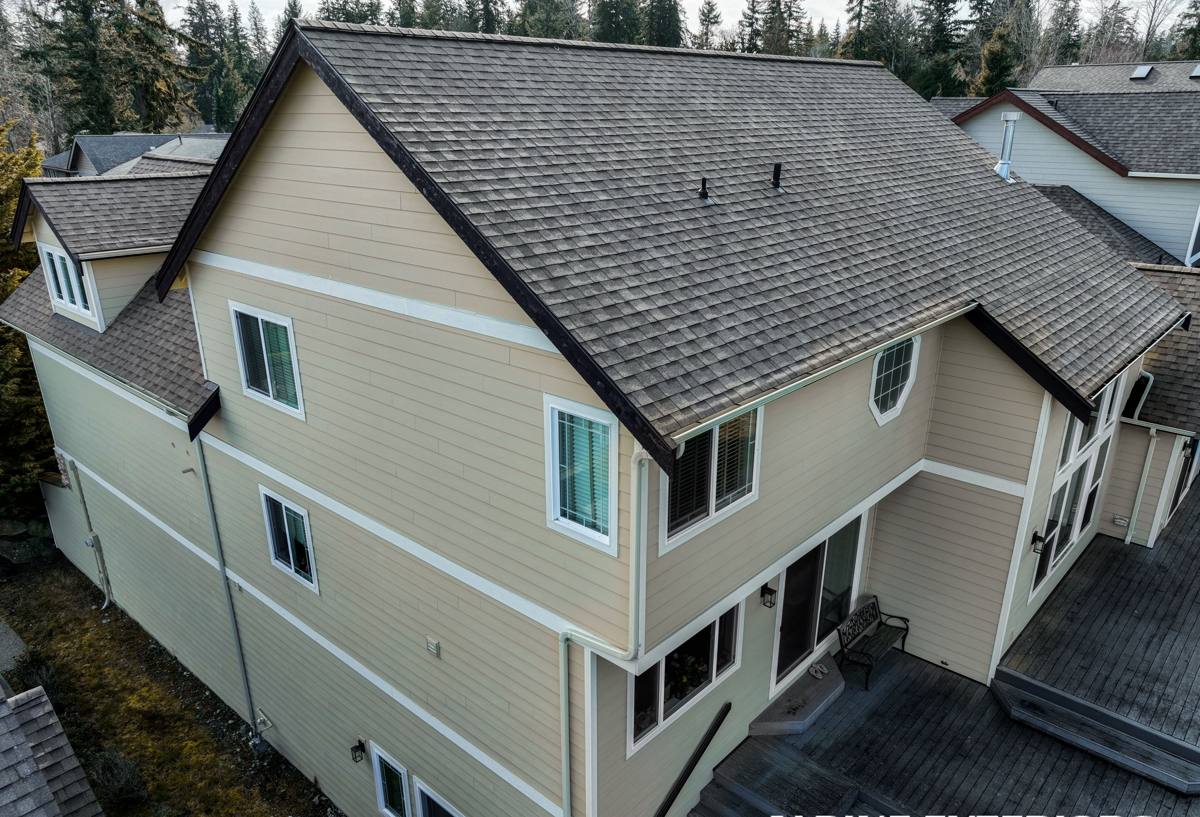
We work on homes throughout Bellingham and Whatcom County, and the openings we run into in the Puget area tend to share a few traits: older framing that's settled unevenly over the decades, mixed additions where a newer wing doesn't quite match the original house, and exterior walls that catch weather from more than one direction. Stock windows can work in some of those openings. Plenty of others need something built or modified to fit — which is exactly what "custom" means in this trade.
What "Custom" Actually Means for a Window Job
Homeowners sometimes hear "custom windows" and assume it means expensive, one-off architectural glass. Most of the time it's far more practical than that. Custom simply means the window is sized, configured, or detailed to match the actual opening and the actual house, rather than forcing the house to match a window that comes in fixed increments.
Situations that call for a custom approach
- Openings that are out of square or out of level after decades of settling — common in older Puget-area homes
- Non-standard shapes: arched tops, angled bays, or trapezoid windows on gable ends
- Additions or remodels where the rough opening doesn't match any stock size
- A desire to change grid patterns, glass tint, or operation type (casement vs. double-hung) to suit the home's exposure
- Replacing a single failed unit in a matched set, where an exact color and profile match matters
In a lot of these cases, "custom" doesn't mean a dramatically higher price — it means the window is manufactured to the opening's real dimensions instead of the installer shimming and packing a stock unit into a hole it doesn't quite fit. That difference matters more here than in a dry climate, because every gap packed with shims and caulk is a future path for wind-driven rain.
How the Local Climate Changes the Job
Three things define window performance in this part of Whatcom County, and they all show up in how we spec and install a job in the Puget area.
Salt air and corrosion
Proximity to the Sound means airborne salt settles on exterior surfaces even well away from the immediate shoreline. Over years, that accelerates corrosion on unprotected fasteners, weakens some low-grade aluminum hardware, and can dull certain finishes faster than a manufacturer's warranty language anticipates. We pay attention to fastener grade and hardware finish on every custom order here, not just the frame material.
Driving, wind-blown rain
Rain that falls straight down is easy to shed. Rain that's being pushed sideways by wind off the water finds every weak seam — a poorly lapped flashing, a bead of caulk asked to do a flashing's job, a nailing fin that wasn't sealed correctly. Custom sizing helps here because a window built tight to its actual opening needs less caulk and fewer field compromises to seal correctly.
Extended moss and mildew season
Shade, moisture, and mild temperatures make this a long moss season compared to drier parts of the state. Moss and algae don't just grow on roofs — they colonize window sills, tracks, and any horizontal wood trim that stays damp. That buildup holds moisture against the frame and trim far longer than a dry surface would, which is one of the more common causes of trim rot and frame damage we find when we pull out an old window here.
Signs Your Current Windows Are Losing That Fight
Most window failure in this climate is slow and easy to miss until it's expensive. Worth checking for:
- Soft or discolored wood trim around the frame, especially on the lower sill
- Fogging or a persistent haze between panes of double- or triple-glazed units — a sign the seal has failed
- Drafts you can feel with a hand near the frame on a windy day
- Visible moss, algae, or dark streaking on sills or lower trim
- Windows that are difficult to open, close, or lock — often a sign the frame has swelled or shifted
- Condensation forming on the interior glass or frame regularly through fall and winter
- Paint or finish that's bubbling or peeling specifically around the window opening, not the wall generally
Any one of these on its own might just need minor attention. Two or three together, especially on the same window, usually means moisture has already gotten past the original seal and it's worth a real inspection before it spreads into the wall framing.
Frame Material and Glass Options
There's no single "best" material for every home — it depends on the wall's exposure, the home's style, and how much upkeep you want to take on. Here's how the common options actually perform in a Puget-area, salt-air, high-rain environment.
| Material | Salt Air / Moisture Performance | Maintenance | Typical Lifespan | Best Suited For |
|---|---|---|---|---|
| Vinyl | Good — won't corrode or rot, but can become brittle with age | Low | 20–30 years | Budget-conscious replacements, rentals |
| Fiberglass | Very good — dimensionally stable, resists moisture and salt corrosion well | Low | 30–40+ years | Exposed walls, higher-end custom shapes |
| Aluminum-clad wood | Good on the exterior face; interior wood needs protection from condensation | Moderate | 20–30 years | Homes wanting a natural wood interior look |
| Solid wood | Weakest in this climate unless finish is maintained diligently | High | Varies widely with upkeep | Historic-style homes with committed maintenance plans |
| Aluminum (uncoated/basic) | Vulnerable to pitting and corrosion near the water without a quality finish | Moderate to high | 15–25 years | Not our default recommendation in this exposure |
We typically steer Puget-area customers toward fiberglass or quality vinyl for most walls facing prevailing weather, and reserve wood or clad-wood for homes where the interior aesthetic is a priority and the owner understands the maintenance trade-off. That's a judgment call based on your specific wall's exposure, not a one-size answer — part of what the estimate visit is for.
Glass packages worth discussing
Beyond frame material, the glass package affects comfort and condensation resistance more than most homeowners expect:
- Double-pane, low-E coated — the practical baseline for this climate; helps with both heat retention and condensation control
- Triple-pane — worth considering on north- and west-facing walls that take the brunt of wind and rain, or for rooms with persistent condensation issues
- Argon or krypton gas fill — improves insulation value with minimal added cost
- Tempered glass — required by code near doors, low sills, and some bathroom locations regardless of style
Our Process, Step by Step
- On-site assessment. We measure every opening individually — not just once, since older Puget homes often have openings that vary slightly from window to window even in the same wall.
- Moisture and framing check. Before quoting, we look at the sill and surrounding framing for existing rot or water intrusion, since that changes the scope of the job.
- Custom order and spec. We confirm frame material, glass package, grid pattern, and hardware finish based on the wall's exposure and your preferences.
- Removal. Old units come out carefully to protect interior finishes and give us a clear look at the rough opening before anything new goes in.
- Flashing and weatherproofing. This is the step that determines whether the window survives driving rain — done correctly, water is directed out and down, never trapped behind the frame.
- Installation and shimming. The unit is set plumb, level, and square, then secured per the manufacturer's fastening schedule — not "close enough."
- Insulation and air sealing. Gaps around the frame are filled with appropriate low-expansion foam or backer rod, not just caulk alone.
- Interior and exterior trim. Trim is finished to match the home, with attention to any horizontal surfaces that will collect moisture and moss over time.
- Final walkthrough. We check operation, sealing, and finish with you before calling the job done.
Flashing and Moisture Management Deserve Extra Attention Here
This is worth its own section because it's the single most common source of callback problems in wet coastal climates, and it's invisible once the trim goes back on. A window can look perfect and still leak for years if the flashing underneath was lapped wrong or the sill pan wasn't sloped to drain. In a climate with wind-driven rain and a long wet season, we treat flashing as the load-bearing part of the job — the window unit itself is almost secondary to getting the water management right. We use a proper sill pan, correctly lapped house wrap and flashing tape, and a weep path that lets any water that does get behind the cladding find its way back out rather than sitting against the framing. It's slower work than a quick caulk-and-trim job, and it's the part of "custom" installation that pays for itself the first hard winter storm off the Sound.
What Drives Cost on a Custom Window Job
Every home is different, so we won't quote a number without seeing the openings, but these are the factors that actually move the price:
- Number of openings and whether sizes are uniform or each needs its own custom order
- Frame material and glass package selected
- Shape complexity — arched, angled, or oversized openings take more fabrication and labor
- Condition of the existing sill and framing, and whether rot repair is needed before the new unit goes in
- Access and story height — second-floor and hard-to-reach openings take more time and equipment
- Interior and exterior trim scope, including any matching to existing millwork
- Lead-time on custom sizing versus stock availability
As a general guide, straightforward custom-sized replacements in a standard opening tend to run at the lower end of the range for the trade, while oversized, uniquely shaped, or high-end fiberglass and clad-wood units run toward the higher end. We'll walk through where your specific job falls during the estimate, with no pressure to upgrade beyond what the wall actually needs.
Why a Crew That Already Works the Puget Area Matters
A window installer who mostly works drier, inland regions can still do competent work, but they're often applying assumptions from a different climate — lighter flashing details, less attention to sill drainage, standard fastener grades that aren't rated for salt exposure. None of that shows up on install day. It shows up two or three winters later.
Working repeatedly in Bellingham and the surrounding Whatcom County neighborhoods, including Puget, means we've seen how these specific homes age under this specific weather pattern — where moss tends to collect, which wall orientations take the worst of the wind-driven rain, and which older framing styles need extra care during removal. That local pattern recognition is part of what you're paying for when you hire a crew based here rather than a national installer passing through.
Keeping New Windows Performing for the Long Run
A correctly installed custom window still needs a little seasonal attention in this climate, especially with a long moss season working against exterior wood and vinyl surfaces alike:
- Clear moss and debris from sills and tracks a couple of times a year, particularly in shaded areas
- Check and refresh exterior caulking at the trim edges every year or two — it's a cheap way to prevent a much bigger repair
- Vacuum weep holes on vinyl and fiberglass frames so water can still drain freely
- Watch for condensation between panes as an early warning that a seal has failed
- Keep gutters and downspouts clear so roof runoff isn't sheeting down across upper-story windows
None of this is heavy maintenance — it's the kind of five-minute check that keeps a well-installed window performing for its full expected lifespan instead of fighting moisture damage from day one.
Let's Look at Your Windows
If you're dealing with drafts, fogged glass, soft trim, or you're just planning ahead for a remodel in the Puget area, we're happy to come take a look. The estimate is free, there's no pressure, and you'll get a straight answer about whether your openings need a true custom order or whether a standard size will do the job right. Use the form below to get started.