 Bellingham Siding
 Board & Batten in a Climate That Doesn't Forgive Shortcuts
Board and batten siding has a clean, vertical-line look that suits a lot of homes in and around Puget — farmhouse-style builds, craftsman remodels, and newer construction that wants a break from lap siding. But the same profile that makes it visually striking also makes it less forgiving of poor installation than horizontal lap siding, especially in a climate like ours. Whatcom County sits in a stretch of the Pacific Northwest where salt-laden air off the Sound, long stretches of driving rain, and a moss and algae season that can run most of the year all work against a wall system that isn't detailed correctly.
This page is specifically about board and batten siding for homes in the Puget area near Bellingham — not board and batten in general. The material choice matters, but so does how the vertical boards, battens, and seams are flashed and fastened for this exact climate. Get that wrong and you're not looking at a cosmetic problem in five years; you're looking at water intrusion behind the cladding, which is a far more expensive fix than the siding job itself.
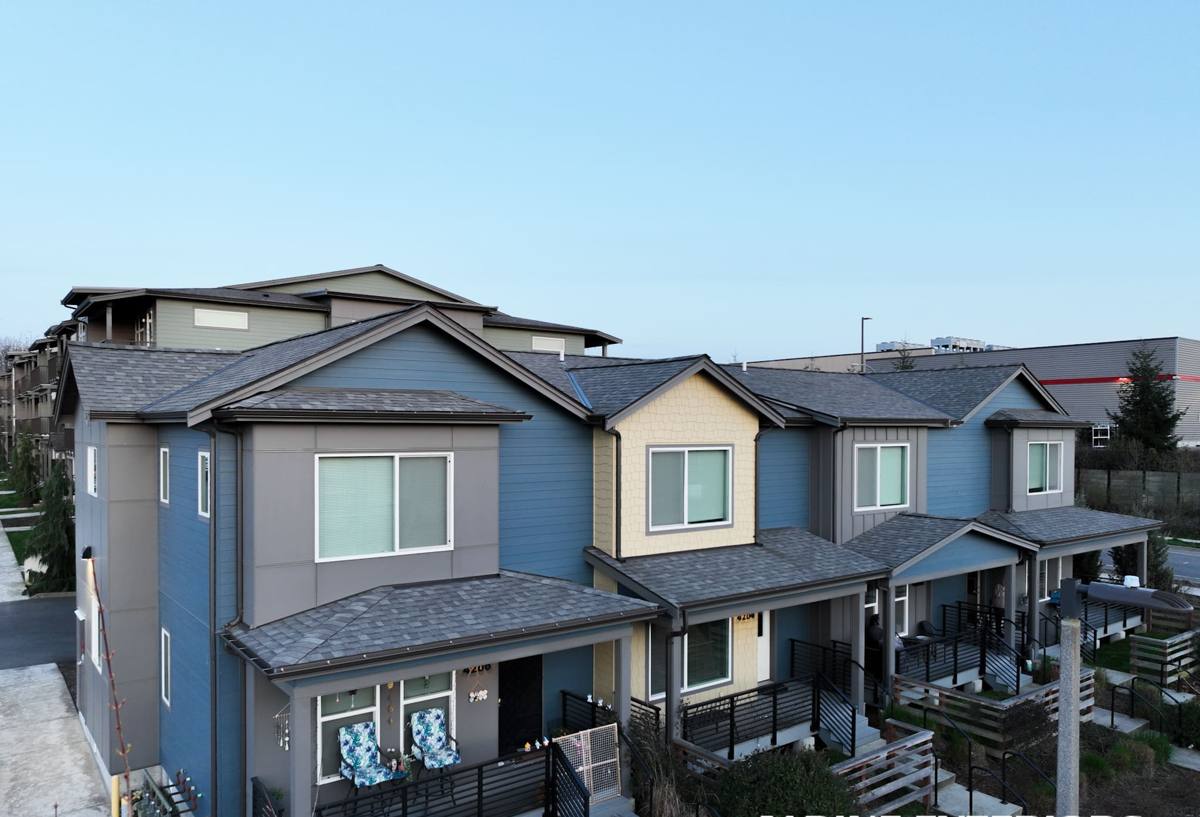
What Local Weather Actually Does to Vertical Siding
Salt Air and Metal Fasteners
Homes closer to the Sound deal with airborne salt that accelerates corrosion on exposed or improperly coated fasteners and trim. Board and batten has more vertical seams and more fastener points than lap siding, so the quality of the fasteners and how they're protected matters more here than it would on a landlocked property.
Driving Rain and Wind-Driven Moisture
Vertical battens create narrow channels that can funnel wind-driven rain downward if the water-resistive barrier and flashing details underneath aren't done right. On a home exposed to weather coming off the water, a board and batten wall lives or dies on what's behind the boards, not just the boards themselves.
Moss, Algae, and Prolonged Dampness
Bellingham's moss season isn't a minor seasonal nuisance — for siding, it means long stretches where a wall surface stays damp, especially on north- and west-facing elevations that don't get much sun exposure. Any siding product that absorbs moisture or swells under sustained dampness is going to struggle here over a 15-20 year span. That's a material question as much as an installation one.
What a Correct Board & Batten Installation Actually Involves
Board and batten looks simple from the curb — vertical boards, battens covering the seams — but a correct install has several layers most homeowners never see:
- A properly lapped and taped water-resistive barrier behind the entire assembly, with all penetrations (vents, hose bibs, light fixtures) flashed before a single board goes up
- Rainscreen furring or a drainage gap so any moisture that does get behind the cladding can actually drain and dry, instead of sitting against the sheathing
- Correct fastener spacing and type for the specific board width and batten size being used, driven into framing — not just sheathing
- Butt joints and seams staggered and flashed, not just butted and caulked
- Proper clearance at the base of the wall — siding held up off decks, patios, and grade so it isn't wicking moisture from below
- Consistent, correctly fastened battens over the seams, not just decorative furring strips tacked on for looks
Skip any one of these steps and the siding can still look right for a year or two. The failures that show up later — staining, soft spots, boards pulling away from battens — almost always trace back to one of these details being rushed or skipped during the original install.
Why We Only Install James Hardie for This Application
We standardized on James Hardie fiber cement across every job we do, and board and batten is one of the applications where that choice matters most. Hardie's HZ5 product line is engineered for the freeze-thaw and moisture cycling common in Pacific Northwest climates, and their factory-applied ColorPlus finish is baked on under controlled conditions rather than field-painted, which matters a lot on a profile with this many exposed edges and seams.
Fiber cement doesn't swell, cup, or absorb water the way wood-based products can, which is the exact failure mode that a damp, moss-prone climate like ours tends to expose over time. It's also non-combustible, which is a meaningful consideration as wildfire smoke seasons have become a more regular part of Pacific Northwest summers, even this far north and this close to the water.
Board & Batten-Specific Hardie Products
Hardie offers both engineered board and batten panels and traditional individual board-and-batten configurations using their trim and panel products. We spec the assembly based on the home's exposure, wall height, and the look the homeowner wants — not a one-size-fits-all approach.
Why We Don't Install Other Board & Batten Materials
We get asked fairly often about LP SmartSide, vinyl board and batten, or cedar for this look, so it's worth being straightforward about why we don't offer them, rather than just saying no.
| Material | What it gets right | Why it's a harder sell in this climate |
|---|---|---|
| LP SmartSide (engineered wood) | Lighter weight, easier to install, lower material cost | Wood-strand core is more vulnerable to sustained moisture exposure at seams and cut edges than fiber cement, which matters through a long wet season |
| Vinyl board & batten | Low upfront cost, minimal maintenance in mild climates | Can warp or become brittle with temperature swings and UV exposure over time; repairs are visible since color isn't consistent across production runs |
| Cedar board & batten | Natural look, long track record, repairable | Needs ongoing refinishing to hold up against moss and moisture; upkeep cost over 15-20 years is significant compared to a factory-finished product |
| James Hardie fiber cement | Factory finish, engineered for this climate, non-combustible, strong transferable warranty | Higher material and install cost than vinyl; requires correct installation technique |
None of these are bad products in every context — they're just trade-offs we're not willing to put our name behind on homes that will sit through decades of this specific weather pattern.
Our Process for Puget-Area Board & Batten Projects
1. On-Site Assessment
We look at the home's exposure — which walls face prevailing weather, how much sun each elevation gets, current condition of the sheathing and water barrier if we're doing a full re-side, and any existing moisture damage that needs to be addressed before new siding goes up.
2. Detailed Scope and Product Selection
We walk through Hardie's board and batten options, color choices, and batten spacing with the homeowner, and put together a written scope that specifies flashing details, not just square footage.
3. Prep and Weather Barrier Installation
This is the step that determines whether the siding lasts. We don't shortcut the water-resistive barrier, flashing, or rainscreen gap regardless of schedule pressure — it's the part nobody sees once the job is done, and it's the part that matters most.
4. Installation
Boards and battens are installed to Hardie's published fastening and clearance specifications, which is also what keeps the manufacturer's warranty intact.
5. Final Walkthrough
We review the finished work with the homeowner, including where flashing and clearances are and what routine maintenance (if any) to expect.
Cost Factors for This Project
Board and batten typically runs somewhat higher in labor than lap siding because of the additional battens and seams, but the exact number depends on several factors specific to each home.
| Factor | Why it affects cost |
|---|---|
| Wall height and complexity | Two-story walls, dormers, and cut-ins around windows all add labor time |
| Existing wall condition | Sheathing repair or replacement adds cost but is not optional if damage is found |
| Battens spacing and board width chosen | Narrower spacing means more material and more fastening labor |
| Removal of existing siding | Tear-off, disposal, and any required sheathing inspection |
| Trim and corner detailing | Custom corner boards and window trim add finish labor |
We give homeowners an itemized estimate rather than a flat per-square-foot number, because two board and batten jobs with the same square footage can have very different labor requirements depending on wall condition and detailing.
What to Look for in Any Contractor for This Work
Whether you hire us or someone else, these are the questions worth asking before signing a contract for board and batten siding in this area:
- Ask specifically how they'll handle the water-resistive barrier and flashing — not just "what siding brand" they install
- Ask whether they're using a rainscreen or drainage gap behind the battens, given how often this climate stays damp
- Ask to see their fastener schedule and whether it matches the manufacturer's published specs for this profile
- Confirm whether the manufacturer's warranty stays intact with their installation method, or whether it's void without certified installers
- Ask how they handle wall penetrations — vents, fixtures, hose bibs — since these are common failure points on vertical siding
- Ask for references from other homes in the immediate area, not just general references
Why Local Experience with This Specific Area Matters
A crew that already works in and around Bellingham and Whatcom County has a working sense of which elevations on a given lot type see the worst weather exposure, how long moss season actually runs here versus other parts of the state, and what permitting and inspection expectations look like locally. That's not something a crew traveling in from outside the region picks up on the first job. It shows up in smaller decisions — where to add extra flashing attention, which side of a home to prioritize during a phased project, how to sequence work around the wetter months — that add up to a wall system that actually holds up through the specific conditions this area sees year after year.
If you're considering board and batten siding for a home in the Puget area, we're happy to walk the property, look at current conditions, and put together a straightforward, no-pressure estimate. There's a form below to get that started.