 Bellingham Siding
 Roofing in York: Built for a Marine Climate, Not a Catalog Climate
York is one of Bellingham's older, established neighborhoods, and that means two things for roofs: the housing stock skews older, and the tree canopy is mature. Both matter more than most homeowners realize. A new roof going onto a York home isn't just competing against rain — it's dealing with salt-laden air drifting up from Bellingham Bay, driving rain that comes in sideways off the Strait during winter storms, and long stretches of shade from mature trees that keep roof surfaces damp far longer than a roof out in open sun. That combination is exactly why moss, algae, and slow-motion moisture damage show up faster here than in drier parts of the state.
A correct roof installation in this climate isn't about picking the cheapest shingle and nailing it down. It's about choosing materials and installation details that specifically account for prolonged dampness, wind-driven rain, and a moss season that, in Whatcom County, can run nearly year-round on shaded slopes.
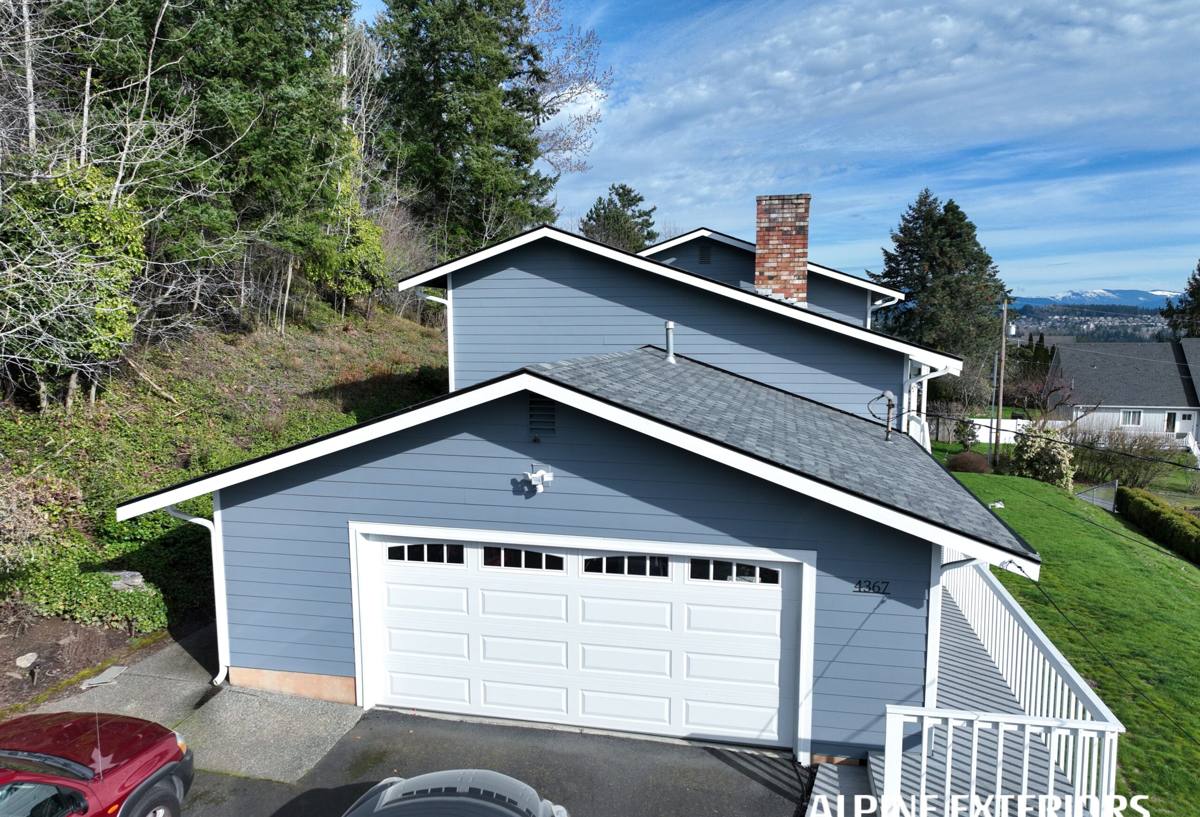
What "Correct" New Roof Installation Actually Involves
Anyone can lay shingles in a straight line. What separates a roof that lasts from one that leaks in year three is what happens underneath and around the shingles — the parts you don't see once the job is done.
Tear-Off and Deck Inspection
We don't install new roofing over old, and we don't skip the deck inspection. Once the old roofing is off, the plywood or plank decking underneath gets checked for soft spots, delamination, and water staining — all common in older York homes where a roof may have been re-covered once or twice over the decades without anyone looking underneath. Any compromised decking gets replaced before anything new goes down. Installing new shingles over a spongy deck just guarantees a callback.
Underlayment and Water Barrier
This is the layer that actually keeps a house dry if wind ever drives rain up under the shingle tabs — which it does here, regularly, in winter storms coming off the water. We use synthetic underlayment across the full roof and self-adhering ice-and-water barrier at the eaves, valleys, and any low-slope transitions, since those are the spots most prone to water backing up under shingles during heavy, sustained rain.
Flashing Details
Chimneys, skylights, sidewalls, and roof-to-wall transitions are where most roof leaks actually start — not in the open field of shingles. Every flashing point gets properly stepped, sealed, and integrated with the underlayment, not just caulked over the top of old flashing, which is a common shortcut that fails within a few seasons in a wet climate.
Ventilation
A roof deck that can't breathe traps moisture from inside the house against the underside of the sheathing, which rots decking from below and shortens shingle life from above. We check intake (soffit) and exhaust (ridge or box vents) balance on every job, since a lot of older York homes were built or re-roofed before current ventilation standards and are working with an attic that's under-vented for today's insulation levels.
Roofing Material Options for a Damp, Shaded Neighborhood
Every material handles Bellingham's moisture and moss pressure differently. The right choice depends on your roof's pitch, how much shade it sits under, and your budget.
| Material | Typical Lifespan (PNW) | Moss/Algae Resistance | Best For |
|---|---|---|---|
| 3-Tab Asphalt Shingle | 15–20 years | Moderate; needs algae-resistant granules to hold up under shade | Budget-conscious re-roofs on sun-exposed slopes |
| Architectural/Dimensional Shingle | 25–30 years | Good, especially with algae-resistant (AR) granule options | Most York homes; balance of durability, appearance, and cost |
| Standing Seam Metal | 40–50+ years | Excellent — moss struggles to get purchase on smooth metal | Heavily shaded roofs, steep pitches, long-term low-maintenance goals |
| Cedar Shake | 20–30 years with upkeep | Poor without diligent maintenance; absorbs and holds moisture | Historic-style homes where owners commit to regular upkeep |
We install and stand behind architectural asphalt shingles and metal roofing as our primary recommendations for this area. Cedar shake can look great on an older-style home, but it demands moisture-conscious maintenance to avoid rot and moss colonization under heavy tree cover — that's a maintenance-burden trade-off worth being honest about up front, not something we discover for you after it's installed.
Our Installation Process
- On-site assessment. We walk the roof (not just look at it from the ground), check the attic for ventilation and moisture signs, and measure pitch, square footage, and layer count.
- Written estimate. Material options, scope, and a real price range — no vague allowances buried in fine print.
- Scheduling around weather. Bellingham winters bring extended wet stretches, so we sequence tear-off and dry-in to minimize how long your deck sits exposed.
- Tear-off and deck repair. Old roofing comes off, decking is inspected and repaired as needed.
- Underlayment, flashing, and shingle or metal installation. Done in the order above, with every flashing point tied into the water barrier.
- Ventilation check and final walk-through. We confirm intake/exhaust balance and walk the finished roof with you before cleanup and haul-away.
Moss, Algae, and Long-Term Roof Health
Moss doesn't just look bad — it holds moisture directly against the roofing material, works into shingle edges, and lifts granules over time, which shortens the life of even a well-installed roof. In a neighborhood like York, with a lot of tree cover creating shaded, slow-drying roof planes, moss pressure is a fact of life rather than an occasional problem.
A few things make a real, lasting difference:
- Zinc or copper strips installed near the ridge, which release trace metal ions with every rain that inhibit moss and algae growth down-slope
- Algae-resistant (AR) shingle granules, standard on most quality architectural shingles today
- Keeping gutters and valleys clear so water doesn't pool and give moss a foothold to establish
- Trimming back tree limbs that overhang the roofline, reducing both shade and the steady drop of needles and leaf litter that traps moisture
None of these replace a properly installed roof, but paired with one, they meaningfully extend how long it stays in good shape before moss becomes a maintenance issue again.
Signs a York Home Needs a New Roof
Roofs fail gradually, and in a wet climate the visible symptoms often show up well after the underlying damage has started. Worth checking for:
- Shingles that are cupping, curling at the edges, or missing granules in patches
- Moss or dark algae streaking that keeps returning within months of cleaning
- Daylight visible through the roof deck from inside the attic
- Soft or spongy spots when walking the roof, or sagging visible from the ground
- Water stains on interior ceilings, especially near chimneys, skylights, or exterior walls
- Granules collecting in gutters, a sign the shingle surface is wearing down
- A roof approaching or past 20–25 years old, regardless of visible damage
Any one of these on its own isn't necessarily an emergency, but a few together usually means it's time for a real inspection rather than another patch.
Why a Crew That Already Works in York Matters
Older neighborhoods come with details a crew only learns by working in them repeatedly. York's housing stock includes a mix of early-1900s and mid-century homes, often on narrower lots with mature trees close to the structure — that changes how staging, tear-off debris handling, and equipment access need to be planned compared to a newer subdivision with wide, open lots. Roof decking on older homes can also vary more than expected once you're under the old shingles, which is exactly why we treat the tear-off inspection as a real step in the process, not a formality.
Working within Bellingham and Whatcom County also means we're familiar with the City of Bellingham's permitting requirements for roof replacement and the practical realities of scheduling around the region's wet season. A crew that treats every job like it's the first roof they've ever installed in a wet, tree-heavy neighborhood is more likely to miss the details that actually matter here.
What Affects the Cost of a New Roof
| Factor | How It Affects Cost |
|---|---|
| Roof size and pitch | More square footage and steeper pitches mean more material and labor time |
| Number of existing layers | Tearing off multiple old layers takes longer and adds disposal cost versus a single-layer tear-off |
| Decking condition | Rotted or delaminated plywood found during tear-off adds repair cost, but skipping it isn't an option |
| Material choice | Standard architectural shingle costs less upfront than metal; metal costs more but lasts substantially longer |
| Roof complexity | Valleys, dormers, chimneys, and skylights all add flashing work and time |
| Access and staging | Steep lots, close-set trees, or limited driveway access can add labor time for material staging and debris removal |
We give real, written price ranges after seeing the roof in person — not a phone-quote guess. Every roof in this neighborhood is a little different once you account for pitch, tree cover, and what's actually under the existing shingles.
Warranty and What Happens After Installation
A new roof should come with two kinds of protection: a manufacturer's warranty on the material itself, and a workmanship warranty from the crew that installed it, covering installation errors separately from product defects. Before we consider a job finished, we walk the completed roof with you, confirm the ventilation and flashing details, and make sure the property is fully cleaned up — including a magnetic sweep for stray nails, which matters a lot more when you've got kids, pets, or a driveway full of parked cars in a tighter urban lot.
If you're weighing whether your York home needs a full replacement or just a strong maintenance push — new gutters, moss treatment, a flashing repair — we're happy to give you an honest read on that first. If you'd like a free, no-pressure estimate for a new roof, the form below gets you a real assessment from a crew that already knows this neighborhood's climate and its older homes.