 Bellingham Siding
 Roofing Built for the Puget Area, Not Just Sold Here
Homes in the Puget area of Whatcom County sit close enough to the water that salt air is a daily fact of life, and close enough to the Cascades' rain shadow edge that driving, wind-blown rain is normal for half the year. Add a shaded, damp shoulder season that can stretch from October into May, and you have a roofing environment that is genuinely harder on asphalt shingles than most of the country ever sees. A roof that would last twenty-five years in a dry inland climate can wear out faster here if it was installed without that reality in mind. This page is about what an asphalt shingle roof actually needs to hold up on a Puget-area home, what a correct installation looks like, and how we approach the job so you get a roof that performs for its full expected life, not just until the first hard winter.
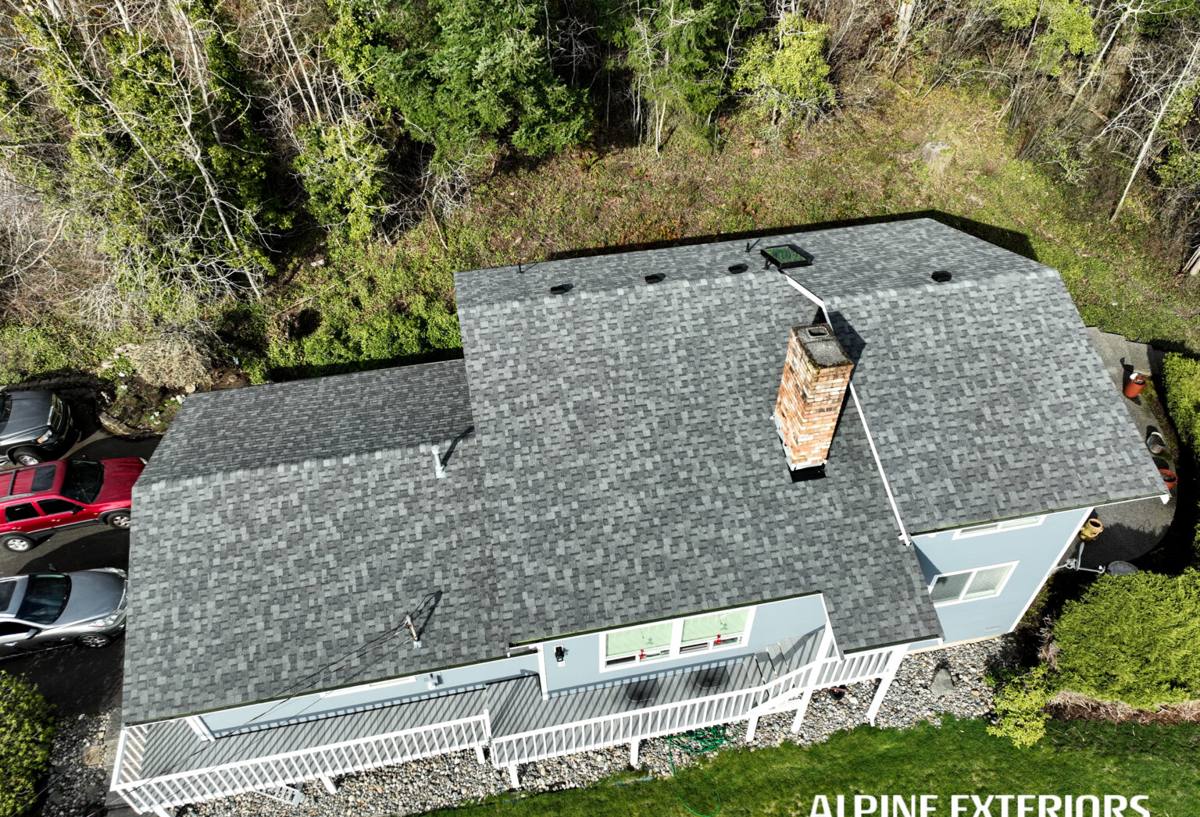
What Bellingham's Climate Actually Does to a Roof
It helps to be specific about the forces at work, because they are not the same everywhere in Western Washington. Homes near the water in the Puget area deal with a combination that inland Whatcom County properties are spared.
Salt Air and Corrosion
Airborne salt accelerates corrosion on exposed metal — nail heads, flashing, vent caps, and gutter hardware. Standard galvanized fasteners and trim can start to streak and weaken years before they would inland. This is a metal-selection and detailing issue as much as a shingle issue, and it's one of the first things we check on any roof close to the water.
Driving, Wind-Blown Rain
Rain that comes in sideways during a winter storm finds every weak seam, every under-lapped shingle course, and every place where flashing was cut short. A roof that sheds vertical rain fine can still leak under driving rain if the underlayment, step flashing, and valley details weren't built for wind-driven water. This is the single biggest cause of "mystery leaks" we get called out for on older Puget-area roofs.
The Long Moss Season
Shade, moisture, and mild temperatures for much of the year add up to prime moss and algae conditions. Moss doesn't just look bad — it lifts shingle edges, holds water against the roof deck, and shortens the life of the shingle mat underneath. A roof with poor airflow or too much shade exposure can develop a moss problem within a few years of installation if it wasn't designed with maintenance and ventilation in mind.
What a Correct Asphalt Shingle Roof Involves
Asphalt shingles look like a simple product, but the shingle itself is only one layer of a system. In this climate, the layers underneath the shingles often matter more than the shingle brand printed on the wrapper.
The Shingle Layer
Architectural (laminated) shingles are our standard recommendation for Puget-area homes over builder-grade 3-tab shingles. They're thicker, rated for higher wind resistance, and their dimensional profile sheds water more effectively at the tab edges — a real advantage when rain is coming in at an angle instead of straight down. Look for shingles with a Class A fire rating, a wind rating suited to coastal exposure, and — where moss and algae are a known issue — an algae-resistant (AR) shingle with copper or zinc granules built in.
The System Beneath the Shingles
This is where most roofs actually succeed or fail in our climate:
- Underlayment: A synthetic or self-adhering underlayment rated for high-moisture climates, not a stapled-down felt that tears and wrinkles under wind-driven rain.
- Ice and water shield: Self-adhered membrane at eaves, valleys, and around every penetration — the places driving rain and moss-related water backup are most likely to find a way in.
- Flashing: Step flashing at every wall intersection, proper valley flashing, and corrosion-resistant metal at chimneys, skylights, and vents — not just caulk covering a gap.
- Ventilation: Balanced intake and exhaust airflow so the attic doesn't trap moisture, which both shortens shingle life from underneath and feeds moss growth from the deck side.
- Fastening: Corrosion-resistant nails, hand-nailed or gun-set to the correct depth — overdriven nails are a common, invisible cause of early shingle failure near the water.
Common Problems We Find on Puget-Area Roofs
When we're called out to inspect an existing roof in this area, a handful of issues show up again and again:
- Moss buildup at north-facing slopes and under tree cover, lifting shingle tabs and trapping moisture
- Rust streaking from corroded fasteners or flashing, especially on roofs closer to the water
- Leaks at valleys and wall flashings that only show up during wind-driven storms, not steady rain
- Granule loss and premature aging on shingles that were never rated for coastal wind exposure
- Attic condensation and mold from inadequate ventilation, often mistaken for a roof leak
- Soft or spongy decking discovered only after tear-off, from years of slow moisture intrusion
Most of these are preventable with the right materials and detailing at installation, and the rest are manageable with a basic maintenance routine. None of them are reasons to avoid asphalt shingles — they're reasons to make sure the roof is built correctly for this specific climate the first time.
How We Approach a Puget-Area Roofing Job
Our process is the same whether it's a full replacement or a significant repair — we don't skip steps to save time, because in this climate the steps we'd skip are the ones that cause callbacks two winters later.
- Inspection and assessment: We check the existing roof, decking, ventilation, and flashing details, and look specifically for moss damage, fastener corrosion, and signs of wind-driven water intrusion.
- Honest scope and estimate: You get a clear breakdown of what's needed and why — including whether deck repair is likely, which we'll always confirm before, not after, we've started.
- Tear-off and deck check: Old roofing comes off down to the deck, and we inspect for soft spots or rot before anything new goes down. Any damaged decking gets replaced, not covered over.
- Underlayment and ice/water shield: Installed to current code and matched to this climate's rain and moss exposure, with extra protection at eaves, valleys, and penetrations.
- Flashing: New corrosion-resistant flashing at every wall, chimney, skylight, and vent intersection — this is where most leaks originate, so we don't reuse old flashing to save a step.
- Shingle installation: Installed to manufacturer spec for nail placement, exposure, and pattern, with attention to proper sealing along eaves and rakes for wind resistance.
- Ventilation check: We confirm intake and exhaust airflow is balanced, adding or correcting vents where the existing setup is inadequate.
- Cleanup and final walkthrough: Full site cleanup including magnetic nail sweep, followed by a walkthrough so you know what was done and what to expect going forward.
Comparing Asphalt Shingle Options
Not every shingle line makes sense for a roof exposed to salt air and moss pressure. Here's how the common tiers stack up for Puget-area homes specifically:
| Shingle Type | Typical Lifespan Here | Wind/Moisture Performance | Best Fit |
|---|---|---|---|
| 3-tab (builder grade) | 12–18 years | Lower wind rating; more prone to edge lift in driving rain | Budget-driven projects, low wind exposure lots |
| Architectural / laminated | 20–30 years | Higher wind rating, better water-shedding profile | Most Puget-area homes — our standard recommendation |
| Algae-resistant (AR) architectural | 20–30 years | Same wind performance, plus copper/zinc granules resist moss and algae staining | Shaded lots, north-facing slopes, homes with known moss history |
| Premium/designer | 30+ years | Highest wind rating and thickest mat, best long-term seam integrity | Homeowners prioritizing longevity and appearance over upfront cost |
What Affects the Cost of a Puget-Area Roofing Project
We won't quote a price without seeing the roof, but these are the factors that actually move the number, in rough order of impact:
| Factor | Why It Matters |
|---|---|
| Roof size and pitch | Larger and steeper roofs take more material, time, and safety setup |
| Deck condition | Rot or soft decking found at tear-off adds material and labor to replace |
| Number of penetrations | Chimneys, skylights, and vents each need individual flashing work |
| Shingle tier selected | 3-tab, architectural, and premium lines carry different material costs |
| Ventilation upgrades | Adding or correcting intake/exhaust vents affects both cost and long-term performance |
| Access and tear-off complexity | Multiple existing layers, steep pitch, or limited access add labor time |
Maintaining a Puget-Area Roof Between Services
A well-installed roof still needs light, regular attention in this climate — mostly to manage moss and keep water moving off the roof, not on it. A simple annual routine goes a long way:
- Check for moss growth each fall before the wet season sets in, especially on shaded or north-facing slopes
- Keep gutters clear so water isn't backing up under the eave line during heavy rain
- Trim back overhanging branches to reduce shade, debris buildup, and moss-friendly conditions
- Look for granule buildup in gutters or downspouts, which can signal accelerated shingle wear
- Have flashing and seals inspected every few years, particularly if the home is close to the water
- Address moss with a proper zinc or copper treatment rather than pressure washing, which can strip granules and shorten shingle life
Why Local Roofing Experience Matters Here
A roof built to a generic national spec can still fail against Puget's specific mix of salt exposure, wind-driven rain, and moss pressure. Crews who work this area regularly know which slopes tend to hold moss, which fastener and flashing choices actually hold up near the water, and where driving rain typically finds a weak detail. That local pattern recognition is the difference between a roof that just meets code and one that's actually built for where it sits. It also means a faster, more accurate inspection when something does need attention — we're not learning this climate for the first time on your roof.
Workmanship You Can Count On
Every roofing job we do is backed by manufacturer material warranties on top of our own workmanship guarantee, so you're covered on both the product and the installation. We'll walk you through exactly what's covered, for how long, and what routine maintenance is expected to keep that coverage valid — no fine print surprises.
If your roof is showing moss, granule loss, or signs of age, or you're planning ahead for a replacement, we're happy to take a look and give you a straightforward, no-pressure estimate. Use the form below to get started.