 Bellingham Siding
 Why Ferndale Roofs Wear Differently Than Roofs Inland
Ferndale sits close enough to Bellingham Bay and the Strait of Georgia that salt-carried air reaches roofs here more often than homeowners moving from inland areas expect. Combine that with Whatcom County's long stretch of wet months and the deep shade thrown by mature evergreens on many lots, and you get a roofing environment that punishes shortcuts. A roof that would hold up fine in a dry, sunny climate can fail early here if it wasn't built with this specific combination of salt exposure, driving rain, and moss pressure in mind.
This isn't a reason to panic about your roof — it's a reason to be deliberate about material choice, ventilation, and workmanship when it's time to replace one. That's what this page covers: what a correct new roof installation looks like specifically for a Ferndale home, not a generic description that could apply anywhere.
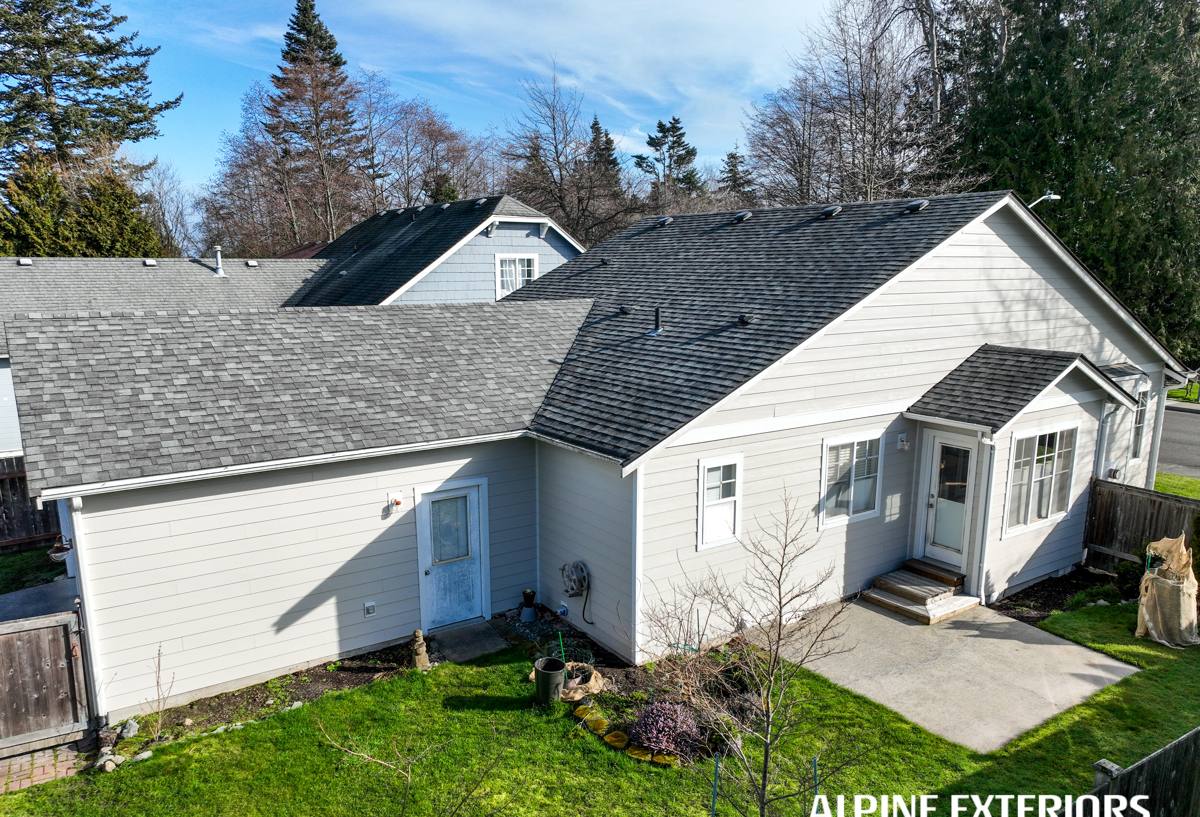
What "Driving Rain" Actually Does to a Roof
Rain that falls straight down is relatively easy for any roofing system to shed. The problem in this part of Whatcom County is wind-driven rain — storms that push water sideways and upward under shingle edges, around flashing, and into any gap a rushed installation left behind. Over years, wind-driven rain finds every weak point: undersized head-lap on shingles, flashing that was reused instead of replaced, or underlayment that wasn't lapped correctly at seams.
A correct installation accounts for this by using proper shingle exposure and nailing patterns, self-adhering underlayment at vulnerable areas like eaves, valleys, and skylights, and flashing that's replaced — not caulked over — at every roof-to-wall and roof-to-chimney transition. None of this is exotic. It's standard practice done without skipping steps, which is where a lot of roofing problems in this climate actually start.
Salt Air and Your Roofing Materials
Salt air accelerates corrosion on any exposed metal component — nails, flashing, vents, and fasteners. It doesn't matter how good the shingles or panels are if the metal holding everything together starts breaking down years ahead of schedule. For homes in and around Ferndale, we treat fastener and flashing corrosion resistance as a real spec, not an upsell.
| Material | How it handles salt air & driving rain | Moss resistance | Typical lifespan |
|---|---|---|---|
| Asphalt composition shingle (standard) | Good with correct flashing and starter strip; granule loss can accelerate near salt air over time | Moderate — needs periodic cleaning in shaded areas | 20–30 years |
| Asphalt shingle (algae-resistant, copper- or zinc-infused granules) | Same water performance as standard, with added surface protection | Better — granules actively discourage moss and algae growth | 25–30+ years |
| Standing seam metal | Excellent water shedding; requires marine-grade or coated fasteners near the coast to avoid corrosion | High — smooth, steep-pitched panels give moss little to hold onto | 40–50+ years |
| Cedar shake | Handles rain well when properly ventilated but is the most maintenance-intensive option in a wet climate | Low without regular treatment — cedar is naturally moss-prone in shade | 20–30 years with upkeep |
We don't push cedar shake on homes with heavy tree cover or limited sun exposure — not because it's a bad product, but because it demands a maintenance schedule most homeowners don't want to keep up with in a climate this wet. That's an honest trade-off conversation we have upfront, not something we discover after the job is done.
Fasteners and Flashing Matter More Here
On a coastal-influenced job like most Ferndale re-roofs, we spec corrosion-resistant fasteners and flashing rated for the exposure, rather than the cheapest option that meets code minimums inland. It's a small line-item difference that has an outsized effect on how the roof looks and performs after ten or fifteen years of salt air.
Ventilation: The Half of the Job You Can't See
A new roof isn't just what's visible from the street — it's also the intake and exhaust ventilation working underneath the surface. In a climate with this much sustained moisture, poor attic ventilation traps warm, humid air against the underside of the roof deck. That trapped moisture is what rots decking from the inside, feeds mold growth, and shortens the life of even a well-chosen roofing material.
Correct ventilation balances intake (usually soffit vents) with exhaust (ridge vents, or box vents where a ridge vent isn't practical). We size and balance these during the tear-off, not as an afterthought, because a roof with the right shingles but the wrong ventilation still fails early — just from the inside out where it's harder to spot.
Moss: A Long Season, Not a One-Time Problem
Whatcom County's moss season isn't a few weeks — on shaded, north-facing, or tree-covered roofs it can be most of the year. Moss holds moisture against the roof surface, works its way under shingle edges as it grows, and can lift tabs enough to let wind-driven rain in behind them. It's a slow process, which is exactly why it's often ignored until the damage is already done.
A new roof installation is the right time to get ahead of this, not just patch around it:
- Choosing algae- and moss-resistant shingles where the roof plan has shaded or low-slope sections
- Installing zinc or copper strips near the ridge on moss-prone slopes, where appropriate for the roof design
- Making sure valleys and low-slope transitions are detailed so water and debris don't pool and encourage growth
- Talking through tree trimming or canopy thinning with you if overhanging branches are keeping a section of roof shaded and damp year-round
None of this eliminates moss entirely — nothing does in this climate — but it changes how fast it comes back and how much damage it can do while it's there.
Our Installation Process
The steps themselves aren't unusual; what matters is that none of them get skipped or rushed.
- Inspection and roof plan. We walk the roof and attic, note ventilation, deck condition, flashing points, and any moss or moisture damage already present, then put together a material and detailing plan specific to that roof's exposure and shading.
- Tear-off and deck check. Old roofing comes off down to the deck so we can actually see the wood underneath — this is where hidden moisture damage from a previous roof's shortcuts usually shows up.
- Deck repair. Any soft, delaminated, or rotted decking is replaced before anything new goes down. Installing new roofing over a compromised deck just hides the problem.
- Underlayment and flashing. Self-adhering underlayment at eaves, valleys, and penetrations; new flashing at every wall, chimney, and vent transition.
- Ventilation balancing. Intake and exhaust vents are installed or corrected to match the attic's needs, not just replaced in the same spots as before.
- Roofing material installation. Shingles, panels, or shakes installed to manufacturer spec and to the exposure-specific details worked out in the roof plan.
- Final walk-through. We review the finished roof with you, including any moss-prevention measures installed and what maintenance, if any, we recommend going forward.
What Affects the Cost of a New Roof in Ferndale
Every roof is priced on its own specifics, but the factors that move the number up or down tend to be the same ones:
| Factor | Why it matters |
|---|---|
| Roof size and pitch | More square footage and steeper pitches mean more material and more labor time |
| Number of valleys, penetrations, and transitions | Each one needs individual flashing detail — more of them means more labor-intensive work, especially where driving rain is a factor |
| Deck condition underneath | Rot or delamination found during tear-off requires replacement before new roofing goes on |
| Material choice | Standard asphalt shingle, algae-resistant shingle, and metal carry different material costs and installation labor |
| Ventilation upgrades needed | Adding or rebalancing intake and exhaust ventilation is inexpensive relative to the roof's total cost but easy to underestimate |
| Access and tree cover | Steep sites, limited access, and heavy tree canopy can add time for both tear-off and cleanup |
We walk through these factors with you during the estimate so the number you get reflects your actual roof, not a generic per-square average that doesn't account for Whatcom County conditions.
Signs Your Ferndale Home May Need a New Roof Soon
- Granules collecting in gutters or at downspout outlets in noticeably larger amounts than in past years
- Shingles that are curling, cupping, or missing tabs, especially on rain- and wind-exposed slopes
- Moss or algae staining that keeps returning within months of being cleaned
- Daylight visible through the roof deck from inside the attic
- Soft or spongy spots on the roof surface when safely inspected
- Water stains on ceilings or in the attic, particularly near valleys, chimneys, or skylights
- A roof that's approaching or past the expected lifespan for its material and hasn't had major work done
Why It Matters to Hire a Crew That Already Works in Ferndale
A roofer who mostly works drier, inland areas isn't necessarily going to under-spec your roof on purpose — but they may not default to marine-grade fasteners, moss-resistant shingle options, or the ventilation balancing this climate calls for, simply because it's not their daily habit. A crew that regularly works Ferndale and the surrounding Whatcom County coastline treats salt-air fasteners, wind-driven rain detailing, and moss-season planning as standard practice, not a special request.
That local familiarity also shows up in smaller ways: knowing which slopes on a given lot layout tend to stay shaded and damp longest, recognizing early moss and moisture patterns specific to this area, and having a realistic sense of how weather windows in Whatcom County affect scheduling a tear-off without leaving a roof exposed longer than it should be.
Get a Straight Answer on Your Roof
If your roof is showing its age, or you just want an honest read on how much life it has left, we're glad to take a look. The estimate is free, there's no pressure, and you'll get a clear explanation of what we see and what your options are — use the form below to get started.