 Bellingham Siding
 New-Construction Windows in Fairhaven: What the Local Climate Demands
Fairhaven sits close enough to the water that salt-laden air, wind-driven rain, and a moss season that runs most of the year all show up on a building envelope faster than they would twenty miles inland. New-construction window installation is one of the few places in a build where you get to decide, once, whether the wall assembly around every window opening is going to handle that exposure for the next thirty years or fight it. On a remodel you're often stuck working around what's already there. On new construction, the flashing, the water-resistive barrier laps, and the window's own drainage path all get built in the right order from the start — if the crew doing it understands what Whatcom County weather actually does to a house.
We're a Bellingham-based siding and exterior crew that works Fairhaven regularly, not as an occasional stop between bigger jobs elsewhere in the county. That matters for new-construction window work specifically, because the failure points aren't exotic — they're the same handful of details done wrong, over and over, on homes exposed to the same weather pattern.
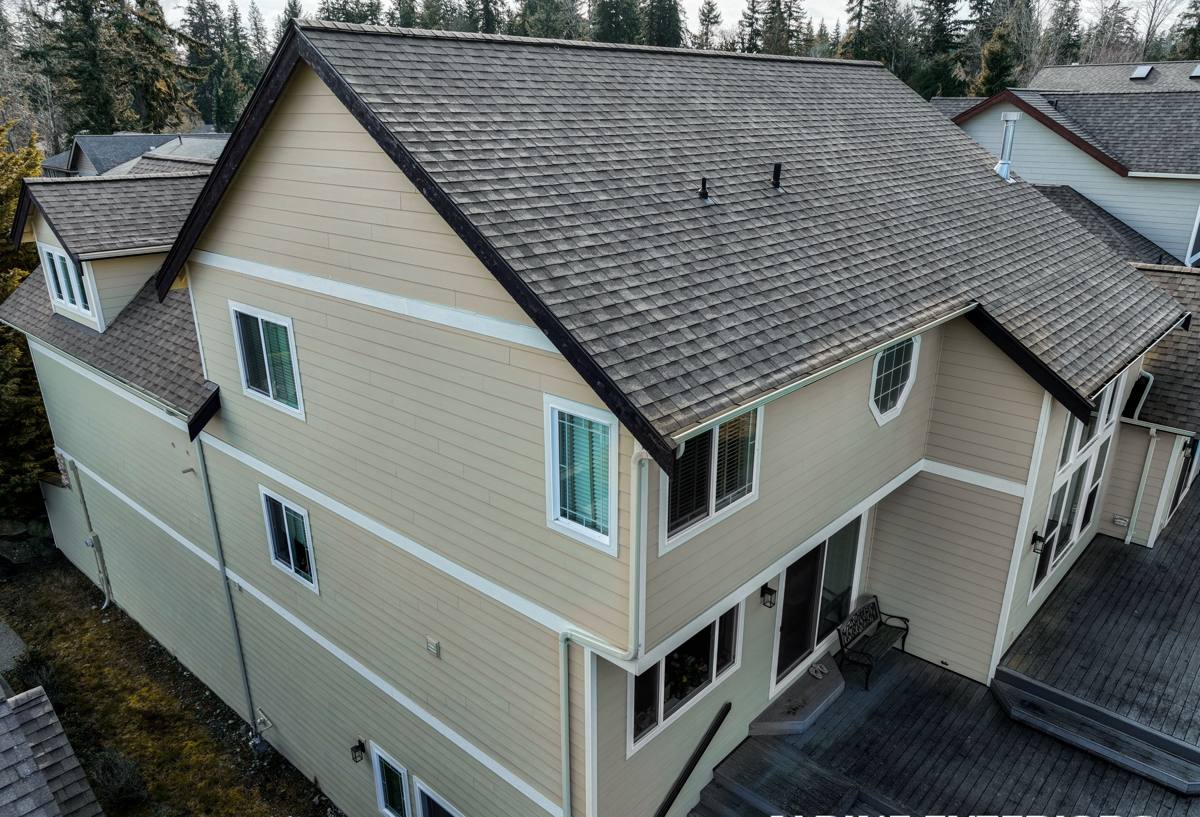
Why "New Construction" Windows Are a Different Job Than Replacement
New-construction windows have a nailing fin around the perimeter that gets fastened directly to the sheathing, then integrated into the water-resistive barrier and flashing before siding goes on. That's different from a pocket replacement window, which drops into an existing frame and leans on the old opening's flashing (good or bad) to keep water out. New-construction installation gives you full access to the rough opening — which is exactly why it has to be done right the first time. Once siding closes it up, the flashing details are hidden for good.
What a Correct Install Sequence Looks Like
- Rough opening checked for square, level, and correct dimension before the window ever gets set
- Sill pan flashing installed first, sloped to drain outward, not just a flat strip
- Window set into the opening and fastened per the manufacturer's schedule — not "however many screws seemed like enough"
- Side and head flashing integrated in proper shingle-lap order (bottom-up, so water sheds over each layer)
- Water-resistive barrier lapped correctly over the head flashing — never tucked under it
- Backer rod and sealant at the interior and exterior per the window manufacturer's install guide, not generalized caulk-everything
- Interior air sealing at the rough opening gap, separate from the exterior weatherproofing
Skip or reorder any one of those steps and the window can look fine for a year or two before a leak shows up inside a wall cavity where nobody's looking for it.
What Salt Air, Driving Rain, and Moss Season Do to Window Openings
Salt Air
Proximity to the water means airborne salt settles on exterior surfaces and accelerates corrosion on unprotected fasteners and lower-grade hardware. It's not dramatic, it's cumulative — a fastener that would last decades inland can start showing rust streaks near the coast in a fraction of that time. This is a reason we're particular about fastener material and window hardware finish on the Fairhaven side of Bellingham specifically.
Driving Rain
Wind off the water pushes rain sideways into wall assemblies, not just straight down. A flashing detail that would be adequate in a low-wind inland setting can get overwhelmed here. That's why sill pan flashing and correct head flashing laps aren't optional upgrades on this job — they're the baseline for a house exposed to wind-driven rain off Bellingham Bay.
Moss and Sustained Moisture
Whatcom County's long wet season keeps exterior surfaces damp for extended stretches, which is exactly the environment moss and algae need to establish. Moss itself doesn't attack a window, but it holds moisture against adjacent trim and siding longer than a dry surface would, which slows drying time after every rain event. Keeping window trim details clean, sloped to shed water, and free of moss-trapping ledges is part of doing this job for the local climate rather than a generic spec sheet.
Choosing Window Products for a New-Construction Fairhaven Build
We don't push one brand as the only acceptable option — the right product depends on the home's design, budget, and the builder's overall spec. What we do insist on is being straightforward about trade-offs instead of pretending every material performs the same in this climate.
| Frame Material | Coastal/Wet-Climate Considerations | Maintenance |
|---|---|---|
| Vinyl | Good moisture resistance, no corrosion risk; performs consistently in salt-air exposure | Low — occasional cleaning |
| Fiberglass | Very stable in temperature and moisture swings; holds up well long-term near the water | Low |
| Wood (clad or unclad) | Attractive, but unclad wood needs consistent upkeep in a wet, salt-air environment or finish failure comes early | Higher — regular refinishing |
| Aluminum | Durable frame, but standard aluminum conducts cold and can be prone to condensation; coastal-grade finishes help with corrosion | Moderate |
For most Fairhaven new-construction projects we're involved in, vinyl and fiberglass tend to be the practical choice given the exposure, but we'll install what the design calls for — our job is to make sure whatever product goes in is flashed and integrated correctly, since installation quality affects long-term performance more than brand choice does.
How We Approach a Fairhaven New-Construction Window Job
- Plan review: We look at window schedule, elevations, and rough opening dimensions before framing is finalized, so there are no surprises when windows arrive.
- Coordination with the builder: New-construction window installation touches framing, the water-resistive barrier, and siding trades. We coordinate sequencing so each layer laps correctly over the last.
- Site-specific flashing details: Given Fairhaven's exposure, we don't default to minimum-code flashing when the site and orientation call for more — for example, extra attention on elevations facing prevailing wind and rain.
- Install and inspect: Each opening gets checked for square and flashing lap before siding closes it up — because after that, it's not visible again.
- Documentation: We keep notes on what was installed where, useful for warranty reference and for the builder's own records.
What to Ask Before Hiring a Crew for This Work
New-construction window installation is easy to underbid and hard to inspect after the fact, which makes it a job where the contractor's actual process matters more than the quote. A few questions worth asking any crew you're considering:
- Do you install sill pan flashing on every opening, or only when specifically asked?
- What's your fastening and shingle-lap sequence, and can you walk me through it?
- Have you worked on homes in this specific area, and do you adjust details for wind and rain exposure?
- Who handles the water-resistive barrier integration — you, the framer, or the siding crew — and how do you coordinate that handoff?
- What does your warranty cover, and is it separate from the window manufacturer's warranty?
A crew that already works Fairhaven regularly should be able to answer all of these without hesitation, because they're not answering from a manual — they're describing what they actually do on every job in this part of Bellingham.
Cost Factors for New-Construction Window Installation
Pricing varies by window count, size, product tier, and how much coordination the job needs with other trades, so we won't quote a number here that wouldn't hold up on your specific plan. What does move the price:
| Factor | Why It Matters |
|---|---|
| Window count and size | More openings and larger units mean more labor and material |
| Frame material | Vinyl, fiberglass, wood, and aluminum carry different material costs |
| Site exposure | Elevations facing prevailing wind/rain may warrant upgraded flashing details |
| Coordination complexity | Jobs where we're integrating tightly with a framer or general contractor's schedule take more planning time |
| Access and building height | Multi-story installs or difficult site access add labor time |
Why This Matters More on New Construction Than a Remodel
On a remodel, a flashing mistake sometimes shows up as a visible leak within a season or two, and it can be opened up and fixed. On new construction, the same mistake gets sided over and can sit undetected for years, doing quiet damage to sheathing and framing the whole time. That's the real argument for hiring a crew that treats new-construction window installation as its own discipline — not a quick add-on to a framing or siding contract — especially in a location where salt air, driving rain, and moss season are working against a poorly built assembly every single week of the year.
If you're planning a new build or an addition in Fairhaven and want window installation done right the first time, we're happy to walk the plans with you and give you a straightforward, no-pressure estimate — just fill out the form below.