 Bellingham Siding
 Why Edgemoor Homes Need a Different Approach to Metal Roofing
Edgemoor sits close enough to the water that homes here take a different kind of weather beating than roofs a few miles inland in Bellingham. You've got salt-laden air coming off Bellingham Bay, wind-driven rain that finds its way under anything installed loosely, and a wet season that stretches long enough for moss and algae to get comfortable on north-facing slopes and anything shaded by mature trees. A metal roof handles all three of these better than most roofing materials on the market, but only if it's specified and installed with those conditions in mind. A metal roof installed the same way you'd install one in a dry inland climate will underperform here, sometimes within a few years.
We've worked on homes throughout Edgemoor and the surrounding Bellingham waterfront areas long enough to know which details matter and which corners get cut on jobs that don't hold up. This page covers what a metal roof needs to do in this specific setting, what a correct installation actually involves, and how we handle the job from first look to final walkthrough.
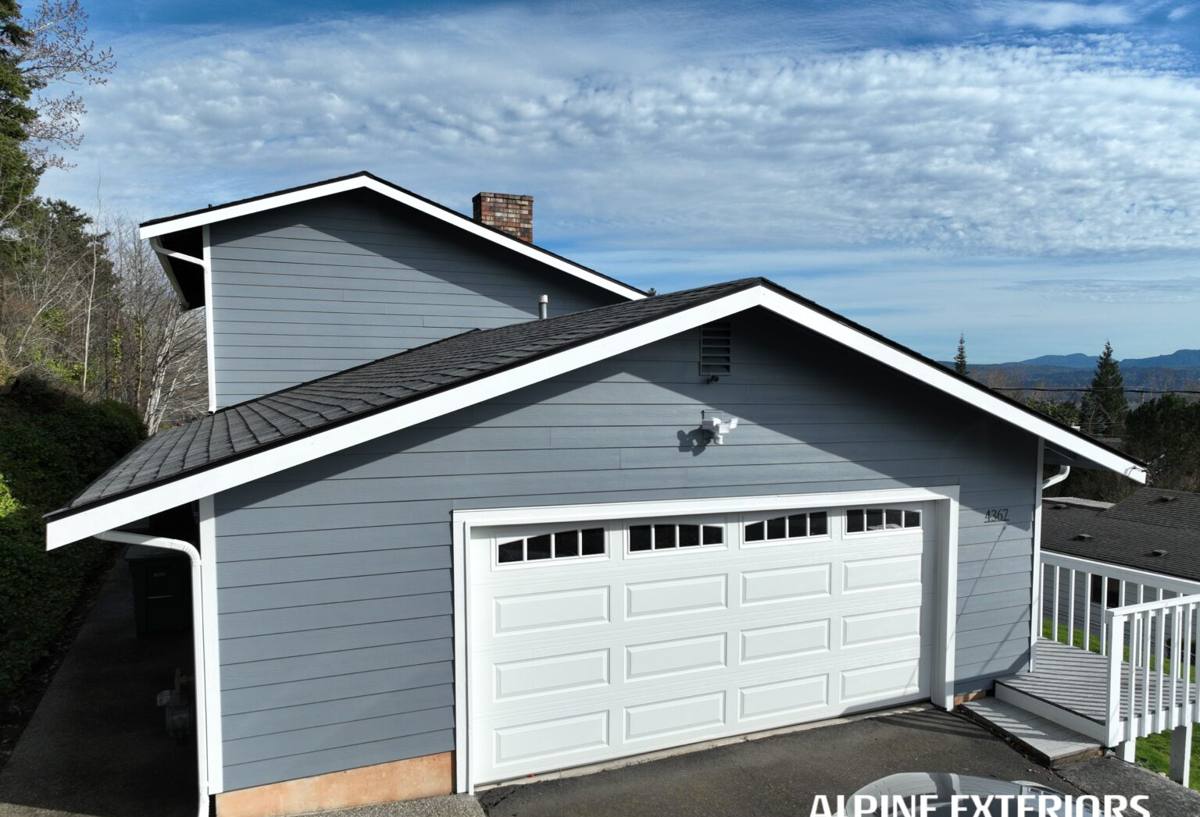
What Salt Air, Rain, and Moss Actually Do to a Roof
Salt Air and Corrosion
Proximity to Bellingham Bay means airborne salt settles on every exterior surface, including the roof. This isn't a dramatic, fast-acting problem, but it's a persistent one. Fasteners, flashing, and panel edges that aren't rated for coastal exposure will corrode faster here than the same materials would fifteen or twenty miles inland. The failure point is almost always at fasteners and cut edges, not the broad face of a panel, because that's where bare metal is most exposed.
Driving Rain
Whatcom County gets plenty of rain that falls straight down, but the storms that do damage are the ones that come in sideways off the water. Wind-driven rain pushes water uphill under laps, around penetrations, and into any seam that relies on gravity alone to shed water. A roof that would be fine in a calm rain can leak in a wind event if the underlayment, flashing, and panel overlaps weren't built for that scenario.
Moss and Algae
Bellingham's wet season runs long, and shaded or north-facing roof sections stay damp for weeks at a stretch. On organic roofing materials, that moisture supports moss growth that traps even more water against the surface. Metal roofing doesn't feed moss the way asphalt or wood does, but it isn't immune — moss and algae can still take hold on painted metal in shaded, debris-prone areas, and once established it holds moisture against the finish and can accelerate wear at seams and fastener points.
Why Metal Roofing Is a Strong Fit for This Climate — With Caveats
Metal roofing is one of the better material choices for a coastal, high-moisture climate like Edgemoor's, for a few honest reasons:
- It sheds water fast and doesn't absorb moisture the way wood shakes or aging asphalt shingles can.
- It doesn't provide the organic material moss and algae need to establish a foothold the way cedar or granulated asphalt surfaces do.
- Properly coated steel and aluminum panels resist corrosion far better than uncoated or under-specified metal.
- A correctly installed standing seam or high-quality panel system handles wind-driven rain better than lapped shingle systems, because the seams are mechanically locked rather than just overlapped.
The caveat is that "metal roofing" is a broad category, and not every metal roofing product or installation method is built for salt air and driving rain. This is where the coating, the fastener choice, and the crew's attention to flashing detail matter more than the marketing on the panel.
What a Correct Metal Roof Installation Involves Here
Panel and Coating Selection
For homes in Edgemoor's coastal-influenced air, we favor coated steel or aluminum panels with a finish rated for marine or coastal exposure, not a generic residential coating. The difference shows up ten or fifteen years down the line in how well the finish holds its color and resists chalking and corrosion at cut edges.
Fasteners Rated for the Environment
Standard fasteners are a common weak point on metal roofs near the water. We use fasteners with corrosion-resistant coatings matched to the panel material, and we pay attention to galvanic compatibility — mixing incompatible metals at fastener points is a slow but real cause of premature failure in salt air environments.
Underlayment as a Backup System
No roof covering is a perfect seal on its own, especially at penetrations and transitions. We install a high-quality synthetic or self-adhered underlayment underneath the metal, particularly at eaves, valleys, and around any roof penetration, so that wind-driven rain that gets past the panel laps still has a second line of defense before it reaches the deck.
Flashing at Every Transition
Valleys, chimneys, skylights, and wall-to-roof transitions are where the vast majority of roof leaks originate, on metal roofs and every other kind. We custom-fit flashing at each of these locations rather than relying on generic trim pieces, and we detail laps and seams to shed water even when it's being pushed by wind rather than falling straight down.
Ventilation
A well-ventilated attic or roof assembly keeps condensation from forming on the underside of metal panels, which matters in a climate where indoor humidity and outdoor damp air are both working against you for much of the year. We check existing ventilation as part of every metal roof project and address gaps rather than roofing over a poorly ventilated attic.
Metal Roofing Options: A Comparison
| System | Best For | Coastal Durability | Maintenance |
|---|---|---|---|
| Standing seam steel | Homes wanting the longest service life and cleanest look | Excellent with marine-grade coating | Low — occasional debris clearing |
| Standing seam aluminum | Homes closest to salt air exposure | Excellent — naturally corrosion-resistant | Low |
| Exposed-fastener metal panels | Budget-conscious projects, outbuildings | Good, but fasteners need monitoring over time | Moderate — fastener checks recommended |
| Metal shingles/shakes | Homes wanting a traditional look with metal performance | Good with proper coating and underlayment | Low to moderate |
For most Edgemoor homes within a mile or two of the water, we lean toward standing seam systems in steel or aluminum because the concealed-fastener design removes the most common failure point in coastal environments. Exposed-fastener panels can still work well on garages, shops, or budget-driven projects, but they ask for more attention over the life of the roof.
Our Process for an Edgemoor Metal Roof Project
- On-site assessment. We look at the existing roof deck, ventilation, flashing conditions, and any moss or moisture staining that points to problem areas, and we check exposure — how close the home is to the water and how much shade the roof gets.
- Material recommendation. Based on that assessment, we recommend a panel type, gauge, and coating suited to the home's specific exposure, not a one-size-fits-all package.
- Written proposal. You get a clear scope of work covering tear-off or overlay, underlayment, flashing detail, ventilation work, and panel installation, along with a straightforward cost breakdown.
- Deck and ventilation prep. Before any panel goes down, we address deck condition and ventilation gaps — installing over a compromised deck or a dead attic space undercuts the whole roof's performance.
- Underlayment and flashing installation. This is the layer that does the real work during a wind-driven rain event, and we don't rush it.
- Panel installation. Panels go down with fasteners and seam details matched to the system and the site's exposure.
- Final walkthrough. We go over the finished roof with you, point out maintenance basics, and answer questions before we consider the job done.
What to Ask Before Hiring Anyone for a Metal Roof Near the Water
Coastal-adjacent metal roofing is a specialty within a specialty. A crew that mostly installs asphalt shingles inland, or one that installs metal roofing but doesn't regularly work this close to Bellingham Bay, may not think through coating grade, fastener compatibility, or flashing detail the way a crew that works Edgemoor routinely will.
- Ask what coating and fastener specifications they use for homes near salt water, and why.
- Ask how they detail valleys and wall transitions — vague answers here are a warning sign.
- Ask whether they'll address attic ventilation as part of the project, not just the panels.
- Ask for the manufacturer's warranty terms in writing, including what voids it.
- Ask how they handle moss and debris buildup in the design, especially on shaded slopes.
Maintaining a Metal Roof in Edgemoor's Climate
Metal roofing is genuinely low-maintenance compared to most alternatives, but "low-maintenance" doesn't mean "no maintenance," especially this close to the water. A short annual checklist keeps a well-installed metal roof performing for decades:
- Clear debris from valleys and around penetrations, especially after fall leaf drop.
- Check for moss or algae growth on shaded, north-facing slopes and remove it gently before it spreads.
- Look over exposed fasteners (if applicable) for early signs of corrosion or backing out.
- Confirm gutters are flowing freely — standing water at the eaves undercuts even a well-installed roof edge.
- After any major windstorm, do a visual check for lifted panels or displaced flashing.
Cost Factors for a Metal Roof in This Area
Every roof is different, but a few factors consistently move the price on metal roofing projects in Edgemoor and similar Bellingham waterfront neighborhoods:
| Factor | Why It Matters |
|---|---|
| Panel system chosen | Standing seam costs more upfront than exposed-fastener panels but reduces long-term maintenance and failure risk near salt air. |
| Roof complexity | More valleys, dormers, and penetrations mean more custom flashing work and labor time. |
| Existing deck condition | Rot or damage found during tear-off adds repair cost but is far cheaper to fix now than to roof over. |
| Coating grade | Marine-rated coatings cost more than standard residential coatings but pay off in corrosion resistance close to the bay. |
| Ventilation upgrades | Adding or correcting attic ventilation during the reroof avoids a second project later. |
Rather than quote a number that won't reflect your specific roof, we walk the property and give you a real breakdown based on what we find.
Get a Straight Answer About Your Roof
If you're weighing a metal roof for a home in Edgemoor, the honest answer depends on your roof's exposure, its current condition, and how it's shaded through the wet months. We're happy to come take a look, walk you through what we see, and give you options without pressure. Use the form below to request a free estimate, and we'll get back to you with next steps.