 Bellingham Siding
 Why Decks in Lynden Wear Out Faster Than Owners Expect
Lynden is a farming community a short drive north of Bellingham, tucked into the Nooksack River valley near the Canadian border. It doesn't sit on saltwater the way Bellingham's shoreline neighborhoods do, but Whatcom County's marine climate doesn't stop at the water's edge — damp, cool air moves through the valley most of the year, and it carries the same moisture load that eats at wood and fasteners across the county. Add a long, mild winter with weeks of steady drizzle instead of hard freezes, and you get conditions that never really let a deck dry out.
That's the part homeowners underestimate. A deck in a drier climate gets a chance to shed moisture between rains. A deck in Whatcom County often doesn't — it stays damp at the joints, under the boards, and around any spot where two pieces of wood meet. That's exactly where rot starts, where fasteners corrode first, and where moss and algae get a foothold that outlasts a single pressure wash.
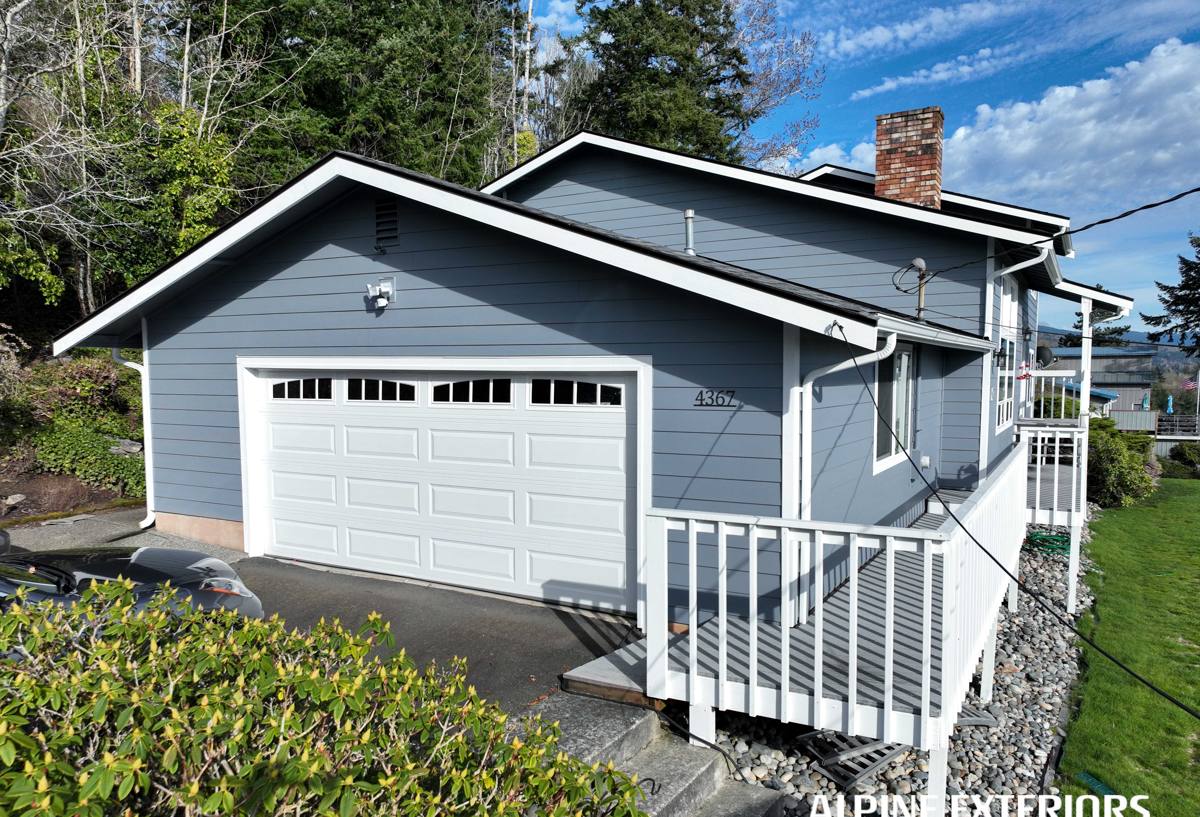
Signs Your Deck Needs Repair, Not Just a Cleaning
Not every tired-looking deck needs structural work, and not every structural problem is visible from the surface. A quick visual check catches some issues; others only show up when someone actually gets underneath the deck and puts a screwdriver to the wood. Before you call anyone, walk your deck and look for:
- Soft or spongy spots when you press on decking boards, especially near the house or along the outer edge
- Green or black staining that comes back within weeks of cleaning, particularly on north-facing or shaded sections
- Any gap, rust streak, or movement where the deck meets the house (the ledger board connection)
- Wobble in the railing when you lean on it, or stair stringers that flex underfoot
- Fasteners with rust rings around the heads, or nail/screw heads sitting proud of the wood
- Standing water that doesn't drain within an hour or two after rain stops
Any one of these by itself might be minor. Several together, especially soft decking near the ledger board or a wobbly railing, usually mean the framing underneath needs a real look before anyone talks about refinishing.
What an Honest Deck Repair Actually Involves
Structural Framing and the Ledger Board
The ledger board — the piece that bolts the deck to the house — is the single most common failure point on decks in this climate. Water gets behind it, the flashing fails or was never installed correctly, and rot spreads into the rim joist before it's ever visible from outside. A repair that only replaces surface boards while leaving a compromised ledger connection isn't a repair; it's a delay. Any deck repair worth doing includes pulling back enough decking to actually see the framing, not just guessing at it from below.
Decking Surface
Individual boards get replaced when they're soft, cupped, or splitting, but board replacement should always include a check of the joist underneath — a rotten board sitting on a sound joist is a five-minute fix; a sound board sitting on a rotten joist is a problem that will come back.
Railings and Stairs
Guardrails and stair railings take direct load from people leaning and grabbing, and they're often the first thing to loosen because their connection points are smaller and see more repeated stress. A wobbly rail is a safety issue, not a cosmetic one, and it's checked against current code height and baluster spacing requirements when we're already on site for other work.
Fasteners and Hardware
Old decks built with standard uncoated screws or nails are one of the most common hidden problems we find. In a climate this wet, those fasteners corrode from the inside of the wood outward, so the deck can look fine while the connections underneath are failing. Repairs get done with corrosion-resistant fasteners and hardware rated for exterior, treated-lumber contact — matching hardware to the lumber's chemical treatment matters more here than in drier regions, since a mismatch accelerates corrosion instead of preventing it.
Repair or Replace? How We Make That Call
Most decks don't need a full teardown. But some do, and an honest contractor tells you which one you're looking at before any work starts, not after the first invoice.
| Factor | Usually Points to Repair | Usually Points to Replacement |
|---|---|---|
| Framing condition | Rot is localized to one or two joists or a section of the ledger | Rot has spread through multiple joists, posts, or beams |
| Age of the deck | Under 15-20 years, built to a reasonable original standard | Original construction is older, undersized, or missing proper flashing throughout |
| Post and footing condition | Posts and footings are solid; problem is above them | Posts are rotted at grade or footings have shifted/settled |
| Scope of damage | Damage is contained to a boundary you can point to | Soft spots and rust show up in multiple, unrelated areas |
| Code compliance | Railing height, spacing, and stair rise/run already meet current code | Structure predates current code and would need major rework to meet it |
When a deck is a genuine borderline case, we say so and lay out both the repair cost and the replacement cost so it's your decision, not a sales pitch either direction.
Materials: What Actually Holds Up Through a Whatcom County Winter
Repairs give you a choice at the board level, even if the rest of the deck stays as-is: match the existing wood, or swap the repaired section to composite decking. Both have a place, and the right call depends on the deck, not on which one sounds more modern.
Pressure-treated lumber is inexpensive and easy to match to an existing deck, but it needs to be sealed or stained on a real schedule in this climate — skip a season and moss gets a head start that's hard to undo. Cedar looks better longer if it's maintained, but it's softer and more prone to the kind of surface checking that gives moisture somewhere to sit. Composite decking costs more upfront and doesn't need staining, but it's not maintenance-free — it still needs regular cleaning to keep moss and algae from taking hold on the surface, and the framing underneath still needs to be sound wood, properly ventilated, regardless of what's on top.
Our standard on repairs is straightforward: whatever decking material you choose, the framing underneath gets treated lumber rated for ground or structural contact as appropriate, connected with fasteners matched to that treatment, and detailed so water sheds away from every joint instead of collecting in it. That's the part that determines whether a repair lasts five years or twenty, far more than which decking product sits on top.
Our Process for a Lynden Deck Repair Call
- Inspection. We get underneath the deck, not just on top of it, and check the ledger, joists, posts, and footings along with the visible decking and railings.
- Written scope. You get a clear breakdown of what's failing, what's sound, and what we recommend — repair, partial replacement, or full rebuild — with reasoning, not just a number.
- Permit check. If the scope touches structural framing, footings, or railing height, we confirm what Whatcom County or the City of Lynden requires before work starts.
- The repair itself. Damaged framing, decking, and hardware get replaced to code, with flashing and fastener choices suited to this climate, not just whatever's on the shelf.
- Finish and seal. Any new or replaced wood gets sealed or finished to match, so the repaired section weathers in with the rest of the deck instead of standing out or failing on a different timeline.
- Walkthrough. Before we leave, we walk the deck with you and point out what was fixed and what to keep an eye on going forward.
Keeping a Repaired Deck From Needing Repair Again
A repair is only as good as the maintenance that follows it. In Whatcom County's climate, that means staying ahead of moss rather than reacting to it once it's established. A few habits make the biggest difference:
- Clear leaves and debris off the deck surface and out of gaps between boards before fall rains set in
- Keep gutters and downspouts clear so runoff isn't dumping directly onto or under the deck
- Re-seal or re-stain wood decking on the schedule the product actually calls for, not "whenever it looks bad"
- Rinse composite decking a couple of times a year to keep algae and pollen film from building up
- Check the ledger board and railing connections once a year for movement, rust, or soft wood
- Trim back vegetation that's shading the deck and keeping it damp longer than the rest of the yard
Why a Crew That Already Works Lynden Matters
Deck repair looks straightforward until you're the one deciding whether a soft board is cosmetic or structural. A crew that works Lynden and the rest of Whatcom County regularly has already seen how decks in this specific climate fail — which connections go first, which lumber ages well here and which doesn't, and how long a moss-covered surface has typically been hiding a real problem underneath. That's judgment that doesn't come from a general contracting background alone; it comes from repairing decks in this valley, in this rainfall pattern, season after season.
It also matters for the practical side of the job — knowing the local permitting process, being a reasonable drive away if a repair needs a follow-up visit, and standing behind the work because we're still going to be working in this area next year and the year after.
If your deck has a soft board, a wobbly rail, or moss that keeps coming back no matter how often you clean it, we're glad to take a look. The estimate is free, there's no pressure attached to it, and you'll get a straight answer about whether you're looking at a repair or something bigger — just fill out the form below to get started.