 Bellingham Siding
 Fairhaven's Climate Is Harder on Decks Than Most Homeowners Realize
Fairhaven sits close enough to Bellingham Bay that salt-laden air is a daily fact of life, not an occasional weather event. Combine that with Whatcom County's long stretch of driving rain from fall through spring, and a moss season that can run eight months or more in shaded, north-facing yards, and you have three separate forces working against an outdoor structure at the same time. A deck built the same way you'd build one in a dry inland climate will show problems in Fairhaven years before it should — corroded fasteners, soft framing at the ledger board, slick moss-covered boards, and finishes that fail early.
None of that means a deck in this neighborhood can't last decades. It means the build has to account for moisture and salt exposure from the first framing decision, not patch around them later with sealant and touch-up stain.
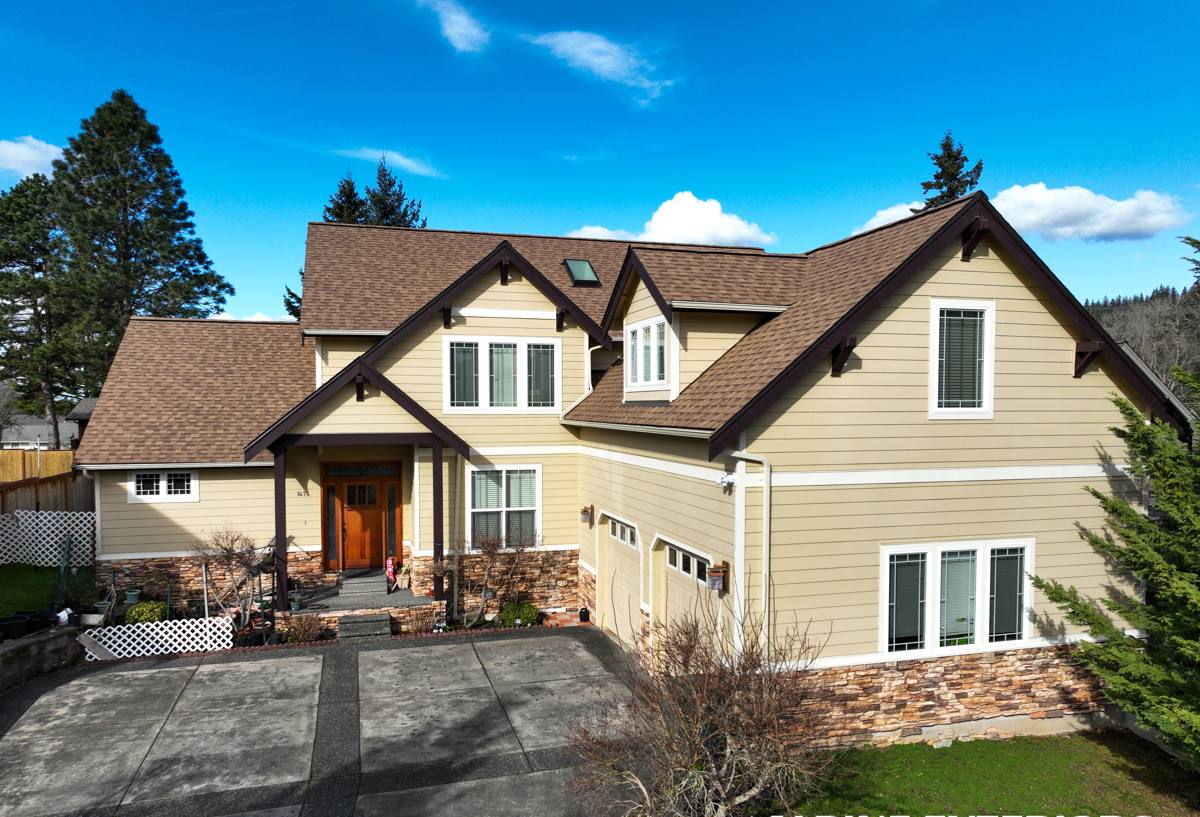
What a Correctly Built Deck Needs in This Neighborhood
Framing and Ledger Attachment
The ledger board — where the deck attaches to the house — is the single most common failure point on decks in wet coastal climates, because it sits directly against the building envelope where water wants to collect. A correct installation uses proper flashing that sheds water away from the house, not just caulk over the ledger, along with structural fasteners rated for exterior and coastal exposure. Framing lumber should be pressure-treated and rated for ground contact where it's close to grade or shaded, since those areas dry out the slowest.
Fasteners and Hardware
This is where a lot of corner-cutting happens because it's invisible once the decking is down. In a salt-air environment, standard galvanized fasteners corrode faster than they would ten or fifteen miles inland. We spec stainless steel or high-grade coated fasteners and connectors rated for coastal and treated-lumber use, especially at joist hangers, ledger bolts, and any hardware that's structural rather than cosmetic. It costs more up front. It's far cheaper than reopening a deck in eight years to replace rusted hangers.
Decking Material Options
There's no single "right" decking material for Fairhaven — it depends on budget, maintenance appetite, and how much sun the deck actually gets (shaded decks grow moss faster regardless of material). Here's how the common options compare under this specific climate:
| Material | Moss & Moisture Behavior | Maintenance | Typical Lifespan |
|---|---|---|---|
| Pressure-treated wood | Absorbs moisture; needs airflow underneath and regular cleaning to resist moss and mildew staining | Annual cleaning, re-stain or seal every 2-3 years | 15-20 years with upkeep |
| Cedar | Naturally rot-resistant but still surface-hosts moss in shaded, damp spots | Cleaning plus periodic finish to maintain color and protection | 15-25 years with upkeep |
| Capped composite / PVC | Doesn't absorb moisture into the board core; moss and algae sit on the surface and rinse off more easily | Periodic washing, no staining or sealing | 25-30+ years, manufacturer-dependent |
| Uncapped composite (older style) | Can absorb moisture at cut edges and fastener points if not detailed correctly | Washing; more prone to surface mildew than capped versions | 15-25 years |
We'll walk through this table with actual product samples during an estimate — the right call often comes down to how much shade the deck footprint gets and whether you want a wood look badly enough to accept the extra upkeep.
Drainage and Slope: The Difference Between a Dry Deck and a Moss Farm
Moss and algae need two things to take hold: shade and standing moisture. You can't do much about a shaded lot, but you can control how long water sits on the deck surface. A correctly built deck has a slight slope away from the house so water sheds instead of pooling, gaps between boards sized to let water and debris pass through rather than collect, and enough clearance and airflow underneath to let the structure actually dry out between the rain events that define a Whatcom County fall and winter. Decks built tight to grade with poor airflow underneath are the ones we see with rot at the joists first, often before the surface boards show any visible damage.
Salt Air and Coastal Corrosion
Fairhaven's proximity to the water means airborne salt settles on every exterior surface, including metal hardware, railing components, and fasteners. Over time, salt accelerates corrosion on anything not rated for coastal exposure — this is the same reason cars and outdoor fixtures near the water age faster than they do a few miles inland. The practical response is straightforward: use hardware, railing brackets, and fasteners rated for coastal or marine-grade exposure throughout, not just on the parts of the deck that are visible. It's a small percentage of total project cost and it's the difference between structural hardware that outlasts the decking and hardware that needs replacing under a deck that otherwise still looks fine.
Permits and Building Code in Bellingham
Most new decks and significant deck rebuilds in the City of Bellingham require a permit, and inspections typically check footing depth, ledger attachment, and railing height and spacing among other structural details. Requirements can vary based on deck height, size, and whether it's attached to the house, so we handle the permit process as part of the job rather than leaving homeowners to sort out code requirements on their own. Skipping the permit step on a deck that legally requires one can create problems later — at resale, with insurance, or if the structure is ever inspected for an unrelated reason.
Our Process for a Fairhaven Deck Project
- On-site assessment — we look at sun exposure, drainage, existing structure (for rebuilds), and how the site actually behaves in wet weather, not just how it looks on a dry day.
- Design and material selection — sizing, layout, railing style, and a decking material recommendation based on your budget and maintenance preference.
- Permitting — we prepare and submit what the project requires and schedule inspections at the appropriate stages.
- Framing and structural work — footings, ledger flashing, joists, and coastal-rated hardware installed to hold up under this climate specifically, not a generic spec.
- Decking, railing, and finish work — installed with proper gapping and fastening for drainage and long-term stability.
- Final walkthrough — we go over care and maintenance expectations specific to the material you chose and the site's sun/shade conditions.
Maintenance That Actually Matters Here
Every deck benefits from upkeep, but in a climate like this, a few tasks matter more than they would elsewhere. This isn't a full maintenance manual — it's the short list that prevents most of the problems we get called out to fix:
- Sweep debris off the deck surface regularly, especially in fall — trapped leaves hold moisture against the boards and accelerate moss growth
- Clean the deck surface at least once a year with a wood- or composite-safe cleaner to remove early moss and algae before it embeds
- Check that gaps between boards stay clear of debris so water keeps draining as designed
- Inspect visible hardware and railing connections periodically for early signs of corrosion, especially after the wettest months
- Reapply sealant or stain on wood decking on the schedule the product calls for — don't wait until it visibly fails
- Keep vegetation trimmed back from the deck edges to reduce shade and improve airflow underneath
Why Hiring a Crew That Already Works in Fairhaven Matters
A deck built from a generic inland spec sheet will technically stand up in Fairhaven — for a while. The difference between a deck that needs real repairs in year eight and one that's still solid at year twenty-five usually comes down to decisions most homeowners never see: which fastener grade got used, how the ledger was flashed, whether the framing was given room to breathe underneath. A crew that regularly builds and repairs decks in this specific neighborhood has already seen which shortcuts fail here and which details are worth the extra cost, because we're the ones who get the call when an older deck starts showing rot or rust. That's a different starting point than a crew pricing the job off a standard checklist that doesn't account for salt air, driving rain, or an eight-month moss season.
If you're planning a new deck or need to replace one that's showing its age, we're happy to take a look and talk through honest options for your specific site — no pressure, no upsell on materials you don't need. Fill out the form below for a free estimate.