 Bellingham Siding
 Decks in Blaine Take a Different Kind of Beating
Blaine sits right on the water, close to the Canadian border, which means homes here deal with a combination most inland Whatcom County towns don't see in the same intensity: salt-laden air coming off the coast, wind-driven rain that gets pushed sideways under eaves and railings, and a moss and algae season that can run eight months out of the year. A deck built to a generic spec, or built for a drier climate, starts showing problems in Blaine years before it should. We've replaced enough decks out here to know the failure patterns are predictable, and predictable failures are preventable if the replacement is done right the first time.
This page is specifically about deck replacement for Blaine homes — not a repair, not a resurface, but a full tear-off and rebuild when the structure or decking has reached the point where patching no longer makes sense.
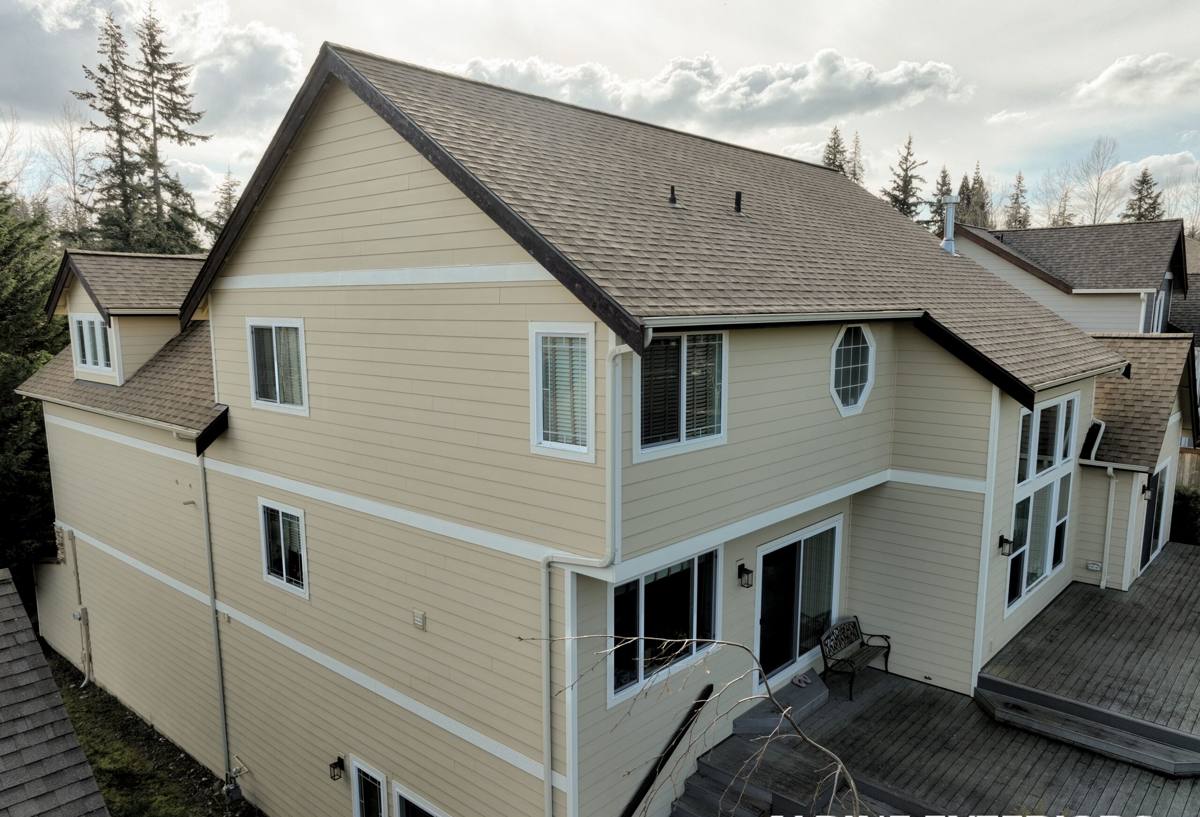
Why Salt Air, Rain, and Moss Wear Decks Out Faster Here
Salt Air and Metal Fasteners
Airborne salt accelerates corrosion on anything metal — nails, screws, joist hangers, bolts. On a lot of older Blaine decks, we find the visible decking boards are still serviceable but the fasteners and hardware underneath have corroded well past a safe service life. Corroded hardware is a structural issue, not a cosmetic one, and it's one of the most common reasons a deck that "looks fine" actually needs a full rebuild.
Driving Rain and Trapped Moisture
Wind-driven rain off the water doesn't just fall straight down — it gets pushed into ledger connections, under rail posts, and between deck boards laid too tight. Once moisture gets trapped against framing or against the house band board, rot sets in from the inside, often before it's visible from the top or from underneath.
Moss, Algae, and Surface Breakdown
Whatcom County's long, wet stretch of the year keeps deck surfaces damp for extended periods, which is exactly what moss and algae need to take hold. Beyond being slippery and unsightly, sustained moss growth holds moisture against the board surface, which speeds up cupping, splitting, and fastener pop on wood decking, and can dull or discolor lower-grade composite boards over time.
Signs a Blaine Deck Needs Replacement, Not Just Repair
Not every deck problem calls for a full rebuild. But when several of these show up together, replacement is usually the more honest recommendation than another round of patching:
- Soft, spongy, or springy spots when you walk across the deck
- Visible rot or dark staining at the ledger board, where the deck attaches to the house
- Rusted, corroded, or missing joist hangers and structural screws
- Deck boards that are cupping, splitting, or have widespread fastener pop
- A railing system that flexes or feels loose when leaned on
- Persistent moss or algae that returns within weeks of cleaning
- A deck built without permits or to an outdated code that a buyer's inspector is likely to flag
- Support posts sitting directly on soil or degraded footings instead of proper concrete piers
If your deck is showing one or two of these in isolation, a repair may still be the right call. If it's showing several at once, especially anything involving the ledger connection or footings, replacement is almost always the more cost-effective long-term decision — repeated patch repairs on a structurally compromised deck tend to cost more over five years than one correct rebuild.
What a Correct Deck Replacement Involves
Structure First
The parts nobody sees are the parts that matter most in this climate. A proper replacement starts with the ledger board connection — flashed correctly so water is directed away from the house rather than into it — followed by footings sized and set to current code, joists spaced and hung with corrosion-resistant hardware, and posts anchored to concrete rather than resting on grade. This is the stage where corner-cutting causes the most damage down the road, because it's the stage that gets buried under decking boards.
Fasteners and Hardware Rated for Coastal Exposure
Given the salt air near the water in Blaine, we don't treat hardware selection as a minor detail. Stainless steel or high-grade coated fasteners and connectors cost more up front than standard galvanized hardware, but in a coastal exposure the difference in service life is significant enough that we consider it the baseline standard for this area, not an upsell.
Decking Surface
Whether you go with wood, composite, or a capped/PVC product, the board itself is only as good as the structure and airflow underneath it. Proper board spacing for drainage, correct fastening patterns, and adequate ventilation beneath the deck all affect how well the surface resists moss and moisture over time, regardless of material.
Railings and Code Compliance
Railing height, baluster spacing, and guard strength requirements are part of the building code for a reason — a deck replacement is the right time to bring an older railing system up to current standard rather than reinstalling something that was already out of compliance.
Choosing a Decking Material for Blaine's Climate
There's no single "best" decking material for every home — the right choice depends on budget, maintenance tolerance, and how much sun versus shade the deck gets. Here's how the common options actually perform in a wet, salt-air, high-moss environment like Blaine:
| Material | Moss/Moisture Behavior | Maintenance | Typical Lifespan Here |
|---|---|---|---|
| Pressure-treated wood | Absorbs moisture; needs sealing to resist moss and rot | Annual cleaning and re-sealing recommended | 10–15 years with upkeep |
| Cedar | Naturally more rot-resistant but still needs sealing in this climate | Regular cleaning, periodic oil or sealant | 15–20 years with upkeep |
| Composite (uncapped) | Better than wood but can still stain/discolor with prolonged moss contact | Periodic washing, no sealing needed | 20–25 years |
| Capped composite / PVC | Best resistance to moisture absorption and staining | Occasional washing only | 25+ years, longer warranty |
We'll walk through this table honestly during your estimate based on your budget and how much maintenance you actually want to do — there's no material here we'd call a bad choice, only trade-offs between upfront cost and long-term upkeep.
Our Deck Replacement Process
- On-site assessment. We inspect the existing deck's framing, ledger, footings, and hardware — not just the surface boards — to determine what's actually driving the wear you're seeing.
- Honest scope and estimate. You get a clear picture of what needs replacing, what material options fit your budget, and a straightforward cost range before any work starts.
- Permitting. Most deck replacements in Whatcom County require a permit, especially if footings, framing, or railing height are changing. We handle that process as part of the job.
- Tear-off and structural rebuild. Old decking, hardware, and any compromised framing come out; footings, posts, joists, and the ledger connection are rebuilt to current code with coastal-rated fasteners.
- Decking and railing installation. Boards and railings go in with proper spacing, fastening, and flashing details suited to a wet, salt-air climate.
- Final walkthrough. We go over the finished deck with you, including what maintenance (if any) the material you chose will need going forward.
Why a Crew That Already Works Blaine Matters
A deck replacement done by a crew unfamiliar with Blaine's coastal exposure tends to make the same mistakes we get called out to fix later: standard-grade hardware that corrodes early, decking laid without enough gap for drainage, or ledger flashing that wasn't detailed for wind-driven rain. A crew that regularly works this stretch of Whatcom County builds those lessons into the job from the start — right fastener grade, right drainage detail, right footing depth for local soil and frost conditions — instead of learning them at your expense.
There's also a practical side: familiarity with Whatcom County's permitting process means fewer delays getting your project approved and inspected, and knowing what typically goes wrong on Blaine decks means we're inspecting the right things during the initial assessment instead of missing a hidden ledger or footing problem.
Maintaining Your New Deck Through Moss Season
Even the best decking material benefits from a little seasonal attention in this climate:
- Sweep debris and standing leaves off the surface regularly through fall and winter
- Wash down the deck once or twice a year to keep moss and algae from establishing
- Keep gutters and downspouts near the deck clear so runoff isn't draining directly onto it
- Check railings and stair connections annually for any looseness
- For wood or uncapped composite, follow the manufacturer's recommended cleaning and sealing schedule
None of this is intensive, but skipping it is how a well-built deck starts to look and perform like a poorly-built one within a few years.
What Deck Replacement Costs Depend On
Every deck is different, so we don't quote sight unseen, but the main cost drivers are consistent:
| Factor | Why It Affects Cost |
|---|---|
| Deck size and shape | More square footage and complex angles mean more material and labor |
| Decking material chosen | Pressure-treated wood is the lowest upfront cost; capped composite/PVC is the highest |
| Height and stairs | Elevated decks and multi-flight stairs add framing, railing, and code requirements |
| Extent of structural rebuild | Footings, ledger, and framing condition affect how much beyond the surface needs replacing |
| Railing style | Cable, glass, and composite railing systems cost more than standard wood or metal balusters |
Broadly, a straightforward deck replacement runs from the low thousands for a smaller wood deck up to a considerably higher figure for a large elevated deck with composite decking and upgraded railings. We'll give you real numbers once we've seen the site.
Get a Straight Answer on Your Blaine Deck
If your deck is showing wear, feels unstable, or you're just not sure whether it needs a repair or a full replacement, we're happy to take a look and give you an honest read — no pressure, no upsell. Fill out the form below for a free estimate.