 Bellingham Siding
 Windows Built for Lynden's Weather, Not Just Its Openings
Lynden sits inland from Bellingham Bay, but that doesn't mean the house is spared from what Whatcom County weather does to a building envelope. Wind-driven rain off the Salish Sea pushes moisture sideways into wall assemblies for months at a time, and the long gray stretch between fall and spring gives moss and algae plenty of time to take hold on north-facing trim and sills. Custom windows here have to do more than look good and open smoothly — they have to keep water out of a wall system that's damp more often than it's dry.
"Custom" doesn't have to mean unusual shapes or high-end trim packages, though it can. Most of the custom window work we do in and around Lynden is about getting the right size, style, and flashing detail for a specific opening in an older or non-standard home, so the window performs correctly instead of being forced to fit.
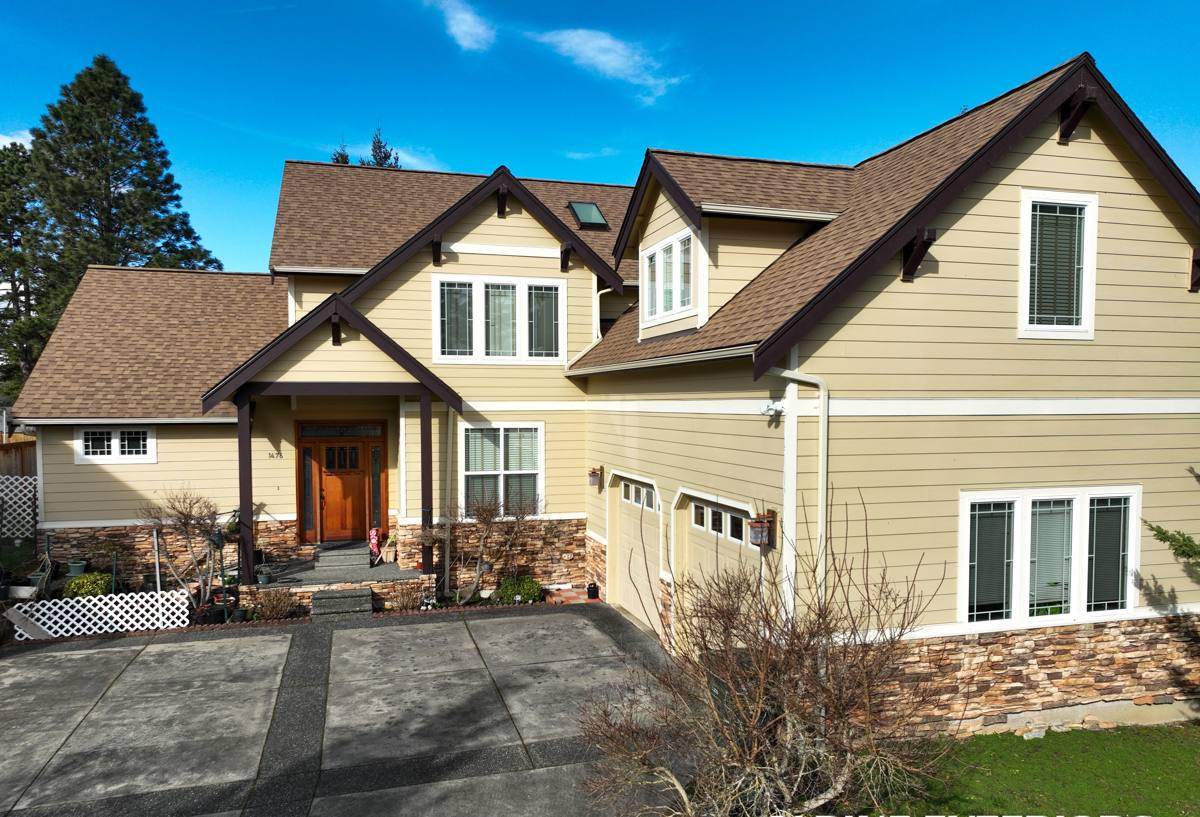
Signs a Home's Windows Are Due for Replacement
Windows rarely fail all at once. They tend to show a handful of small problems first, and those problems get worse every wet season they're ignored.
- Fogging or a permanent haze between panes — the seal on the insulated glass unit has failed
- Soft or discolored wood at the sill or lower corners of the frame
- Drafts you can feel with a hand near the frame on a windy day
- Windows that are hard to open, close, or lock, especially after painting or settling
- Visible gaps between the window frame and the siding or trim
- Condensation forming on the inside of the glass regularly through winter
- Peeling paint or bubbling caulk around the exterior casing
Any one of these can usually be repaired. Several at once, especially on an older single-pane or early dual-pane window, is a sign the unit itself is at the end of its useful life and repair is just delaying a replacement that's coming anyway.
Why This Matters More on Older Lynden Homes
A lot of the housing stock around Lynden and the surrounding Whatcom County countryside includes older farmhouses and mid-century homes where windows were installed under different flashing standards than what's used today. Even a window in decent physical condition can be under-flashed by modern standards, which means water is finding a path behind the trim slowly, year after year, well before it shows up as a visible problem inside.
What a Correct Window Installation Actually Involves
The window unit itself is a small part of the job. Most of the long-term performance — and most of the risk if it's done wrong — comes down to how the opening is prepared and flashed before the new window ever goes in.
Opening Prep
We remove the old unit, inspect the rough opening for rot or soft framing, and repair or replace any damaged material before anything new goes in. Installing a new window into a compromised opening just hides the problem behind fresh trim.
Flashing and the Water-Management Layer
This is the step that decides whether the window leaks in five years or lasts thirty. A correct install builds a shingled, lapped system — sill pan flashing at the bottom, side flashing that overlaps it, and head flashing at the top that sheds water over everything below — tied into the home's existing weather-resistive barrier so water is always directed outward, never trapped behind the siding.
Sealing and Insulation
Low-expansion foam or backer rod and sealant fill the gap between the window frame and rough opening for both air sealing and a small amount of drainage room. Exterior caulking at the trim joints is the last line of defense, not the first — it should never be doing the job flashing is supposed to do.
Trim and Finish
Exterior casing gets primed on all cut edges before installation, not just painted after, since end grain and cut edges are where moisture gets in fastest on wood trim.
Glass and Frame Options
Custom windows come in enough material and glass combinations that picking one mostly comes down to matching the home's age, exposure, and budget. Here's how the common options stack up for a Whatcom County climate.
| Frame Material | Moisture Behavior | Maintenance | Typical Fit |
|---|---|---|---|
| Vinyl | Won't rot; handles constant damp well | Low — occasional cleaning | Most replacement projects, budget-conscious remodels |
| Fiberglass | Very stable in wet/dry cycling, minimal expansion | Low | Long-term ownership, larger or custom-shaped openings |
| Wood (clad exterior) | Needs an intact exterior clad layer to stay protected | Moderate — clad exterior, interior wood care | Historic or high-end homes wanting a wood interior look |
| Aluminum | Prone to condensation without a thermal break | Low, but check thermal break quality | Specific architectural styles, not our first recommendation here |
On glass, double-pane with a low-E coating and argon fill is the standard we install for most homes in this area — it balances upfront cost against real winter heating savings and summer glare control. Triple-pane is worth discussing for north- or west-facing rooms that take the brunt of the weather, but it's a bigger investment and not always the right call for every opening.
Our Process, Start to Finish
- On-site assessment — we look at each window opening individually, not just the whole house at once, since flashing needs and framing condition vary window to window on the same home
- Written estimate — clear scope, materials, and pricing before any work starts, no surprise add-ons mid-project
- Ordering and scheduling — custom sizes take longer to arrive than stock sizes, and we plan the schedule around that lead time up front
- Removal and opening inspection — old units come out, framing gets checked and repaired as needed
- Flashing, install, and seal — done in the sequence that keeps water moving outward at every layer
- Trim, cleanup, and final walkthrough — we check operation, weatherseal, and finish before calling the job done
What Drives the Cost of a Custom Window Project
| Factor | Why It Matters |
|---|---|
| Standard vs. true custom sizing | Non-standard openings require made-to-order units with longer lead times and higher unit cost |
| Frame material | Vinyl is generally the most budget-friendly; fiberglass and clad wood cost more upfront |
| Glass package | Low-E coatings, argon fill, and triple-pane options each add cost but also add performance |
| Condition of the existing opening | Rot or framing repair adds labor that isn't visible until the old window comes out |
| Number of windows done at once | Bundling several openings in one project usually costs less per window than doing them one at a time |
We won't quote a per-window number without seeing the actual opening — a wall with hidden water damage behind an old window changes the scope, and we'd rather tell a homeowner that honestly during the estimate than after the wall is already open.
Why a Crew That Already Works This Area Is Worth Hiring
Window flashing isn't a one-size-fits-all detail — it has to be built to work with whatever siding, wrap, and trim system is already on the house. A crew that regularly works homes around Lynden and the rest of Whatcom County has already seen how local builders from different eras handled that transition, and knows which older assemblies need extra attention versus which ones are straightforward. That familiarity shows up in fewer surprises during the job and a flashing detail that's actually built for the rain load this area gets, not a generic installation pulled from a manual written for a drier climate.
It also means a straightforward relationship if a question comes up after the install — a callback for a warranty check or an adjustment isn't a scheduling problem when the crew is already working nearby.
Keeping Custom Windows Performing After Installation
- Rinse pollen, dirt, and moss spores off frames and sills a couple times a year, especially after the wet season
- Check exterior caulk lines annually for cracking or gaps and have them touched up before they open further
- Keep gutters and downspouts clear so runoff isn't sheeting directly down over window heads
- Operate locking hardware periodically through the winter — a window that's never opened can develop a stuck sash without anyone noticing
- Watch for early moss growth on sills or trim and clean it off promptly rather than letting it establish
None of this is a big time investment, but it's the difference between custom windows that still look and perform like new at year ten versus ones that needed premature attention because small issues went unaddressed.
If windows in a Lynden-area home are drafty, fogged, hard to operate, or just original to a much older house, we're happy to take a look and put together a straightforward, no-pressure estimate — use the form below to get started.