 Bellingham Siding
 Happy Valley Roofs Take a Specific Kind of Beating
Happy Valley is one of Bellingham's older residential neighborhoods, close enough to the water to pick up salt-laden air off Bellingham Bay and exposed to the same wet, mild-winter weather pattern that defines Whatcom County. That combination is hard on a roof in ways that don't show up right away. Salt air accelerates corrosion on any exposed metal fastener, flashing seam, or gutter joint. Driving rain, especially when it comes sideways off a southwest storm, finds every gap in flashing and underlayment that a calm-weather installation might get away with. And the long stretch of overcast, damp months from fall through spring gives moss and algae months to establish themselves on any roof surface that holds moisture or shade.
None of that is unique to one street or one style of house. It's a neighborhood-wide condition, and it's why the roofing decisions that work fine in a drier climate — thinner underlayment, minimal flashing at transitions, standard fasteners — don't hold up the same way here. A metal roof, installed correctly for this climate, is one of the more durable answers to that problem. Installed carelessly, it fails in the same spots any roof does: valleys, penetrations, and the line where the roof meets the siding.
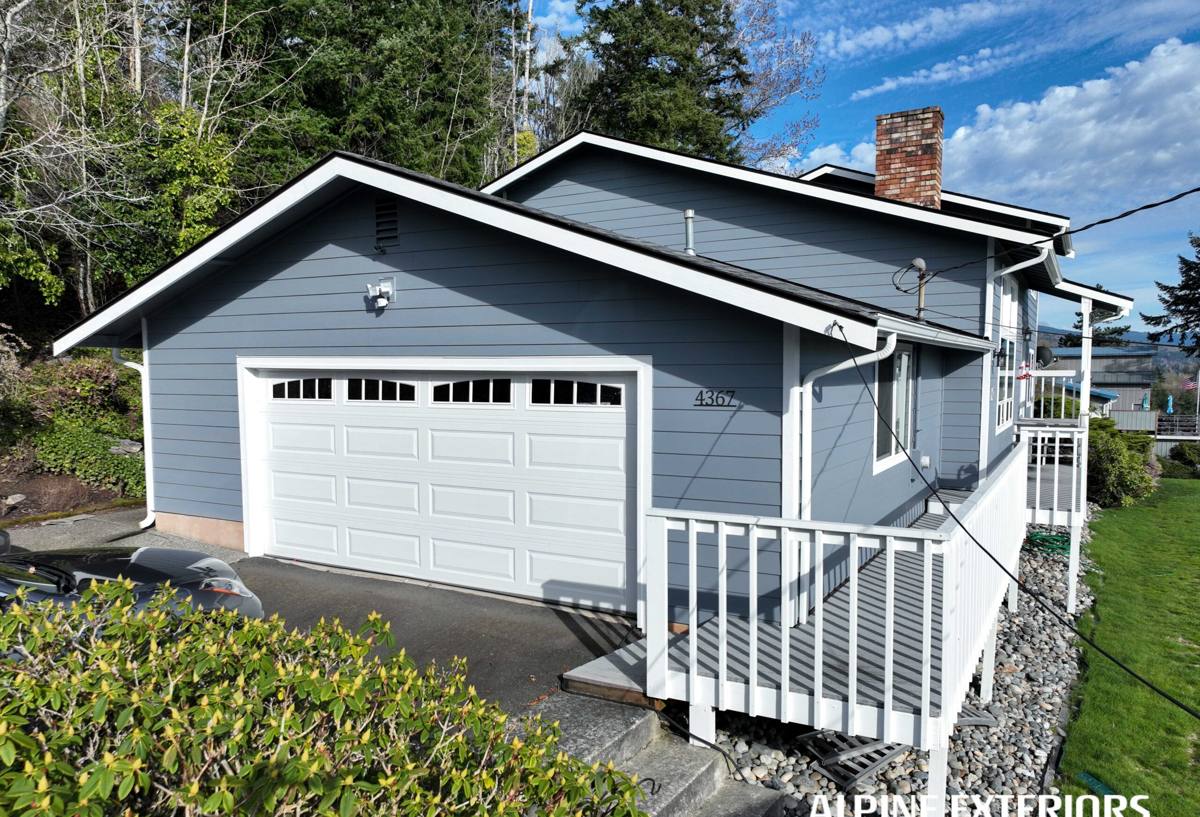
Why Metal Roofing Fits Happy Valley Homes
Metal roofing isn't the right call for every home or every budget, but it solves several problems that come up often in this part of Bellingham:
- Sheds driving rain faster than shingles, with fewer horizontal laps for wind-driven water to work into
- Doesn't absorb moisture the way asphalt shingles or wood shakes do, which slows moss and algae growth even though it doesn't eliminate it
- Holds up to decades of Pacific Northwest wet-dry cycling without the granule loss and curling that shortens shingle life
- Sheds the light snow loads Whatcom County occasionally gets more efficiently than textured roofing materials
- Reduces the frequency of roof replacement, which matters on a home where the roof is already competing for maintenance budget with siding, gutters, and trim
The trade-off is upfront cost and the fact that a metal roof only performs as well as its installation. Panel seams, fastener choice, and flashing detail matter more on a metal roof than on almost any other roofing material — get those wrong and you've spent more money for a roof that leaks in the same places a cheap shingle roof would.
Metal Roofing Systems: Which Type Fits Your Home
"Metal roofing" covers a few different systems, and they're not interchangeable in terms of cost, appearance, or how well they handle standing water and moss.
| System | How It's Fastened | Best For | Moss & Debris Behavior |
|---|---|---|---|
| Standing seam | Concealed clips, no exposed fasteners on the field | Homes wanting a clean, modern look and the lowest long-term maintenance | Smooth panel and raised seams shed debris well; least moss-prone option |
| Exposed-fastener (corrugated/rib panel) | Screws driven through the panel face | Budget-conscious projects, outbuildings, simpler rooflines | Fastener washers age faster in salt air and need periodic inspection |
| Stone-coated steel (shake or tile profile) | Interlocking panels, concealed fasteners | Homeowners wanting a traditional shake or tile look with metal's durability | Textured surface holds slightly more debris than standing seam; still sheds better than wood shake |
For most Happy Valley homes we look at, standing seam is the system that best matches the climate — fewer penetrations for water to find, and no exposed fasteners for salt air to work on over the years. Exposed-fastener panels are a legitimate lower-cost option, but the maintenance conversation is different, and we'll tell you that honestly during the estimate rather than let cost be the only factor.
What We Won't Cut Corners On
Regardless of which system a homeowner chooses, there are a few things we treat as non-negotiable on every metal roof we install in this climate: full underlayment coverage (not spot coverage), proper flashing at every wall, chimney, and vent penetration, and fasteners or clips rated for coastal exposure. Skipping any of these to save money is how a metal roof ends up with the same leak problems as a poorly installed shingle roof, just with a bigger price tag attached.
What a Correct Metal Roof Installation Actually Involves
Underlayment and Ice-and-Water Protection
A synthetic underlayment across the whole roof deck is the baseline, but the details that matter most in Whatcom County are the eaves, valleys, and any low-slope section. Those get a self-adhered ice-and-water membrane, not because Bellingham sees heavy ice buildup, but because those are exactly the spots where driving rain and slow-draining water sit longest. Skipping this step is one of the most common shortcuts we see on roofs we're asked to look at after a leak.
Flashing Where the Roof Meets Your Siding
This is the detail that gets overlooked most often, and it's also the one that matters most to us as a siding contractor. Where a roofline meets a wall — at a dormer, a porch tie-in, or a second-story wall above a lower roof — the step flashing and counter-flashing have to be integrated with both the roofing material and the siding or trim above it. A roofer who doesn't think about siding, or a siding crew that doesn't think about roofing, will often leave that transition as two separate jobs that don't quite overlap correctly. Water finds that gap. Because we do both trades, we detail that transition as one continuous water path rather than two trades' work butted together.
Fastening, Panel Layout, and Expansion
Metal panels expand and contract with temperature swings, and they need to be fastened in a way that allows for that movement without loosening screws or deforming panels over time. Panel layout also affects how water moves across the roof — panels run the wrong direction relative to the roof's drainage pattern, or seams landing in a bad spot near a valley, cause problems that don't show up until the first real storm.
Ventilation
A metal roof over an under-ventilated attic can trap moisture underneath the panels, which defeats a lot of the moisture-resistance benefit you're paying for. We check existing ridge, soffit, and gable venting as part of every estimate and flag it if it needs upgrading alongside the roofing work.
Our Process, Start to Finish
Assessment and Estimate
We start with a roof and siding walkaround together, since the two systems meet at multiple points on most homes. We check the existing deck condition, flashing at transitions, attic ventilation, and gutter condition, then put together a written estimate that spells out panel type, underlayment package, and flashing scope — not just a total price.
Tear-Off or Overlay
Most metal roofing projects on existing homes involve a full tear-off to the deck so we can inspect and repair any water-damaged sheathing before it's covered up. Overlaying metal over old roofing is sometimes possible on outbuildings or simple structures, but for a primary home in this climate we'll walk you through why a tear-off is usually the more honest long-term choice.
Installation Days
Panel installation moves faster than shingle work once the deck prep and flashing are done, but the flashing and detail work at penetrations, valleys, and the siding tie-in take the most time and the most care. We don't rush that part to hit a shorter timeline.
Final Walkthrough
Before we call a job finished, we walk the roof and the ground with you, check gutters and downspouts are tied in correctly to handle the panel's water volume, and go over the warranty paperwork for both material and workmanship.
Moss, Algae, and Salt Air: What Ongoing Care Looks Like
Metal roofing resists moss better than shingles or wood shake, but "resists" isn't "immune." Overhanging trees, north-facing slopes, and shaded valleys can still collect enough organic debris for moss to get a foothold, especially through a full Whatcom County moss season. A yearly check — clearing debris from valleys and gutters, rinsing off buildup before it takes root — keeps a metal roof performing the way it's supposed to. Gutters matter just as much as the roof itself here: a metal roof sheds water fast, and undersized or clogged gutters just move the water problem down to your fascia and siding instead of solving it.
Salt air is the other long-term factor. It won't damage the panel coating in normal exposure, but it does accelerate wear on exposed fasteners, cut edges, and lower-grade flashing metal over the years. This is part of why we lean toward concealed-fastener systems and quality flashing metal for homes in this part of Bellingham rather than treating every roof the same regardless of its exposure.
Cost Factors for a Happy Valley Metal Roofing Project
| Factor | Why It Moves the Price |
|---|---|
| Roof complexity | Multiple valleys, dormers, and roof-to-siding transitions mean more flashing labor, not just more material |
| Tear-off vs. overlay | Full tear-off adds labor and disposal cost but lets us inspect and fix the deck underneath |
| Panel system | Standing seam runs higher than exposed-fastener panel due to fabrication and installation time |
| Underlayment package | Full ice-and-water coverage at eaves and valleys costs more than minimal underlayment but pays off in this climate |
| Access and staging | Steep pitches or limited yard access for staging materials add labor time |
| Gutter and flashing integration | Upgrading gutters or fascia at the same time avoids a second mobilization later |
We won't quote a number without seeing the roof — anyone who does is guessing or leaving out scope. What we can tell you honestly is that metal roofing costs more upfront than asphalt shingles, and the systems and details described above are where that difference in price actually goes.
Why a Crew That Already Works in Happy Valley Matters
Roofing and siding work in this neighborhood benefits from knowing the local conditions rather than treating every job as a generic install. A crew that's worked other homes in this part of Bellingham already understands how salt exposure and moss growth vary block to block, has a working relationship with the permit process through the City of Bellingham and Whatcom County, and can spot the roof-siding transition problems that cause callbacks before they're built into a new roof. That familiarity doesn't replace a careful individual assessment of your home, but it means fewer surprises during the estimate and fewer guesses during installation.
Questions to Ask Before You Hire
- Are you licensed, bonded, and insured to work in Washington State, and can you provide proof?
- Do you carry manufacturer certification for the panel system you're recommending?
- Can you explain, specifically, how you'll flash the roof-to-siding transitions on my house?
- What underlayment package do you use at eaves and valleys, and why?
- What's covered under the material warranty versus your workmanship warranty, and for how long?
- Do you have recent work in this area you can reference?
- Will the same crew handle both the roofing and any siding or trim work that meets it?
If a contractor can't answer the flashing and warranty questions specifically, that's worth noticing before you sign anything.
If you're weighing a metal roof for a home in Happy Valley, we're glad to take a look and put together a straightforward, no-pressure estimate — including an honest read on whether metal is the right fit for your roof, your budget, and how long you plan to stay in the home. Use the form below to get started.