 Bellingham Siding
 Why Windows Take a Different Kind of Beating in Happy Valley
Happy Valley sits close enough to Bellingham Bay that salt-laden air is a real factor in how exterior materials age, and it combines with Whatcom County's long wet season to put more stress on windows than most homeowners realize. It isn't one dramatic event that ruins a window here — it's the slow, repeated cycle of wind-driven rain finding its way into small gaps, humid air condensing on cold glass, and shaded, tree-covered lots staying damp long after a storm has passed. Add in the moss and algae growth that comes with months of low sun and high moisture, and you've got a climate that will find every weak point in a window's frame, seal, and flashing.
An "energy-efficient" window in this setting has to do two jobs at once: keep conditioned air in and keep moisture out. A window that's efficient on a spec sheet but poorly suited to marine exposure and heavy rain can still lead to soft trim, fogged glass, and rising heating bills within a few years.
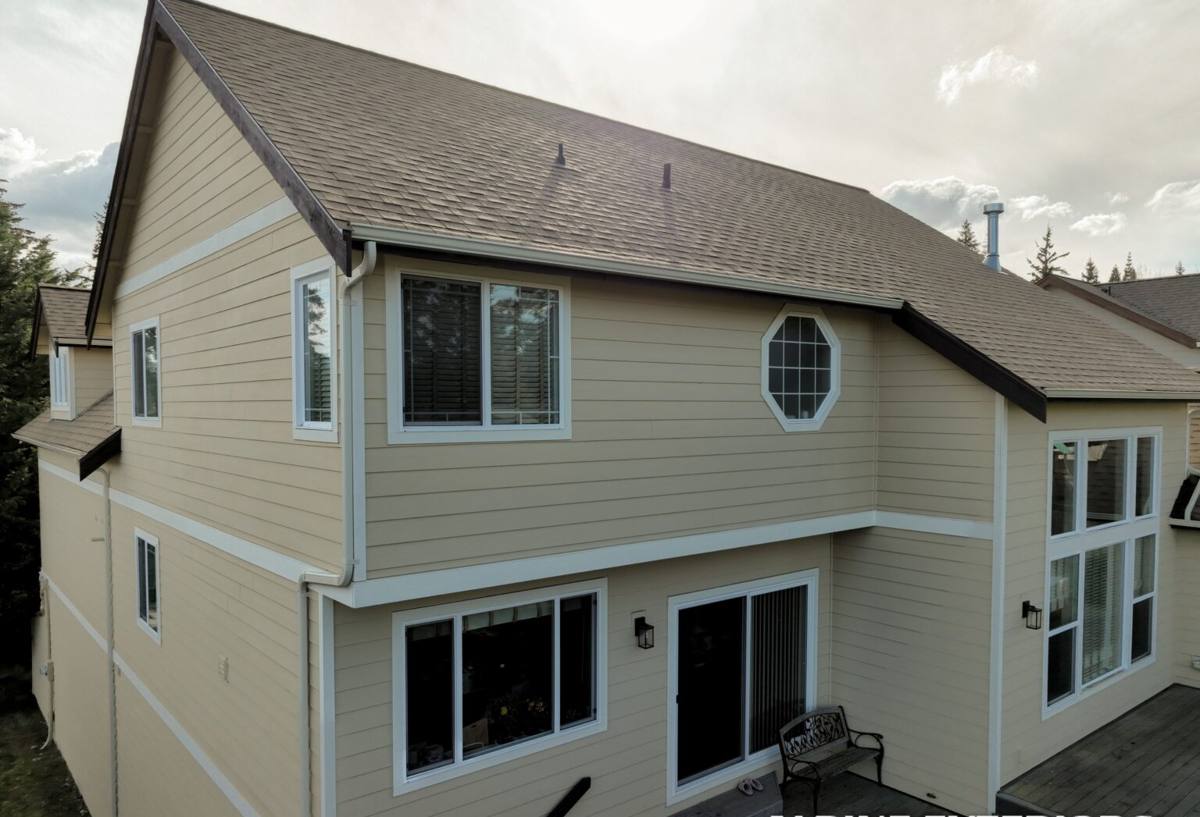
The Warning Signs Worth Paying Attention To
Most homeowners don't replace windows because they woke up and decided to — they replace them because something started bothering them. In Happy Valley, the complaints we hear most often are:
- Cold drafts near the frame, especially during wind-driven rain off the bay
- Condensation or fogging between the panes, which means the seal has failed
- Sticking, swelling, or difficulty locking sashes, often a sign of moisture getting into the frame
- Visible moss, algae, or dark staining building up on sills and lower frames
- Noticeably higher heating bills in older single-pane or early-generation double-pane homes
- Soft or discolored trim and wall material around the window opening
Any one of these on its own might just mean routine maintenance. Several of them together, especially on a home more than 20-25 years old, usually points to windows that are no longer doing their job.
What "Energy-Efficient" Actually Means in a Marine Climate
A lot of window marketing is written for hot, dry climates, which isn't much use to a homeowner in Whatcom County. Here, efficiency is less about blocking summer heat and more about controlling heat loss, air infiltration, and moisture over a long, wet, mild winter.
U-Factor Matters More Than R-Value Here
U-factor measures how much heat a window lets escape — the lower the number, the better it performs in our climate. For Bellingham homes, we generally look for U-factors in the range that Northwest energy programs recommend for this zone, rather than chasing whatever number sounds most impressive on a brochure. A well-built double-pane, low-E window is often the right, cost-effective choice; triple-pane can make sense in specific situations, which we'll cover below.
Condensation Resistance
Because of our humidity, condensation resistance matters as much as insulation value. A window with a poor condensation resistance rating will sweat on cold, damp mornings, and that moisture ends up on your sill, your trim, and eventually in places you can't see. This is one of the most overlooked specs on a window, and one of the most important for a house near the water.
Frame Materials: What Holds Up Near Salt Air and Year-Round Rain
Frame material has a bigger effect on long-term performance than most homeowners expect, especially with salt air in the mix. Here's how the common options generally compare for a Happy Valley home:
| Frame Material | Performance in Salt Air / Rain | Maintenance | Typical Use Case |
|---|---|---|---|
| Vinyl | Good — won't corrode or rot, handles moisture well | Low; occasional cleaning | Most standard replacements, strong value |
| Fiberglass | Excellent — very stable, resists warping and salt exposure | Low | Higher-exposure walls, long-term durability priority |
| Wood-clad | Fair — attractive but the wood core is vulnerable if the exterior cladding is ever breached | Higher; needs monitoring at joints and sills | Historic or architecturally specific homes |
| Aluminum | Poor for our climate — conducts cold, prone to condensation, can pit near salt air over time | Moderate | Generally not our first recommendation here |
We don't install every material on this list for every home. On a property close to the bay with direct salt exposure, we'll often steer a homeowner toward vinyl or fiberglass over aluminum or unclad wood — not because those other products can't work anywhere, but because the maintenance burden and moisture risk are harder to justify in this specific environment. That's a judgment call based on trade-offs, not a knock on any manufacturer.
Installation Is Where Energy Efficiency Is Actually Won or Lost
A high-performance window installed poorly will underperform a modest window installed correctly. This is the part of the job that doesn't show up in a product brochure but matters more than anything else, especially with the amount of driving rain Whatcom County sees off the water.
Flashing and Water Management
Every opening needs a proper flashing sequence — building paper or house wrap integrated correctly with sill pan flashing, side flashing, and head flashing so that any water that gets past the window sheds outward and down, never inward. On wind-driven rain days, a poorly flashed window is a slow leak waiting to happen, even if the window itself is a good product.
Sealing and Insulation Around the Rough Opening
The gap between the window frame and the rough opening needs to be insulated and air-sealed correctly, not just stuffed with whatever's on hand. Over-compressed insulation, missing backer rod, or the wrong sealant for our climate all lead to drafts and moisture problems that get blamed on the window when the real issue is the installation.
Our Process for Happy Valley Window Projects
We keep the process straightforward, and every step accounts for the conditions this neighborhood actually deals with:
- On-site assessment of existing windows, framing condition, and any moisture or rot already present
- Honest recommendation on repair versus full replacement — not every window needs to come out
- Product selection based on your home's exposure, sun/shade pattern, and budget, not a one-size pitch
- Proper removal with inspection of the sheathing and framing underneath before anything new goes in
- Correct flashing, air-sealing, and insulation at every opening
- Final check of operation, seals, and weatherproofing before we consider the job done
- Clear explanation of what basic maintenance to do going forward, especially heading into moss season
Matching the Window to Your Home's Exposure and Shade
Not every window on a Happy Valley home needs the same specification. A west-facing wall that catches more direct weather off the bay may benefit from a heavier-duty frame and higher water-resistance detailing than a sheltered, shaded side of the house. Meanwhile, homes tucked under mature trees deal more with prolonged dampness and moss growth than with wind exposure, which changes what matters most: drainage and airflow around the frame rather than storm resistance alone.
This is also where triple-pane glass gets a real look. It's not automatically the right call everywhere in Bellingham — it adds weight, cost, and isn't always necessary on a well-shaded, moderate wall. But on a north- or west-facing exposure with more direct exposure to wind and rain, the extra insulating layer and improved condensation resistance can be worth the difference.
Cost Factors to Expect
Window replacement pricing varies by size, frame material, glass package, and how much work is needed to correct any existing rot or flashing issues. Rather than quote a number that won't mean much without seeing your home, here's what actually drives the cost up or down:
- Number and size of openings being replaced
- Frame material — vinyl is typically the most budget-friendly, fiberglass and wood-clad cost more
- Glass package — double-pane low-E versus triple-pane, and any tempered glass required by code near doors or low sills
- Condition of the existing framing — hidden rot or water damage adds labor and material
- Access and site conditions — sloped lots and second-story openings can add complexity
We give a firm, itemized quote after seeing the actual openings and their condition, not a rough guess over the phone.
Maintenance During Moss Season
Even a correctly installed, well-built window needs a small amount of upkeep in this climate. Keeping weep holes and drainage tracks clear of moss and debris prevents water from pooling where it shouldn't. Wiping down sills after long wet stretches, checking that exterior caulking hasn't cracked or pulled away, and keeping nearby vegetation trimmed back so airflow can reach the window all go a long way toward protecting your investment through Whatcom County's long damp season.
Why Hiring a Crew That Already Works in Happy Valley Matters
Every neighborhood in Bellingham has its own mix of housing ages, lot conditions, and exposure patterns, and Happy Valley is no exception. A crew that regularly works in this area already understands the mix of older and newer homes here, how sloped and tree-covered lots affect drainage and access, and what the salt air and rain pattern off the bay does to different materials over time. That local familiarity means fewer surprises during the project and a recommendation that's actually suited to your specific home rather than a generic climate zone.
If your windows are drafty, fogged, sticking, or just past their useful life, we'd be glad to take a look and give you a straightforward, no-pressure estimate — use the form below to get started.