 Bellingham Siding
 Storm Damage Roof Repair for Ferndale Homes
Ferndale sits close enough to the water and open farmland that storms coming off the Strait of Georgia and the Nooksack delta hit roofs here harder than they do a few miles inland. Wind-driven rain, salt-laden air, and a moss season that barely takes a break from October through May put real stress on a roof year after year. When a storm actually damages that roof — torn shingles, lifted flashing, a leak that starts during a wind event and doesn't stop — the repair needs to address the storm damage itself and the conditions that made it worse in the first place.
This page covers what storm damage roof repair actually involves for homes in and around Ferndale, what our process looks like, and why it matters to work with a crew that already understands this specific stretch of Whatcom County.
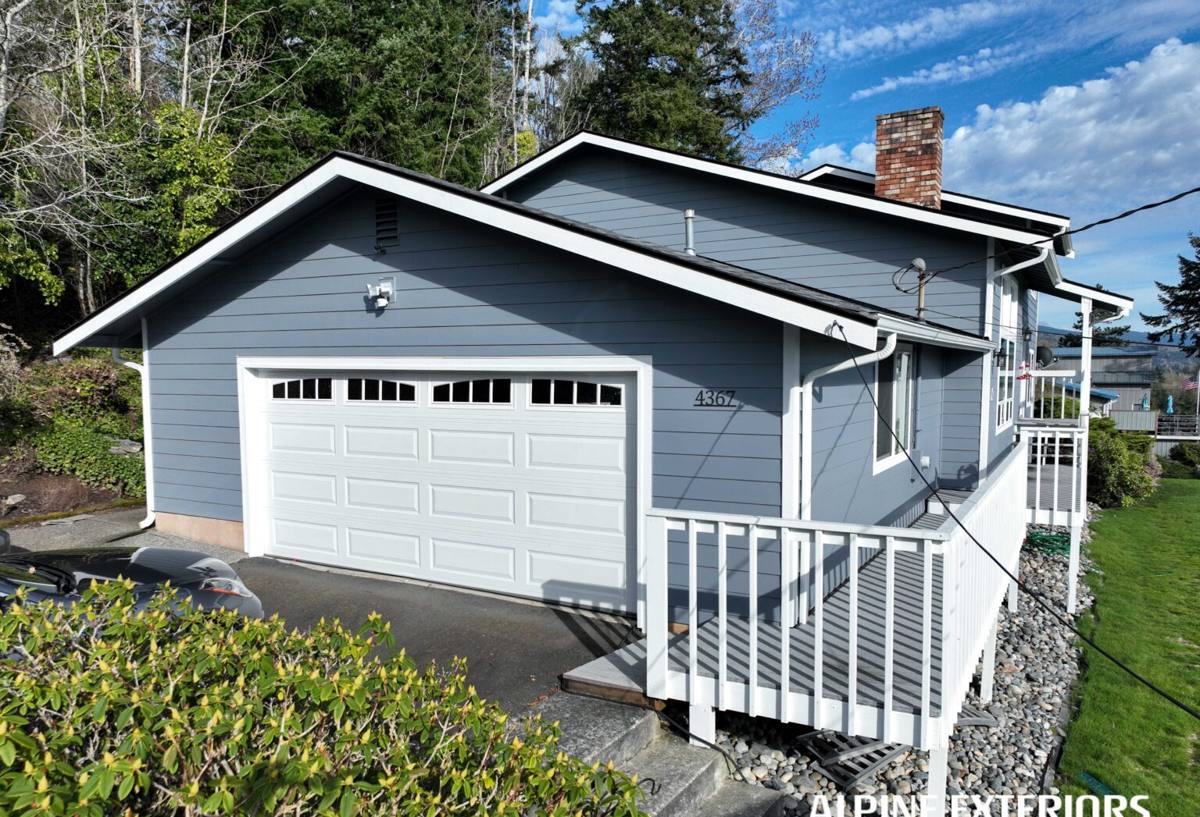
What Whatcom County Storms Actually Do to a Ferndale Roof
Wind-Driven Rain
Straight-down rain rarely causes a roof leak on its own — a roof is built to shed water moving downward. The problem is wind-driven rain, which pushes water sideways and upward under shingle edges, around flashing, and into any gap that's already started to open up from age or a prior storm. Ferndale's exposure to open wind off the water and surrounding flatland means gusts during a storm event can drive rain much harder against roof planes than the same storm would in a more sheltered, tree-lined part of Bellingham.
Salt Air and Corrosion
Proximity to the water means a steady low level of salt in the air, even well inland from the shoreline itself. Salt air accelerates corrosion on exposed metal — nails, flashing, fasteners, and any exposed metal roofing components. A storm that pulls up a section of shingles or flashing that's already been quietly corroding for years will fail faster and worse than the same storm hitting fresh materials.
The Long Moss Season
Whatcom County's moss season runs long — shade, moisture, and mild temperatures are exactly what moss needs, and a Ferndale roof with any north-facing or tree-covered section rarely gets a real dry-out period. Moss holds moisture against the roofing surface, lifts shingle edges over time, and gives wind something to grab onto during a storm. A roof with untreated moss going into a storm is more likely to lose material than a roof that's been kept clear.
Signs Your Ferndale Roof Has Storm Damage
Not all storm damage is obvious from the ground. Some of it shows up as a leak weeks later; some of it is visible right after the wind dies down. Here's what we tell Ferndale homeowners to check for after a storm event:
- Shingles that are visibly lifted, curled, cracked, or missing entirely
- Granules collecting in gutters or at downspout outlets (a sign of shingle wear accelerated by wind abrasion)
- Flashing around chimneys, vents, or roof-to-wall transitions that looks bent, lifted, or separated
- New or worsening water stains on ceilings or in the attic after a storm
- Debris — branches, needles, moss clumps — pushed into valleys or against roof penetrations
- Gutters pulled loose or sagging from wind load or debris weight
- Soft spots or sagging when walking the attic space (a sign water has already gotten into the decking)
If you see any of these after a storm, the roof needs a real inspection — not just a patch over the visible spot — before the next weather system comes through.
What a Correct Storm Damage Repair Involves
A quick patch over the obvious hole is not the same thing as a correct repair. Storm damage repair done right addresses three layers: the visible damage, the underlying decking and underlayment, and the flashing or transition points that likely let water in during the storm in the first place.
| Repair Scope | What's Involved | When It's the Right Call |
|---|---|---|
| Emergency tarp / temporary seal | Fast weatherproofing to stop active water intrusion until a full repair can be scheduled | Right after a storm, when a full repair can't happen the same day |
| Section repair | Removing and replacing damaged shingles, felt or synthetic underlayment, and flashing in the affected area, tying it back into the surrounding roof | Damage is localized to one slope or area and the rest of the roof is sound |
| Multi-area repair | Several separate repair zones addressed in one visit, often after wind damage that hit more than one roof plane | Storm damage is scattered across the roof but the overall roof age and condition don't call for replacement |
| Full replacement | Tear-off and full re-roof | Storm damage is widespread, the roof was already near end-of-life, or repeated storm events have compounded the damage |
Part of our job is telling you honestly which category your roof falls into — not defaulting to the most expensive option, and not underselling damage that will just fail again in the next storm.
How We Handle a Storm Damage Repair Call in Ferndale
1. Inspection First, Not a Guess
We walk the roof, the attic, and the affected interior spaces before recommending anything. Storm damage often extends past what's visible from the ground or even from a quick look at the roof surface — we check decking condition, underlayment, and flashing at every point where the storm likely pushed water in.
2. Documentation
We photograph and document the damage clearly, including things that matter for insurance purposes — the extent of the damage, likely cause, and condition of surrounding materials. This isn't a substitute for your insurer's own adjuster, but it gives you and your insurance company a clear, honest record to work from.
3. Stop the Leak, Then Fix It Right
If there's active water intrusion, our first priority is stopping it — a tarp or temporary seal if a full repair can't happen immediately. The permanent repair then addresses shingles, underlayment, decking, and flashing together, not just the top layer.
4. Match Materials, Don't Just Patch
Where possible we match existing shingle type, color, and profile so a repair doesn't stand out as an obvious patch job. When an exact match isn't available — which happens with older roofs — we're upfront about that before starting work.
Insurance and Storm Damage Claims
Many Ferndale storm repairs go through homeowners insurance, especially after a named wind event or a storm significant enough to affect multiple properties in the area. We're glad to provide our inspection findings and photos to support your claim, and we'll give you a straightforward repair estimate that reflects the actual scope of work — not a number inflated to match a claim, and not a lowball that leaves damage unaddressed. What you do with your insurer and your claim is your call; our job is to make sure the repair itself is done correctly regardless of how it's paid for.
Roofing Materials and Coastal Whatcom County Conditions
When a repair involves replacing more than a small patch, it's worth understanding how different roofing materials hold up to the salt air, moisture, and moss pressure common around Ferndale.
| Material | Salt Air / Corrosion Behavior | Moss & Moisture Behavior | Maintenance Burden |
|---|---|---|---|
| Composition (asphalt) shingle | Fasteners and any exposed metal need corrosion-resistant coatings; shingle mat itself is not metal so it isn't directly corroded | Susceptible to moss growth on shaded slopes; needs periodic cleaning | Moderate — periodic moss treatment and gutter clearing |
| Metal roofing | Requires a coating and fastener system rated for coastal/salt exposure; uncoated or mismatched fasteners corrode faster near the water | Sheds moss more easily due to smooth surface and steep pitch, but valleys still need clearing | Lower for moss, but coating and fastener condition need occasional checking |
| Wood shake | Fasteners face the same corrosion risk as other materials; the wood itself is vulnerable to constant damp conditions | Highest moss and moisture retention risk in a long, damp moss season | Higher — regular treatment and inspection needed to manage moisture retention |
None of these materials are wrong choices — each comes with trade-offs in maintenance, moisture handling, and installation sensitivity that we walk through honestly based on your roof's exposure, pitch, and shade cover.
Why Hiring a Crew That Already Works Ferndale Matters
A roofer who mainly works drier, more sheltered parts of a region can still do competent work — but a crew that regularly works Ferndale and the surrounding Whatcom County coastline knows which flashing details tend to fail first in this wind exposure, which roof orientations hold moss longest, and what a repair needs to actually survive the next storm season rather than just look fixed today. That local pattern recognition is the difference between a repair that holds and one that reopens with the next hard blow off the water.
We're a Bellingham-based crew, and Ferndale storm damage calls are a regular part of our work — not an occasional trip out of our usual territory.
Get a Free, No-Pressure Estimate
If your Ferndale home has storm damage — or you're not sure whether what you're seeing after a recent storm needs attention — we're happy to take a look and give you an honest assessment. Use the form below to request a free estimate; there's no obligation and no pressure.