 Bellingham Siding
 Window Installation Built for Fairhaven's Climate
Fairhaven sits close enough to Bellingham Bay that its homes take a different kind of weather than houses further inland. Salt-laden air off the water works on metal hardware and fasteners year-round. Driving rain off Puget Sound doesn't just fall straight down — it gets pushed sideways into window walls during winter storms. And Whatcom County's long, wet moss season means anything horizontal or shaded stays damp for months at a stretch. Windows here don't fail because they're old. They fail because water and salt found a way in, and nobody caught it early.
Window installation in this neighborhood has to account for all three of those factors at once — the frame material, the flashing detail, and the sealant all matter more here than they would in a drier part of the state. That's the lens we bring to every job in Fairhaven: not just "install the window," but install it in a way that holds up to what this specific location throws at it.
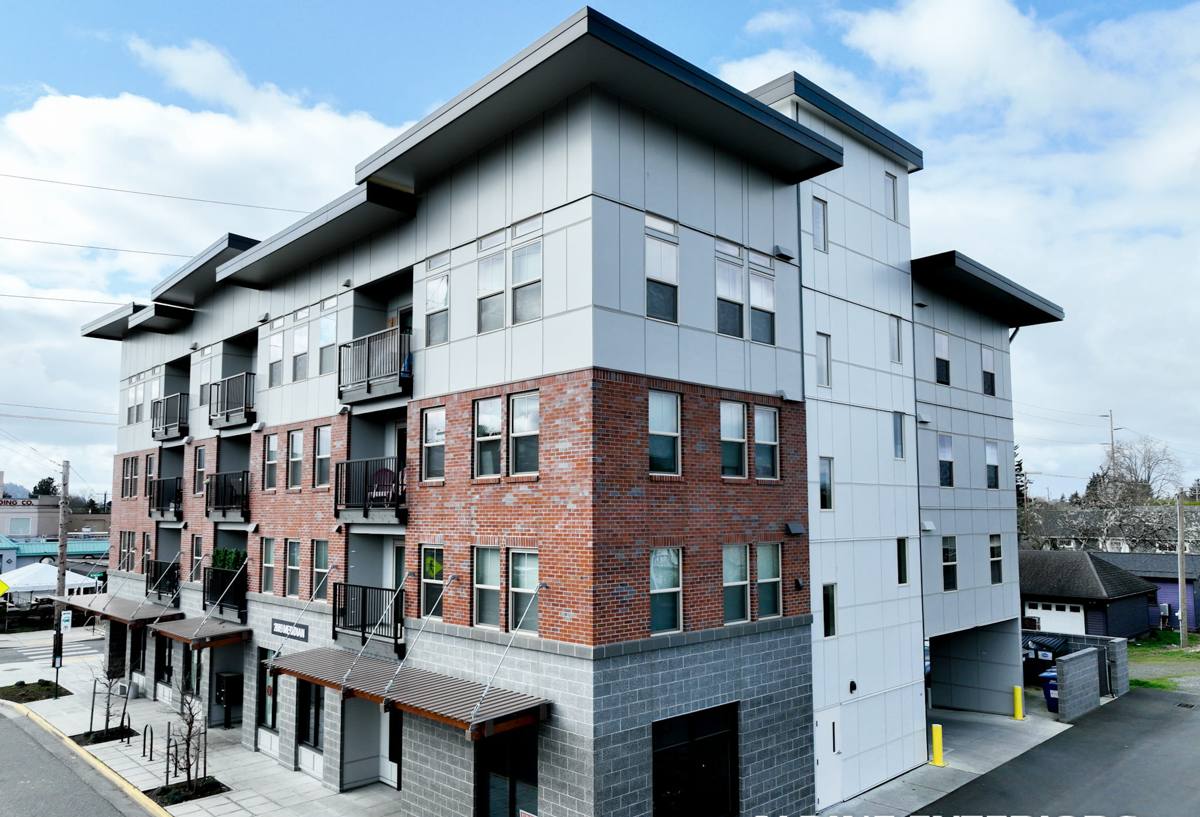
Signs a Fairhaven Home Needs New Windows
Older homes in and around Fairhaven — especially anything built before modern flashing standards became common — often show the same handful of warning signs. Catching these early saves you from a bigger repair later, because a leaking window doesn't just damage the window; it can rot the framing and sheathing around it.
- Fogging or moisture trapped between panes (a sign the seal has failed)
- Soft or discolored trim, siding, or drywall directly around the window
- Windows that are hard to open, close, or lock — frames can swell or warp with moisture exposure
- Visible gaps, cracked caulk, or daylight around the frame
- A noticeable draft or a spike in heating costs during winter storms
- Corroded or stiff hardware — hinges, locks, and cranks that show rust or pitting
- Moss or algae growth on the sill or lower frame, especially on north- or west-facing walls
If you're seeing more than one of these, it's worth having someone look at the whole window opening — not just the glass — before deciding what to do.
What a Correct Installation Actually Involves
It's Not Just the Window
The window unit itself is maybe a third of what determines whether an installation lasts. The rest comes down to what happens at the rough opening — the flashing, the moisture barrier, and how the window ties into the existing wall system. In a climate with this much wind-driven rain, a window that's beautifully made but poorly flashed will still leak.
The Details That Matter
- Sill pan flashing — a sloped, water-tight pan at the bottom of the opening so any water that gets past the window sheds outward instead of pooling against the framing
- Weather-resistive barrier integration — flashing tape and house wrap layered correctly (upper layers over lower layers) so water always drains down and out, never behind the barrier
- Proper shimming and squaring — a window that's not level or plumb puts uneven stress on the frame, which shortens the life of seals and hardware
- Correct fastening — using fasteners rated for exterior, marine-adjacent exposure rather than standard hardware that corrodes faster near the bay
- Exterior sealant — a quality, paintable sealant applied at the right joints, not everywhere (over-sealing can trap moisture instead of letting it drain)
- Interior air sealing — closing the gap between the window frame and the rough opening with low-expansion foam or backer rod, which also helps with energy performance
Skip any one of these steps and you can end up with a window that looks fine for a year or two before problems show up inside the wall, where they're expensive to find and fix.
Choosing the Right Window for Salt Air and Driving Rain
Material choice matters more here than in drier inland climates. We install several window materials and pick based on the specific home, budget, and exposure — not a one-size answer.
| Material | How It Handles Salt Air & Moisture | Maintenance | Typical Fit |
|---|---|---|---|
| Vinyl | Won't corrode or rot; performs well near the bay | Low — occasional cleaning | Most homes, best value |
| Fiberglass | Excellent dimensional stability, resists warping in wet/dry cycles | Low | Homes wanting a longer-term, higher-end frame |
| Wood-clad | Attractive but the wood interior needs protection from moisture intrusion at joints | Higher — requires attention to seals over time | Historic-character homes where appearance is a priority |
| Aluminum | Conducts cold and can corrode faster in salt air without proper coating | Moderate to high | Rarely our first recommendation this close to the water |
For most Fairhaven homes, vinyl or fiberglass frames make the most sense simply because they don't give salt air or moss-season dampness anything to work on. Wood-clad windows can still be the right call on a historic-style home where matching the original look matters — we just make sure the flashing and cladding details are done well enough to protect the wood underneath.
Glass and Hardware
Double-pane, low-E glass is the standard for this climate and handles our temperature swings fine. Triple-pane adds cost and weight without a major performance jump in most Bellingham-area homes — it's worth discussing case by case, but it's not something we push as a default upgrade. On hardware, look for corrosion-resistant finishes and locks; this is one area where cutting cost shows up fastest in a marine environment.
Our Installation Process
- On-site assessment — we look at the actual window openings, existing flashing condition, and any signs of past water intrusion before quoting anything
- Product selection — we walk through material and glass options suited to the home's exposure and your budget, full-frame or insert replacement depending on the condition of the existing frame
- Removal — old windows come out carefully, and we inspect the rough opening and sheathing for hidden rot or damage before anything new goes in
- Repair as needed — any soft framing or damaged sheathing gets addressed before the new window goes in, not covered up
- Flashing and installation — sill pan, weather barrier integration, shimming, and fastening done to a consistent standard, not rushed
- Sealing and finishing — exterior sealant, interior trim, and insulation around the frame
- Final walkthrough — we check operation, look, and seal with you before calling the job done
What Affects Cost
Every home is different, but these are the factors that actually move the price on a Fairhaven window installation:
| Factor | Why It Matters |
|---|---|
| Full-frame vs. insert replacement | Full-frame costs more but is necessary when the existing frame is damaged or the opening needs correcting |
| Frame material | Vinyl is generally the most budget-friendly; fiberglass and wood-clad cost more upfront |
| Number and size of openings | Larger or custom-shaped windows require more material and labor |
| Hidden damage | Rot or moisture damage found during removal adds repair time before installation can proceed |
| Access and story height | Second-story or hard-to-reach windows take longer and may need extra equipment |
| Trim and finish work | Matching historic trim profiles or custom interior finish adds labor |
We give straightforward, itemized estimates so you can see what's driving the number, rather than a flat quote with no explanation.
Why a Crew That Already Works Fairhaven Makes a Difference
A window installer who works across a lot of different climates has to relearn local conditions on every job. A crew that regularly works in Fairhaven and along Bellingham Bay already knows what wind-driven rain does to a poorly flashed sill, what a moss-covered north wall usually means underneath, and which frame materials actually hold up to salt exposure over years, not just on paper. That local repetition shows up in fewer callbacks and fewer surprises mid-project — because we've already seen how this specific combination of weather and older housing stock behaves.
It also means we're familiar with the character of homes in this part of Whatcom County, including older construction where rough openings aren't perfectly square and trim details matter for keeping the exterior looking right after the work is done.
Keeping New Windows Performing Long-Term
A good installation is the biggest factor in window lifespan, but a little seasonal attention keeps things performing the way they should:
- Check exterior caulking each fall before the wet season sets in, and touch up any cracked or separated sections
- Clear moss or debris from sills and tracks, especially on shaded or north-facing windows
- Test locks and hardware periodically for stiffness or corrosion, and lubricate as needed
- Watch for condensation between panes, which signals a failed seal rather than a cleaning issue
- Keep gutters and downspouts clear so runoff isn't sheeting down across window openings
None of this is complicated, but skipping it is how small issues turn into bigger repairs down the line — particularly in a climate that stays damp as long as ours does.
Get a Straightforward Estimate
If you're dealing with drafty, fogged, or aging windows in Fairhaven, we're happy to take a look and give you an honest read on what's actually going on — no pressure, no upsell script. Fill out the form below and we'll set up a time to assess your home and talk through real options for your budget and your house.