 Bellingham Siding
 Why Fairhaven's Waterfront Setting Is Hard on Windows
Fairhaven sits close to Bellingham Bay, and that location shapes what a window has to survive here. Salt-laden air moves off the water and settles on frames, hardware, and glazing, where it speeds up corrosion on anything less than fully weather-rated. Add Whatcom County's driving rain — storms that come in sideways off the Sound rather than falling straight down — and you get water pressure at the window's edges that a builder-grade unit was never designed to resist. Then there's the moss and algae season, which in this part of Washington can run most of the year in shaded, north-facing spots. Together, salt exposure, wind-driven rain, and near-constant moisture are the three things we design around on every Fairhaven window project.
None of this means Fairhaven homes need exotic materials or gimmicks. It means the basics — flashing, sealant choice, frame material, and drainage — have to be done right, because a marine climate has less tolerance for shortcuts than a drier inland area does.
What "Custom" Actually Means for Fairhaven Homes
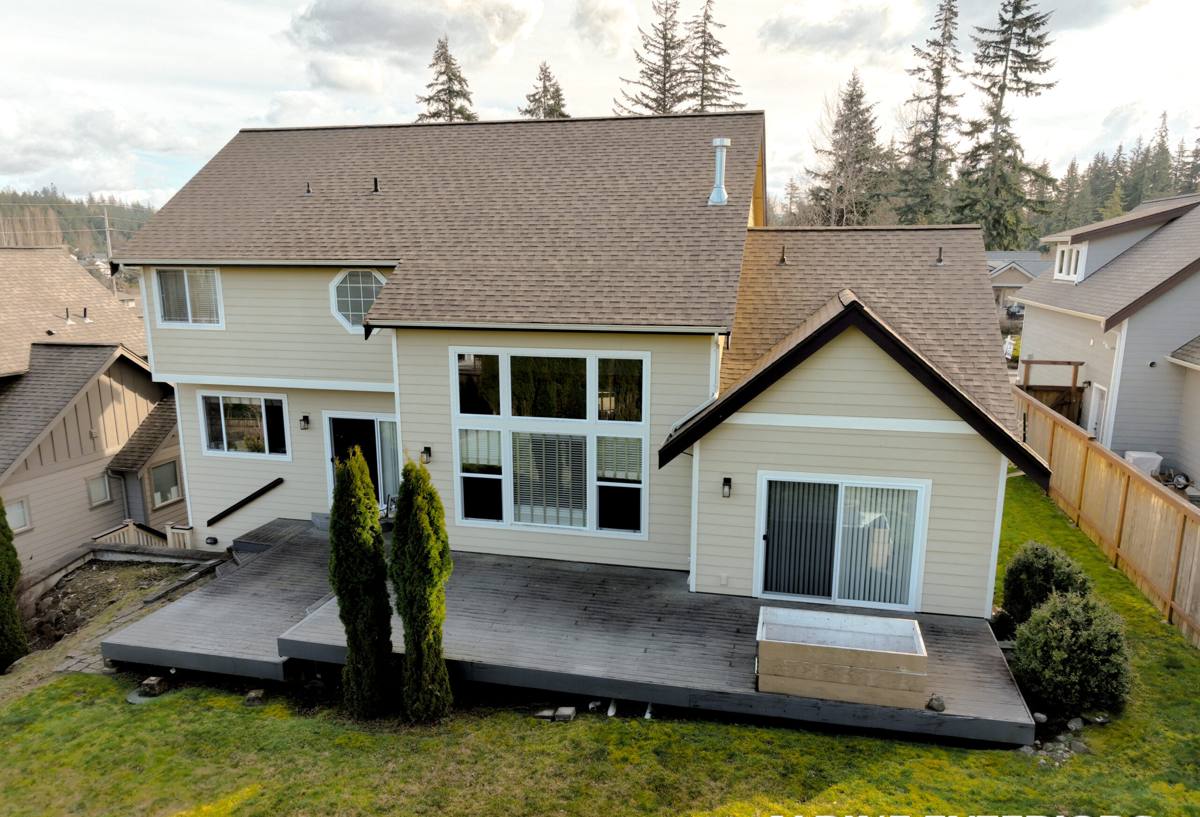
A lot of homeowners hear "custom windows" and assume it's just an upsell. In Fairhaven, it's usually a practical necessity. Many homes in this neighborhood are older, with window openings that were framed before modern standard sizes existed, or that have settled slightly over the decades. Others have architectural features — bay windows, transoms, arched tops, or narrow sidelights — that simply don't exist in a stock size chart.
Custom, in our world, means:
- Windows manufactured to the exact rough opening you have, instead of resizing the opening to fit a stock unit
- Matching the sightlines, muntin pattern, and proportions of the home's original windows when replacing one at a time
- Custom shapes — arches, angles, and specialty geometry — built to spec rather than approximated
- Frame and hardware materials selected for a bay-adjacent, high-moisture site, not just for price
If your home is near Fairhaven's older commercial core or in one of the neighborhood's character residential pockets, it's worth checking with the City of Bellingham on any design guidelines that may apply before finalizing window style — we're glad to help you figure out whether that applies to your address.
Material Choices That Actually Hold Up Near the Bay
We get asked constantly which window material is "best." The honest answer depends on how close you are to the water, how much sun and wind your exposure gets, and how much upkeep you want to do. Here's how the common options actually perform in a salt-air, high-rain environment like Fairhaven's:
| Material | Salt Air / Moisture Resistance | Moss & Algae Staining | Maintenance Needed |
|---|---|---|---|
| Vinyl | Good — won't corrode, but hardware inside must be marine-rated | Rinses off easily; doesn't stain the frame itself | Low — occasional wash |
| Fiberglass | Very good — dimensionally stable, resists warping in wet/dry cycling | Rinses off easily | Low |
| Aluminum-clad wood | Good on the exterior face; interior wood needs sealed joints to avoid trapped moisture | Can stain at trim joints if not detailed well | Moderate — watch cladding seams |
| Bare wood | Weakest in this climate unless finish is maintained on a strict schedule | Prone to staining and, over time, rot if neglected | High — regular refinishing |
We're not against wood windows — some Fairhaven homes genuinely call for that look, especially where a historic profile matters. But we tell clients up front what that choice costs in upkeep near the bay, so nobody's surprised three winters in. For most Fairhaven replacements, fiberglass or a quality vinyl with corrosion-resistant hardware gives the best balance of performance and low maintenance, and clad-wood remains the right call when matching an original wood profile matters more than minimizing upkeep.
What a Correct Installation Actually Involves
Flashing and Water Management
In a climate with wind-driven rain, the window unit itself matters less than what happens around it. Proper installation means integrating flashing tape and a sill pan so any water that gets past the exterior seal drains back out instead of soaking into the framing. This is the step that gets skipped most often on rushed jobs, and it's the one that causes rot you won't see for a couple of years.
Sealant Selection
Not every exterior sealant is rated for constant damp exposure. We use products chosen for long-term flexibility and adhesion in a marine climate, not whatever's cheapest at the hardware store — cheap sealant hardens and cracks within a few seasons here, and once it cracks, water finds the gap.
Drainage and Weep Paths
Every properly installed window has a way for incidental moisture to escape — weep holes or drainage channels at the sill. In Fairhaven's moss-prone spots, those paths clog with debris and organic buildup faster than in drier areas, so we make sure they're sized and positioned to stay clear, and we show homeowners where they are for future upkeep.
Fit and Insulation
A custom-built window still needs to be shimmed, leveled, and insulated correctly at the rough opening. Gaps that are too tight or too loose both cause problems — one restricts drainage, the other lets in drafts and moisture. This is where experience with older Fairhaven framing, which isn't always perfectly square, actually shows.
Our Process for a Fairhaven Custom Window Project
- On-site assessment — we look at your existing windows, framing condition, exposure to wind and rain, and any moss or moisture staining already present
- Measurement and material selection — exact rough opening measurements, plus a conversation about material trade-offs based on your home's specific exposure
- Manufacturing — custom units are built to spec, which typically takes longer than stock windows; we give you a realistic timeline up front, not an optimistic one
- Removal and installation — old units come out, framing is inspected and repaired if needed, flashing and sill pans go in, then the new window is set, shimmed, and sealed
- Final check and cleanup — we test operation, confirm weep paths are clear, and walk you through basic maintenance specific to your material choice
Signs Your Current Windows Are Losing the Battle
Not every window needs replacing, but in a climate like Fairhaven's, problems tend to progress faster once they start. Watch for:
- Fogging or moisture between panes on double- or triple-glazed units — a sign the seal has failed
- Soft, spongy, or discolored wood at the sill or lower frame corners
- Windows that stick, bind, or won't stay open — often swelling from moisture intrusion
- Visible moss, algae, or persistent green staining on frames or sills, especially on shaded or north-facing walls
- A draft you can feel by hand along the frame edge, even with the window latched
- Peeling or bubbling exterior paint right at the window perimeter
Any one of these on its own might just need a repair. Several together, especially on an older Fairhaven home, usually means it's time to talk about replacement before the framing underneath takes damage too.
Maintaining Custom Windows in a Salt-Air, Moss-Prone Climate
Even well-installed windows need some seasonal attention here. Rinse salt residue off frames and hardware a few times a year, especially if you're on a more exposed or elevated lot. Keep weep holes and sill drainage clear of leaves, needles, and moss debris — a soft brush and occasional rinse is usually enough. Lubricate hinges and locks with a moisture-displacing product periodically, since bare metal hardware corrodes faster in salt air than most homeowners expect. If you chose a wood or clad-wood window, check caulking and paint lines every year or two, since that's the maintenance trade-off that comes with the look.
Why a Crew That Already Works Fairhaven Matters
Window installation isn't identical from one part of Whatcom County to another. A crew that mostly works drier, inland jobs can still do competent work, but they're not necessarily thinking about salt exposure, wind-driven rain angles off the bay, or how fast moss builds back up on a shaded sill here. Working in Fairhaven regularly means we've seen how these specific conditions age a window over five, ten, fifteen years — not just how it looks on installation day. That experience shows up in the small decisions: which sealant actually holds up, how much drainage capacity to build in, and which framing quirks are common in this neighborhood's older housing stock.
If you're weighing a window project in Fairhaven, we're happy to take a look and give you a straightforward, no-pressure estimate — no obligation, just an honest read on what your home actually needs. The form below gets you started.