 Bellingham Siding
 Board & Batten Siding in Fairhaven: Built for a Waterfront Neighborhood
Fairhaven's mix of historic character homes, craftsman bungalows, and newer builds near the waterfront gives board and batten siding a natural home. The vertical lines suit the neighborhood's architecture, and the style has real functional history — board and batten was originally developed to shed water efficiently on exposed walls. That history matters here, because Fairhaven sits close enough to Bellingham Bay that homes take a steady diet of salt-laden air, wind-driven rain, and the shade and dampness that fuel moss growth for much of the year.
We install board and batten siding for Fairhaven homeowners using James Hardie fiber cement exclusively. This page walks through what the style requires in this specific setting, what a correct installation looks like, and why the details matter more here than they would a few miles inland.
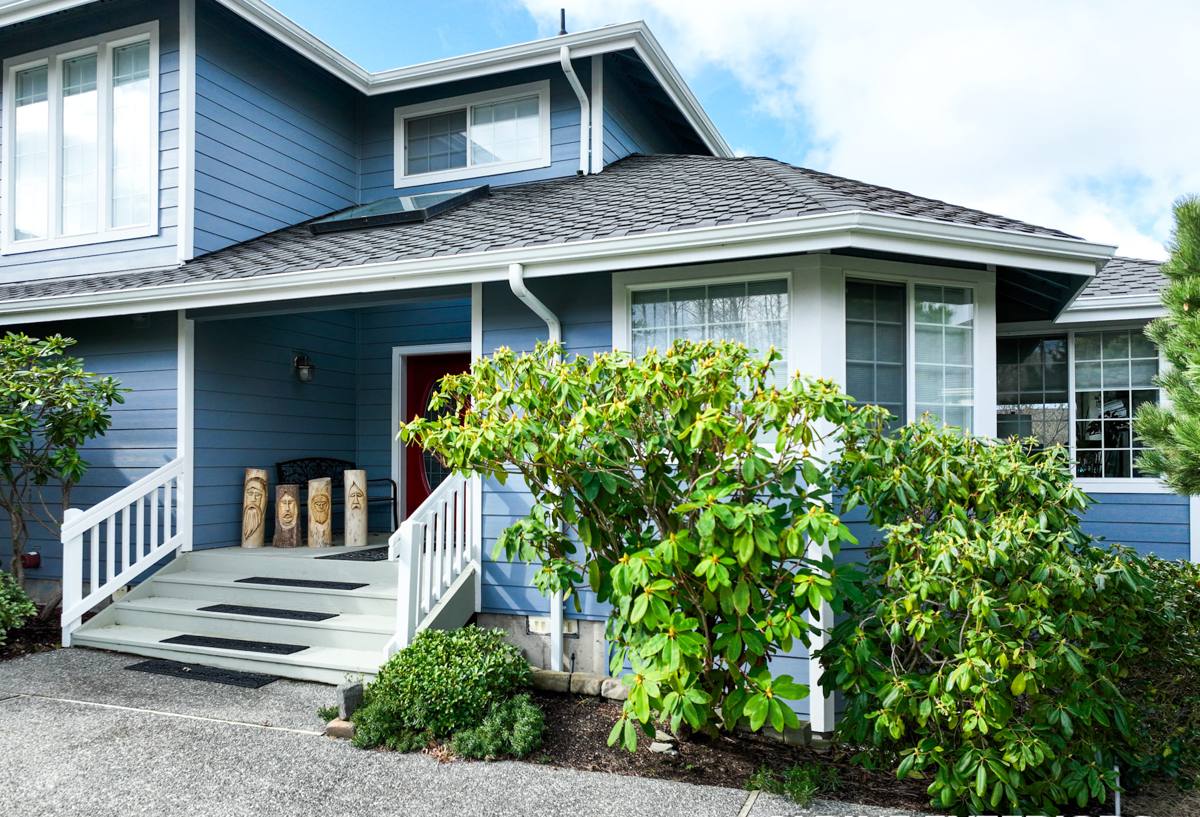
Why Fairhaven's Climate Is Tougher on Siding Than It Looks
Salt Air and Moisture Load
Proximity to the water means airborne salt settles on exterior surfaces year-round. Salt is hygroscopic — it pulls moisture out of the air and holds it against whatever surface it lands on. On wood-based siding, that means longer periods of trapped dampness at exactly the seams and edges where board and batten is most vulnerable: the vertical joints between boards and the battens covering them.
Driving Rain
Whatcom County's weather pattern brings rain on wind, not just rain falling straight down. Driving rain pushes water sideways into vertical seams and under battens if the flashing and gapping details weren't done correctly at installation. A board and batten system that looks fine on a calm day can still be failing quietly during a January windstorm.
Moss and Shade
Many Fairhaven lots have mature tree cover, and combined with our long wet season, that means extended moss and algae growth on north- and west-facing walls. Moss holds moisture against a wall for weeks at a time. On a material that swells, delaminates, or softens with sustained dampness, that's a slow, cumulative problem — one that usually shows up as soft spots or paint failure years before anyone budgets for new siding.
What Correct Board & Batten Installation Requires Here
Board and batten looks simple — vertical panels, vertical battens over the seams — but the details that keep it watertight in a coastal, high-rain climate are not optional extras. They're the difference between siding that lasts decades and siding that needs attention in five to seven years.
- Correct rainscreen gap behind the panels so moisture that does get in can drain and the wall can dry
- Weather-resistive barrier installed and lapped correctly before any panel goes up
- Flashing at every horizontal transition — window heads, doors, roof-to-wall intersections, and the base of the wall
- Batten spacing and fastening that follows the manufacturer's engineering, not a generic "close enough" layout
- Proper gapping and sealant at panel joints, sized for our regional temperature swings so panels aren't fighting each other as they expand and contract
- Factory-finished material at the cut ends properly sealed, since a raw cut edge is where moisture intrusion usually starts
Skip any one of these and the siding may still look correct for a season or two. The problems that follow — trapped moisture, soft substrate, paint or finish failure — tend to show up behind the wall before they show up on the surface, which is why we treat these steps as non-negotiable rather than optional upgrades.
Why We Use James Hardie for Board & Batten, Not the Alternatives
Board and batten is available in several materials — primed wood, engineered wood, vinyl, and fiber cement among them. We install James Hardie fiber cement exclusively, and in a climate like Fairhaven's the reasoning is straightforward.
Fiber cement doesn't rot, and it doesn't feed moss or mildew the way wood-based products can. It holds its shape and dimensions in wet-dry cycling far better than engineered wood panels, which matters directly for board and batten, since that style depends on tight, stable seams between boards and battens to keep water out. Hardie's ColorPlus factory finish is baked on and warranted against fading and flaking, which matters on a style with a lot of exposed vertical trim catching direct weather. And because Hardie is non-combustible, it adds a layer of fire resistance that none of the wood-based board and batten alternatives can offer.
We don't install primed wood, engineered wood siding, cedar, or vinyl board and batten. Each has legitimate uses in the right application, but none of them hold up the way we want a Fairhaven home's siding to hold up over a 30-plus year ownership window, and we'd rather stand behind one system we trust than offer several we'd have reservations about.
James Hardie Product Lines for Board & Batten
| Product | Use Case | Notes for Fairhaven Homes |
|---|---|---|
| HardiePanel Vertical Siding + HardieTrim Battens | Full board and batten look, new construction or full re-side | Most common approach; battens sized and spaced to match the home's proportions |
| HZ10 Climate Engineered Line | Homes in wetter, harsher coastal zones | Engineered for higher-moisture climates like ours; recommended for exposed or waterfront-adjacent walls |
| ColorPlus Factory Finish | All board and batten panels and battens | Reduces future repainting; finish is baked on and warranted, which matters given how much vertical trim this style exposes |
Our Process for a Fairhaven Board & Batten Project
1. On-Site Assessment
We start by walking the exterior and looking specifically for what's driving the need for new siding — moisture staining, moss buildup, soft spots at the base of walls, or failed caulking at trim. This tells us whether we're dealing with a straightforward re-side or whether there's underlying sheathing or framing damage to address first.
2. Moisture and Substrate Check
Before any new siding goes up, we confirm what's underneath is sound. In a climate where trapped moisture is the main long-term threat, installing new siding over a compromised wall just hides the problem — it doesn't solve it.
3. Weather Barrier and Rainscreen
We install the water-resistive barrier and rainscreen gap system correctly before the first panel goes up. This is the step that determines whether the wall assembly can actually dry out after wind-driven rain, and it's the step most likely to get shortcut by crews unfamiliar with our climate.
4. Panel and Batten Installation
Panels and battens go up to manufacturer specification — correct fastening pattern, correct gapping, correct flashing at every penetration and transition. This is where board and batten either gets built right or doesn't, and it's not a step we compress to save time.
5. Finish Details
Caulking, sealant, and touch-up work at cut edges and trim connections get finished with attention to the same seams that take the brunt of driving rain and salt exposure over time.
Maintenance for Board & Batten in a Coastal, Mossy Climate
Correctly installed Hardie board and batten needs far less upkeep than wood-based alternatives, but "less" isn't "none." A short seasonal routine keeps it performing the way it's built to:
- Rinse salt residue and airborne grime off exterior walls once or twice a year, especially on sides facing the water
- Keep gutters clear so overflow doesn't run down and pool behind battens
- Trim back vegetation and tree cover that keeps walls shaded and damp, which is what drives moss growth
- Check caulking at trim and window transitions annually and touch up before gaps widen
- Address any soft spots, staining, or paint lifting promptly rather than waiting for a full season to pass
Why Local Installation Experience Matters for This Style
Board and batten has less forgiveness for installation shortcuts than a standard lap siding job — the vertical seams and batten spacing leave fewer places for water to hide once it gets behind the wall. A crew that's installed this style repeatedly in Whatcom County's specific combination of coastal humidity, wind-driven rain, and heavy moss pressure knows where the failure points actually show up in this climate, not just in a manufacturer's general installation guide. That experience shows up in the flashing details, the gapping decisions, and the batten layout choices made on-site — the parts of the job a homeowner doesn't see once it's finished, but that decide how the siding performs for the next three decades.
Ready to Talk About Board & Batten for Your Fairhaven Home?
If you're weighing board and batten siding for a home in Fairhaven, we're glad to walk the exterior with you, look at what your walls are dealing with, and talk through what a correctly built system looks like for your specific home. Reach out for a free, no-pressure estimate using the form below.