 Bellingham Siding
 Roof Repair Built for Edgemoor's Waterfront Climate
Edgemoor sits close enough to Bellingham Bay that its roofs deal with a mix most inland neighborhoods don't: salt-laden air off the water, driving rain that comes in sideways during winter storms, and a moss season that can run eight months or longer under the tree canopy common to the area. None of that is unusual for Whatcom County, but Edgemoor gets a concentrated version of it — mature trees overhead, shaded north-facing slopes that never fully dry out, and proximity to salt spray that accelerates corrosion on fasteners, flashing, and gutter hardware faster than roofs a few miles inland.
Roof repair here isn't just patching a leak. It's understanding why that leak started in the first place, and whether the conditions that caused it are still working against the fix. A repair that ignores moss growth patterns, valley drainage, or corroding flashing will fail again — often within a season or two.
Signs an Edgemoor Roof Needs Repair Now
Most roof problems don't announce themselves with a dramatic leak. They show up as smaller signals first, and catching them early is almost always cheaper than waiting.
- Moss or algae streaking on north-facing slopes or anywhere shaded by trees
- Granules collecting in gutters or at downspout outlets
- Soft or discolored ceiling patches, especially after a heavy rain event
- Curling, cracked, or missing shingles, particularly on wind-exposed edges
- Rust staining or visible corrosion around flashing, vents, or metal valleys
- Sagging or spongy spots when walking the roof during an inspection
- Daylight visible through the attic roof deck, or damp insulation below it
Any one of these on its own might not mean much. Two or three together, especially in an older section of roof, usually means water has already found a way in and is doing quiet damage under the surface.
The Repairs We See Most Often in Edgemoor
Moss and Organic Growth Damage
Moss doesn't just sit on top of shingles — its root structure lifts shingle edges and holds moisture against the roofing material long after the rest of the roof has dried. On the shaded, tree-covered lots common in Edgemoor, this is the single most frequent cause of premature shingle failure we're called out for. A repair in these areas usually means removing the growth correctly (not pressure-washing, which strips granules and shortens shingle life), replacing any shingles the moss has already lifted or cracked, and addressing the moisture source — often overhanging branches or inadequate attic ventilation — so it doesn't come right back.
Flashing and Valley Failures
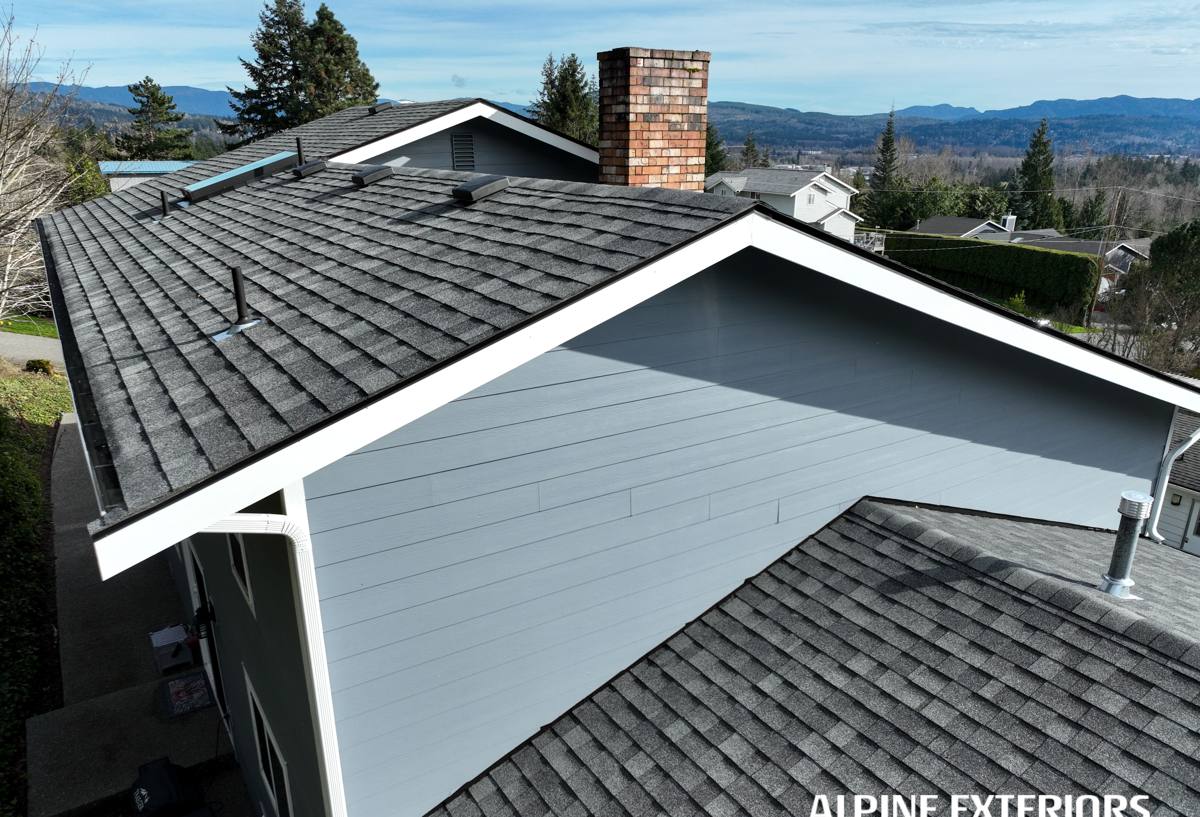
Salt air corrodes exposed metal faster than inland conditions do, and flashing around chimneys, skylights, and roof valleys is usually the first place it shows. Once flashing corrodes or pulls away from its seal, water gets a direct path into the roof deck. This is one of the most common leak sources we diagnose, and it's also one of the most misdiagnosed — homeowners often assume the shingles are bad when the actual failure point is a six-inch strip of flashing.
Wind and Storm Damage
Driving rain off the bay usually arrives with wind behind it, and wind-driven rain finds gaps that a straight-down rainstorm never would. Lifted shingle tabs, blown-off ridge caps, and rain forced up under roof edges are common after winter storm systems move through.
Gutter and Drainage Related Damage
When gutters clog with moss debris and fir needles — a near-constant issue under the tree cover in this neighborhood — water backs up under the roof edge instead of draining away. This shows up as rot at the fascia and roof edge long before it shows up as an obvious leak inside the house.
Repair or Replace? What Actually Determines the Answer
Homeowners often assume any leak means a full roof replacement is coming. That's frequently not true — but it's also true that patching the wrong roof at the wrong time wastes money. Here's how we think through it.
| Factor | Favors Repair | Favors Replacement |
|---|---|---|
| Roof age | Under 15-18 years (asphalt) | Approaching or past manufacturer lifespan |
| Damage extent | Isolated to one slope, valley, or penetration | Spread across multiple slopes or the whole roof |
| Roof deck condition | Solid, dry decking under the damaged area | Soft, delaminated, or rotted decking found on inspection |
| Moss/growth history | First occurrence, caught early | Recurring growth that's already lifted multiple shingle courses |
| Prior repair history | Well-maintained, few past patches | Multiple past patches on the same sections |
The honest answer only comes from getting on the roof and, when needed, checking the deck from the attic side. We'll tell you straight if a repair is the right call — or if a repair would just be a temporary fix on a roof that's telling you it's done.
What a Correct Repair Actually Involves
A quality roof repair is more than swapping out a few shingles. Done right, it includes:
- Full diagnosis, not just the visible symptom. Tracing water stains back to their actual entry point, which is often several feet from where the stain shows up inside.
- Deck inspection. Checking whether the roof sheathing under the damaged area is sound, or whether it's been softened by long-term moisture.
- Matching materials correctly. Shingle color and profile change over time with sun and weather exposure — we match as closely as the existing product allows rather than leaving an obvious patch.
- Proper flashing work. Any repair touching a valley, chimney, or vent gets new flashing and correct underlayment integration, not just sealant over the old metal.
- Ventilation check. Poor attic ventilation accelerates moss growth and shortens shingle life from the underside — worth a look any time we're already up there.
- Cleanup and debris removal. Old shingle granules, moss debris, and nails cleared from the roof and gutters before we leave.
Our Roof Repair Process in Edgemoor
We keep this straightforward because it should be.
- Inspection and estimate: We walk the roof, check the attic where accessible, and give you an honest assessment — repair or replace, with our reasoning.
- Written scope: You get a clear, itemized description of the work before anything starts, no vague line items.
- Scheduled repair: We work around Whatcom County's weather windows — dry stretches are booked efficiently rather than rushed.
- Site protection: Landscaping, siding, and gutters are protected during tear-off and repair work.
- Final walkthrough: We show you the completed repair and explain what was found and fixed.
Materials and Trade-Offs Worth Understanding
Edgemoor has a mix of roofing types — asphalt composition shingle is the most common, with cedar shake and some standing-seam metal on older or higher-end homes. Each has different repair considerations in this climate:
Asphalt composition shingle is the most repair-friendly and most cost-effective to patch, but it's also the most susceptible to moss lifting and granule loss over time. Regular moss management extends its life significantly.
Cedar shake has real aesthetic appeal but requires more disciplined maintenance in a moss-prone, high-moisture environment — untreated or neglected cedar holds moisture against the wood and can rot from the underside faster than it shows on top. If your home has cedar, we're honest about the upkeep it needs rather than pretending it's maintenance-free.
Standing-seam and metal roofing shed moss and moisture better than either alternative, but in a salt-air environment the fastener and flashing hardware needs to be a corrosion-resistant grade — cutting corners there is where metal roof problems usually start, and it's a detail worth confirming on any metal roof repair or install.
None of these is objectively "bad" — the right choice depends on your home's exposure, your maintenance appetite, and your budget. What matters for repair work is using materials and fasteners rated for the salt-air exposure this neighborhood actually gets, not just what's cheapest at the supply house.
Moss and Moisture: A Practical Maintenance Checklist
Between repairs, a few habits go a long way toward keeping an Edgemoor roof out of trouble:
- Trim back branches overhanging the roofline to cut down on shade and debris buildup
- Clear gutters and valleys at least twice a year, more often under heavy tree cover
- Have moss physically removed rather than left to spread — don't wait for it to visibly lift shingles
- Check attic ventilation isn't blocked by insulation or debris
- Walk the roofline visually after major windstorms for lifted or missing shingles
- Address small flashing or sealant issues promptly before winter rain arrives
Why a Crew That Already Works Edgemoor Matters
Roof repair advice that works for a dry, sun-exposed roof in eastern Washington doesn't automatically apply here. A crew familiar with Edgemoor already knows which slopes tend to hold moss, how salt exposure off the bay affects fastener choice, and what Whatcom County's rain patterns do to valleys and flashing over a few winters. That local pattern recognition shortens the diagnosis, and it means the repair addresses the actual cause instead of just the symptom that happened to leak this time.
It also means showing up when the weather actually allows it — scheduling repair work around this area's rain windows rather than working from a generic calendar that doesn't account for how often Bellingham gets a dry afternoon in November.
Get a Straight Answer on Your Roof
If you're seeing moss buildup, a stain on the ceiling, or just want a second opinion before winter rains set in, we're happy to take a look. We'll give you a clear, no-pressure estimate and tell you honestly whether you're looking at a repair or something bigger — use the form below to get started.