 Bellingham Siding
 South Hill Decks Take a Different Kind of Beating
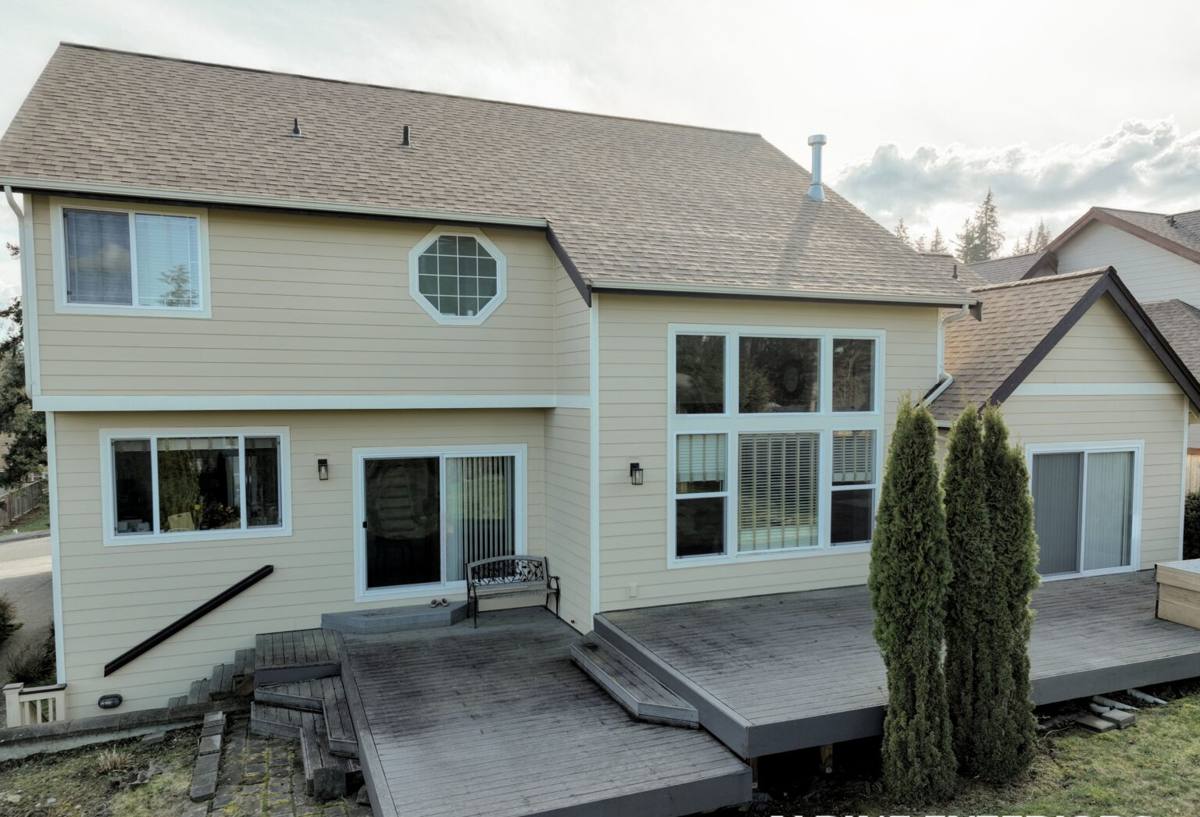
South Hill sits up above downtown Bellingham with a mix of older homes, mature tree cover, and lots that slope toward views of the bay. That combination is great for the house, but tough on a deck. Elevated lots mean more wind-driven rain hitting the structure from the side, not just from above. Mature trees mean shade, dropped needles, and leaf litter sitting on the decking surface for weeks at a time. And because South Hill isn't far from Bellingham Bay, salt-laden air works its way into every exposed fastener, hinge, and piece of hardware year-round.
None of that is unique to any one house — it's just what Whatcom County weather does to an outdoor structure over fifteen, twenty, thirty years. A deck that was built correctly for its time can still reach the point where patching no longer makes sense, and replacement is the honest answer. This page walks through what that looks like specifically for South Hill homes.
Why Moss, Rain, and Salt Air Matter More Here Than People Expect
Bellingham gets a long, wet fall-through-spring stretch, and shaded lots like many on South Hill stay damp longer than open, sun-exposed yards. That extended dampness is exactly what moss and algae need to establish on decking boards, railings, and stair treads. Beyond being unattractive, moss holds moisture against the wood surface and turns a deck slick and genuinely dangerous underfoot, especially on stairs.
Salt air is the quieter problem. It doesn't show up as visibly as moss, but it accelerates corrosion in fasteners, joist hangers, and any exposed metal hardware. A deck can look structurally fine on the surface while the connections holding it together are quietly rusting away underneath. That's a big part of why a visual once-over isn't enough to judge whether a deck needs replacing — you have to get under it.
What This Means for an Older South Hill Deck
- Ledger boards (where the deck attaches to the house) are a common rot point if flashing was ever missed or has failed
- North- and east-facing decks under tree canopy dry out slower and show moss and soft wood sooner than south-facing decks
- Original fasteners on decks more than 15-20 years old are often not rated for today's treated lumber chemistry, which speeds up corrosion
- Sloped lots can mean footings were undersized or placed shallow for the original grade, which shows up as movement over time
Signs a Deck Needs Replacing, Not Just Repair
Repair makes sense when the problem is isolated — a few soft boards, a loose railing post, a cracked stair tread. Replacement makes sense when the problems are systemic. Here's how we tell the difference on a walkthrough:
- Soft or spongy decking in multiple, unrelated areas — not just one board, but a pattern across the deck
- Rust staining or visible corrosion around joist hangers, post bases, or ledger bolts
- Ledger board separation or gapping where the deck meets the house siding
- Noticeable bounce or movement when walking across the deck, especially near the middle span
- Persistent moss or algae that returns within weeks of cleaning, even after treatment
- Railings that flex or wiggle under normal pressure — a code and safety issue, not cosmetic
One or two of these can often be repaired. Several at once, especially involving the ledger or framing, usually means the structure has reached the end of its service life and a full rebuild is the more honest recommendation.
What a Correct Deck Replacement Actually Involves
A deck replacement done right in this climate isn't just swapping old boards for new ones on the same frame. The framing and moisture management underneath are what determine whether the new deck lasts 10 years or 30.
Structure and Framing
This is where most of the long-term performance is decided. Correct footing depth and sizing for the soil and slope, properly sized joists for the span, and joist hangers and structural fasteners rated for both the treated lumber in use and for coastal exposure. On sloped South Hill lots, this also means confirming footings are set to the right depth and bearing on solid ground, not just matching whatever depth the original deck happened to use.
Ledger Flashing
Where the deck attaches to the house is the single most common failure point we find on rebuilds in this area. Correct flashing — installed so water sheds away from the house rather than behind the siding — is not optional. This is also the step most likely to get skipped or done poorly on a lower-bid job, because it's hidden once the decking goes down.
Decking Surface and Drainage
Board spacing, fastening method, and slope away from the house all affect how well a deck sheds water and resists moss. On shaded, tree-covered lots we also talk with homeowners about how much sun exposure the deck realistically gets, since that shapes both material choice and how often it'll need cleaning.
Railings and Stairs
Rebuilt to current code height and baluster spacing requirements, with hardware sized for the actual loads a railing needs to resist — not just what looks right.
Decking Material Options
There's no single "best" material — it depends on budget, how much sun or shade the deck gets, and how much upkeep the homeowner wants to do. Here's how the common options compare for a shaded, damp-prone South Hill lot:
| Material | Moss/Moisture Behavior | Maintenance | Typical Lifespan |
|---|---|---|---|
| Pressure-treated wood | Absorbs moisture; needs sealing to resist moss and rot | Annual cleaning and re-sealing recommended | 10-15 years with upkeep |
| Cedar | Naturally moisture-resistant but still needs sealing in shaded spots | Periodic sealing; more forgiving than treated pine | 15-20 years with upkeep |
| Composite decking | Sheds water well; can still grow surface algae in deep shade | Occasional washing, no sealing/staining | 25-30 years |
| PVC/capped decking | Best moisture resistance; least hospitable surface for moss | Lowest — occasional rinse | 25-30+ years |
For decks that sit in heavy shade most of the day — common on tree-covered South Hill lots — we lean toward recommending composite or capped decking to homeowners who want to minimize the moss battle, but wood is still a sound, honest choice for anyone willing to keep up with sealing on a normal schedule. We'll lay out the real trade-offs for your specific lot rather than pushing one product.
Permits and Code in Bellingham
Most deck replacements in the City of Bellingham require a building permit, particularly when the deck is elevated, attached to the house, or the footings and framing are being rebuilt rather than just the surface boards. Permitted work means an inspector signs off on footings, framing, and ledger attachment before it's covered up — which is exactly the part of the job that's impossible to verify later. We handle the permit process as part of the job rather than treating it as an optional add-on, because skipping it leaves the homeowner holding the liability if something's ever questioned at resale or by insurance.
Our Process
- On-site assessment. We get under the deck, check the ledger connection, probe framing and posts for soft spots, and check footing condition where visible.
- Honest recommendation. Repair, partial rebuild, or full replacement — with the reasoning explained, not just a bid.
- Material walkthrough. We go over decking, railing, and hardware options based on your lot's sun/shade exposure and budget.
- Permit and plan. We pull the required City of Bellingham permit and schedule inspections at the right points in the build.
- Build. Demo, framing, ledger flashing, decking, railings, and stairs, in that order, with each step built to be inspected and to last.
- Final walkthrough. We go over the finished deck with you before calling the job done.
Why a Crew That Already Works South Hill Matters
South Hill's terrain — sloped lots, mature trees, older homes with their own quirks in framing and grading — isn't something you learn from a manual. A crew that's worked the neighborhood knows what to expect from footing depth on sloped ground, how tree cover affects material recommendations, and where older Bellingham homes tend to have ledger or flashing issues from how they were originally built. That familiarity shows up in fewer surprises mid-project and a more accurate estimate up front, because we're not guessing at conditions we've never dealt with before.
Keeping a New Deck Healthy in This Climate
A correctly built deck still needs some seasonal attention in Whatcom County's climate. A simple maintenance routine goes a long way:
- Sweep leaves and needles off the deck regularly in fall, especially in shaded corners where debris collects and holds moisture
- Clean moss or algae as soon as it appears rather than letting it establish — it's much easier to remove early
- Check railings and stair connections once a year for any looseness
- Reseal wood decking on the schedule appropriate to the product — don't wait until it looks obviously weathered
- Keep gutters and downspouts near the deck clear so runoff isn't draining directly onto or under it
If your South Hill deck is showing soft spots, persistent moss, or just feels like it's on borrowed time, we're happy to take a look and give you a straight answer about repair versus replacement. Fill out the form below for a free, no-pressure estimate.