 Bellingham Siding
 Why Sudden Valley Windows Wear Differently
Sudden Valley sits in a pocket of Whatcom County that gets a specific mix of weather most Bellingham neighborhoods don't deal with in the same combination: lake-effect humidity off Lake Whatcom, heavy tree cover that keeps siding and window trim shaded and damp for long stretches, and the same driving winter rain that hits the rest of the county. Add in salt-laden air moving up from the Puget Sound corridor on windy days, and you've got a climate that's genuinely tough on window frames, seals, and sills.
The result is predictable if you know what to look for: sashes that swell and stick in fall and winter, glazing seals that fail years before their rated life, wood sills that hold moisture long after a storm has passed, and a moss and algae film on north-facing frames that never fully dries out. None of that is a defect in your house — it's just what this environment does to windows that weren't chosen or installed with it in mind.
What "Custom" Actually Means Here
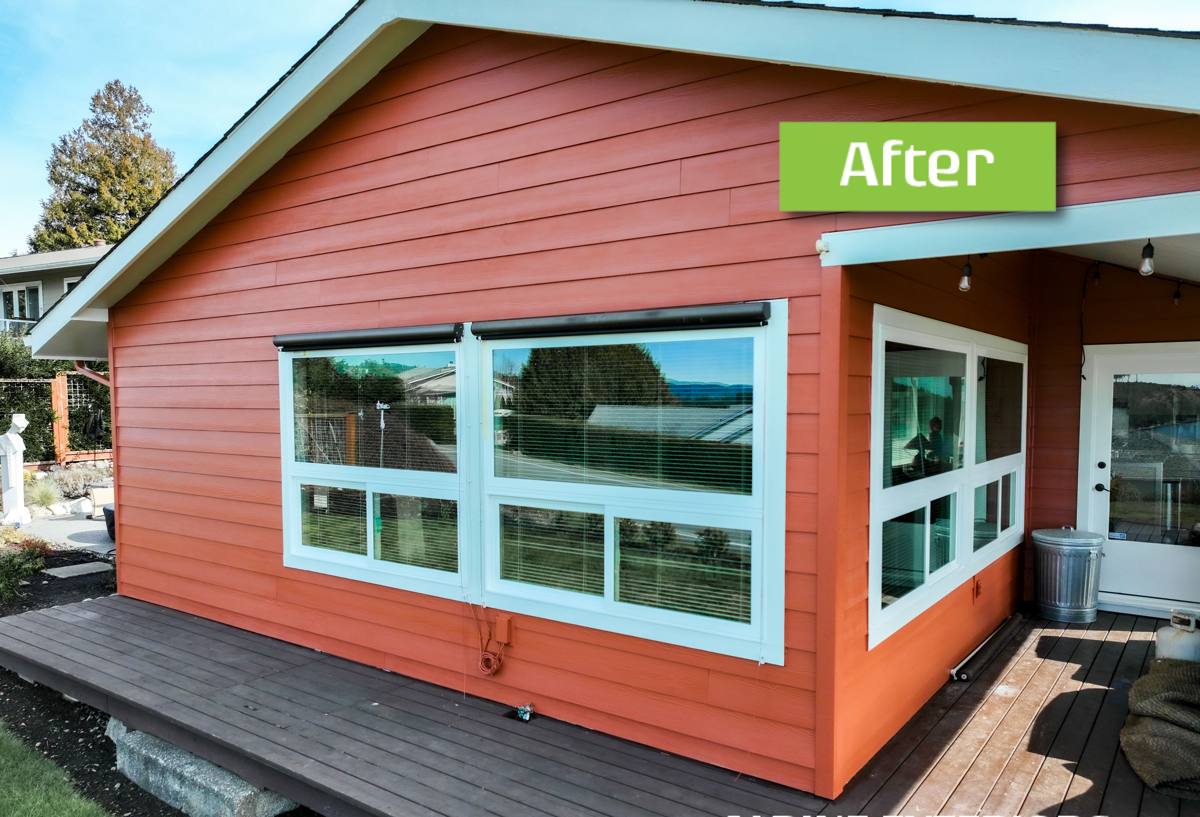
We use "custom" to mean two things, not one. First, custom-sized: a lot of Sudden Valley homes were built with non-standard rough openings, especially older cabins and additions built out over the years to take advantage of lake or forest views. Off-the-shelf window sizes often mean shimming, foam-filling, or trimming out gaps that become moisture entry points later. Second, custom-specified: frame material, glazing package, and hardware chosen for how this specific property sits — how much tree shade it gets, whether it faces the lake, how exposed it is to wind-driven rain.
Common Sudden Valley Window Situations
- Older homes with wood-frame windows that have been painted over multiple times and no longer seal or operate cleanly
- View-oriented homes with large fixed picture windows flanked by smaller operable units, all needing to match
- Additions or sunrooms with window openings that were never quite standard size
- Heavily shaded lots where moss and mildew build up on frames faster than on sun-exposed properties
- Homes near the lakeshore with more direct exposure to wind and moisture swings
Material Choices That Hold Up in This Climate
There's no single "best" window material — there's a best fit for your exposure, budget, and maintenance appetite. Here's how the common options actually perform under Sudden Valley conditions specifically.
| Frame Material | Moisture Behavior | Maintenance | Best Fit |
|---|---|---|---|
| Vinyl | Won't rot or absorb water; seams are the main watch point | Low — occasional cleaning | Most Sudden Valley homes, budget-conscious replacements |
| Fiberglass | Very stable, minimal expansion/contraction with humidity swings | Low | Larger openings, view windows, long-term low-maintenance goals |
| Wood (clad exterior) | Interior wood warmth with a protected exterior face | Moderate — exterior cladding shields the wood, but interior still needs occasional attention | Homes wanting a traditional look without full wood maintenance |
| Solid wood | Requires diligent sealing and repainting to resist our moisture and moss cycle | High | Historic-style homes where owners are committed to upkeep |
| Aluminum | Conducts cold and can condense/sweat in our damp winters | Low, but condensation is a real issue | Rarely our first recommendation for this area |
We generally steer Sudden Valley clients toward vinyl or fiberglass unless they specifically want a wood interior look — not because other materials can't work, but because the maintenance burden of solid exterior wood in a shaded, humid setting is a genuine ongoing cost that a lot of homeowners underestimate when they're comparing sticker prices.
Glazing and Seal Performance
The glass package matters as much as the frame. In a lake-adjacent, tree-shaded neighborhood, two things do most of the work:
- Warm-edge spacers — the metal or foam strip separating panes of glass. Standard aluminum spacers conduct cold and encourage condensation on the inside of the glass in our winters; warm-edge spacer technology reduces that considerably.
- Argon or krypton gas fill — improves insulation value, which matters when a home is shaded most of the day and doesn't get much passive solar warming to offset heat loss.
- Low-E coatings — help manage both heat retention in winter and glare/heat gain on the homes that do get lake-reflected sun.
Failed seals show up as fog or moisture between the panes — once you see that, the insulated glass unit has failed and no amount of cleaning fixes it. If we're replacing windows in your home, we're also looking hard at how the new units are sealed to the rough opening, because a good window with a bad installation seal will eventually fail the same way.
Installation Details That Prevent Moisture Problems
Most window failures we see in this area trace back to installation, not product quality. This is where hiring locally actually matters — a crew that's worked Sudden Valley's shaded lots and lake exposure knows where water wants to go.
What a Correct Installation Includes
- Full removal of the old window and inspection of the rough opening framing for hidden rot before anything new goes in
- Flashing installed in the correct shingle-lap sequence so water sheds outward and down, never behind the siding
- A sloped sill pan so any water that does get past the exterior seal drains back out instead of pooling
- Proper low-expansion foam and backer rod at the perimeter — not just caulk over a gap
- Exterior trim and caulk joints sized and placed to shed water rather than trap it against the frame
- Interior air sealing so conditioned air isn't leaking out and pulling moist air into the wall cavity
Skip any one of these steps and you can end up with a window that looks fine for a year or two while moisture works its way into the wall assembly behind it — a much more expensive problem to fix than the window itself.
Our Process for Sudden Valley Projects
1. On-Site Assessment
We look at each opening individually — sun exposure, tree cover, siding condition around the frame, and any existing signs of water intrusion or wood damage. This is also when we take accurate measurements, since custom sizing is common here.
2. Material and Glazing Recommendation
Based on that walk-through, we recommend frame material and glazing package suited to that specific exposure — a shaded, north-facing wall gets a different conversation than a lake-facing wall that takes direct wind and rain.
3. Written Estimate
You get a clear, itemized estimate before any work starts — no surprise add-ons once demolition begins.
4. Removal and Structural Check
Old windows come out, and we inspect the framing underneath. If there's rot or water damage, we tell you before proceeding, not after.
5. Install and Seal
New units go in with proper flashing, sill pans, and sealing as described above.
6. Final Walkthrough
We check operation, seals, and finish work with you before calling the job done.
Signs It's Time to Replace, Not Repair
- Visible fog or moisture between the glass panes (failed seal)
- Wood sills that are soft, discolored, or holding paint poorly no matter how often they're repainted
- Windows that won't stay open, won't latch, or have become difficult to operate seasonally
- Noticeable draft or cold spots near the frame in winter
- Persistent moss or black mildew staining on the frame that keeps returning after cleaning
- Single-pane or original-to-the-house windows in a home more than a few decades old
Not every issue means full replacement — sometimes it's a hardware fix or re-caulking job. We'll tell you honestly which category yours falls into rather than pushing a bigger project than you need.
Why Local Experience in This Specific Area Matters
Bellingham Siding Company works across Whatcom County, and Sudden Valley has its own personality within that: the tree cover, the lake proximity, and the mix of older cabins and newer builds all change what a correct window job looks like compared to, say, a wide-open lot closer to downtown Bellingham. A crew that hasn't worked this neighborhood specifically may not think to check for the shaded-side moss buildup, the lake-facing wind exposure, or the odd rough-opening sizes that show up in additions built over the decades. That's the kind of thing you only really learn by doing the work here repeatedly.
Get an Honest Estimate
If your windows in Sudden Valley are sticking, fogging, drafting, or just showing their age, we'll come take a look and give you a straightforward assessment — what needs replacing now, what can wait, and what it'll actually cost. Reach out for a free, no-pressure estimate using the form below.