 Bellingham Siding
 Windows Built for Cordata's Climate, Not Just Its Openings
Cordata sits far enough inland from Bellingham Bay to feel a little sheltered, but it still gets the same weather pattern that defines Whatcom County: long stretches of driving rain from the west, humid air off the Salish Sea, and a moss season that runs from fall through spring. Windows in this neighborhood don't fail because the glass wears out. They fail because water finds a way behind the frame, sits there in a shaded north-facing wall, and slowly rots the sheathing nobody sees until a remodel or a leak forces the issue.
Good window installation here is really a water-management job with glass attached to it. The window unit itself is almost never the weak point — the flashing, the sill pan, the sealant details, and how the new window ties into the existing siding are what decide whether a house stays dry for the next twenty years or starts showing soft trim in five.
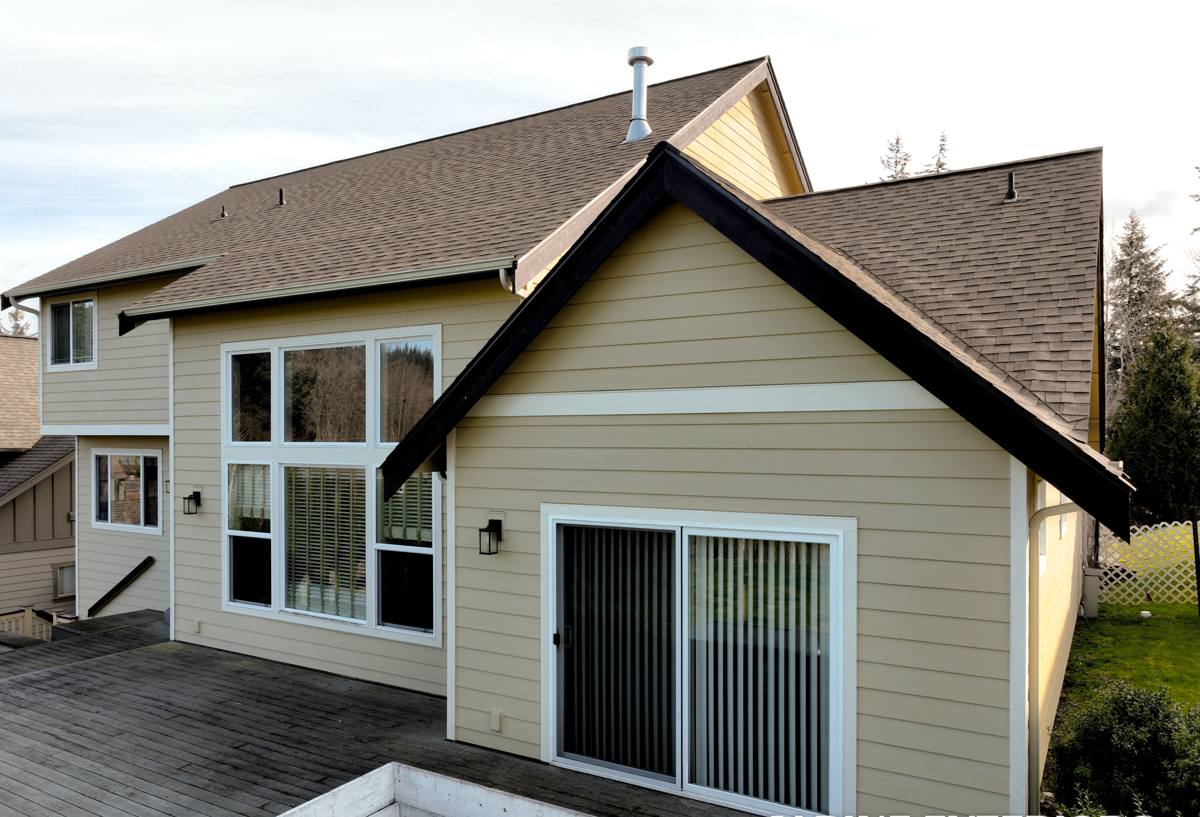
What Cordata's Housing Stock Tells Us
Cordata is a mix of newer development homes from the last two to three decades alongside older Bellingham-area construction, plus a fair number of homes that have already had one round of vinyl siding or window replacement done on them. That mix matters for a few reasons:
- Original aluminum or early vinyl windows from older builds are often single-pane or early dual-pane units with weak seals — condensation between the panes is a common sign they're due.
- Builder-grade vinyl windows from the 1990s and 2000s development boom are frequently installed with minimal flashing by original standards that would not meet today's water-resistive barrier requirements.
- Homes with prior remodels sometimes have windows that were swapped without touching the surrounding siding or flashing — a fast, cheap approach that can trap moisture behind the new unit instead of solving the problem.
Before we quote a job, we look at what's actually there: window age, frame material, visible staining or soft spots at the sill, and how the siding meets the window opening. That tells us whether this is a straightforward replacement or a job that needs some sheathing repair first.
Signs a Cordata Home's Windows Need Attention
- Fogging or condensation trapped between panes (failed seal)
- Drafts or cold spots near the frame even with the window closed
- Paint or trim bubbling, or wood trim that feels soft when pressed
- Visible gaps between the window frame and siding
- Moss or dark streaking building up on the sill or below the window
- Difficulty opening, closing, or locking — frames shifting out of square
What a Correct Installation Actually Involves
There's a big difference between "swap the window" and installing it correctly. Here's what we do on every job, whether it's one window or a whole-house replacement:
1. Remove and Inspect
We pull the old window and check the rough opening — sheathing, framing, and any existing flashing tape or building paper — for water damage before anything new goes in. This is the step that gets skipped when a job is rushed, and it's the one that determines whether the new window lasts.
2. Repair Before You Cover
If we find soft or rotted sheathing, it gets cut out and replaced. Installing a new window over damaged framing just hides a problem that will keep spreading behind the wall.
3. Sill Pan and Flashing
A sloped sill pan directs any water that gets past the window back outside instead of into the wall cavity. Flashing tape integrates with the house's water-resistive barrier in the correct shingle-lap order — top piece overlapping the one below it — so water always sheds downward and outward, never into the seam.
4. Set, Shim, and Fasten
The window gets set level and plumb, shimmed at the manufacturer's specified points, and fastened without over-driving screws that can bow the frame and cause the sash to bind.
5. Seal and Insulate
Low-expansion foam or backer rod and sealant fill the gap between the frame and rough opening — enough to insulate and air-seal, not so much that it bows the frame inward.
6. Exterior Trim and Siding Tie-In
This is where a lot of replacement jobs cut corners. The siding and trim around the new window need to be reinstalled or re-flashed so the whole assembly sheds water as one system, not as a window sitting inside a gap in the siding.
Why This Matters More in Bellingham Than It Would Elsewhere
Whatcom County's weather doesn't hit hard all at once very often — it wears things down gradually. Driving rain off the water, prolonged damp periods, and shaded exposures that never fully dry out are what turn a small flashing mistake into a rot problem two or three years later. Salt-laden air near the bay also accelerates corrosion on lower-quality fasteners and hardware over time, which is one reason we're particular about the fastener and flashing tape products we use on installs anywhere in the Bellingham area, Cordata included.
Moss is the other local factor people underestimate. It doesn't just grow on roofs — it takes hold on sills, in corners of window trim, and anywhere debris and shade combine with year-round moisture. Moss holds water against wood and vinyl longer than open air would, so a window detail that would be fine in a drier climate can become a chronic damp spot here.
Choosing Window Materials for This Climate
There's no single "best" window material — it's a set of trade-offs. Here's how the common options stack up for a Whatcom County home:
| Material | Moisture Behavior | Maintenance | Typical Trade-Offs |
|---|---|---|---|
| Vinyl | Won't rot; seams and welds are the main watch point | Low — occasional cleaning | Best value; frame can expand/contract with temperature swings |
| Fiberglass | Very stable, minimal expansion/contraction | Low | Higher upfront cost; strong long-term performance |
| Wood (clad exterior) | Good if cladding and seals stay intact; interior wood needs protection from moisture | Higher — finish and seals need periodic checks | Classic look; more installation sensitivity around the cladding-to-frame seam |
| Aluminum | Conducts cold and can condense in our damp winters | Low | We don't typically recommend it for this climate due to condensation risk |
For most Cordata homes, we install vinyl or fiberglass because they hold up well against sustained moisture exposure without the maintenance schedule that wood cladding requires. That's our standard recommendation, not a knock on wood windows done well — it's about matching material to how much upkeep a homeowner actually wants to commit to.
Single Window vs. Whole-House Replacement
Not every job needs to be all-or-nothing. Here's how we help homeowners think through it:
- One or two problem windows: Makes sense when the rest of the house's windows are a similar age and still performing fine — no fogging, no drafts, no visible frame damage.
- Whole-house replacement: Worth considering when multiple windows are the same age and starting to show the same failure signs, or when you're already planning a siding project and want the window and siding work coordinated at the flashing level.
- Phased replacement: A practical middle ground — tackle the worst-facing walls (typically west and north exposures that take the most weather) first, then the rest over time.
If you're already planning new siding, doing windows first — or at the same time — lets us integrate the flashing and water-resistive barrier as one continuous system instead of patching a new window into old siding or new siding around old, leak-prone windows.
Cost Factors Worth Understanding
We don't post fixed prices because every opening is different, but these are the variables that actually move the number:
| Factor | Why It Matters |
|---|---|
| Window count and size | Larger units and more openings mean more material and labor |
| Frame material | Vinyl is the most budget-friendly; fiberglass and wood-clad cost more upfront |
| Sheathing or framing repair | Hidden rot found during removal adds material and time, but skipping it just delays a bigger repair |
| Siding tie-in complexity | Matching or patching existing siding around the new window takes more care than an open wall |
| Access and height | Second-story or hard-to-reach windows take longer and may need additional equipment |
A written estimate should always spell out which of these apply to your home before any work starts — a number without that context isn't a real estimate.
Our Process for Cordata Jobs
- On-site assessment: We look at existing windows, siding condition, and any visible water staining before quoting anything.
- Written estimate: Clear scope, materials, and pricing — no surprise change orders for anything we could have caught during the assessment.
- Scheduling around weather: Openings are only exposed for as short a window as possible, and we plan around forecasted rain rather than working through it.
- Installation: Removal, inspection, repair if needed, flashing, setting the window, and full trim/siding tie-in as described above.
- Final walkthrough: We check operation, sealant lines, and trim finish with you before calling the job done.
Why Local Experience with Cordata Homes Matters
A crew that works this specific area regularly already knows which builders and eras of construction tend to have thin flashing, which exposures take the worst weather, and how moss and moisture typically show up on these homes before it hides deeper problems. That's not something you can fully substitute with a general contractor pulled in from outside the area — it comes from having done this work, on this kind of house, in this exact climate, repeatedly.
If you're seeing drafts, fogged glass, or trim that doesn't look right around a window in your Cordata home, we're happy to take a look and give you an honest read on what it needs — whether that's a simple replacement or something more involved. Reach out for a free, no-pressure estimate using the form below.